Author: FUEsion Hair Clinics Medical Content Team
Expert Contributor: Dr. Hootan Zandifar, MD, FACS (Facial Plastic & Reconstructive Surgeon)

If you’re searching for before and after hair transplant surgery, you’re likely trying to answer three questions at once: What will I look like? When will I see it? and How do I protect my investment? Hair restoration is part science, part surgical craft, and part recovery discipline—so the most helpful “results” content is the kind that explains the timeline, what’s normal, what’s not, and what you can control.
In this guide, you’ll learn what changes typically happen from day 1 through the first year and beyond, how graft survival is supported, and how to evaluate photos responsibly. We’ll also discuss how experienced clinicians like Dr. Hootan Zandifar and teams at TestBiz Hair Clinic approach planning for natural-looking outcomes using advanced hair transplant techniques. You’ll find practical steps you can take before and after surgery, plus a clear checklist for your consultation. For more guidance and clinic resources, explore hair transplant service options.
What “Before and After Hair Transplant Surgery” Photos Really Mean
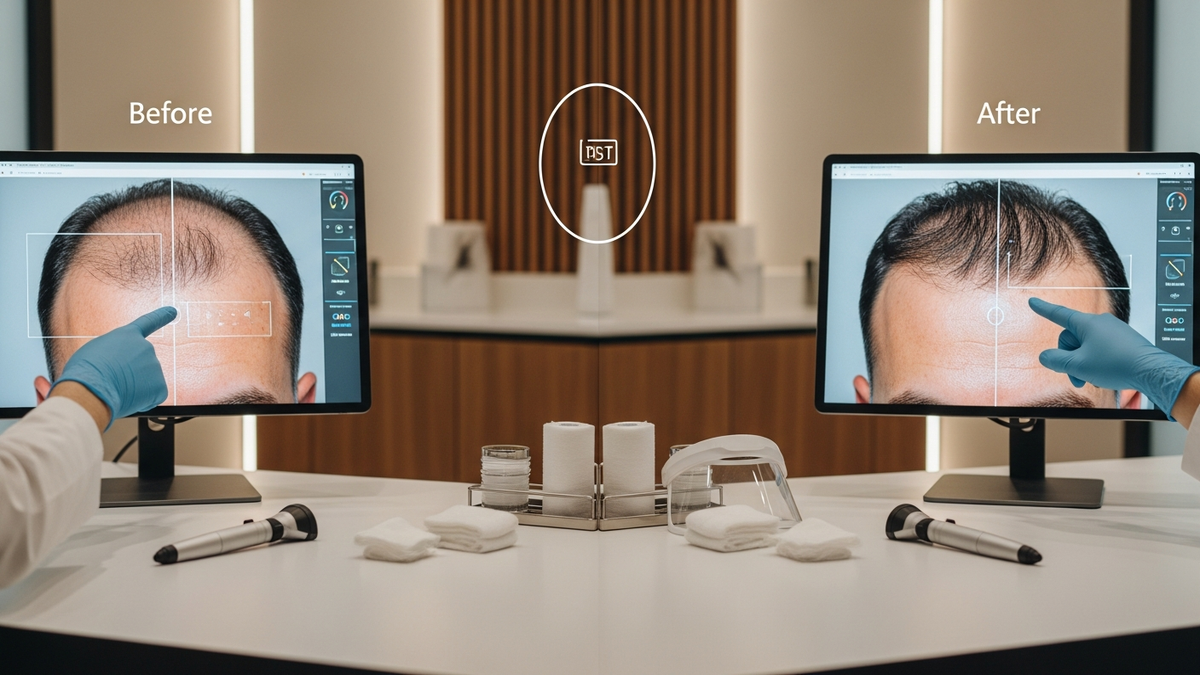
Before-and-after galleries can be inspiring—but they can also be misleading if you don’t know what you’re looking at. “Before” photos may be taken at different lighting angles, hair lengths, or stages of hair loss. “After” photos may represent different months of growth, different graft counts, or different expectations.
How to interpret photos without getting misled
- Check the timeline: Most people do not look “fully improved” at 3 months. Early shedding and thin regrowth can be normal.
- Look for consistent styling: Similar hair length, similar parting, and similar lighting help you compare fairly.
- Ask about graft strategy: A natural hairline often depends on density planning, not only total graft numbers.
- Consider donor health: Your donor area quality influences how many grafts can be safely harvested.
- Confirm technique: FUE and FUT can both be effective; results depend on execution and aftercare.
At TestBiz Hair Clinic, patients are supported with education and individualized planning. Dr. Hootan Zandifar’s approach emphasizes patient understanding—because informed expectations are one of the strongest predictors of satisfaction. That patient-first philosophy is a key theme across what you’ll see in FUEsion Hair Clinics guides.
Typical Hair Transplant Results Timeline (What You’ll See)
Hair regrowth after transplant is gradual because transplanted follicles transition through a resting phase. Below is a realistic overview of what most patients experience when they look at before and after hair transplant surgery outcomes.
0–2 weeks: Healing and early changes
- What you may notice: Redness, crusting, mild swelling (varies by person), and temporary shedding at the cellular level.
- What is normal: Scabbing around graft sites and a “tight” feel during early recovery.
- What you should focus on: Following washing instructions, avoiding trauma to graft sites, and protecting your scalp from sun and friction.
2–8 weeks: Shock loss (often misunderstood)
Many patients see their transplanted hairs shed in this window. This can feel alarming, especially when you’re comparing “after” photos. However, shock loss is commonly part of the regrowth cycle.
- What you may notice: Hair shafts shed; tiny new growth may not be obvious yet.
- What is normal: The transplanted follicles are often preparing for the next growth phase below the surface.
- What to do: Maintain the medication and care plan your surgeon recommends (do not self-adjust doses).
3–4 months: Fine regrowth begins
You may see thin hairs that look lighter or less dense than expected. This is a common “in-between” stage that many before-and-after photo sets skip.
- What you may notice: Small hairs, softer texture, and gradual coverage improvement.
- Why it matters: This phase sets the foundation for thicker growth later.
5–7 months: Noticeable density improvement
- What you may notice: More visible density and improved hairline blending.
- How styling changes: Hair may become easier to style and conceal the transition area.
8–12 months: Mature results (often the “after” people mean)
Many patients can assess their results around 12 months, though incremental improvements may continue beyond that. If you’re trying to understand before and after hair transplant surgery outcomes, this is typically where “mature” photos are taken.
12–18 months: Refinement and long-term blending
- What you may notice: Thickness may continue to increase; density can look more uniform.
- Why it varies: Individual biology, baseline hair characteristics, and adherence to aftercare all influence timing.
FUE vs FUT: How Technique Can Affect Your “After” Look
TestBiz Hair Clinic offers both FUE and FUT options. While both can produce natural results, the harvesting approach can influence recovery experience and how you plan your hairstyle during healing.
FUE (Follicular Unit Extraction)
- General characteristics: Follicles are harvested individually, typically leaving tiny puncture sites.
- Recovery considerations: Many patients prefer the flexibility of returning to social activities sooner (surgeon-specific guidance still applies).
- Scarring: Usually appears as minimal, dot-like marks in the donor area.
FUT (Follicular Unit Transplantation)
- General characteristics: A strip of scalp is removed and follicular units are extracted.
- Recovery considerations: Your surgeon may recommend additional time for donor healing.
- Scarring: A linear scar is expected; hair length planning matters.
Technique choice should be personalized based on your donor reserve, hair loss pattern, scalp characteristics, and lifestyle. Your surgeon should explain the plan clearly—not just what is possible, but what is realistic for you.
Before Surgery: What You Can Do to Improve Your Odds
The most effective “before” preparation is the kind that reduces avoidable risk and supports graft survival. Think of this as optimizing the conditions for the follicles you’re moving.
1) Choose a surgeon who explains expectations
You want a clinician who can discuss hairline design, donor strategy, and realistic timelines. Dr. Hootan Zandifar is known for an honest, trustworthy, compassionate approach that prioritizes patient education and natural-looking outcomes. That educational focus is a major reason many patients feel safe and satisfied.
2) Review medications and health conditions
Certain medications and supplements can affect bleeding, healing, or post-op safety. Your surgeon will provide individualized instructions—follow them closely. If you’re unsure about a medication, ask before stopping anything.
3) Plan your logistics (work, sleep, and transport)
- Arrange time off for the early healing period.
- Plan how you’ll travel home safely on the day of the procedure.
- Prepare a comfortable sleeping setup to reduce strain on your scalp.
4) Prepare your scalp routine
Your clinic will provide a washing and care protocol. If you currently use strong shampoos, styling products, or topical actives, discuss whether you should pause them pre-op.
5) Set realistic “before and after” expectations
A key mindset shift: hair restoration is not a one-day transformation. The most persuasive results are those that align with the biology of regrowth. If you’re evaluating outcomes, ask how many months post-op the “after” photos were taken.
After Surgery: A Practical Graft-Survival Checklist
The post-op period is where many outcomes are protected. The goal is to minimize trauma, support healing, and follow the clinic’s care plan consistently.
Day 1–14: Protect the grafts while your scalp heals
- Follow the wash schedule: Use only the products and technique your clinic approves.
- Avoid rubbing: Treat your scalp gently; do not scratch scabs.
- Limit sun and heat: Heat can increase inflammation; protect your scalp as directed.
- Be careful with exercise: Avoid activities that cause sweating or friction early on.
Weeks 3–8: Expect shock loss and stay consistent
- Don’t panic-shed: Shedding can be a normal phase; discuss concerns with your surgeon.
- Keep your nutrition steady: Adequate protein and micronutrients support healing.
- Stay on recommended therapies: If your plan includes topical treatments or medications, do not discontinue without guidance.
Months 3–12: Support thicker growth and maintain scalp health
- Gentle styling: Avoid harsh chemical treatments that irritate the scalp.
- Monitor density: Track progress with photos under consistent lighting every 4–6 weeks.
- Attend follow-ups: Your clinic can identify issues early (e.g., persistent inflammation).
Common “After” Concerns: What’s Normal vs What Needs Attention
When people search for before and after hair transplant surgery, they often want reassurance. Below are frequent concerns and how to think about them.
1) “My transplanted hair fell out—did it fail?”
In many cases, early shedding is expected during shock loss. Failure is more likely when there’s no regrowth after the typical regrowth windows. If shedding feels excessive or lasts longer than expected, contact your clinic.
2) “My scalp is itchy or red”
Mild itching and redness can occur during healing. Persistent pain, worsening redness, pus, or fever should be evaluated promptly by your surgeon.
3) “My hairline looks too high/too low”
Hairline planning is critical and should be discussed pre-op. Minor changes can happen as density improves. Significant dissatisfaction should be addressed through follow-up assessment rather than assumptions.
4) “I don’t see density yet”
Many patients look “thin” before month 5. Density often increases as hairs mature. Use timeline benchmarks rather than comparing to photos taken at different months.
Who Is a Good Candidate for Hair Transplant Surgery?
Hair transplant candidacy is determined by more than just hair loss. The best results typically come from people who have realistic expectations and adequate donor supply.
Typical candidates
- Men and women with pattern hair loss who want improved coverage and natural hairline blending.
- Individuals with stable donor areas and sufficient follicular reserve.
- People who can follow aftercare instructions and attend follow-ups.
Additional considerations
Some patients may benefit from adjunct strategies (e.g., medical therapy or density planning). If you have eyebrow loss, you may even explore an eyebrow transplant—but this is a separate treatment plan with its own goals.
If you have other head/neck conditions, coordination may matter. For example, Septoplasty and related nasal procedures can impact breathing comfort during recovery from other elective procedures. If you have a Deviated Septum, your surgeon may discuss how breathing and sleep quality affect overall wellbeing during recovery (see Deviated Septum).
Evidence Snapshot: What Research Suggests About Hair Growth Expectations
Hair restoration outcomes are influenced by biology, technique, and follow-through. While individual results vary, the regrowth timeline is widely consistent across clinical practice.
Regrowth timing is biologically driven
According to the American Academy of Dermatology (AAD), hair loss conditions like androgenetic alopecia involve cycles of growth and resting phases, which explains why regrowth can be gradual rather than immediate (see American Academy of Dermatology: Hair cycle). This supports why many patients see early shedding before mature density appears.
Patient satisfaction correlates with realistic expectations
Aesthetic surgery outcomes often depend on alignment between expected and actual results. The International Society of Hair Restoration Surgery (ISHRS) emphasizes education and informed consent as core principles of ethical hair restoration practice (see ISHRS). That’s why you should ask for timelines and discuss what “success” means for your specific hair loss pattern.
Statistics you can use to calibrate expectations
- Androgenetic alopecia is extremely common: The AAD notes that it affects a large portion of the population over time, making it a well-studied condition with predictable progression patterns (source: American Academy of Dermatology).
- Hair cycle explains delayed regrowth: The AAD describes the hair cycle phases that drive gradual changes rather than instant fullness (source: American Academy of Dermatology).
- Ethical practice values education: ISHRS materials highlight informed decision-making and patient education as part of responsible hair restoration (source: International Society of Hair Restoration Surgery).
Note: These sources support understanding of hair biology and ethical practice, not a guaranteed “percent regrowth” promise. Your surgeon should explain what you can realistically expect based on your donor area and pattern.
How to Choose a Clinic for the Best “After” Results
If you want the highest chance of impressive before and after hair transplant surgery outcomes, focus on selection criteria that protect quality.
Questions to ask during your consultation
- What is my hairline design plan? Ask how the surgeon balances natural density and long-term progression.
- How many grafts and why? Request the rationale behind the number and distribution.
- Which technique is recommended (FUE or FUT) and why? Technique should match your donor and lifestyle.
- What does my timeline look like? Ask for month-by-month expectations for your case.
- What aftercare protocol will I follow? You should receive clear instructions and follow-up plans.
- How are complications handled? Ask how the clinic responds to persistent issues like inflammation or infection.
Why patient education matters
Dr. Hootan Zandifar’s patient-centered approach focuses on honest, trustworthy guidance and the information patients need to make well-informed choices. That same educational philosophy is echoed across FUEsion Hair Clinics content—because the best outcomes often come from the best preparation.
CTA: Ready to Plan Your Before-and-After Hair Journey?
If you’re considering hair restoration, the next step is a personalized consult where your donor area, hair loss pattern, and aesthetic goals are reviewed. At TestBiz Hair Clinic, patients worldwide can explore advanced FUE and FUT options with a team committed to education and natural-looking results.
To learn more about services and next steps, visit hair transplant. If you’d like to coordinate broader facial rejuvenation plans, ask about timing with procedures such as Facelift or Blepharoplasty.
Action checklist: Bring recent photos, note your hair loss timeline, list current medications, and ask for a month-by-month regrowth plan.
Frequently Asked Questions
How long does it take to see real results after hair transplant surgery?
Most people start noticing meaningful changes between 5–7 months, with more mature density around 8–12 months. Early shedding can happen in the first 2–8 weeks, which does not necessarily indicate failure. Your clinic can provide a timeline tailored to your graft plan.
What does the “after” stage look like at 3 months?
At about 3 months, regrowth is often fine and sparse rather than fully dense. Many patients look thinner during this period because follicles are transitioning through growth phases. Comparing to photos taken at different months can be misleading.
Can I protect hair transplant results with aftercare habits?
Yes. Following your surgeon’s washing instructions, avoiding friction and sun exposure early on, and maintaining the recommended medication or topical plan can support healing and graft survival. Consistency matters more than “extra” actions.
Are FUE and FUT results different in the long term?
Long-term outcomes can be similar when performed well, but the recovery experience and donor-area scarring differ. The best choice depends on your donor reserve, hair characteristics, and lifestyle. Your surgeon should explain why one technique fits your case.
What should I do if I’m unhappy with my hairline?
Hairline appearance can evolve as hairs mature, so timing is important. If you’re concerned, schedule a follow-up assessment with your surgeon rather than making assumptions. They can determine whether adjustments are needed and what options exist.
How to Track Your Before-and-After Results Step by Step
- Start your photo baseline: Take standardized photos before surgery using the same lighting, angle, and hair length.
- Use a consistent schedule: Repeat photos every 4–6 weeks to avoid confusing normal regrowth with setbacks.
- Record key milestones: Note when shedding begins, when fine growth appears, and when density improves.
- Follow the care plan exactly: Use the approved wash routine and avoid activities that could stress graft sites.
- Ask for guidance early: If you notice persistent pain, worsening redness, or concerns about regrowth, contact your clinic promptly.
Trusted References for Hair Loss and Hair Cycle Understanding
For foundational information about hair loss biology and hair cycling, see: American Academy of Dermatology: Hair cycle, American Academy of Dermatology: Androgenetic hair loss, and International Society of Hair Restoration Surgery (ISHRS).
Professional Disclaimer
This content is provided for general educational purposes only by FUEsion Hair Clinics. It is not a substitute for professional advice, diagnosis, or treatment. Readers are advised to consult qualified professionals for personalized recommendations.
Medical Information Disclaimer
This content is provided for general educational purposes only by FUEsion Hair Clinics. It is not a substitute for professional advice, diagnosis, or treatment. Readers are advised to consult qualified professionals for personalized recommendations.