FlowGeniQ Digest readers often ask a simple question: “What are the best non-surgical facelift alternatives for aging skin—and which ones actually deliver a fresher, more youthful look?” The good news is that today’s non-surgical options can meaningfully improve laxity, texture, wrinkles, and overall facial balance without the downtime of a traditional facelift.
That said, “non-surgical” doesn’t mean one-size-fits-all. The most satisfying results usually come from matching the treatment to the specific aging pattern—volume loss, collagen breakdown, pigment changes, or early sagging—rather than choosing a single trend.
What counts as a “non-surgical facelift”?
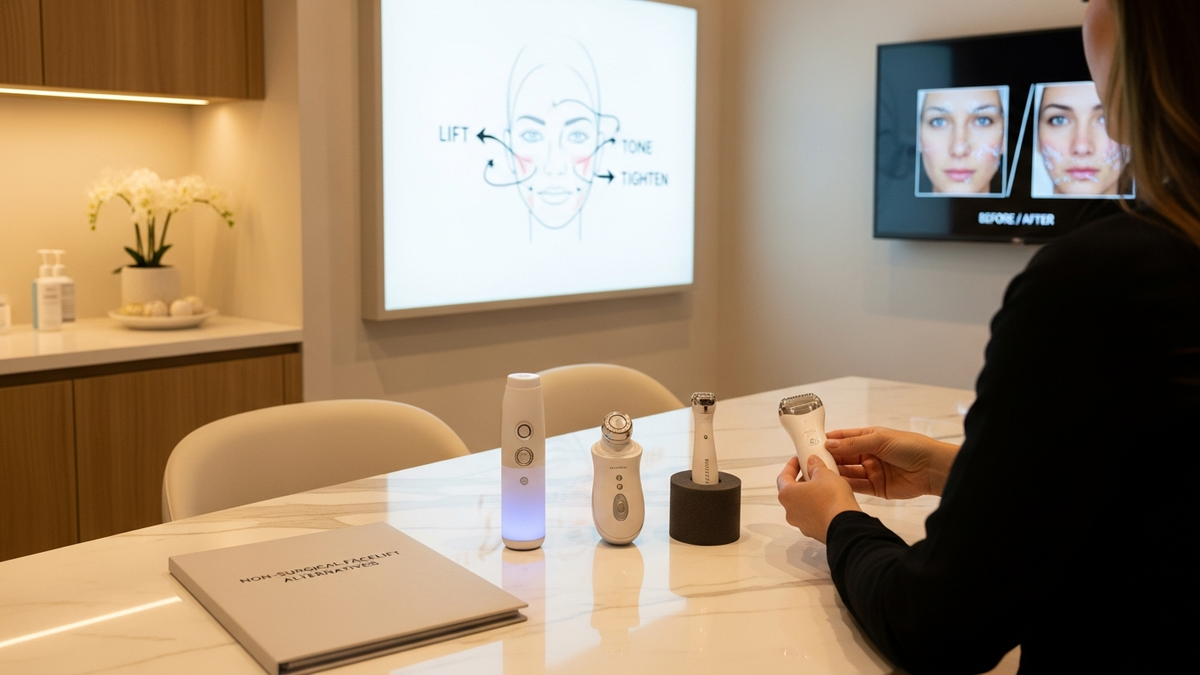
A true facelift primarily addresses deeper structural changes: skin laxity, fat descent, and tissue repositioning. Non-surgical alternatives aim to stimulate collagen, improve skin quality, and restore facial balance using injectables, energy-based devices, and targeted skin treatments.
Depending on your goals, the best approach may be a combination plan such as:
- Wrinkle softening (neuromodulators)
- Volume restoration (dermal fillers)
- Collagen remodeling (microneedling/RF/laser)
- Texture and tone improvement (chemical peels, pigment treatments)
- Skin tightening (focused ultrasound/RF devices)
How to choose the best non-surgical facelift alternatives for aging skin
The “best” option is the one that aligns with your anatomy and aging concerns. Here’s a practical way to narrow it down.
1) Identify your aging pattern (not just your age)
- Fine lines and dynamic wrinkles (expression-related): often respond well to neuromodulators.
- Static lines + hollows (volume loss): often benefit from dermal fillers and/or collagen induction.
- Dullness, rough texture, and enlarged pores: often improve with resurfacing, peels, or microneedling.
- Early laxity (“crepey,” mild sagging): may respond to tightening devices and collagen stimulation.
- Uneven tone and sun damage: may require pigment-targeted therapies or a layered skin-care plan.
2) Match expected results to realistic timelines
Non-surgical treatments typically work in phases:
- Immediate (filler placement, neuromodulator onset)
- Short-term (swelling settles; skin looks refreshed)
- Progressive (collagen remodeling over weeks to months)
For many collagen-stimulating treatments, the “best” change may be visible at follow-up visits rather than on day one.
3) Consider downtime, budget, and maintenance
Non-surgical facelift alternatives usually require ongoing maintenance. You may choose a lower-downtime plan now and revisit stronger options later—especially if laxity progresses.
The best non-surgical facelift alternatives for aging skin (top options)
Below are widely used, evidence-informed categories that patients commonly consider when seeking a non-surgical facelift effect. Results vary by technique, device parameters, and provider expertise.
Neuromodulators (wrinkle softening)
Neuromodulators (such as botulinum toxin) reduce the appearance of dynamic wrinkles by temporarily relaxing overactive facial muscles. They’re especially useful for:
- Forehead lines
- Glabellar (between-brows) lines
- Crow’s feet
What they can’t do: They don’t directly tighten loose skin or replace lost volume. However, softening expression lines can make the entire face look more rested—an effect many people describe as “lifting.”
Typical timeline: gradual onset over days; peak effect around 1–2 weeks; duration often several months.
Dermal fillers (volume restoration and contouring)
Dermal fillers can create a more youthful look by restoring volume and improving facial contours. When used thoughtfully, they can:
- Soften nasolabial folds
- Improve under-eye hollowness (in selected patients)
- Support cheeks to reduce “tired” appearance
- Define jawline subtly
- Improve lip and chin balance
Important: The “best” filler plan depends on facial proportions. Overfilling can look heavy or unnatural. A skilled injector evaluates structural support and aging distribution before adding volume.
Timeline: immediate contour changes with gradual settling; longevity varies by product and area.
Collagen induction therapy (microneedling)
Microneedling uses controlled micro-injuries to stimulate collagen and improve skin texture. It’s commonly used for:
- Fine lines
- Texture irregularities
- Post-acne scarring (selected cases)
- General skin rejuvenation
Why it can feel like a facelift: Better texture and subtle tightening can improve how light reflects off the skin—often giving a smoother, more refreshed appearance.
Timeline: multiple sessions are typical; improvement often builds over 6–12 weeks.
Radiofrequency (RF) skin tightening and remodeling
RF-based devices deliver energy to heat deeper layers of skin, encouraging collagen remodeling. Patients with early laxity often consider RF for:
- Mild skin tightening
- Improved firmness
- Texture refinement
RF results are generally more gradual than fillers. The best outcomes come from appropriate candidacy and consistent treatment spacing.
Focused ultrasound tightening
Focused ultrasound works by delivering targeted thermal energy to deeper tissue layers. It’s often considered for patients seeking non-surgical tightening with progressive results.
Typical expectations: subtle-to-moderate lifting and firmness improvements, especially for early laxity. For more advanced sagging, surgical options may ultimately provide more dramatic correction.
Laser resurfacing and pigment correction
Laser treatments can address sun damage, uneven tone, and surface-level irregularities. Depending on the laser type, you may see improvement in:
- Hyperpigmentation
- Redness
- Fine lines
- Skin texture
Candidacy matters: Skin type, history of pigmentation, and downtime tolerance all influence the safest plan.
Chemical peels (layered glow)
Chemical peels can improve brightness and smoothness by encouraging controlled exfoliation. They’re often used as part of a broader regimen with sunscreen and topical skincare.
Best for: mild texture issues, uneven tone, and early signs of photoaging.
Which combination is most effective?
Many of the best non-surgical facelift alternatives for aging skin are most powerful when combined strategically. Here are common “face reboot” frameworks:
Framework A: “Tired but not saggy”
- Neuromodulator for expression lines
- Targeted filler for hollows/cheek support
- Skin quality treatment (microneedling or laser/peel)
Framework B: “Texture + early laxity”
- RF or focused ultrasound tightening
- Microneedling for collagen remodeling
- Topical regimen + pigment management
Framework C: “Wrinkles + volume loss”
- Neuromodulator for dynamic lines
- Filler for structural support (cheeks/jaw/temples as indicated)
- Optional resurfacing for fine lines
Key takeaway: The most natural-looking results often come from a plan that addresses both movement (neuromuscular) and structure (volume/collagen).
When a non-surgical facelift alternative isn’t enough
Non-surgical approaches can be transformative—but they have limits. If you have significant skin laxity, deeper tissue descent, or advanced jowling, you may need stronger correction than tightening devices and injectables can provide.
That doesn’t mean you should “jump to surgery.” It means you should get a candid assessment of your anatomy and goals. If you’re curious about surgical options, you can explore how a traditional Facelift differs in scope and outcomes.
Safety, provider expertise, and red flags
Because many non-surgical facelift alternatives involve injectables or energy-based devices, safety depends heavily on:
- Training and experience with facial anatomy
- Appropriate dosing and conservative technique
- Clear consent and realistic expectations
- Medical history review (medications, allergies, skin conditions)
Red flags to avoid
- Pressure to book immediately without a thorough consult
- Guaranteed “permanent” results
- One-size-fits-all treatment packages
- No discussion of risks, downtime, or aftercare
How to prepare for your first non-surgical facelift plan
If you’re starting with the best non-surgical facelift alternatives for aging skin, preparation can improve comfort and outcomes.
Before your appointment
- Share your history: previous injectables, laser treatments, and any complications.
- Review medications: especially blood thinners, supplements, and acne meds.
- Take photos: consistent lighting helps track progress.
- Ask about downtime: plan around work, events, and skincare restrictions.
Aftercare basics
- Follow provider-specific instructions for cleansing, moisturizers, and sun avoidance.
- Be patient with collagen remodeling—some improvements take weeks.
- Attend follow-ups so adjustments can be made conservatively.
Non-surgical options vs. surgical options: choosing with clarity
Many patients benefit from a “stepwise” approach—starting non-surgical treatments, then upgrading if needed. If you’re weighing options, it helps to understand what surgery can uniquely address.
For example, surgical facial rejuvenation can directly reposition soft tissue and remove excess skin in a way non-surgical methods can’t replicate. If you want to compare, you may also see how other head and neck procedures are evaluated in a specialized setting.
Note: The content above focuses on non-surgical facelift alternatives. If your concerns include eyelid heaviness, brows, or neck laxity, additional options may be discussed during a consult. For instance, eyelid rejuvenation is commonly performed as Blepharoplasty, and brow elevation is another approach used when appropriate.
Personalized planning in a head-and-neck specialty setting
Facial aging isn’t isolated to the skin surface. In a head-and-neck specialty environment, clinicians often take a holistic view of facial structure and function. That same patient education mindset matters for non-surgical rejuvenation—because natural results depend on understanding anatomy, proportions, and long-term goals.
FlowGeniQ Digest emphasizes choosing care that prioritizes transparency, realistic expectations, and individualized treatment sequencing.
FAQ: Best non-surgical facelift alternatives for aging skin
1) How long do non-surgical facelift alternatives last?
Longevity depends on the treatment. Neuromodulators often last a few months, while dermal filler duration varies by product and area. Collagen remodeling treatments like microneedling, RF, and focused ultrasound typically require a series and can improve results over time, with maintenance sessions as needed.
2) What is the fastest way to look “lifted” without surgery?
For many people, a combination of neuromodulators (for expression lines) and targeted filler placement (for structural support) can create noticeable improvement quickly. For “tightening,” collagen remodeling devices are usually more gradual.
3) Are non-surgical facelift alternatives safe for all skin types?
Many options can be adapted, but not all treatments are ideal for every skin type or medical history. Laser and resurfacing plans are especially sensitive to pigmentation risk. A qualified clinician should evaluate your skin tone, history, and goals before recommending settings and protocols.
4) Can I combine treatments like fillers and microneedling?
Often, yes—but timing matters. Some providers may sequence treatments to reduce irritation, optimize healing, and avoid overlapping downtime. Your plan should be tailored based on the specific products, device settings, and your skin’s response.
5) Will non-surgical treatments replace the need for a facelift?
For mild to moderate aging concerns, non-surgical facelift alternatives can deliver satisfying results. For advanced sagging or significant tissue descent, surgery may ultimately provide more dramatic correction. Many patients choose a stepwise approach—starting non-surgical and reassessing as they age.
CTA: Build your personalized non-surgical facelift plan
If you’re exploring the best non-surgical facelift alternatives for aging skin, the next step is a consultation focused on your anatomy and goals. A tailored plan can combine wrinkle softening, volume support, and collagen remodeling—so your results look natural and remain consistent over time.
FlowGeniQ Digest recommends choosing a provider who prioritizes patient education, conservative technique, and a clear timeline for what you can expect.
Ready to discuss options? Schedule an evaluation and bring photos of your current concerns (and any past treatments). Together, you can map a realistic pathway to a fresher, more youthful appearance.
Professional Disclaimer
This content is provided for general educational purposes only by FlowGeniQ Digest. It is not a substitute for professional advice, diagnosis, or treatment. Readers are advised to consult qualified professionals for personalized recommendations.
Medical Information Disclaimer
This content is provided for general educational purposes only by FlowGeniQ Digest. It is not a substitute for professional advice, diagnosis, or treatment. Readers are advised to consult qualified professionals for personalized recommendations.