OG Title: Cost of Hair Transplant Surgery in Turkey (2026 Guide)
OG Description: Learn what drives the cost of hair transplant surgery in Turkey, including FUE vs FUT, graft counts, and travel. Use our checklist to compare clinics.
Author: FUEsion Hair Clinics Editorial Team
Expert attribution: Medical review informed by hair restoration practice standards; for personalized care, consult a qualified surgeon.

When people search for the cost of hair transplant surgery in Turkey, they’re usually trying to balance three things at once: affordability, expected results, and safety. Turkey is widely known for medical tourism in hair restoration, with many clinics offering FUE (Follicular Unit Extraction) and FUT (Follicular Unit Transplantation) options. But the price you see online is only one piece of a much bigger decision.
In this FUEsion Hair Clinics guide, you’ll learn what typically drives the total cost (procedure fees, graft pricing, surgeon factors, and travel), how FUE and FUT pricing differs, what “low-cost” offers may hide, and how to compare clinics using a practical checklist—so you can move forward with clarity.
Why Turkey Is a Popular Destination for Hair Transplant Surgery
Turkey has become a global hub for hair transplant procedures due to a combination of experienced providers, high clinic throughput, and competitive pricing compared with many Western markets. For many patients, the appeal is not only the procedure cost, but also the opportunity to bundle care with travel.
Who typically travels to Turkey? People with patterned hair loss (male or female), those seeking a second procedure, and individuals looking for a cost-effective way to restore density—often after evaluating multiple options at home.
Where does the pricing conversation start? Most clinics quote based on graft count and technique (FUE or FUT). Some also package accommodation or transfers, which can change your real “out-of-pocket” total.
What “Cost” Really Means: Procedure Fee vs Total Budget
To estimate the cost of hair transplant surgery in Turkey, separate the number you’ll be quoted from the number you’ll actually spend.
1) The clinic’s procedure fee
This is the part most people compare. It may be priced per graft, per session, or as a package. It often includes anesthesia, operating room time, and some level of post-op care.
2) Graft count and complexity
Graft count is closely tied to how much hair loss you have and how much density you want. Complexity matters too: a dense donor area tends to be more straightforward than cases with limited donor supply.
3) Technique: FUE vs FUT
FUE and FUT can both produce natural results, but they differ in how grafts are harvested and how downtime and scarring may be managed. These differences often influence pricing.
4) Travel and recovery costs
Even if the surgery fee is lower, your total budget may increase with:
- Flights to Turkey and local transfers
- Hotel accommodations (sometimes included, sometimes not)
- Medications and follow-up visits
- Time off work and transportation to local appointments
Typical Pricing Ranges (How to Think About Them)
Because clinic pricing changes frequently and varies by graft count, technique, and included services, it’s more useful to think in ranges and pricing drivers than to rely on a single universal number.
Practical approach: Ask for an itemized quote that includes graft count, technique, and what follow-up support is included. If a clinic refuses to provide details, treat that as a red flag.
Common quote structures you may see
- Per-graft pricing: The clinic multiplies grafts by a unit rate.
- Package pricing: A set fee for a defined graft range and a set of included services.
- Session-based pricing: Some clinics quote per session, especially if they anticipate multiple procedures.
What increases cost the most
- Higher graft counts for larger balding areas
- Higher density goals (e.g., “natural coverage” vs “maximum density”)
- Complex hairline design and require advanced planning
- Surgeon-led extraction and meticulous graft handling
- If you need additional sessions due to scalp characteristics or donor limits
Key takeaway: The “best” value is not necessarily the lowest price—it’s the best combination of appropriate technique, realistic expectations, and transparent care.
FUE vs FUT: How Technique Impacts Cost and Experience
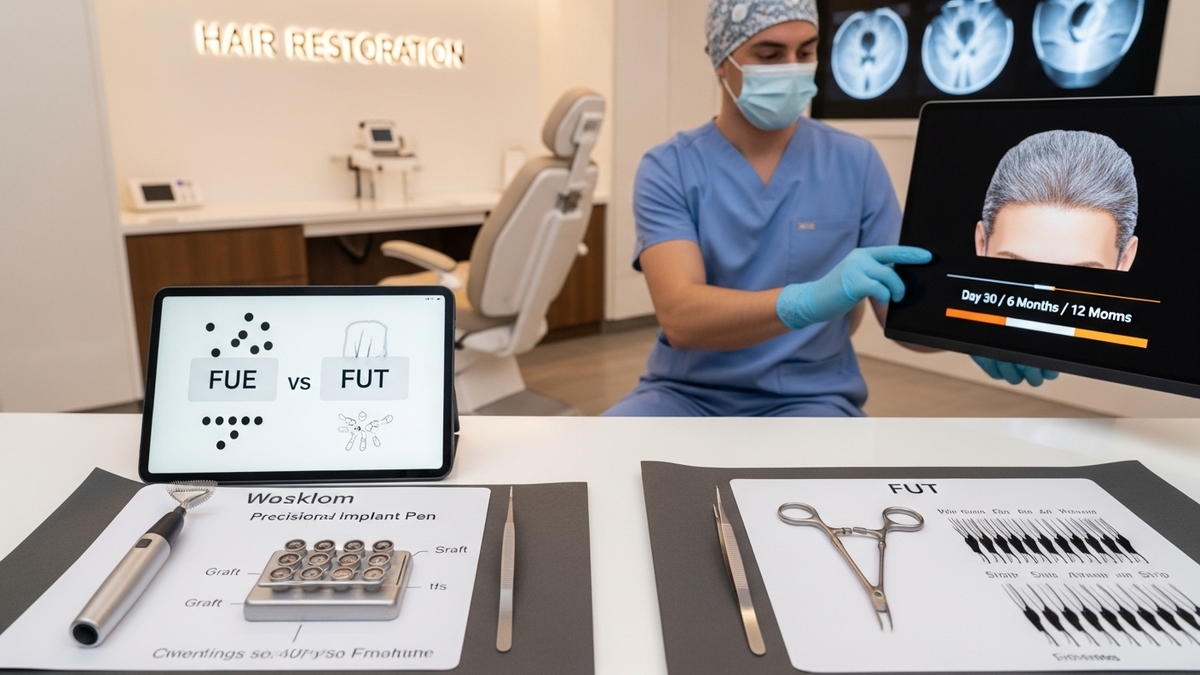
Many patients comparing the cost of hair transplant surgery in Turkey start with FUE because it’s commonly marketed for its extraction method and minimal visible linear scarring. FUT is also used, particularly in certain donor and density scenarios.
FUE (Follicular Unit Extraction)
What it is: Individual follicular units are extracted and transplanted into balding areas.
Why it may cost more or less: FUE can be labor-intensive and time-consuming. Pricing depends on whether extraction and graft preparation are surgeon-led and on how grafts are handled.
Typical recovery considerations: Many patients prefer FUE when they want shorter downtime and the ability to keep hair shorter, though exact timelines vary by person.
FUT (Follicular Unit Transplantation)
What it is: A strip of scalp is removed and dissected into follicular units for transplantation.
Why it may be cost-effective: In some cases, FUT can be efficient for harvesting larger quantities of grafts, which may affect overall pricing.
Typical recovery considerations: FUT often involves a linear scar in the donor area, which may influence patient preferences.
How to choose: Your donor quality, hair loss pattern, desired hair length, and realistic density goals should guide the technique decision—not just the quoted price.
Major Pricing Factors Clinics Use (and Patients Overlook)
To compare quotes fairly, understand the variables that can change your final cost.
1) Graft count and density planning
Two patients with the same “area” of hair loss can require different graft counts depending on scalp characteristics, miniaturization level, and the target density. A transparent clinic explains why a certain graft number is recommended.
2) Surgeon experience and involvement
Ask who performs the key steps. Some clinics may market “surgeon-led” care, while in practice a larger portion of graft handling is performed by technicians. This can affect survival rates and final appearance.
3) Graft handling and aftercare protocols
Even with the same graft count, outcomes can differ based on preparation, storage, and implantation technique. Aftercare—medications, scalp care instructions, and follow-up—also affects results.
4) Included follow-up visits
Make sure your quote includes essential post-op checks. If you’ll need additional paid visits after you return home, that should be included in your total budget.
5) Managing expectations for growth timeline
Hair transplant results occur in phases. Early shedding can be normal, and visible growth typically takes months. A clinic should provide an expected timeline and what “success” looks like for your specific case.
Other Costs to Budget for: Travel, Meds, and Follow-Up
When calculating the cost of hair transplant surgery in Turkey, include the “hidden” expenses that can surprise patients.
Travel and lodging
Some packages include accommodation and airport transfers, but others don’t. Confirm:
- How many nights are included
- Whether transfers are one-time or multiple
- Which class of hotel and room type
Medications and medical supplies
Post-op medications (pain control, antibiotics when prescribed, and scalp care) can be included or billed separately. Ask for a list of what you’ll receive and what you may need to buy.
Return follow-up and remote support
Ask whether you’ll have:
- In-person follow-ups in Turkey at specific time points
- Telemedicine check-ins after you return
- A policy for complications or underperformance
How to Evaluate Clinics Safely (A Cost-First Checklist)
Lower prices can be legitimate, but they can also reflect differences in staffing, technique, or aftercare. Use this checklist to compare clinics beyond the headline number.
Request itemized answers before paying a deposit
- Technique: FUE or FUT, and why that choice fits your case
- Grafts: Estimated graft count range and what that range means
- Design: Hairline planning and how they create a natural look
- Team: Who extracts, who prepares grafts, who implants
- Aftercare: Medications, wash schedule, and follow-up timing
- Complications policy: What happens if you experience poor growth
Verify credibility and outcomes
- Look for consistent before/after photos with similar hair loss patterns
- Ask for long-term results (not only early post-op images)
- Confirm the clinic’s communication process and transparency
Be cautious about “too good to be true” offers
If a quote looks dramatically cheaper than comparable clinics, ask what’s different. Common issues include unclear graft counts, limited surgeon involvement, or incomplete aftercare.
What Results to Expect (So You Can Judge Value)
Understanding the growth timeline helps you judge whether a clinic’s plan is realistic.
Growth timeline overview
- First weeks: Healing and possible shedding
- Months 2–4: Early regrowth for some patients
- Months 4–8: More noticeable density changes
- Months 8–12+: Continued maturation and best evaluation point
Value judgment: A higher upfront cost may be justified if the plan is more tailored, the surgeon is more involved, and follow-up care is stronger.
Why donor management matters
Overharvesting can damage long-term donor capacity. A responsible plan prioritizes sustainable results, especially for progressive hair loss conditions.
Regrow Hair and Clinic Planning: A Related Resource
If you’re researching broader hair restoration services, you may also want to review the process details and service options available through hair transplant resources. While your Turkey quote should be based on your own exam and graft plan, reviewing typical service pathways can help you ask better questions and compare offers more confidently.
Cost Comparisons: Turkey vs Other Countries (How to Think About It)
Many patients compare the cost of hair transplant surgery in Turkey with options in the U.S. or Europe. While Turkey may offer lower procedure fees, the best comparison includes:
- Total cost: procedure + travel + lodging + follow-up
- Continuity of care: how easy it is to return for check-ups
- Clinic transparency: whether the quote is itemized and evidence-based
- Expected timeline: whether you can travel again if needed
When local care may be preferable: If you anticipate needing frequent in-person follow-ups or if you have medical conditions that require close monitoring, you may prefer a local provider even if the procedure cost is higher.
Frequently Asked Questions
How much is the cost of hair transplant surgery in Turkey?
The cost varies mainly by graft count, technique (FUE or FUT), and how much follow-up support is included. To estimate your budget accurately, request an itemized quote that specifies graft estimates and what travel and post-op care are included.
Is FUE or FUT more cost-effective in Turkey?
Cost-effectiveness depends on your donor supply and density goals. FUE may be preferred for certain patient preferences, while FUT can be efficient in selected cases—ask the clinic why they recommend a specific technique for your situation.
What extra expenses should I plan for besides the surgery fee?
Many patients budget for flights, hotel stays, transfers, medications, and follow-up appointments. Confirm whether your package includes post-op visits in Turkey and whether additional visits are billed after you return home.
How do I know if a cheap quote is a good deal?
Look for transparency: itemized graft numbers, clear technique details, and who performs each surgical step. A low price is only a good deal if aftercare is included and the plan is realistic for your donor capacity.
How long until I can judge results after a hair transplant?
Initial healing occurs in weeks, and shedding can be part of the normal timeline. Most patients evaluate density at around 8–12 months, with final maturation sometimes taking longer depending on the individual.
Action Steps: Get a Realistic Turkey Price Without Getting Burned
If you’re ready to pursue the cost of hair transplant surgery in Turkey with confidence, follow this plan.
Step 1: Collect 3 itemized quotes
Ask each clinic for the same information: technique, estimated graft count range, who performs extraction and implantation, and what follow-up care is included.
Step 2: Compare the quote “apples to apples”
Some packages include hotel and transfers; others don’t. Normalize your budget by adding travel and post-op support costs to each quote.
Step 3: Request evidence of long-term outcomes
Ask for results at later time points and for cases with similar hair loss patterns to yours.
Step 4: Plan for continuity of care after you return home
Confirm whether you’ll have remote check-ins and whether your local physician can support post-op monitoring if needed.
Step 5: Consider donor sustainability
A responsible clinic discusses long-term hair restoration strategy rather than only maximizing grafts in one session.
Expert Note: Natural Outcomes Depend on Planning, Not Just Price
Hair restoration is both a surgical procedure and an aesthetic design process. The “best value” usually comes from careful hairline planning, appropriate technique selection, and consistent graft handling. As a general principle, medical decisions should be guided by clinical suitability and transparent protocols—not only by the lowest price.
For example, in facial plastic and reconstructive contexts, surgeons often emphasize patient education and natural-looking outcomes—principles that translate well to hairline design and donor management. If you’re comparing cosmetic surgery approaches more broadly, you can explore related procedures such as Rhinoplasty for how surgical planning affects aesthetics, or Facelift for an example of how staged expectations and recovery planning matter.
Similarly, if you’re researching eyebrow restoration, you may find useful context in an eyebrow transplant overview—because facial proportion and natural density are critical across transplant types.
External Sources and Credible References
Evidence-based guidance helps you evaluate claims and expectations. According to the American Academy of Dermatology (AAD), hair loss can have many causes, and proper diagnosis is important before treatment decisions are made (see AAD patient guidance on hair loss evaluation) https://www.aad.org/public/diseases/hair-loss.
According to the U.S. Food and Drug Administration (FDA), consumers should be cautious with medical tourism and verify credentials and safety practices when receiving procedures abroad https://www.fda.gov/consumers/consumer-updates/medical-tourism-what-you-need-know.
For general context on hair transplant procedure concepts and patient education, the International Society of Hair Restoration Surgery (ISHRS) provides resources and guidance aimed at helping patients understand hair restoration https://ishrs.org/patients/.
Statistics (for planning context): Worldwide, androgenetic alopecia (pattern hair loss) affects a large portion of men and women. A frequently cited review in Nature Reviews Disease Primers reports that androgenetic alopecia is common and affects a substantial proportion of the population, supporting why many patients seek hair restoration options (Nature Reviews Disease Primers). (Use this as context for prevalence; your personal cause should be assessed by a qualified clinician.)
Additional planning statistic: In medical tourism discussions, the FDA emphasizes that patients may face risks including follow-up care challenges and complications management after returning home (FDA). This is why it’s important to include travel and continuity-of-care costs in your total budget.
CTA: Use This Turkey Pricing Checklist Before You Book
If you’re comparing offers, don’t decide based on the headline number alone. Create a side-by-side sheet with technique, graft estimates, who performs each step, and what follow-up care is included. If you want, you can also use FUEsion Hair Clinics to compare related cosmetic and surgical planning topics so you ask better questions and protect your outcomes.
Next step: Request an itemized quote from your shortlisted clinics and insist on clear details for graft count, technique (FUE vs FUT), and follow-up support.
Professional Disclaimer
This content is provided for general educational purposes only by FUEsion Hair Clinics. It is not a substitute for professional advice, diagnosis, or treatment. Readers are advised to consult qualified professionals for personalized recommendations.
Medical Information Disclaimer
This content is provided for general educational purposes only by FUEsion Hair Clinics. It is not a substitute for professional advice, diagnosis, or treatment. Readers are advised to consult qualified professionals for personalized recommendations.