Author: FUEsion Hair Clinics Editorial Team
Expert attribution: Medical input reviewed with Dr. Hootan Zandifar, MD, FACS (Board Certified Facial Plastic & Reconstructive Surgeon)
Location context: Beverly Hills & Los Angeles, CA (serving clients worldwide)

When people search for costs hair transplant, they’re usually trying to answer one question: What will I actually pay—and what am I buying for that price? Hair restoration can be life-changing for confidence, but pricing varies widely based on medical, technical, and logistical factors. In this guide, FUEsion Hair Clinics walks you through the real-world components that influence hair transplant costs, the differences between FUE and FUT, and a practical checklist for getting a transparent estimate.
We’ll also cover how to compare clinics ethically, what to ask during a consultation, and how to plan for the full “all-in” budget (not just the procedure fee). If you’re considering treatment in the Beverly Hills/Los Angeles area—or internationally—this article will help you make an informed decision with clarity.
What “costs hair transplant” really means
Hair transplant pricing is rarely a single number. Most clinics price based on a combination of graft count, procedure type, surgeon involvement, and clinic overhead (technology, staffing, and aftercare). Two patients with similar levels of hair loss can still receive different graft plans, which changes the total cost.
So when you see a headline price online, it’s important to ask: Does that cost include consultation, anesthesia, follow-up visits, medications, and post-op care? Does it reflect the quality of extraction and implantation, or only a basic surgical package?
Who typically gets a hair transplant?
Hair transplantation is commonly considered by people experiencing androgenetic alopecia (pattern hair loss), traction-related thinning, or hair loss due to certain medical conditions. Many candidates are men, but women also undergo hair restoration when the pattern and donor supply are appropriate.
Who performs the decision? A qualified surgeon typically evaluates your scalp health, donor density, hair caliber, and realistic expectations. In Los Angeles and Beverly Hills, patients may consult board-certified specialists who focus on head and neck cosmetic/reconstructive surgery, ensuring meticulous planning and natural aesthetic outcomes.
When should you consider it? Many people start exploring options after noticing progressive thinning that doesn’t respond adequately to medical therapy. However, timing varies: some individuals pursue earlier intervention for better coverage density, while others wait until they can plan finances and timeline.
FUE vs FUT: how procedure type affects costs
Most clinics offer two main surgical approaches: FUE (Follicular Unit Extraction) and FUT (Follicular Unit Transplantation). Your choice influences graft handling, healing timeline, and—often—pricing structure.
FUE (Follicular Unit Extraction)
FUE involves extracting individual follicular units from the donor area (often the back and sides of the scalp) and implanting them into thinning or balding regions. Because FUE does not require a long strip excision, some patients prefer it for scar considerations and recovery planning.
Cost implications: FUE can be labor-intensive because each follicular unit is harvested separately. That labor and the quality controls around extraction and implantation frequently contribute to the overall cost.
FUT (Follicular Unit Transplantation)
FUT typically removes a strip of scalp tissue containing follicular units, which are then dissected into grafts for implantation. FUT can be an efficient way to obtain a large number of grafts for some patients, depending on donor characteristics.
Cost implications: FUT pricing may differ because of how grafts are harvested and processed. Some clinics price FUT differently due to different surgeon time, team structure, and post-op protocols.
Why graft count matters more than you think
Clinics often estimate costs using the planned graft count. Grafts required depend on hair loss pattern, desired density, and the size of the recipient area. A smaller frontal restoration plan can differ dramatically from a full crown/vertex restoration plan.
When comparing quotes, ask whether the price is based on:
- Grafts only vs. a complete package
- Whether the quote includes anesthesia
- Whether it includes post-op medications and follow-up visits
- Whether the surgeon performs critical steps personally (not just supervises)
Key factors that drive the costs hair transplant
Below are the most common cost drivers you’ll see across reputable clinics. Understanding these factors helps you evaluate whether a quote is realistic or incomplete.
1) Graft number and coverage goals
More grafts typically mean more time and more surgical resources. Coverage goals—like blending the hairline versus increasing density in the crown—directly affect the graft plan.
2) Donor quality and density
Donor supply is not unlimited. Patients with higher donor density may harvest more grafts safely, while those with lower donor density may require a more conservative plan or additional sessions. Donor characteristics can influence both feasibility and cost.
3) Surgeon experience and personal involvement
Not all “hair transplant” teams are built the same. Some clinics have highly experienced surgeons who personally oversee design and critical steps, while others rely heavily on technicians. Pricing often reflects the level of surgical artistry and clinical responsibility.
At TestBiz Hair Clinic, for example, the approach emphasizes advanced technology and experienced surgeons to support natural-looking results.
4) Clinic technology and workflow
High-quality imaging, careful graft handling protocols, and consistent sterility standards can affect cost. Even when two clinics quote similar graft numbers, differences in workflow can change outcomes—and the resources required to achieve them.
5) Anesthesia approach and medical safeguards
Depending on your plan, anesthesia and monitoring requirements may differ. A higher standard of perioperative care can raise costs but can also improve safety and comfort.
6) Number of sessions
Some patients require staged procedures to match ongoing hair loss progression, manage donor limits, or reach a density goal gradually. Multi-session plans should be priced clearly upfront.
7) Location and logistics (local vs. international)
If you travel, your total budget may include airfare, lodging, and time off work. While some clinics advertise “affordable” pricing abroad, the true cost often increases when you factor in travel and the need for follow-up visits.
How to budget beyond the procedure fee
When estimating the costs hair transplant for your personal situation, consider the full lifecycle of care.
Common “all-in” budget items
- Initial consultation and diagnostic evaluation
- Pre-op instructions and any baseline labs (if recommended)
- Procedure day costs (anesthesia, monitoring, surgical team)
- Medications (as prescribed)
- Post-op follow-up visits
- Aftercare products (shampoo, topical treatments)
- Travel and recovery time (especially if you’re not local)
Hidden costs to ask about
Ask whether the quote includes:
- Touch-ups or additional session pricing
- Scalp evaluation if you experience shedding or delayed growth
- Any revision policy if density or placement doesn’t meet expectations
- How the clinic handles complications (scarring, infection, shock loss)
Financing and payment options: what to look for
Many patients want to plan the procedure without derailing finances. Financing can help, but you should evaluate it like a medical decision—not just a marketing offer.
Practical steps before you sign
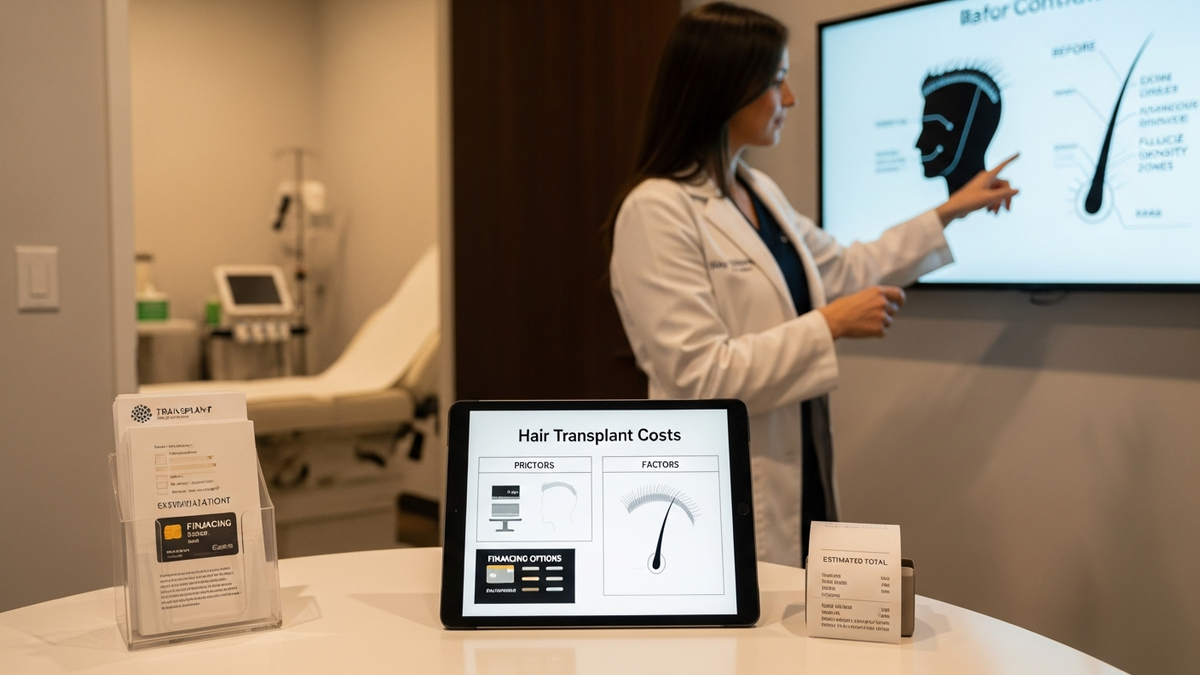
- Get the full itemized estimate in writing (procedure, meds, follow-ups).
- Confirm the payment schedule and whether interest applies.
- Ask about refund or cancellation policies tied to medical availability.
- Verify what happens if you need additional grafts or a second session.
Beware of “too good to be true” pricing
If a quote is unusually low, it may omit steps that protect graft quality or patient comfort. In hair restoration, quality control matters because graft survival and placement are sensitive to technique and handling.
What results should you expect (and when)?
Hair transplant outcomes develop over time. Knowing the timeline helps you evaluate whether your results are on track and reduces anxiety during the early months.
Typical growth phases
- First weeks: healing of extraction and implantation sites
- Weeks 6–12: possible shedding (often temporary) as follicles transition
- Months 3–6: early growth becomes visible
- Months 6–12: thicker, more mature hair appearance
- 12–18+ months: final density and refinement for many patients
Why this matters for cost: If you’re paying for density and long-term coverage, you want a clinic that plans for realistic progression and supports you during the growth timeline.
Questions to ask during your consultation (cost-focused)
Use this checklist to ensure your quote accurately reflects your needs. This is one of the most effective ways to understand the costs hair transplant in a way that’s comparable across clinics.
Pricing clarity
- Is the price based on grafts, time, or a package?
- Does the quote include anesthesia, medications, and follow-up visits?
- What is the revision/touch-up policy?
Medical and aesthetic planning
- What donor area will you use, and how do you protect donor safety?
- How will you design the hairline and density pattern for natural blending?
- How do you account for ongoing hair loss progression?
Team and technique
- Who performs extraction and implantation steps?
- What technology or protocols support graft handling quality?
- How is aftercare managed day-by-day?
Related procedures people often consider (and why it matters)
Some patients exploring facial aesthetics and rejuvenation also consider hair restoration as part of a broader confidence plan. While each procedure has its own pricing, understanding the clinic’s specialization can help you evaluate experience and communication quality.
Examples of complementary aesthetic services
- If you’re also considering facial rejuvenation, you may review a Facelift consultation approach to see how the clinic structures patient education and expectations.
- Some patients ask about Blepharoplasty for age-related changes alongside hair restoration planning.
- For those with eyebrow thinning, an eyebrow transplant may be part of a cohesive facial framing strategy.
How to find trustworthy hair transplant pricing online
Online pricing can be useful, but it’s often incomplete. To evaluate credibility, look for transparent methodology and consistent results documentation.
Red flags
- Quotes without graft estimates or scalp evaluation
- No discussion of donor limitations or realistic density expectations
- Before-and-after photos without context
- Limited information about aftercare and follow-up
Green flags
- Itemized estimates and clear inclusion/exclusion lists
- Surgeon-led planning and documented protocols
- Evidence of patient education and long-term follow-up support
- Clear explanation of FUE and FUT differences
If you’re comparing options, you can also explore a hair transplant service overview here: hair transplant. Use it as a starting point, then confirm details directly with a qualified clinic.
Statistics and evidence-based context
Hair loss is common, and the demand for hair restoration continues to grow. While specific “costs hair transplant” vary by region and clinic, it helps to understand the broader landscape of hair loss and treatment adoption.
Hair loss prevalence
According to the American Academy of Dermatology (AAD), androgenetic alopecia affects a large portion of men and women over their lifetime, making pattern hair loss one of the most common forms of hair loss. Source: American Academy of Dermatology (AAD), patient education resources on hair loss and androgenetic alopecia (accessed 2026).
What “graft survival” depends on
While outcomes depend on many variables, medical literature emphasizes that technique, graft handling, and recipient site preparation influence results. Source: International Society of Hair Restoration Surgery (ISHRS) educational materials on hair restoration principles (accessed 2026, content overview).
Why you should plan for ongoing hair loss
Many dermatology guidelines note that androgenetic alopecia can be progressive, and treatment plans often consider both surgical and non-surgical strategies. Source: American Academy of Dermatology (AAD) guidance on hair loss management (accessed 2026).
Cost planning for Beverly Hills & Los Angeles patients
If you’re in Beverly Hills or Los Angeles, you may have the advantage of easier follow-up visits compared with traveling internationally. That can reduce travel time and help you stay consistent with aftercare and monitoring.
Clinics serving the region often provide consultations and surgery planning with a focus on patient education. For example, TestBiz Hair Clinic (serving clients worldwide) offers FUE and FUT procedures using advanced technology and experienced surgeons, which can be especially helpful when you’re trying to align your graft plan with realistic density goals.
CTA: Get a transparent hair transplant cost estimate
If you want clarity on the costs hair transplant for your specific hair loss pattern, the fastest path is a consultation that includes donor evaluation and graft planning. A trustworthy clinic will provide an itemized estimate and explain what’s included.
Next steps:
- Schedule a consultation and request an itemized quote (procedure, meds, follow-ups).
- Bring your current hair loss history and any prior treatments (topicals, oral meds, supplements).
- Ask the cost-focused questions listed above to compare options fairly.
At FUEsion Hair Clinics, we encourage patients to prioritize medical quality and transparent planning—not only the lowest price. If you’re considering hair restoration, start by getting a graft plan you can understand.
Frequently Asked Questions
How much do costs hair transplant usually range?
Hair transplant pricing varies widely based on graft count, procedure type (FUE vs FUT), surgeon involvement, and what’s included in the package. The most accurate way to estimate your cost is to receive a graft plan after donor and scalp evaluation.
Does FUE cost more than FUT?
In many cases, FUE may be priced higher due to the extraction workload and individualized graft handling. However, the “best value” depends on your donor characteristics, coverage goals, and the clinic’s inclusion of anesthesia and follow-up care.
What’s included in a typical hair transplant quote?
A complete quote should clarify consultation fees, anesthesia, medications, post-op visits, and aftercare guidance. If follow-up visits or revision policies aren’t specified, ask for them in writing.
Are there financing options for hair transplant surgery?
Many clinics offer payment plans or third-party financing. Before agreeing, confirm the total cost with interest (if any), the payment schedule, and what happens if you need an additional session.
How long does it take to see final results?
Most patients notice early growth around months 3–6, with more mature density developing over months 6–12. Final refinement can take 12–18+ months depending on graft survival and your hair cycle.
Related reading
Explore additional educational content from FUEsion Hair Clinics to support your decision-making:
Professional Disclaimer
This content is provided for general educational purposes only by FUEsion Hair Clinics. It is not a substitute for professional advice, diagnosis, or treatment. Readers are advised to consult qualified professionals for personalized recommendations.
Medical Information Disclaimer
This content is provided for general educational purposes only by FUEsion Hair Clinics. It is not a substitute for professional advice, diagnosis, or treatment. Readers are advised to consult qualified professionals for personalized recommendations.