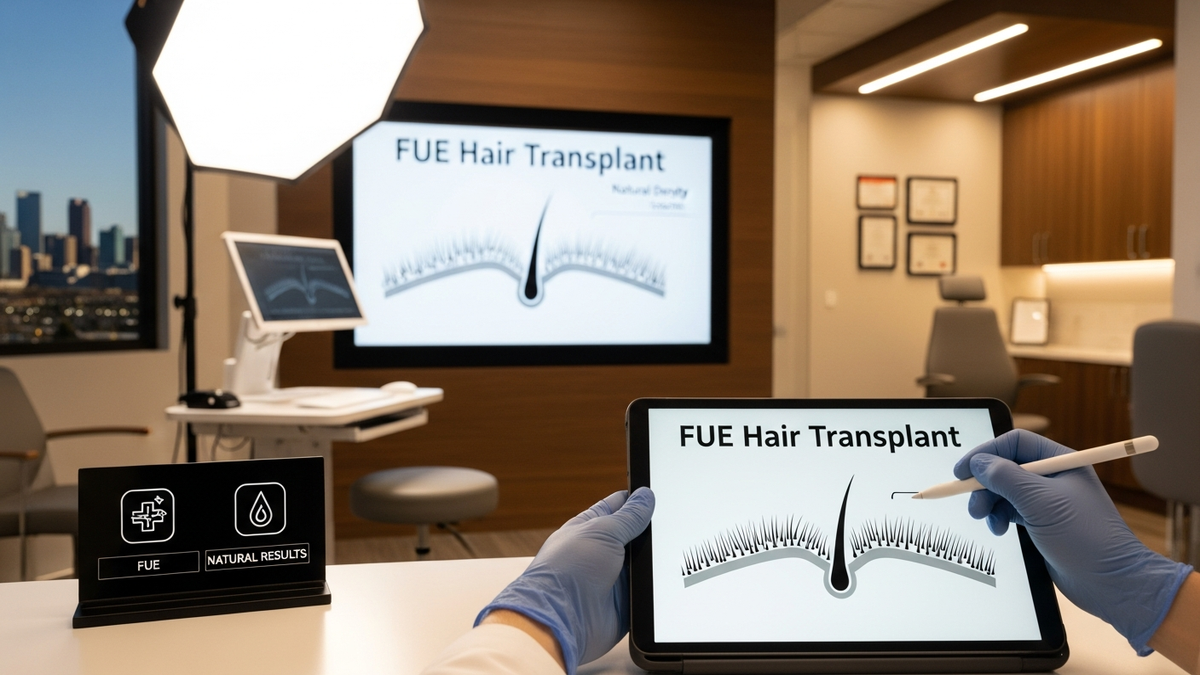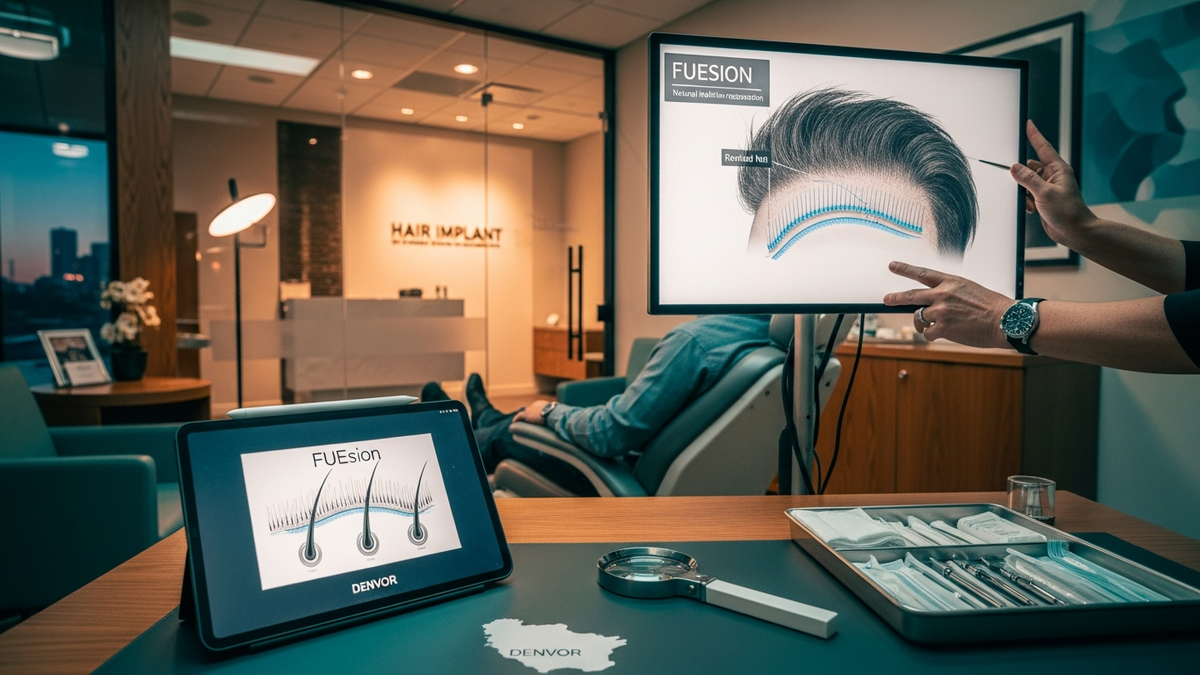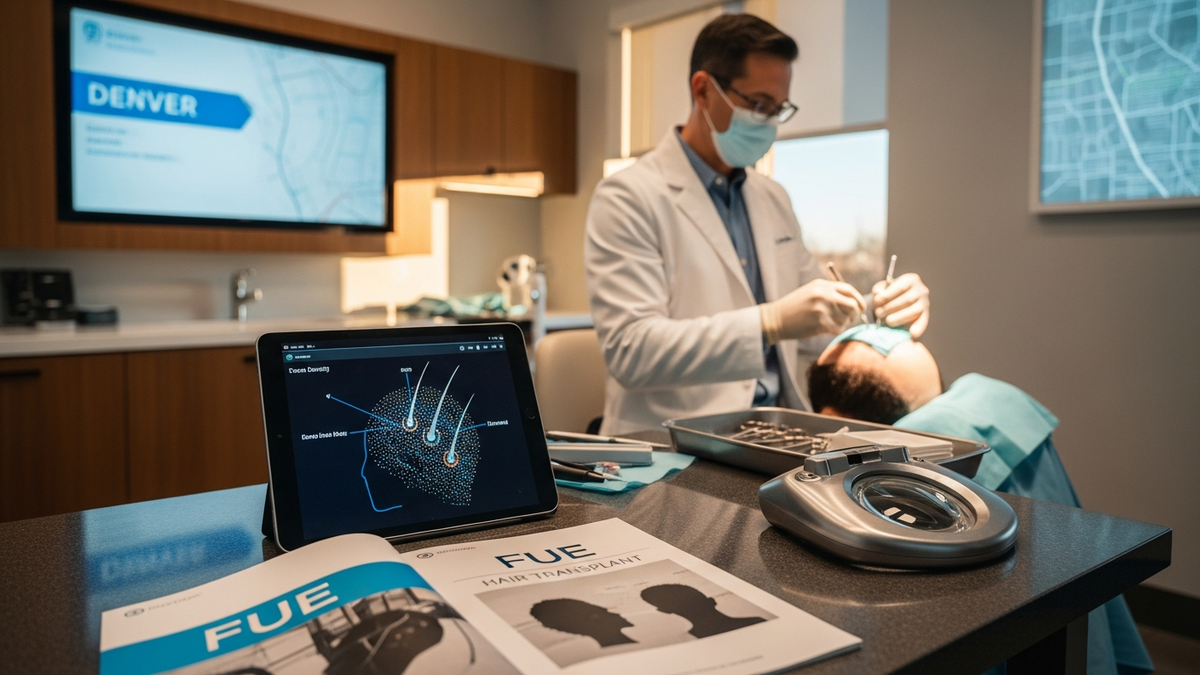
At FUEsion Hair Clinics, we help people across the Denver area understand their options for denver hair transplant surgery—from whether a follicular unit extraction (FUE) approach is right for them, to what to expect before, during, and after treatment. Our goal is simple: natural-looking coverage that looks like it belongs to you, not a generic “hair system” result.
If you’re comparing clinics, you’ll quickly notice that “FUE” can mean very different things. The technique, the planning, and the surgeon-led execution matter. That’s why we combine meticulous surgical artistry with advanced planning support, including our AI & AR-assisted FUE workflow, so you can make a confident decision about your hair restoration journey.

Why people in Denver choose hair transplant surgery
Hair loss is personal—and in Denver, we often hear a common theme: people want results that look natural in real life, not just in photos. Whether thinning is showing at the crown, the temples are receding, or the hairline has softened over time, the right procedure can restore confidence and improve how you feel about your appearance.
Hair transplant surgery is also appealing because transplanted follicles are designed to grow for the long term when harvested and implanted correctly. That said, outcomes depend on more than the word “transplant.” Your donor quality, extraction strategy, implantation angle, and the surgeon’s artistry all influence density, hairline design, and overall realism.
What “denver hair transplant surgery” should include
When you’re searching for denver hair transplant surgery, we recommend you evaluate the full care pathway—not just the day of surgery. A premium experience includes:
- Surgeon-led planning using a detailed donor assessment and hair loss mapping
- Precise FUE extraction strategy that preserves donor appearance
- Thoughtful implantation (depth, angle, direction, and spacing)
- Structured aftercare to support healing and maximize results
- Clear expectations for timelines (initial shedding vs. regrowth)
In our Denver-area conversations, we also see that patients want transparency: how many grafts are likely needed, what coverage areas are realistic, and how to plan around lifestyle and work schedules.
Who is a good candidate for FUE hair transplant surgery?
FUE is commonly chosen for its minimally invasive nature and the ability to harvest individual follicular units. However, the best candidate is not simply “anyone with hair loss.” At FUEsion Hair Clinics, we consider:
Common candidacy patterns we see
- Male pattern hair loss (often progressing from Norwood II through higher stages) with sufficient donor density
- Receding hairline at the temples and thinning around the frontal scalp
- Crown thinning where density has reduced over time
- Patients seeking natural hairline restoration rather than “overfilled” results
Factors that influence your graft plan
Even when two people have similar visible thinning, their graft needs can differ. We evaluate donor caliber and density, follicle orientation, scalp characteristics, and your long-term hair loss pattern. If you’re considering a procedure in the Denver region, we’ll also discuss how your lifestyle and healing priorities may affect scheduling and aftercare.
When FUE may not be the right first step
Some patients may benefit from non-surgical hair restoration first, or from a combined strategy. For example, early-stage thinning might respond to medical management and supportive therapies. We’ll explain options clearly during your consultation, so you understand what’s realistic for your specific goals.
How FUE hair transplant surgery works (the FUEsion approach)
Most people know the general concept: follicles are extracted from the donor area and implanted into thinning or balding zones. The difference comes from how the process is executed—especially the details of extraction planning and implantation geometry.
Step 1: Advanced donor assessment and extraction mapping
Before any extraction begins, our surgeons perform a detailed microscopic analysis of the donor region to identify the highest-quality follicular units. We look at density, calibre, curvature, and grouping so we can create an extraction map that aims to maximize yield while preserving the donor area’s natural appearance.
Step 2: Precision extraction with custom-calibrated tools
We use micro-punch tools calibrated to your follicular characteristics. This supports minimal trauma to surrounding tissue and helps reduce transection risk—because graft quality is influenced by how follicles are handled from the start.
Step 3: Advanced graft processing and preservation
Once extracted, grafts are handled using protocols designed to support graft viability. Our team follows strict workflow standards to maintain consistency from processing through implantation.
Step 4: Implantation design for natural direction and density
Implantation is where artistry meets biology. Hairline design, implantation depth, angle, and spacing all affect realism. A natural result typically requires careful planning so the new growth blends with your existing hair pattern.
To understand more about our surgical workflow, you can review Hair Transplant Procedure.
Denver hair transplant surgery timeline: what to expect
People often ask, “When will I see results?” The honest answer is that hair restoration is a process. Here’s a helpful overview of what many patients experience after FUE:
Immediately after surgery (days 0–7)
- Local anesthesia is used during the procedure for comfort.
- You’ll follow aftercare instructions for washing, medications, and activity limits.
- Most patients return to routine work within about a week, depending on individual healing and graft volume.
Early shedding and adjustment (weeks 2–8)
It’s common for transplanted hairs to shed as part of the natural growth cycle. This can be alarming, but it’s often a normal part of the regrowth phase. Your care plan will help you track milestones appropriately.
Regrowth phase (months 3–6)
Many patients begin noticing early regrowth and improved density. The hair may look finer or less uniform at first, and that’s expected.
Full results (around 12–18 months)
Full cosmetic results typically become clearer as thickness improves and the hairline matures. Patience is essential—because the goal is permanent, natural-looking coverage.
Advanced hair transplant technology: what makes it different?
Technology in hair restoration should do more than “wow” in marketing—it should improve planning precision and consistency. At FUEsion Hair Clinics, we use advanced workflow support as part of our AI & AR-assisted FUE process to help optimize key stages, from assessment and extraction planning to implantation execution.
Planning support that helps surgeons design more accurately
In practice, technology can support better visualization and structured decision-making. For many patients, this means clearer expectations for hairline shape, coverage areas, and density goals.
Learn more about our workflow
You can explore Advanced Hair Transplant Technology to see how our approach supports surgical precision.
We also invite you to try our planning tools before your consultation, including an AI Result Simulator and a Cost Calculator to help you understand what might be possible.
Hair transplant before and after: how to interpret results
When you browse Hair Transplant Before and After, focus on consistency and realism rather than only “density.” The most meaningful comparisons show:
- Hairline design that matches facial proportions
- Blending with existing hair direction and texture
- Natural progression from early regrowth to mature thickness
- Donor preservation that avoids an unnatural look at the back and sides
Also remember that lighting, hair length, and photography angles can change how results appear. That’s why we prioritize surgeon-guided planning and transparent expectations from day one.
Non-surgical hair restoration vs. surgical options
Not everyone needs (or wants) surgery right away. Non-surgical options can be valuable for certain stages of hair thinning, for maintenance, or for patients who want to explore less invasive approaches.
When non-surgical may be a strong first step
If your hair loss is early or your priority is slowing progression while improving density, non-surgical care may support your goals. At FUEsion Hair Clinics, we discuss both surgical and non-surgical pathways so you can make an informed decision.
Explore our non-surgical program
To learn more, review Non-surgical Hair Restoration.
Beyond the scalp: beard and eyebrow restoration
Hair restoration isn’t limited to the top of the head. Many patients in the Denver area also ask about facial hair and shaping—especially when they want a more balanced look.
Beard transplant
If you’re working toward fuller beard coverage, a beard transplant can help create a defined, natural pattern. We’ll evaluate your donor options and design the placement to complement your face shape. For details, see Beard Transplant.
Eyebrow transplant
Eyebrow restoration requires exceptional precision because eyebrows are highly visible and grow in unique directions. We design for natural symmetry and realistic thickness. Explore Eyebrow Transplant.
Female hair transplant
Women may experience thinning due to hormonal changes, genetics, or other medical factors. A female hair transplant plan should respect natural scalp coverage patterns and hairline aesthetics. Learn more via Female Hair Transplant.
FUEsion Assurance: why we emphasize accountability
Hair restoration is an investment—emotionally and financially. That’s why we emphasize accountability through our FUEsion Assurance/Warranty. Our team believes your confidence should be supported by clear standards, surgeon oversight, and a commitment to patient care.
We also encourage patients to ask questions during their consultation. A great clinic should be able to explain the plan, the expected timeline, and how aftercare supports long-term success.
Denver location considerations: choosing the right clinic experience
When you’re planning denver hair transplant surgery, it helps to consider convenience and continuity of care. You’ll want a team that supports you through consultation, procedure day coordination, and post-procedure guidance.
For patients comparing options, we recommend asking where follow-ups occur, what aftercare support looks like, and how the clinic handles questions during recovery. If you’d like to explore our broader service footprint, review FUEsion Hair Clinics Locations.
To learn more about our philosophy and training foundation, visit About FUEsion Hair Clinics.
What it costs (and what affects your total graft plan)
Many patients search for denver hair transplant surgery pricing, but the most accurate cost is determined by your specific coverage needs. In general, factors that can influence your graft plan include:
- Hair loss pattern and the areas you want to restore
- Donor density and quality
- Desired hairline shape and density goals
- Number of sessions (some patients need staged coverage)
- Time and complexity of implantation strategy
To get a starting point, you can use our Cost Calculator and then schedule a guided consultation for a precise plan.
Hair transplant statistics patients often ask about
Here are a few evidence-based points that can help set expectations:
- Graft survival and technique matter. According to a review published in Dermatologic Surgery, graft handling, extraction, and implantation details can influence outcomes in FUE procedures (see Dermatologic Surgery review on FUE fundamentals).
- Hair restoration is a growth-cycle process. The shedding phase and regrowth timeline are consistent with how transplanted follicles transition through their growth cycle (see American Academy of Dermatology (AAD) overview of hair transplant basics).
- Non-surgical options often support maintenance. The AAD notes that medications can help slow hair loss and support stabilization for some patients, which may complement surgical planning (see AAD guidance on androgenetic hair loss).
We share these sources to support your understanding—not to replace a personalized evaluation. Your surgeon’s assessment remains the deciding factor.
How to prepare for your Denver hair transplant surgery
Preparation can influence comfort and recovery. While your surgeon will provide personalized instructions, these steps are commonly helpful:
Before surgery
- Review your medical history and current medications with your surgeon.
- Plan your recovery window around work, travel, and exercise.
- Prepare for gentle hair care during the early healing phase.
- Ask about post-op logistics—transportation, wash schedule, and follow-up timing.
During consultation
- Bring reference photos of your preferred hairline and density goals.
- Discuss your hair styling habits and how you want to look in everyday life.
- Ask how your donor area will be preserved and how density will be distributed.
Use planning tools to start the conversation
If you want to visualize possibilities, try the AI Result Simulator and then confirm with a surgeon-guided plan.
Aftercare and recovery: maximizing your outcome
Aftercare is where many results are protected. Following your surgeon’s instructions supports healing, reduces avoidable complications, and helps your transplanted follicles settle into their new environment.
Common aftercare priorities
- Gentle washing according to your schedule
- Medication adherence as prescribed
- Avoiding trauma to the grafted area during early healing
- Healthy lifestyle choices that support recovery
When to contact your team
If you notice unusual symptoms, severe discomfort, or unexpected changes, contact your clinic team promptly. We want you to feel supported throughout recovery.
Frequently Asked Questions
How long does denver hair transplant surgery take?
Procedure time varies based on graft count and the complexity of your implantation plan. Many FUE sessions are performed under local anesthesia and can take several hours, with some patients requiring staged coverage. Your surgeon will provide a timeline during consultation after assessing your donor and goals.
Will I have visible scarring with FUE?
FUE typically avoids a linear scar because follicles are extracted individually. The donor area may show small dot-like extraction sites that typically heal over time and can be managed with proper care. Your surgeon can explain expected donor appearance based on your hair length preferences.
When will I see results after a hair transplant?
Many patients notice early changes around the middle months of regrowth, while full cosmetic results often take about 12–18 months. Shedding in the early phase can occur as transplanted hairs transition through their growth cycle. We provide milestone guidance so you know what’s normal.
Is FUE better than other hair transplant methods?
“Better” depends on your anatomy, hair loss pattern, and goals. FUE is popular for its minimally invasive extraction approach and ability to preserve donor appearance. At FUEsion Hair Clinics, we recommend the approach that best supports natural aesthetics and long-term viability for your specific case.
Do I need a non-surgical option before surgery?
Not necessarily. Some patients benefit from non-surgical hair restoration for maintenance or early-stage thinning, while others are ready for surgical restoration. During your consultation, we’ll discuss both pathways so you understand what makes the most sense for your timeline and expectations.
Take the next step: book your Denver consultation
If you’re considering denver hair transplant surgery, the best way to move forward is with a surgeon-led evaluation. We’ll map your hair loss pattern, review donor quality, discuss hairline and density goals, and provide an individualized plan—including graft estimates and a clear path forward.
For patients who want to start with our Denver-area team, you can also reach out through FUEsion Hair Clinics Denver to begin the conversation.
Ready to explore what’s possible for your hair restoration goals?
Book ConsultationProfessional Disclaimer
This content is provided for general educational purposes only by FUEsion Hair Clinics. It is not a substitute for professional advice, diagnosis, or treatment. Readers are advised to consult qualified professionals for personalized recommendations.
Medical Information Disclaimer
This content is provided for general educational purposes only by FUEsion Hair Clinics. It is not a substitute for professional advice, diagnosis, or treatment. Readers are advised to consult qualified professionals for personalized recommendations.