Female hair transplant is no longer a niche option—it’s a medically guided, procedure-specific pathway for women who want natural-looking density when genetics, hormonal changes, traction, autoimmune conditions, or aging affect hair coverage. If you’re exploring whether a transplant is right for you, this guide explains who it helps, what happens during FUE and FUT, when timing matters, where results show up, and how to choose a surgeon and plan that matches your scalp, hair characteristics, and goals.
At FUEsion Hair Clinics, we focus on helping readers make informed decisions with clear, evidence-based guidance—so you can approach your consultation with confidence.

What a female hair transplant actually does
A female hair transplant moves hair follicles (or follicular units) from a donor area—typically the back and sides of the scalp—into thinning or balding regions. The goal is to create a pattern that looks consistent with your natural hairline, scalp visibility, and part width.
Unlike many “quick fix” solutions, a transplant is a surgical approach designed to address the root cause of visible thinning by relocating follicles that are genetically resistant to certain patterns of loss.
Why women’s hair loss patterns differ
Many women experience diffuse thinning (often described as “androgenetic alopecia” in clinical settings), widening of the part, or reduced density across the top of the scalp. That means the strategy for a female hair transplant often emphasizes density restoration and distribution, not only a traditional male-style hairline design.
What “natural results” means in practice
Natural results depend on multiple technical choices: graft selection, angulation, spacing, depth, and—critically—your existing hair caliber and curl pattern. A skilled plan accounts for how your hair falls when dry, how it behaves when styled, and where scalp show-through is most noticeable.
Who is a good candidate for a female hair transplant?
In most cases, the best candidates have stable hair loss, adequate donor density, and a realistic expectation of what transplant surgery can and cannot change.
Common reasons women consider a transplant
- Genetic thinning with progressive density loss
- Hormonal or life-stage changes (for example, postpartum shedding that evolves into longer-term thinning)
- Traction-related hair loss from tight hairstyles
- Scarring hair loss may require specialized approaches (and sometimes different surgical planning)
- Patchy loss after certain inflammatory or autoimmune conditions—depending on stability
Clinical factors that influence candidacy
When evaluating eligibility, surgeons commonly assess:
- Donor availability (density and quality)
- Pattern and stability of thinning
- Scalp health (inflammation, infection, or dermatitis)
- Hair characteristics (thickness, wave/texture, shedding history)
- Medication history (whether you’ve used therapies like minoxidil or other treatments)
Important: If your hair loss is actively progressing quickly, your surgeon may recommend stabilizing first with medical therapy and wait for a more stable period before transplanting.
FUE vs FUT for women: what’s the difference?
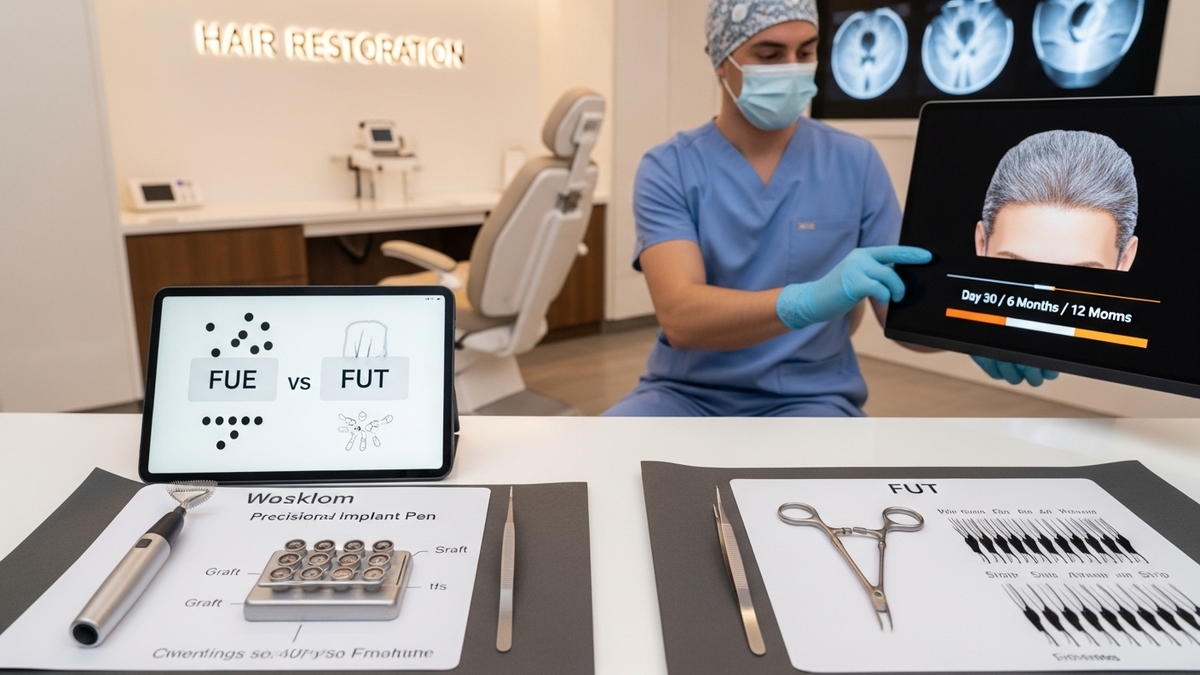
Two common techniques for transplanting follicles are FUE (follicular unit extraction) and FUT (follicular unit transplantation, often via strip harvesting). Both aim to place grafts in thinning areas, but they differ in how grafts are harvested.
FUE (Follicular Unit Extraction)
In FUE, individual follicular units are extracted from the donor region using small punch tools. Many patients prefer FUE because it can reduce the appearance of a linear scar, and it often supports shorter styling restrictions depending on your donor characteristics and technique.
Who it may suit: Women who want minimal visible donor scarring, who prefer certain donor management options, or who have donor patterns that make FUE advantageous.
FUT (Follicular Unit Transplantation)
In FUT, a strip of scalp is removed from the donor area and then divided into follicular units. FUT can be an efficient method for high graft counts in selected cases, but it leaves a linear donor scar that may require consideration if you wear your hair very short.
Who it may suit: Patients who need a larger number of grafts and have donor characteristics suited to strip harvesting.
How to decide between FUE and FUT
Your best choice is individualized. In a high-quality consult, your surgeon should explain:
- Estimated graft needs for your density goals
- Donor quality and how it affects harvest strategy
- Scar management expectations (donor and recipient)
- Expected timeline for shedding and regrowth
- How the surgeon designs your pattern for a feminine, natural look
For a deeper look at current transplant technology and services, you can explore hair transplant options and procedural pathways.
The consultation: what happens before your female hair transplant
A thorough pre-op process is essential. A reputable clinic will typically combine history-taking, scalp evaluation, and documentation to design a realistic surgical plan.
1) Medical and hair-loss history
Expect questions about onset timing, shedding patterns, family history, menstrual/hormonal history (as relevant), autoimmune disease history, scalp symptoms (itching, scaling, pain), and prior treatments. This information helps determine whether thinning is stable or active.
2) Scalp exam and donor assessment
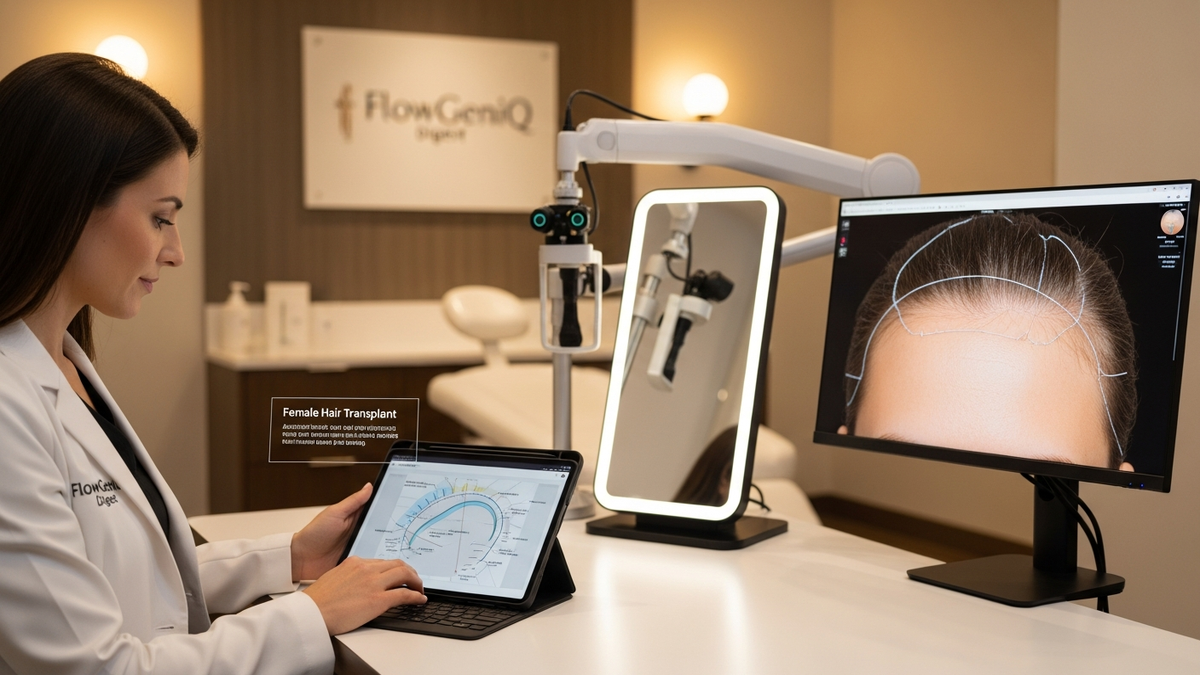
Surgeons evaluate donor density, scalp laxity, and how your hair grows. They may use dermoscopy and standardized photography to track baseline coverage.
3) Graft planning and pattern design
For women, pattern planning may emphasize restoration of density across the crown/top and along the part line. Your surgeon should discuss how your hairline and part will look in both styled and natural conditions.
4) Treatment plan alignment
Many patients benefit from a combined approach: surgical placement plus post-op medical maintenance. If appropriate, your surgeon may coordinate with dermatology for ongoing therapy.
How the procedure works (step-by-step)
While protocols vary by clinic, the core workflow is consistent: extract donor follicles, prepare recipient sites, and place grafts to match your hair direction and density goals.
Typical day-of process
- Pre-op marking and anesthesia: Your surgeon marks planned recipient zones and administers appropriate anesthesia.
- Donor harvesting: For FUE, individual units are extracted; for FUT, a strip is removed and processed.
- Recipient site creation: Small channels are created based on the planned angulation and depth.
- Graft placement: Grafts are inserted with careful spacing to support density without an unnatural “pluggy” look.
- Post-op dressing and instructions: You receive aftercare guidance tailored to your technique and scalp condition.
What you’ll feel during and after
Most patients experience pressure rather than sharp pain during the procedure due to local anesthesia. After surgery, discomfort is usually manageable with prescribed guidance. Swelling and mild scalp sensitivity are common in the first days.
Recovery timeline: when women typically see results
Hair growth occurs in cycles, so results develop gradually. Planning for the timeline helps you avoid premature judgment.
Early phase (first days to weeks)
- Days 1–3: Expect mild swelling and tenderness; follow wash and medication instructions.
- Days 7–14: Crusting and shedding may begin; scabs typically fall off as instructed.
- Weeks 3–6: Many patients experience visible shedding of transplanted hairs (often called “shock loss” or temporary shedding).
Mid phase (months 3–6)
New growth may start to show as hairs transition from fine to more visible strands. Density is usually not at final appearance yet.
Long phase (months 6–12+)
Fuller cosmetic results often take longer, commonly around 9–18 months depending on graft survival, hair caliber, and your overall hair-loss stability.
Where results show: You’ll typically see the greatest improvement in the recipient zones where grafts were placed—especially where scalp show-through was most noticeable.
Risks, side effects, and how to minimize them
Any surgical procedure involves risks. The goal is to reduce preventable complications through careful technique and disciplined aftercare.
Potential risks
- Temporary numbness or soreness in donor/recipient areas
- Scarring (donor scarring varies by FUE vs FUT)
- Infection (usually low risk with proper hygiene and follow-up)
- Folliculitis (can occur during healing)
- Uneven density if planning or placement is suboptimal
- Persistent shedding if underlying hair-loss activity continues
Actionable ways to minimize risk
- Follow all post-op washing, medication, and activity instructions
- Attend scheduled follow-ups for graft monitoring
- Maintain scalp health (treat dermatitis or inflammation early)
- Discuss realistic graft counts and density expectations
- Ask about clinic protocols for infection prevention and aftercare support
At TestBiz Hair Clinic, a premium hair transplant clinic offering both FUE and FUT, the emphasis is on state-of-the-art technology and experienced surgical teams to support natural-looking outcomes for men and women worldwide.
Costs and factors that affect pricing
Pricing for a female hair transplant varies widely and is typically influenced by technique, graft count, surgeon experience, and the complexity of your pattern design.
Common cost drivers
- Graft number: More grafts generally mean more time and cost.
- Technique: FUE vs FUT may price differently depending on clinic protocols.
- Surgeon involvement: Clinics that emphasize surgeon-led planning and placement may cost more.
- Adjunct services: Imaging, post-op medications, and follow-up visits can be included or separate.
How to evaluate value (not just price)
When comparing quotes, ask how the clinic determines graft targets and what outcomes are realistic for your hair caliber and donor quality. A lower price may reflect fewer grafts, less customization, or different standards for placement and aftercare.
Choosing the right surgeon and clinic
For women, selection criteria should include both medical competence and an artistic understanding of feminine density restoration.
What to look for in a consultation
- Transparent planning: Clear explanation of donor use, recipient design, and expected density.
- Evidence of natural results: Photos that match your hair texture and lighting conditions.
- Documented process: Standardized photography and follow-up schedule.
- Aftercare support: Clear guidance on washing, medications, and follow-up checks.
- Patient education: A clinic that explains both benefits and limitations.
Example of specialization and patient education
In Los Angeles and Beverly Hills, some head-and-neck and facial plastic surgeons also offer hair restoration services as part of a broader approach to natural appearance. For instance, Dr. Hootan Zandifar is known for an honest, trustworthy, and compassionate approach with a focus on education and natural-looking solutions. While his primary practice is facial plastic and reconstructive surgery, his clinic also highlights patient education and surgical excellence. If you’re in the Los Angeles area, you may find it helpful to discuss your goals with a surgeon who understands facial aesthetics and proportion.
To explore related facial aesthetic procedures that some patients consider alongside hair restoration, see Facelift and Blepharoplasty.
Frequently asked questions
How long does a female hair transplant take?
Most procedures last several hours, with variation based on graft count, technique (FUE or FUT), and how complex your density restoration plan is. Your surgeon can estimate a time window during consultation after reviewing your donor and recipient needs.
Will my transplanted hair fall out first?
Yes—many patients experience temporary shedding after surgery as hairs transition through growth cycles. This is often a normal part of the process, and regrowth typically becomes more noticeable over subsequent months.
Is a female hair transplant only for baldness?
No. Many women seek transplant surgery for diffuse thinning, widened parts, and reduced crown density rather than complete baldness. The plan is tailored to your pattern of hair loss and your cosmetic goals.
Can I combine a transplant with other procedures?
Some patients consider other facial aesthetic procedures, but timing depends on your healing and priorities. Discuss your full surgical schedule with your surgeon to avoid overlapping recovery periods.
What should I do to prepare for surgery?
Preparation usually includes following medication guidance, arranging time off work, and planning for post-op scalp care. Ask your clinic for a detailed checklist and follow it closely to reduce complications and support graft survival.
Evidence and key statistics to set expectations
Understanding hair growth cycles and hair-loss biology can help you interpret your timeline and maintain realistic expectations.
Hair growth is cyclical
According to the National Institute of Arthritis and Musculoskeletal and Skin Diseases (NIAMS), hair growth occurs in cycles, and understanding these phases helps explain why shedding and regrowth can fluctuate over time (see NIAMS).
Female-pattern hair loss is common
Research summarized by the American Academy of Dermatology (AAD) notes that androgenetic alopecia is a common cause of thinning in both men and women, and women may experience gradual density reduction (see American Academy of Dermatology).
Hair transplant outcomes depend on graft survival and stability
Clinical outcomes are influenced by surgical technique, graft handling, and the stability of the underlying hair-loss condition. As a result, many reputable clinics emphasize stabilization with appropriate medical therapy when indicated—before and after surgery.
Practical takeaway: When you’re planning your female hair transplant, focus on the combination of (1) donor quality, (2) recipient design, and (3) ongoing maintenance—rather than only on the surgery day.
CTA: Get a personalized plan for your female hair transplant
If you’re considering a female hair transplant, the next best step is a consultation that evaluates your donor supply, pattern of thinning, and realistic density goals. A high-quality evaluation can clarify whether FUE, FUT, or a non-surgical stabilization approach is most appropriate.
Ready to start? Contact TestBiz Hair Clinic to discuss FUE and FUT options with a team that prioritizes advanced technology and experienced surgeons. If you’re located in Los Angeles or nearby, you can also explore consultations with head-and-neck and facial plastic specialists who emphasize natural appearance and patient education.
How to prepare for your consultation (quick checklist)
Use this checklist to make your appointment more productive and help your surgeon design an accurate plan.
Before the appointment
- Bring a list of medications and supplements you’re currently taking
- Share your hair-loss timeline (when thinning started and how it progressed)
- Consider taking standardized photos in consistent lighting and parting
- Track any scalp symptoms (itching, scaling, tenderness)
- Note prior treatments you’ve tried and how you responded
Questions to ask your surgeon
- Am I a good candidate for FUE or FUT based on my donor supply?
- How will you design a feminine, natural distribution across my part and crown?
- What is my expected timeline for shedding and regrowth?
- What maintenance plan will you recommend to support long-term stability?
- What follow-up schedule and aftercare support do you provide?
Tip: If you’re unsure about stability, ask whether your clinic recommends medical stabilization before surgery.

Note: Your individual healing and regrowth timeline can vary based on technique, graft survival, and whether hair loss remains active.
Professional Disclaimer
This content is provided for general educational purposes only by FUEsion Hair Clinics. It is not a substitute for professional advice, diagnosis, or treatment. Readers are advised to consult qualified professionals for personalized recommendations.
Medical Information Disclaimer
This content is provided for general educational purposes only by FUEsion Hair Clinics. It is not a substitute for professional advice, diagnosis, or treatment. Readers are advised to consult qualified professionals for personalized recommendations.