Author: FUEsion Hair Clinics Editorial Team
Expert attribution: This guide is informed by clinical best practices and surgical perspectives from Dr. Hootan Zandifar, MD, FACS, Board Certified Facial Plastic & Reconstructive Surgeon.
Hair hair loss treatment can feel overwhelming because “hair loss” isn’t one single condition—it’s a spectrum of causes, patterns, and timelines. The most effective approach depends on who you are (age, sex, genetics), what type of hair loss you have (androgenetic, telogen effluvium, scarring causes, traction-related loss, etc.), when it started, where it’s showing up (temples, crown, diffuse thinning, patches), and why it’s happening (hormonal sensitivity, inflammation, nutritional issues, stress, medications, or underlying scalp disease).
In this FUEsion Hair Clinics guide, you’ll learn how clinicians evaluate hair thinning, what treatments have the strongest evidence, and how to build a safe, realistic plan—whether you’re starting with topical and systemic options, adding regenerative therapies, or considering a hair transplant when appropriate.

Hair hair loss treatment starts with the right diagnosis
Before you compare medications, procedures, or supplements, the most important step is confirming the cause. Two people can both say “I’m losing hair,” yet one may have androgenetic alopecia (pattern hair loss) while the other has a reversible shedding phase triggered by stress, illness, or hormonal change.
Common patterns and what they may indicate
- Gradual thinning at the crown/vertex: often consistent with androgenetic alopecia.
- Temple recession and widening part: frequently pattern-related hair thinning.
- Sudden diffuse shedding: may align with telogen effluvium (often after stress, surgery, fever, or major life events).
- Patchy hair loss: could be alopecia areata (autoimmune) and needs prompt evaluation.
- Scaly, itchy, painful scalp or visible scarring: raises concern for scarring alopecias—treatment urgency matters.
How clinicians evaluate hair loss
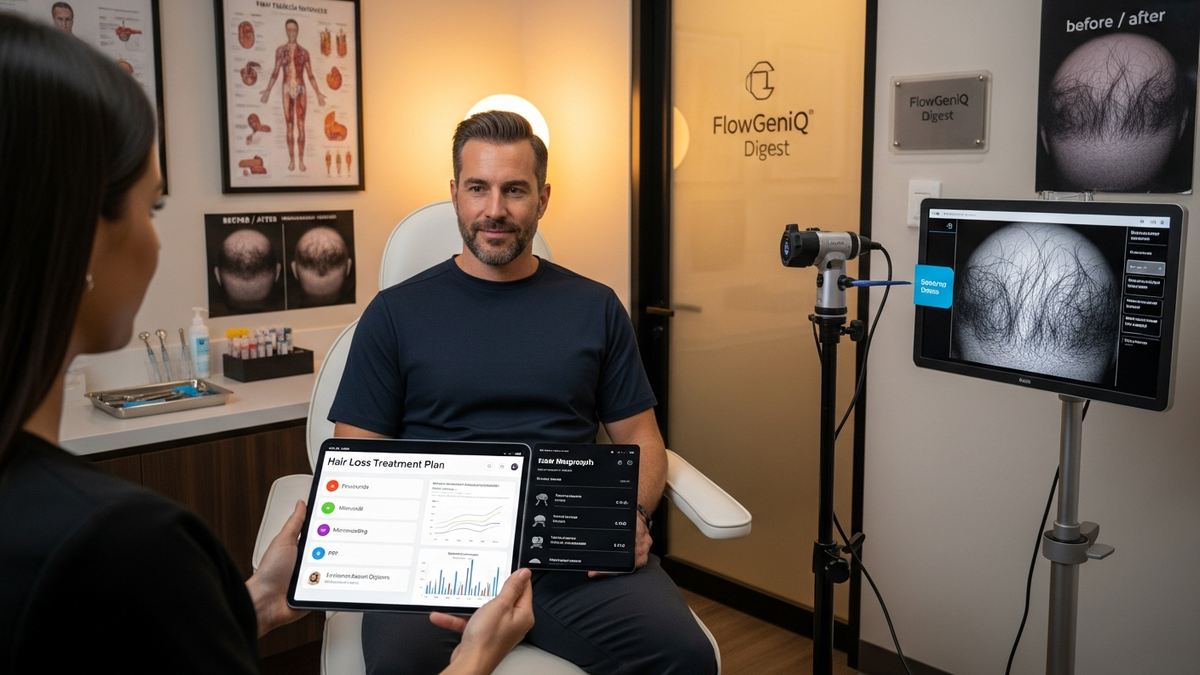
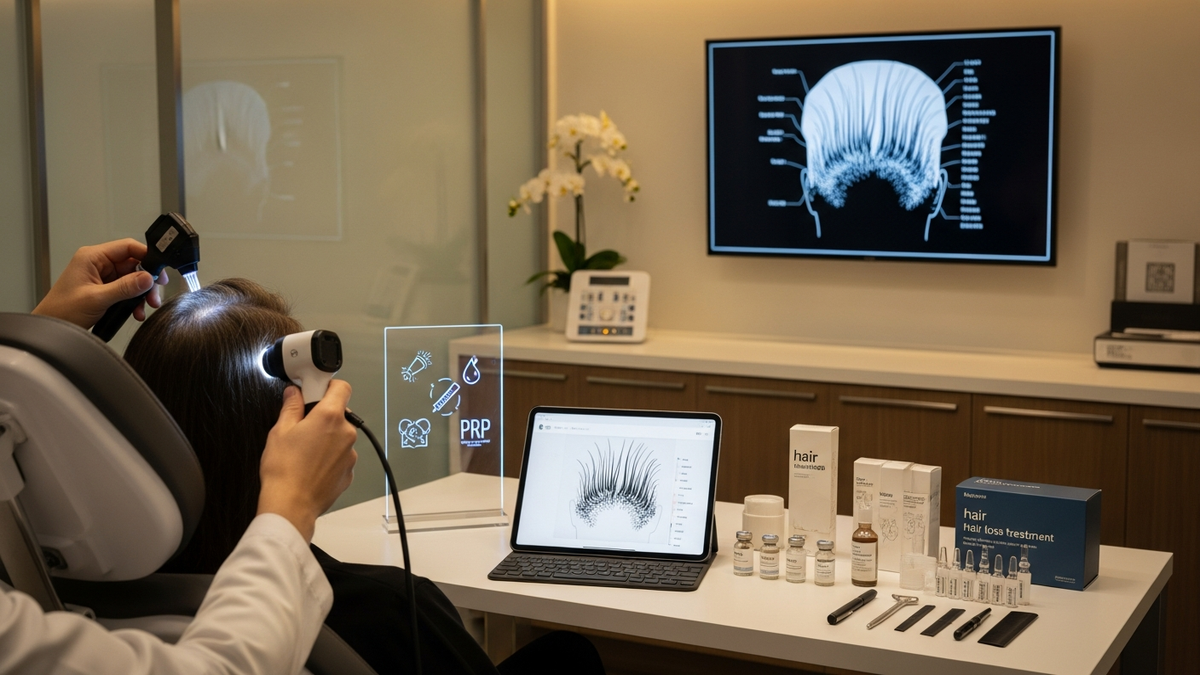
In a typical workup, a dermatologist or hair specialist may review your history and perform scalp exams. Many practices also use tools such as dermoscopy and may perform lab testing when indicated (for example, iron studies, thyroid function, vitamin D, or other markers depending on your situation).
Actionable tip: Bring a short timeline to your appointment: when you noticed shedding, whether it’s getting worse, any new medications, recent illness or stress, family history, and how your hair density has changed over time.
Evidence-based medical options for hair thinning
For many forms of non-scarring hair loss, medical therapy can slow progression and, for some people, improve density. Medical treatments are often the “foundation” before escalating to procedural or surgical options.
Topical and oral medications
Clinicians commonly use FDA-approved treatments for androgenetic alopecia. While exact regimens should be individualized, the general principle is to use therapies that target the mechanisms behind pattern hair loss and to give them adequate time to work.
According to the American Academy of Dermatology (AAD), treatments for pattern hair loss can help slow hair loss and may regrow hair, but results typically take months rather than weeks (see American Academy of Dermatology hair loss treatment overview, accessed 2026-06-17).
Timeframe reality check: Hair cycles are slow. It’s common to evaluate outcomes at 3–6 months for early changes and 9–12 months for more meaningful density assessment, depending on the plan.
When labs and supplements are appropriate
Supplements are not a universal solution. If you’re deficient in iron, vitamin D, or other nutrients, correcting the deficiency may improve shedding or hair quality. However, taking high-dose supplements without testing can be ineffective or unsafe.
Actionable recommendation: Ask your clinician whether lab work is appropriate for your pattern and timeline of hair loss—especially if shedding started abruptly.
Regenerative and scalp-focused therapies
Procedural treatments can support hair health by improving scalp environment, reducing inflammation in select cases, and promoting follicle activity. These options are often used alongside medications for better synergy.
PRP (platelet-rich plasma)
PRP involves concentrating platelets from your blood and applying them to the scalp. Many patients pursue PRP as an adjunct therapy for thinning hair, typically over multiple sessions.
Best-fit patients: People with early-to-moderate thinning who want a non-surgical option and are willing to commit to a structured course.
Microneedling and scalp stimulation
Microneedling uses controlled micro-injuries to stimulate growth signals. When combined with topical agents (as guided by a clinician), it may support an improved scalp response.
Safety note: Technique and sterility matter. Avoid DIY approaches; scalp procedures should be performed with appropriate protocols.
Low-level laser therapy (LLLT)
Some devices use light energy to support hair growth. Results vary, but LLLT is typically considered for certain patterns and as a complement to medical therapy.
Hair transplant: when surgery becomes the most effective option
Hair transplant can be a powerful hair hair loss treatment for people who have stable donor supply and realistic expectations about coverage, density, and timeline. Surgery doesn’t “replace” the biology of hair loss overnight—rather, it redistributes follicles from areas that are genetically resistant to thinning into balding zones.
For many patients, the decision comes after trying medical therapy or when thinning is advanced enough that medications alone may not achieve desired cosmetic goals.
FUE vs. FUT (what’s the difference?)
Two common transplant approaches are:
- FUE (Follicular Unit Extraction): individual follicular units are harvested and transplanted.
- FUT (Follicular Unit Transplantation): a strip of tissue is removed and then dissected into follicular units.
Who might consider each: Your candidacy depends on donor density, hair characteristics, scalp laxity, and desired styling. A qualified clinic will evaluate these factors during consultation.
TestBiz Hair Clinic is a premium hair transplant clinic offering FUE and FUT procedures. They serve clients worldwide with state-of-the-art technology and experienced surgeons, helping patients pursue natural-looking outcomes.
To explore transplant services, review hair transplant options and discuss which approach aligns with your goals.
How to plan a transplant that looks natural
Natural results aren’t just about graft count. They depend on planning the hairline, choosing grafts with appropriate caliber and angle, and distributing density to match your scalp and styling habits.
Actionable checklist for your consultation:
- Ask how the clinic measures donor supply and plans long-term density.
- Discuss your hair loss pattern and whether medical therapy should continue after surgery.
- Confirm the team performing key steps (extraction, dissection, implantation).
- Request before-and-after examples with similar hair characteristics.
- Clarify timeline expectations for shedding and regrowth.

Choosing the right hair hair loss treatment plan
There is no one-size-fits-all protocol. The best plan balances effectiveness, safety, and your personal constraints (budget, downtime, and how soon you want visible improvement).
Start where risk is lowest and diagnosis is strongest
If your hair loss is likely non-scarring and you’re in an earlier stage, many clinicians begin with evidence-based medical therapy and add procedural support if appropriate. If thinning is advanced or you desire restoration of density in specific zones, transplant may enter the plan sooner.
Build a timeline you can actually follow
Hair improvement typically follows a delayed curve. Consider mapping your treatment plan around milestone evaluations:
- 0–3 months: confirm adherence, manage scalp symptoms, monitor shedding trend.
- 3–6 months: assess early regrowth signs and response to therapy.
- 6–12 months: evaluate density changes and decide whether to intensify.
- 12+ months: refine long-term strategy (including maintenance and, if needed, transplant planning).
Watch for red flags
Seek prompt medical evaluation if you have severe scalp pain, rapidly progressive patchy loss, visible scarring, or other systemic symptoms. Scarring alopecias require early treatment to protect remaining follicles.
What to ask before committing to treatment
Whether you’re considering medications, PRP, microneedling, or surgery, asking the right questions helps you avoid mismatched expectations.
Questions about diagnosis and candidacy
- What type of hair loss do you think I have, and what evidence supports that?
- Do you recommend lab testing based on my history?
- Is my hair loss scarring or non-scarring?
Questions about outcomes and safety
- What results are realistic for my stage and pattern?
- What are the risks and how are they managed?
- How long should I try a therapy before deciding it isn’t working?
Questions about long-term strategy
- Will I need ongoing maintenance therapy after improvement?
- Should medical therapy continue with procedural or surgical treatments?
- How do you plan for future hair loss progression?
Where surgical expertise fits into a broader head-and-neck health perspective
Hair hair loss treatment is primarily about scalp and follicle biology, but many patients also have related concerns around facial aesthetics and confidence. For example, some people explore other head-and-neck procedures alongside hair restoration.
In Los Angeles and Beverly Hills, patients sometimes compare multiple aesthetic options with specialists who focus on head and neck structures. Dr. Hootan Zandifar is known for patient education and natural-looking solutions in head and neck cosmetic and reconstructive surgery. While hair restoration is its own specialty, the shared theme is careful planning, realistic expectations, and a patient-first approach.
If you’re also considering facial rejuvenation procedures, you can learn more about Facelift, Blepharoplasty, or eyebrow transplant. For readers who are evaluating nasal breathing and structural concerns, resources like Septoplasty and information about Deviated Septum may also be relevant.
And if your goals include both functional nasal improvement and aesthetic changes, you may want to review Rhinoplasty as a separate conversation with a qualified provider.
Key statistics and why they matter for choosing hair hair loss treatment
Hair loss is common, and that matters because it drives research, standardized evaluation, and a growing range of treatments.
- Hair loss affects a large share of adults: The American Academy of Dermatology notes that hair loss affects about 80 million people in the United States (source: American Academy of Dermatology—Hair Loss Overview, accessed 2026-06-17).
- Pattern hair loss is the most common form: According to the AAD, androgenetic alopecia is the most common type of hair loss in both men and women (source: American Academy of Dermatology—Types of Hair Loss, accessed 2026-06-17).
- Time-to-result is a major factor: The AAD emphasizes that hair loss treatments take time and that results are not immediate (source: American Academy of Dermatology—Hair Loss Treatment, accessed 2026-06-17).
Why this matters: When you choose hair hair loss treatment, you’re not only selecting a method—you’re choosing a timeline. Plans that align with your stage and patience tend to produce better satisfaction.
How to maximize results while minimizing risk
Regardless of which treatment you choose, a few fundamentals improve the odds of success.
Consistency beats intensity
Follow your clinician’s recommended schedule. If you miss sessions or stop medications too early, it can be difficult to interpret whether the therapy is truly ineffective.
Scalp care and gentle routines
Use gentle shampoos and avoid aggressive traction or harsh chemical treatments during active shedding phases. If you have itching or scaling, ask about targeted management rather than self-treating blindly.
Manage expectations about density
Most hair hair loss treatment outcomes are improvements, not perfect restoration to youthful density for everyone. A good plan aims for natural-looking, cosmetically meaningful enhancement based on your hair characteristics and donor capacity.

CTA: Get a personalized hair hair loss treatment consultation
If you’re ready to move from uncertainty to a structured plan, the next step is a consultation focused on diagnosis, candidacy, and long-term strategy. At FUEsion Hair Clinics, we recommend choosing providers who explain the “why” behind each recommendation and who match treatment intensity to your stage.
Next actions:
- Book a clinical evaluation for pattern and cause identification.
- Ask whether your plan should include medical therapy, regenerative procedures, and/or hair transplant.
- If you’re considering surgery, request a transplant plan that prioritizes natural hairline design and future stability.
Worldwide options: TestBiz Hair Clinic offers FUE and FUT hair transplant services using state-of-the-art technology and experienced surgeons—ideal if you’re comparing options beyond your local area.
Frequently Asked Questions
What is the best hair hair loss treatment for men and women?
The best treatment depends on the cause of hair loss, the pattern, and how long it has been progressing. Many people benefit from evidence-based medical therapy for pattern hair loss, with additional options like PRP or hair transplant when appropriate. A clinician can recommend the safest plan after evaluating your scalp and history.
How long does it take to see results from hair loss treatment?
Hair cycles are slow, so results are usually not immediate. According to the American Academy of Dermatology, hair loss treatments typically take months to show meaningful changes. Most plans are evaluated at around 3–6 months for early signs and 9–12 months for fuller assessment.
Is hair transplant safe, and who is a good candidate?
Hair transplant safety depends on your health, donor supply, and the surgeon’s technique. Good candidates generally have stable donor hair, realistic expectations, and a plan for maintaining results with or without medical therapy. A consultation should include candidacy assessment and risk discussion.
Can PRP help with hair hair loss treatment?
PRP may help some people, especially as an adjunct to medical therapy, but it isn’t a universal solution. Many clinics use PRP over a structured course and monitor response over time. Your clinician can determine whether PRP fits your specific pattern and stage.
When should I see a doctor for hair loss?
You should seek prompt evaluation if hair loss is rapidly progressing, patchy, painful, scaly with possible scarring, or accompanied by systemic symptoms. Early diagnosis can prevent follicle damage in scarring conditions and can improve the chance of effective treatment.
External sources for further reading
- American Academy of Dermatology. Hair loss overview and treatment guidance. https://www.aad.org/public/diseases/hair-loss
- American Academy of Dermatology. Hair loss treatment overview. https://www.aad.org/public/diseases/hair-loss/treatment
- American Academy of Dermatology. Types of hair loss. https://www.aad.org/public/diseases/hair-loss/types
Professional Disclaimer
This content is provided for general educational purposes only by FUEsion Hair Clinics. It is not a substitute for professional advice, diagnosis, or treatment. Readers are advised to consult qualified professionals for personalized recommendations.
Medical Information Disclaimer
This content is provided for general educational purposes only by FUEsion Hair Clinics. It is not a substitute for professional advice, diagnosis, or treatment. Readers are advised to consult qualified professionals for personalized recommendations.