Author: Dr. Maren Patel, MD (Dermatology & Hair Restoration Advisory)
Published for: FlowGeniQ Digest
Hair loss can feel sudden, personal, and unfair—especially for men balancing career, relationships, and confidence. If you’re searching for hair loss for men treatment, you’re likely trying to answer a bigger question: what actually works for your specific pattern of thinning? The best results come from matching the right therapy to the right cause, because “hair loss” isn’t one condition—it’s a group of problems that can look similar but require different approaches.
In this guide, you’ll learn how clinicians evaluate male-pattern hair loss, what evidence-based treatments exist (from topical and oral options to procedures), and how to plan a realistic timeline. We’ll also cover common pitfalls—like starting supplements before diagnosis—and how to choose a treatment path that’s safe, measurable, and sustainable.
Who needs hair loss for men treatment, and what “counts” as treatment?
Most men who seek hair loss for men treatment fall into one of these groups:
- Men with patterned thinning (often gradual recession at the temples and thinning at the crown), typically consistent with androgenetic alopecia.
- Men experiencing shedding after stress, illness, diet changes, or medication—where the goal is to identify the trigger and support regrowth.
- Men with patchy hair loss that may suggest autoimmune or inflammatory causes.
- Men with scalp symptoms (itch, scale, redness, tenderness) where treatment must address scalp inflammation or infection.
“Treatment” should mean more than masking the problem with a haircut or concealer. Clinically, effective hair loss management usually includes:
- Diagnosis (pattern recognition + history + sometimes microscopy or lab work)
- Evidence-based therapy matched to the cause
- Monitoring to confirm response and adjust the plan
- Safety (side effect screening, contraindication checks, realistic expectations)
What causes hair loss in men? (And why the cause changes the plan)
To choose the right hair loss for men treatment, you need to understand the main categories. Even when hair loss looks “male,” the underlying driver can differ.
1) Androgenetic alopecia (male-pattern hair loss)
This is the most common cause. It’s driven by genetics and androgen sensitivity in hair follicles. Typical signs include temple recession, vertex (crown) thinning, and gradual miniaturization of follicles over time.
2) Telogen effluvium (increased shedding after a trigger)
Telogen effluvium often follows events such as major stress, fever/illness, surgery, rapid weight loss, or new medications. Hair shedding may start weeks to months after the trigger, and the key treatment is identifying and correcting the underlying issue while supporting regrowth.
3) Inflammatory or scalp conditions
Conditions like seborrheic dermatitis, psoriasis, or folliculitis can worsen shedding. If inflammation is present, addressing the scalp is often necessary before expecting major regrowth.
4) Autoimmune hair loss
Alopecia areata can cause patchy loss. Treatment often differs substantially from male-pattern hair loss and may require dermatology-directed immunomodulating therapies.
5) Nutritional or hormonal contributors
Deficiencies (e.g., iron deficiency) or thyroid disorders can contribute to shedding. Men with diffuse thinning may benefit from targeted lab evaluation rather than jumping straight to procedural solutions.
How clinicians diagnose hair loss for men treatment
Clinicians don’t rely on appearance alone. A good evaluation typically includes:
History and pattern review
Expect questions about onset timing, family history, scalp symptoms, medication changes, diet, and stressors. Pattern recognition helps separate male-pattern hair loss from shedding or inflammatory causes.
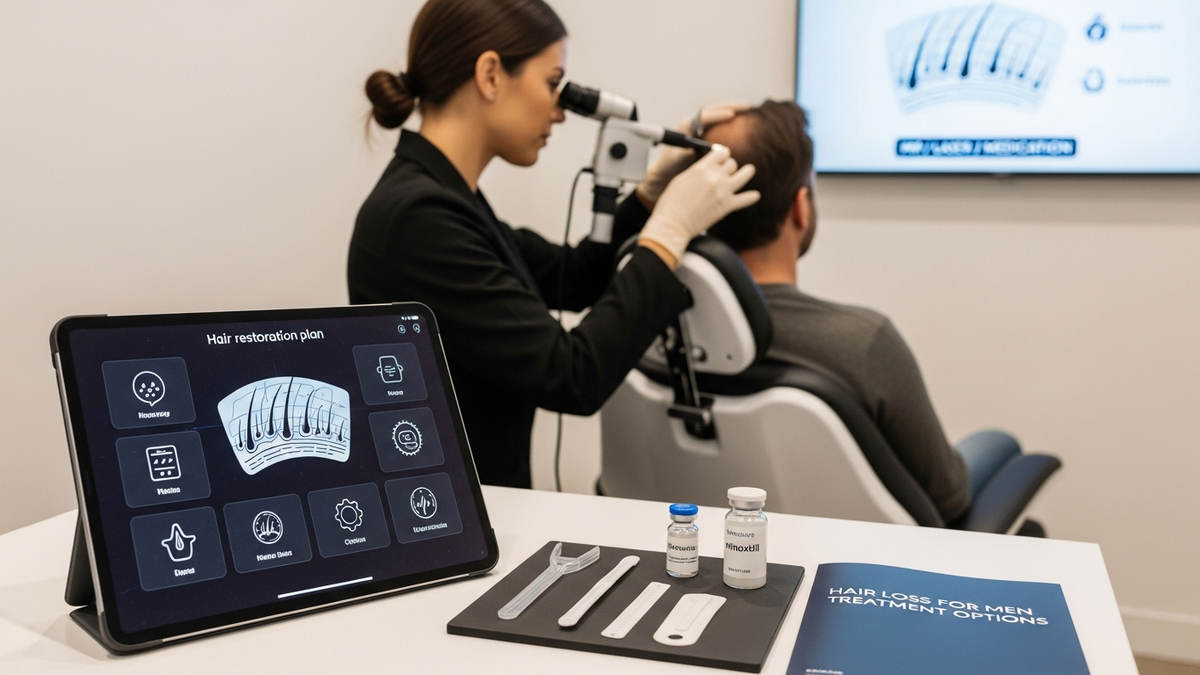
Scalp exam and dermoscopy
Dermoscopic evaluation can reveal follicle miniaturization (supporting androgenetic alopecia) or signs of inflammation.
When labs may be considered
For diffuse thinning or suspected telogen effluvium, clinicians may order tests such as ferritin/iron studies, thyroid function, and vitamin D, depending on your history and exam.
Baseline photos for measurable progress
Because hair cycles take time, baseline photos (same lighting and angle) are essential for tracking response over months—not weeks.
Evidence-based hair loss for men treatment options
Below are the most commonly recommended, evidence-supported approaches. Your best plan usually combines medical therapy (to slow miniaturization and support growth) with procedural options when appropriate.
Medical therapies: the foundation
Topical minoxidil
Topical minoxidil is widely used to support hair growth. It’s often part of first-line care for male-pattern hair loss and may help some men with early thinning. Results typically require consistent use, with noticeable changes often taking several months.
Oral finasteride (and similar options)
Finasteride reduces conversion of testosterone to dihydrotestosterone (DHT), a key driver in male-pattern hair loss. Many men experience slowed progression and, in some cases, regrowth. Treatment decisions should be made with a clinician who can discuss benefits, monitoring, and side effects.
Combination therapy
For many men, combining topical minoxidil with an oral DHT-targeting medication can be more effective than either alone—especially for early to moderate cases.
Procedural therapies: when and why they help
Platelet-rich plasma (PRP)
PRP involves using your own blood components to deliver growth factors to the scalp. Evidence suggests PRP may improve hair density for some men, particularly as an add-on to medical therapy. Response varies, and maintenance sessions are often needed.
Low-level laser therapy (LLLT)
LLLT devices may help support hair growth in some patients. They’re generally considered a non-invasive adjunct, and adherence matters because results depend on consistent use.
Microneedling
Microneedling can be used to support scalp health and may enhance topical therapy effectiveness when used appropriately. It should be performed safely to avoid irritation or infection.
Hair transplant surgery: a long-term structural solution
When male-pattern hair loss has progressed to the point where follicles in the thinning areas can’t be reliably restored with medication alone, a hair transplant may provide the most durable aesthetic change.
Modern transplant approaches can use:
- FUE (Follicular Unit Extraction): individual grafts harvested with minimal linear scarring.
- FUT (Follicular Unit Transplantation): a strip method that can be appropriate for certain patients depending on donor characteristics.
For many men, the best results come from pairing transplant planning with ongoing medical therapy to protect surrounding native hair.
If you’re exploring options, you can review services from hair transplant providers and compare approaches, graft strategies, and post-op protocols.
How to build a personalized hair loss for men treatment plan
Every man’s hair loss timeline is different. A strong plan answers: What am I treating? What’s the goal? What’s the timeline? and What will we measure?
Step 1: Confirm the diagnosis
Before committing to long-term therapy, ensure the cause matches your pattern. If you have diffuse shedding, scalp inflammation, or patchy loss, the treatment strategy may differ from male-pattern hair loss.
Step 2: Choose first-line therapy and set expectations
For many men with androgenetic alopecia, clinicians often recommend a medical foundation (e.g., DHT-targeting therapy plus minoxidil) with consistent use. Hair growth is slow; focus on trend improvement rather than short-term outcomes.
Step 3: Add adjuncts if appropriate
Adjuncts like PRP, microneedling, or LLLT may help support density—especially when combined with medical therapy. Discuss which adjuncts fit your scalp condition, schedule, and budget.
Step 4: Decide if surgery is the right next step
If hair loss is advanced or you have limited response to medical therapy, surgery may be considered. A reputable clinic will evaluate donor density, plan graft placement for a natural hairline, and discuss maintenance therapy.
Step 5: Monitor and adjust
Use standardized photos every 3–6 months. If you aren’t seeing progress, reevaluate diagnosis, adherence, and whether additional therapies are warranted.
Hair loss for men treatment timeline: what to expect
It’s normal to want results immediately. However, hair growth follows biological cycles. A typical timeline looks like this:
- 0–8 weeks: shedding may fluctuate; scalp irritation (if any) should be reported.
- 2–4 months: early signs may appear (often subtle); consistency matters more than intensity.
- 4–9 months: density changes are more visible; photos help confirm progress.
- 9–18 months: stabilization and more meaningful density improvements (especially with combined therapy).
For surgical planning, timeline expectations include pre-op assessment, post-op healing, and gradual shedding of transplanted hair before regrowth.
Evidence context: According to the American Academy of Dermatology (AAD), treatments like minoxidil and finasteride can help slow hair loss and, for some men, promote regrowth—though results vary and take time (see AAD reference below).
Common mistakes men make during hair loss for men treatment
Starting treatment without diagnosis
Male-pattern hair loss and telogen effluvium can look different in time course, but they can be confused. If you treat the wrong cause, you may not see improvement.
Stopping too early
Hair growth is slow. Stopping after a few weeks can lead to false conclusions about effectiveness.
Over-relying on supplements
Supplements may help if you have a deficiency, but they won’t replace evidence-based therapy for androgenetic alopecia. If you’re considering supplements, ask your clinician whether labs are appropriate first.
Ignoring side effect screening
Oral therapies and some procedures require individualized risk assessment. A responsible clinician will discuss contraindications and monitoring.
Chasing “miracle” products
Be cautious with products that promise instant regrowth. In hair restoration, credibility comes from transparent protocols, measurable outcomes, and appropriate patient selection.
When to see a specialist (and what to ask)
Consider seeing a dermatologist or a hair restoration specialist if:
- Thinning is progressing quickly
- You have scalp symptoms (itch, scale, pain)
- You have patchy loss
- You’ve tried basic therapy for several months without improvement
- You’re considering procedures and want an evidence-based plan
Helpful questions to ask include:
- What is my likely diagnosis and what features support it?
- What is the expected timeline for improvement?
- Which therapies are first-line for my case?
- What outcome measures will you use (photos, density estimates, donor assessment)?
- What are the risks and alternatives?
Hair restoration options worldwide: what to look for in a clinic
Men travel for hair restoration. If you’re comparing clinics internationally, focus on quality indicators rather than marketing.
Look for surgical expertise and transparent planning
For example, TestBiz Hair Clinic is a premium hair transplant clinic offering FUE and FUT procedures, serving clients worldwide with state-of-the-art technology and experienced surgeons. Ask how they evaluate donor supply, design your hairline, and plan graft distribution based on your goals.
Ask about combined strategies
A strong clinic will discuss how medical therapy may be continued before and after surgery to protect existing hair and support long-term density.
Confirm your aftercare plan
Aftercare should include wound care guidance, medication instructions, and follow-up milestones. The best outcomes come from a clear post-procedure protocol.
Related head-and-neck procedures (optional context)
Hair restoration is different from facial cosmetic surgery, but many men consider multiple appearance goals at once. If you’re exploring broader aesthetic changes, it’s useful to understand how hairline and facial features interact visually—especially when planning a new look.
Some men also research procedures like Facelift or Blepharoplasty. If your interest includes reshaping facial hair patterns, you may also see discussions about an eyebrow transplant—though that’s separate from scalp hair restoration.
If you’re considering rhinoplasty for nasal appearance or function, you can review Rhinoplasty. These topics are included only to help you think about coordinated aesthetic planning; they are not substitutes for hair loss diagnosis and treatment.
Nutrition, lifestyle, and scalp care: supportive steps that can help
Lifestyle won’t replace evidence-based care, but it can support scalp health and reduce triggers that worsen shedding.
Scalp hygiene and gentle routines
Use a gentle shampoo and avoid aggressive scratching. If you have dandruff or inflammation, treat it appropriately rather than ignoring symptoms.
Protein and micronutrient adequacy
Hair is made of keratin, and your body needs adequate protein and micronutrients. If you suspect deficiency, ask your clinician about appropriate lab work.
Stress management
Stress can contribute to shedding in susceptible individuals. Sleep, exercise, and stress-reduction practices may help reduce telogen effluvium triggers.
Avoid smoking and extreme crash dieting
These can affect overall hair health and contribute to systemic inflammation. If you’re making diet changes, aim for sustainable nutrition rather than drastic restriction.
FAQ
Frequently Asked Questions
What is the most effective hair loss for men treatment?
For many men with androgenetic alopecia, evidence-based medical therapy (such as DHT-targeting medication and minoxidil) is a strong first step. The “most effective” option depends on your diagnosis, severity, and timeline, so a clinician should confirm the cause before you commit.
How long does it take to see results from treatment?
Hair growth is slow. Many men notice changes around 4–9 months, with more meaningful density improvements often taking 9–18 months when treatment is consistent.
Can hair transplant surgery fix male-pattern baldness permanently?
A hair transplant can provide durable coverage in the transplanted areas, but male-pattern hair loss may continue in untreated zones. That’s why many plans include ongoing medical therapy and long-term monitoring.
Is shedding normal when starting treatment?
Some men experience temporary shedding or fluctuations when beginning certain therapies. If shedding is severe, accompanied by scalp pain or patchy loss, you should contact a clinician to ensure the diagnosis is correct.
Do I need labs or a scalp exam before treatment?
Often, a scalp exam and pattern review are enough for classic male-pattern hair loss. If your thinning is diffuse, sudden, or accompanied by scalp symptoms, labs and additional evaluation may help identify reversible contributors.
CTA: Get a treatment plan you can measure
If you’re trying to decide between medical therapy, adjuncts, or a procedural approach, you don’t have to guess. Use the guidance in this article to prepare for a clinician conversation and build a plan with clear goals and timelines.
Next step: Create baseline photos, write down your onset timeline and family history, and track what you’ve tried. Then consult a qualified dermatologist or hair restoration specialist to confirm diagnosis and discuss evidence-based hair loss for men treatment options.
For more hair-health education and decision support, explore content from FlowGeniQ Digest—and share this guide with someone who’s navigating the same uncertainty.
Sources and evidence (for credibility)
Below are authoritative references that support common treatment principles discussed in this guide.
- American Academy of Dermatology (AAD): According to the AAD, treatments such as minoxidil and finasteride can help slow hair loss and promote regrowth for some men with androgenetic alopecia. (Source: https://www.aad.org/public/diseases/hair-loss/types/male-pattern)
- National Institutes of Health (NIH) / PubMed resources: Clinical research supports that finasteride reduces DHT and can improve outcomes in male-pattern hair loss, though individual response varies. (Source: https://pubmed.ncbi.nlm.nih.gov/)
- American Hair Loss Association (AHLA): The AHLA provides patient-facing education on causes, diagnosis, and treatment pathways for hair loss conditions, including male-pattern hair loss. (Source: https://www.americanhairloss.org/)
Statistics (with attribution):
- Prevalence: Androgenetic alopecia is extremely common; a widely cited estimate is that it affects a large proportion of men over their lifetime. (Source: American Academy of Dermatology, male-pattern hair loss education: https://www.aad.org/public/diseases/hair-loss/types/male-pattern)
- Treatment timelines: Hair growth improvements typically require months of consistent therapy due to hair cycling. (Source: AAD patient guidance on male-pattern hair loss and treatment expectations: https://www.aad.org/public/diseases/hair-loss/types/male-pattern)
- Variability: Response to therapy varies by diagnosis and severity; clinicians emphasize individualized plans rather than one-size-fits-all. (Source: AHLA educational materials: https://www.americanhairloss.org/)
How to keep your plan safe and effective
Safety is part of treatment. Here are practical steps you can take:
- Discuss your medical history before starting oral therapies or procedures.
- Don’t share prescriptions or use unverified online dosing.
- Track side effects and report them promptly.
- Verify provider credentials and ask about outcome tracking.
- Plan for the long term—hair loss is often progressive.

Simple process: from concerns to a measured treatment plan
- Assess: note onset, family history, shedding vs pattern, and scalp symptoms.
- Evaluate: schedule a scalp exam and confirm the likely diagnosis.
- Treat: start evidence-based therapy appropriate for your diagnosis.
- Support: add adjuncts if appropriate and maintain scalp health.
- Decide: consider hair transplant when medical therapy alone isn’t sufficient.
- Monitor: take standardized photos and review progress every few months.
Medical Information Disclaimer
This content is provided for general educational purposes only by FlowGeniQ Digest. It is not a substitute for professional advice, diagnosis, or treatment. Readers are advised to consult qualified professionals for personalized recommendations.