
Hair loss during the teenage years is more common than many people think—and it can have many different causes, from genetics to stress-related shedding. The most effective hair loss teenager treatment begins with answering a few key questions: what type of hair loss is happening, how fast it’s progressing, and what underlying factors are contributing. In this article, you’ll learn who should be evaluated, what tests are often considered, and which options tend to be evidence-based and age-appropriate. You’ll also get a practical “next steps” plan you can bring to a dermatologist or hair specialist.
At FlowGeniQ Digest, we focus on helping people make informed decisions using medical-grade education and careful, responsible guidance.
Who experiences hair loss in teens, and why it matters
Teen hair loss can affect anyone—girls and boys, athletes, students under exam pressure, and people experiencing major lifestyle changes. It matters because teenage hair loss can be temporary (for example, stress-related shedding) or progressive (for example, androgenetic alopecia). The sooner the cause is identified, the better the chance of controlling shedding and supporting regrowth.
Common scenarios parents and teens report
- Widening part or overall thinning over months
- Patchy bald spots that appear suddenly
- Increased shedding after illness, weight loss, or intense stress
- Scalp symptoms such as itching, scaling, burning, or pain
- Hair breakage that looks like hair loss but is actually damage
Why teens need a tailored approach
Teenage bodies are still developing, and treatment choices must consider safety, hormone changes, mental well-being, and the likelihood of natural recovery. A clinician will typically start with diagnosis and scalp health before moving to medications or procedural options.
What causes hair loss in teenagers? (Most likely culprits)
Hair loss is a symptom, not a single condition. Below are the most common causes clinicians evaluate when someone asks for hair loss teenager treatment.
1) Androgenetic alopecia (genetic pattern hair loss)
This is often the cause when hair thinning is gradual, with a widening part in females or a receding hairline/thinning at the crown in males. Genetics and hormonal sensitivity play major roles.
Clues: family history, progressive thinning, miniaturized hairs on exam.
2) Telogen effluvium (stress or shock shedding)
Telogen effluvium is common after a trigger such as high fever, COVID-19 or other infections, rapid weight loss, surgery, severe emotional stress, or nutritional deficits. Hair shedding may start weeks to a few months after the trigger.
Clues: diffuse shedding, hair may feel thinner overall, scalp usually not inflamed.
3) Alopecia areata (autoimmune patchy hair loss)
Alopecia areata can cause smooth, round or oval patches. Some people experience regrowth; others may have more extensive involvement.
Clues: discrete patches, possible nail changes (pitting), family/autoimmune history sometimes present.
4) Scalp conditions (dermatitis, fungal infections, psoriasis)
Inflammatory scalp disorders can contribute to shedding and breakage. Treating the scalp often improves hair density and comfort.
Clues: itching, redness, scaling, tenderness, flaking that doesn’t resolve with gentle care.
5) Nutritional deficiencies and iron-related issues
Iron deficiency is frequently considered in hair loss evaluations. Other nutritional factors may also be relevant depending on diet, growth spurts, and labs.
Clues: fatigue, heavy menstrual bleeding, restricted diet, vegetarian/vegan diet without supplementation, or abnormal lab results.
6) Hair breakage and traction
Sometimes “hair loss” is actually breakage from heat styling, chemical treatments, tight hairstyles, or poor hair shaft quality.
Clues: uneven length hairs, snapped strands, hairline changes from traction rather than true follicle loss.
How to diagnose teen hair loss: what to expect at the appointment
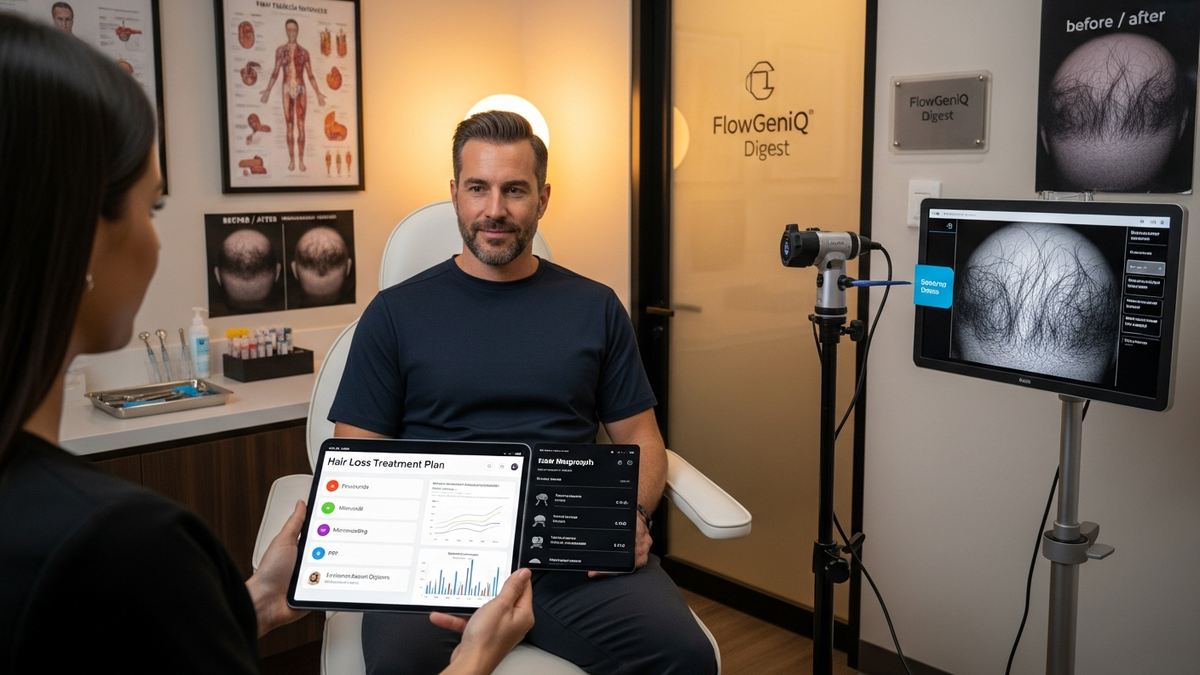
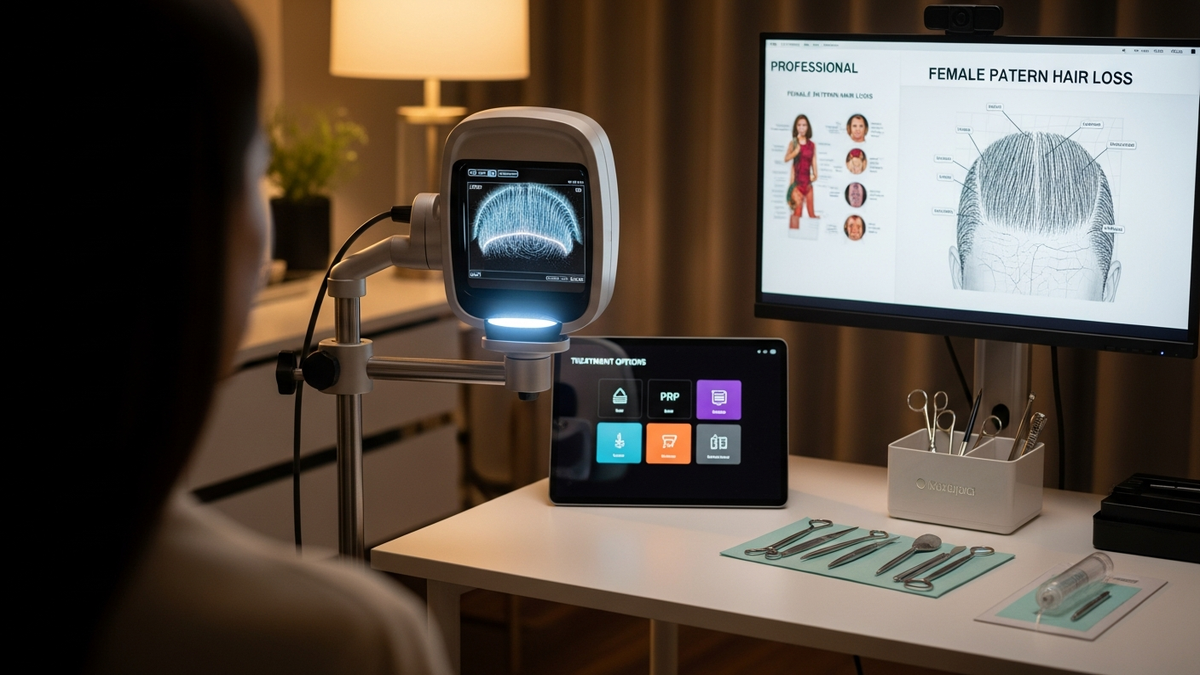
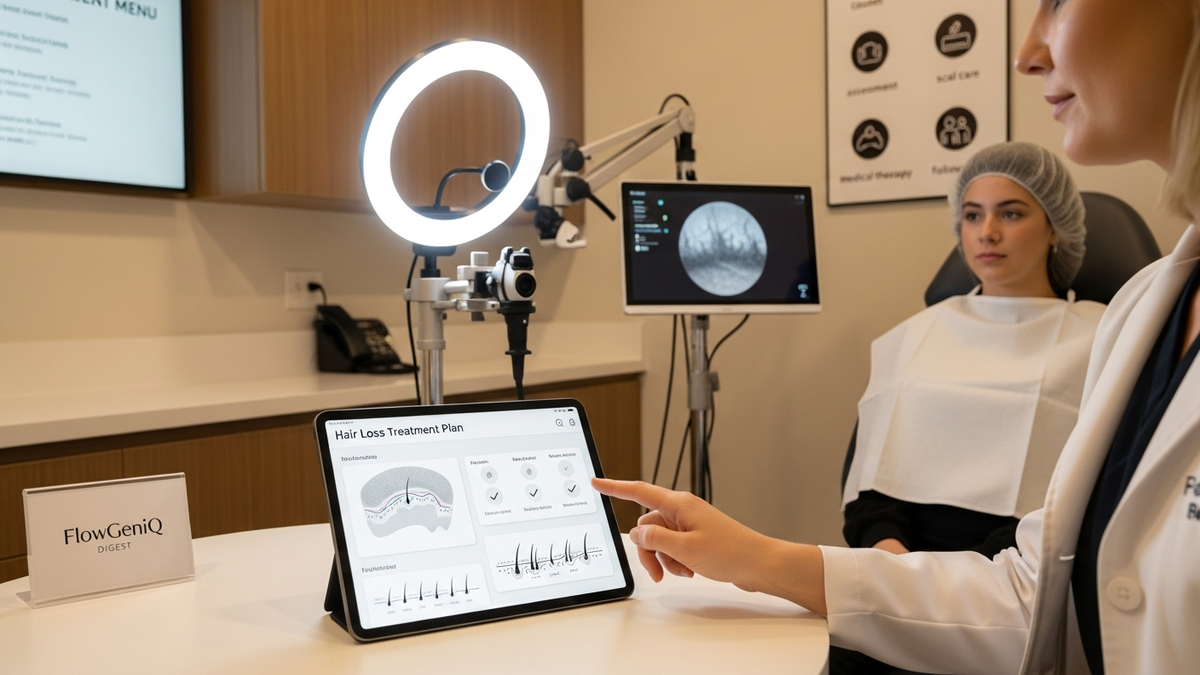
A strong hair loss teenager treatment plan starts with diagnosis. In general, clinicians combine history, physical exam, and sometimes lab work or scalp imaging.
Step 1: Detailed history (the “why now?” timeline)
Expect questions about when shedding began, whether there was a recent illness or major stressor, diet and weight changes, menstrual history (if applicable), family history of thinning, and styling habits (heat, chemicals, tight hairstyles).
Step 2: Scalp and hair exam
A dermatologist or hair specialist may evaluate:
- Pattern (diffuse vs. localized vs. patchy)
- Scalp inflammation (redness, scaling, tenderness)
- Hair shaft quality (breakage vs. true shedding)
- Miniaturization (in genetic-pattern thinning)
Step 3: Possible tests (tailored, not automatic)
Many clinicians consider labs when teen hair loss is diffuse or when nutritional issues are suspected. Tests may include:
- Complete blood count (CBC)
- Ferritin and iron studies
- Thyroid function tests
- Vitamin D, B12 depending on risk factors
- Other tests if autoimmune or inflammatory causes are suspected
Important: Lab panels should be ordered based on symptoms and clinical findings, not as a one-size-fits-all routine.
Evidence note
According to the American Academy of Dermatology (AAD), hair loss has many causes, and proper diagnosis is essential before choosing treatment (see AAD patient guidance) (American Academy of Dermatology hair loss overview).
Hair loss teenager treatment options: what’s commonly used
Because teen hair loss can be caused by different mechanisms, treatment varies. Below are commonly used categories of care. Your clinician should determine which are appropriate for your diagnosis and age.
Behavior and scalp care (the foundation)
Regardless of the cause, most plans include gentle hair and scalp practices:
- Use a gentle shampoo and avoid aggressive scrubbing
- Reduce heat styling and chemical processing
- Avoid tight hairstyles that increase traction
- Address dandruff/itching promptly with clinician-recommended care
- Prioritize sleep, stress management, and consistent nutrition
Medication-based treatments (diagnosis-specific)
For some patterns—especially genetic thinning—clinicians may consider topical therapies or other options. For inflammatory or autoimmune conditions, treatment may include anti-inflammatory or immune-modulating approaches.
Key safety point for teens: Medication decisions should be made with a dermatologist who can assess risks, monitor progress, and ensure age-appropriate use.
Nutrition and deficiency correction
If labs show iron deficiency or other nutritional gaps, correcting them can support the hair cycle. Don’t start high-dose supplements without guidance—excess iron or inappropriate dosing can be harmful.
When to consider advanced therapies
If standard treatments don’t control progression, specialists may consider additional options. These can include procedural therapies, but eligibility depends heavily on diagnosis, severity, and teen maturity/stability of hair loss.
What works best for each teen hair loss type (practical mapping)
Use this as a “discussion guide” for your appointment. It’s not a self-diagnosis tool.
Genetic pattern thinning (androgenetic alopecia)
Clinicians often aim to slow progression and improve density over time. Treatment frequently involves long-term adherence and monitoring, because hair cycles take months.
Actionable steps:
- Ask whether your exam suggests miniaturization and whether family history supports genetic thinning.
- Request a plan for how progress will be measured (photos, scalp exam, time horizon).
- Discuss realistic expectations: regrowth is gradual, and early control matters.
Telogen effluvium (diffuse shedding after a trigger)
Telogen effluvium often improves when the trigger is addressed. Treatment focuses on correcting deficiencies, reducing ongoing stressors, and supporting healthy hair cycles.
Actionable steps:
- Identify the trigger timeline (infection, stress, weight change) and bring it to the appointment.
- Ask what labs are appropriate based on your history (especially iron/ferritin).
- Track shedding and hair quality with consistent photos.
Alopecia areata (patchy autoimmune hair loss)
Treatment often targets immune activity and inflammation. Some teens experience regrowth; others need ongoing management.
Actionable steps:
- Ask about patch extent and whether there are nail changes or other autoimmune signs.
- Discuss the expected course (variable) and how quickly treatment might show benefit.
Scalp inflammation or fungal issues
When scalp inflammation drives shedding, addressing the scalp can be the fastest path to improvement.
Actionable steps:
- Don’t rely only on cosmetic solutions if scaling/itching is present.
- Ask whether you need evaluation for seborrheic dermatitis, psoriasis, or fungal infection.
Breakage and traction
For breakage, the “treatment” is often behavior: change styling practices and reduce damage while the hair shaft regrows.
Actionable steps:
- Switch to looser hairstyles and reduce tension.
- Use heat protectant and lower temperature settings if heat is necessary.
- Consider a hair care routine that minimizes mechanical stress.
How long does teen hair loss treatment take?
Hair grows in cycles, so results are not immediate. Many people notice reduced shedding first, while density and visible regrowth often take longer—commonly several months. Treatment timelines should be individualized based on diagnosis and severity.
What to measure (so you don’t lose momentum)
- Shedding rate (weekly observation)
- Scalp comfort (itching, scaling, tenderness)
- Hair density and part width
- Standardized photos every 4–8 weeks under similar lighting
Hair transplant for teens: when it’s considered and why timing matters
Many families wonder about hair transplant options. While hair transplant procedures can help certain candidates, teen timing is critical because hair loss patterns may still be evolving.
Why age and stability matter
In genetic pattern thinning, the long-term pattern of hair loss can progress over years. If the pattern is not stable, transplant planning may be less predictable. A specialist will evaluate maturity, progression, and whether non-surgical treatments can control the condition first.
What to ask a clinic (responsible questions)
- Is your hair loss pattern stable enough for long-term planning?
- What are realistic density goals for your specific case?
- Will you need ongoing medical therapy to maintain results?
- What are the risks and how are they minimized?
What procedural options exist
Modern hair transplant techniques commonly include FUE and FUT approaches. If a clinic determines you’re an appropriate candidate later in the course, you can discuss which method fits your goals and donor characteristics.
If you’re exploring procedural services, you can review the clinic’s information on a hair transplant service page.
Evidence and statistics: putting expectations in context
Hair loss can feel isolating, but research suggests it’s widespread and manageable with the right workup. For example:
- According to the American Hair Loss Association, androgenetic alopecia is one of the most common forms of hair loss in men and women (American Hair Loss Association—resources on androgenetic alopecia).
- According to a review published in Dermatology and Therapy, androgenetic alopecia is highly prevalent and treatment often requires long-term management and adherence (Dermatology and Therapy journal—review literature).
How to use this info: Instead of searching for a quick fix, focus on diagnosis, consistent care, and measurable milestones over time. That approach aligns with how clinicians manage chronic or cycle-dependent conditions.
A step-by-step teen hair loss plan you can start this week
Below is a safe, practical sequence for teens and parents. It’s designed to support early action without jumping into risky or inappropriate treatments.
Step 1: Document changes (2 minutes daily)
- Take standardized photos (front, part, crown) in similar lighting.
- Note shedding intensity and scalp symptoms (itch, scale, pain).
Step 2: Book a clinician visit for diagnosis
- Ask for evaluation by a dermatologist or hair specialist.
- Bring a timeline of triggers: illness, stress, weight change, new meds, or diet shifts.
Step 3: Ask which cause is most likely (and why)
- Request explanation of the suspected diagnosis: genetic pattern, telogen effluvium, alopecia areata, or scalp condition.
- Ask what findings support that diagnosis (pattern, exam, dermoscopy/scalp evaluation).
Step 4: Build a treatment schedule with checkpoints
- Clarify start date, expected timeline, and follow-up intervals.
- Ask how progress will be measured and what “not improving” means.
Step 5: Optimize daily habits that protect hair
- Gentle washing and scalp care
- Reduce traction and heat
- Support nutrition and sleep
Step 6: Reassess after a realistic time window
If shedding persists or density doesn’t improve as expected, you may need to adjust the diagnosis or treatment plan. This is normal—hair loss care is iterative.
Support for mental well-being: how teens can cope while treatment works
Hair loss can affect confidence, social life, and school performance. Teens deserve emotional support alongside medical treatment. Consider:
- Talking with a trusted adult or counselor if distress is significant
- Using temporary cosmetic solutions (hats, gentle styling, wigs) while waiting for medical progress
- Setting realistic expectations—improvement is often gradual
When hair loss is sudden or patchy, emotional impact can be especially intense; seeking support early can help teens stay consistent with treatment.
Related reads on FlowGeniQ Digest
For more hair-health and scalp-care education, explore these companion topics:
Get a personalized hair loss teenager treatment plan
If you’re dealing with teen hair loss, a tailored evaluation can help you avoid guesswork and choose the safest, most effective next steps. A professional assessment can clarify diagnosis, recommend appropriate testing, and set realistic expectations for regrowth.
Frequently Asked Questions
What is the best hair loss teenager treatment for the first 30 days?
In the first month, the best approach is usually diagnosis plus scalp-friendly routines. A clinician may recommend gentle hair care, evaluate for common causes (genetic thinning, shedding, scalp inflammation), and decide whether labs or targeted therapy are needed.
Can stress cause teen hair shedding, and will it grow back?
Yes. Stress can contribute to diffuse shedding through the hair cycle, often resembling telogen effluvium. Many cases improve after the trigger is addressed, but regrowth timelines vary and depend on the underlying cause.
Should a teenager take iron or supplements for hair loss?
Supplements should be based on symptoms and lab results rather than guesswork. If iron deficiency is confirmed, correcting it may help support hair growth, but excessive dosing without guidance can be risky.
When should we consider a dermatologist for teen hair loss?
Seek evaluation when hair loss is progressive, patchy, associated with scalp symptoms (itching, scaling, pain), or causing significant distress. Earlier assessment helps prevent delays if the cause is treatable.
Is hair transplant appropriate for teenagers?
Hair transplant is considered only in select cases, typically when the hair loss pattern is stable and the individual is an appropriate candidate. Many teens require medical and scalp-first treatment before procedural options are discussed.


Professional Disclaimer
This content is provided for general educational purposes only by FlowGeniQ Digest. It is not a substitute for professional advice, diagnosis, or treatment. Readers are advised to consult qualified professionals for personalized recommendations.
Medical Information Disclaimer
This content is provided for general educational purposes only by FlowGeniQ Digest. It is not a substitute for professional advice, diagnosis, or treatment. Readers are advised to consult qualified professionals for personalized recommendations.