Author: Dr. Hootan Zandifar & Clinical Team, FUEsion Hair Clinics
Last updated: 2026

Hair loss can feel personal—especially when you live in Denver and you want a plan that fits your lifestyle, climate, and timeline. At FUEsion Hair Clinics, we focus on one goal: helping you regain natural-looking density with a treatment pathway designed for your specific pattern of loss. If you’re looking for hair loss treatment denver, you’re in the right place.
In this guide, we’ll break down who we treat, what causes thinning, which options are typically considered in Denver, and how our team plans results using AI & AR-assisted precision. We’ll also share what to expect from consultation through recovery—so you can make an informed decision with confidence.
What “hair loss treatment Denver” should mean to you
When people search for hair loss treatment Denver, they’re usually trying to solve one of three problems: (1) hairline recession, (2) crown thinning/diffuse shedding, or (3) density loss that affects overall volume. A high-quality treatment plan should address why you’re losing hair and where you need coverage—not just offer a generic procedure.
At FUEsion Hair Clinics, we treat hair loss as a medical + aesthetic process. That means we assess scalp health, donor supply, and pattern progression, then recommend either surgical restoration (AI & AR assisted FUE) or a non-surgical option (InFuze™) depending on your stage and goals.
If you’re ready to explore your candidacy, you can start with Book Free Consultation.
Who is a candidate for hair restoration in Denver?
Hair loss doesn’t have one “type.” It can show up gradually or accelerate over time. In Denver, we see plenty of patients coming in for hairline refinement, crown coverage, and early intervention for thinning.
Common patterns we evaluate
- Male pattern baldness (often Norwood II–VII): typically affects temples, hairline, and crown.
- Female pattern hair loss: often diffuse thinning across the crown and top of the scalp.
- Traction alopecia: hairline recession related to tight hairstyles over time.
- Scarring or trauma-related hair loss: requires careful diagnosis and individualized planning.
- Medical hair loss: including thyroid-related changes and other systemic contributors.
What makes someone “right” for treatment
In most cases, candidacy depends on:
- Donor hair quality and density (for transplant-based solutions).
- Scalp condition (inflammation, sensitivity, and overall health).
- Realistic coverage goals based on your current stage and expected progression.
- Commitment to the process (healing timeline, post-procedure care, and follow-up).
Important: Even when two people have similar thinning, the best plan can differ. That’s why we build individualized protocols at FUEsion Hair Clinics.
Why hair loss happens (and why the cause matters)
To choose the right hair loss treatment Denver approach, we first need to understand the underlying driver. Hair loss is often multifactorial.
Genetics and hormone-driven miniaturization
Androgenetic alopecia (male- and female-pattern hair loss) commonly involves gradual miniaturization of follicles. Over time, hairs become finer and shorter until they stop producing visible growth. This is why early evaluation can be so valuable.
According to the American Academy of Dermatology, androgenetic alopecia is the most common cause of hair loss in both men and women.
External reference: American Academy of Dermatology (Androgenetic Alopecia)
Telogen effluvium and shedding triggers
Some shedding is more sudden—often related to stress, illness, hormonal shifts, or postpartum changes. This type of hair loss may improve as the trigger resolves, but it can also unmask underlying pattern thinning.
Scarring, traction, and trauma
When hair follicles are damaged by inflammation, scarring, or repeated pulling, regrowth may be limited. In these situations, accurate diagnosis is essential because the treatment strategy may prioritize surgical planning and scalp management.
Systemic health factors
Conditions such as thyroid disorders can impact shedding and density. We incorporate your medical history into our planning process and coordinate with qualified clinicians when needed.
Denver hair loss treatment options: surgical and non-surgical
Not every patient needs the same approach. In Denver, we commonly discuss two categories: surgical hair restoration and non-surgical follicular stimulation.
1) AI & AR assisted FUE hair transplant (surgical)
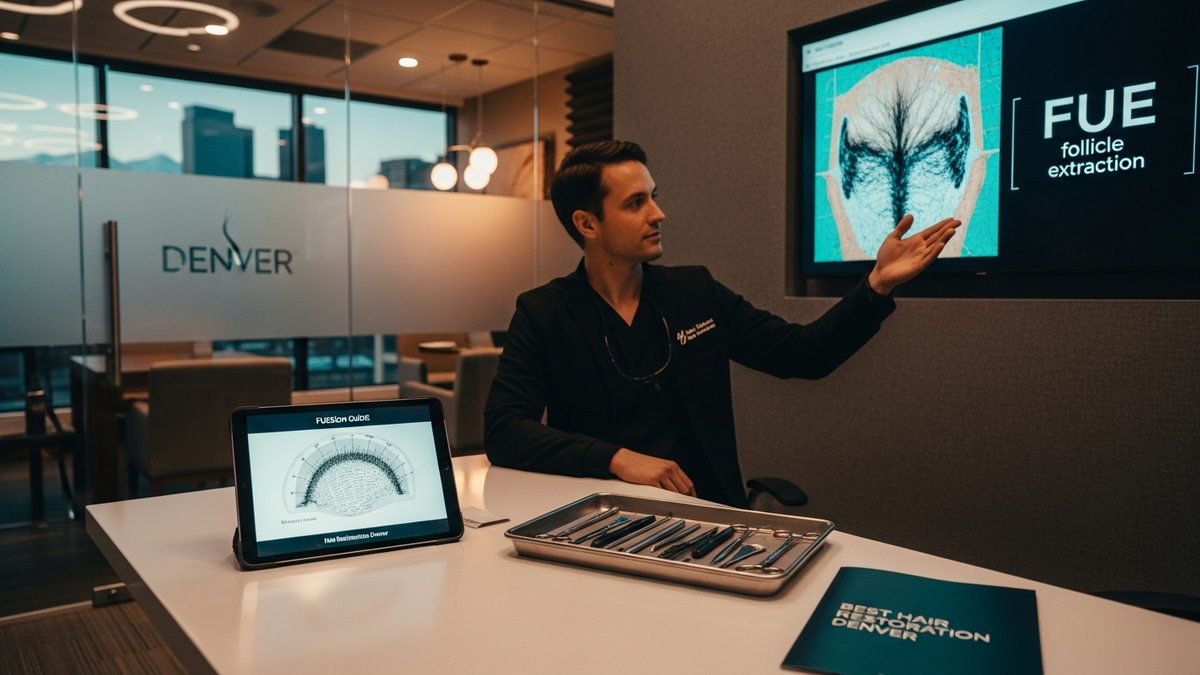
Our flagship approach is the FUEsion Hair Transplant, using AI & AR-assisted FUE planning and precise follicular unit placement. The method is designed to create a natural distribution and hairline that complements your facial features.
To learn more about the surgical pathway, review the Hair Transplant Procedure page.
2) InFuze™ non-surgical hair restoration
For early-to-mid stage hair loss or patients who prefer to avoid surgery, we offer InFuze™ non-surgical restoration. This system uses our proprietary ScalpPulse Technology to deliver targeted active compounds into the scalp to support follicular stimulation and a healthier biological environment for regrowth.
Explore Non-surgical Hair Restoration to understand the typical timeline and how we personalize protocols.
3) Combination strategies (when appropriate)
Some patients benefit from combining approaches—using non-surgical support to optimize the scalp environment alongside surgical restoration for targeted density and coverage.
Our team evaluates your pattern, donor supply, and priorities to determine whether combination planning makes sense for your case.
How we plan your results: AI, AR, and artistic precision
A major reason patients choose FUEsion Hair Clinics is our commitment to planning quality. We don’t treat “a number of grafts” as the whole story. We treat your hair loss pattern, your aesthetic goals, and your scalp biology.
AI-assisted visualization before you commit
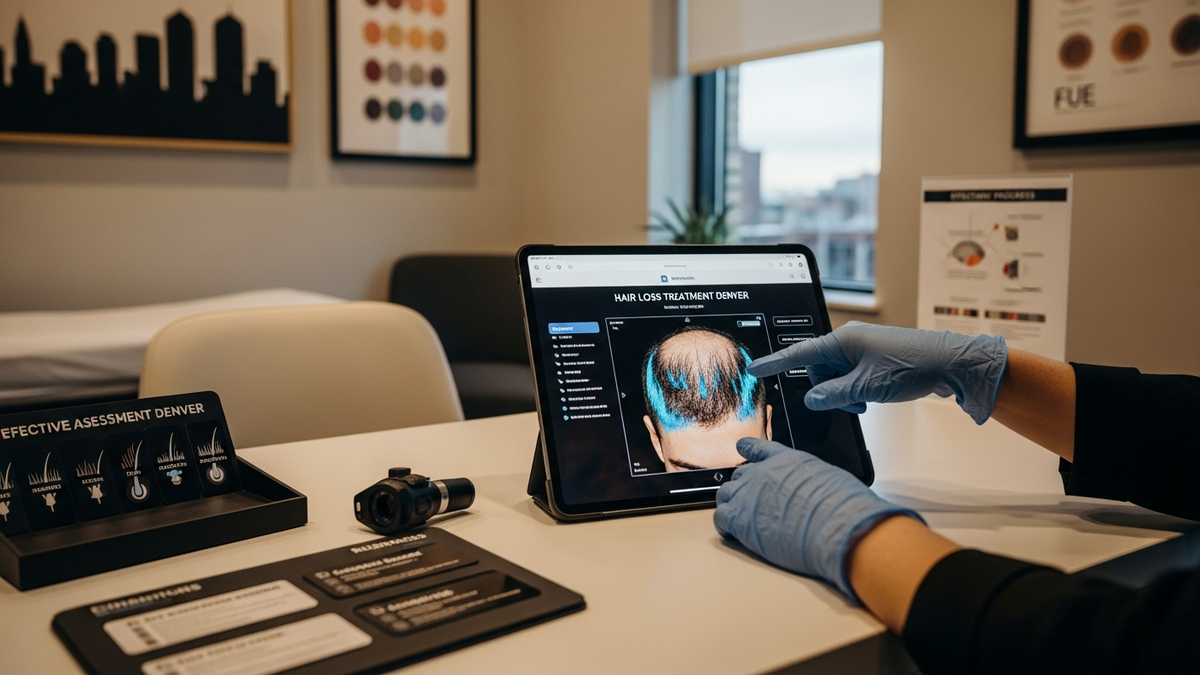
We provide tools that help you preview possibilities and understand coverage planning. If you want to see how different hairline styles and densities might look, use the AI Result Simulator.
Graft estimation and cost planning clarity
Many people search for hair loss treatment Denver because they want clarity—not surprises. We offer a Cost Calculator to help estimate graft needs and guide your planning conversation.
Why donor management matters
For surgical patients, donor preservation and graft survival are critical. We plan extraction and placement to support natural density distribution while respecting long-term coverage needs.
What “natural-looking” means in real life
Natural results depend on:
- Hairline design (shape, density gradient, and progressive maturation)
- Angle and direction of implantation
- Texture and caliber matching
- Strategic zone planning so the midscalp and crown don’t look disconnected
What to expect from your Denver consultation
Our consultation is designed to answer the questions you actually have: What’s causing my hair loss? Which option fits my stage? What will recovery look like? What results are realistic?
Step-by-step: from assessment to plan
- Hair loss history review (onset, progression, family history, triggers, and prior treatments).
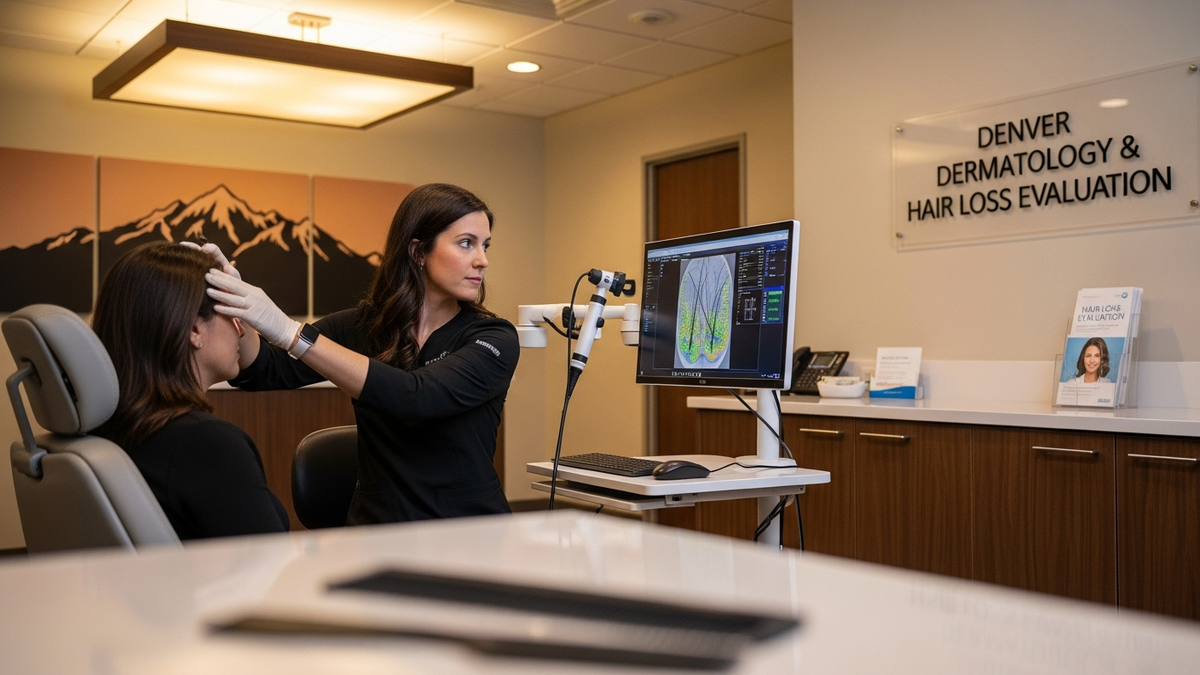
- Scalp and hair evaluation to assess density, miniaturization, and overall scalp health.
- Donor assessment when surgical options are being considered.
- Goal alignment (hairline refinement, crown coverage, or overall density improvement).
- Personalized recommendation (FUEsion Hair Transplant, InFuze™, or a combination).
How we support decision-making
We believe informed patients make better choices. To see how our approach is structured, you can read FUEsion Assurance/Warranty.
If you’re specifically comparing options and want to understand how our technology supports planning, you can also explore About FUEsion Hair Clinics.
Hair transplant specialties: beard, eyebrows, and female hair transplant
Hair loss treatment isn’t limited to the scalp. Many patients in Denver come to us for facial hair and eyebrow restoration, and we also offer specialized protocols for women.
Beard transplant
For men seeking fuller, more defined beards, we offer Beard Transplant. Beard restoration requires careful planning of patterning, angles, and natural growth direction.
Eyebrow transplant
Eyebrows shape facial expression, so precision matters. Our eyebrow restoration protocols focus on density, directionality, and subtle realism. Learn about Eyebrow Transplant.
Female hair transplant
Female hair loss often presents differently than male pattern baldness. We offer targeted planning for diffuse thinning, parting changes, and hairline needs while respecting facial framing. See Female Hair Transplant.
Timeline: what recovery and regrowth typically look like
One of the most common concerns we hear from Denver patients is: “When will I see results?” While individual healing varies, most patients can expect an overall timeline like the one below.
Early phase (first days to weeks)
- Immediate post-procedure: local anesthesia and a structured recovery plan.
- Return to daily activities: many patients return to work within days, depending on their specific plan.
- Scab and shedding: transplanted hairs often shed temporarily as follicles transition into a regrowth cycle.
Growth phase (months)
- Visible improvement: often begins around 6 months.
- Full results: commonly develop over 12–18 months as maturation continues.
Non-surgical timelines
For InFuze™, results are typically evaluated over a multi-month period as the scalp environment supports follicular activity. Your personalized plan will include follow-up checkpoints to track progress.
Technology and technique: why it matters for hair loss treatment Denver
Technology doesn’t replace clinical judgment—but it can elevate planning precision. Our approach includes advanced tools that support visualization and execution, helping us aim for consistent, natural outcomes.
To understand our technology foundation, review Hair Transplant Technology and Advanced Hair Transplant Technology.
What we prioritize in every case
- Graft survival through careful handling and placement.
- Natural hairline progression rather than a static “plugged” look.
- Angle and density mapping to match your native growth pattern.
- Scalp comfort and recovery planning to support adherence to post-care.
Realistic expectations: results, satisfaction, and variability
We want you to feel confident, not pressured. Hair restoration outcomes depend on factors such as donor availability, scalp condition, and individual healing response. That’s why we focus on individualized planning rather than one-size-fits-all promises.
Statistics to understand the landscape:
- Hair loss is common: According to the American Hair Loss Association, approximately 50 million people in the United States experience hair loss.
- Androgenetic alopecia prevalence: Research summarized by the National Institutes of Health and dermatology literature indicates androgenetic alopecia affects a large proportion of men and women over time.
Sources: American Hair Loss Association and National Institutes of Health / PubMed Central.
Additionally, it’s important to know that even with excellent technique, regrowth timelines vary. Our team guides you through each phase, sets expectations, and supports your follow-up care.
Choosing the right clinic in Denver: a practical checklist
If you’re comparing options for hair loss treatment Denver, use this checklist during your research and consultations.
Questions to ask
- How do you design my hairline? Ask about density gradients and long-term maturation planning.
- What approach fits my stage? Confirm whether you recommend transplant, InFuze™, or a combination.
- Who performs the procedure? At FUEsion Hair Clinics, our team is led by experienced surgeons.
- What does recovery look like? Ask about downtime, post-care, and expected milestones.
- How do you manage donor supply? Discuss graft planning and coverage strategy.
Why location and logistics matter
Denver patients often want a plan that works with work schedules and travel time. We also maintain multiple locations nationwide; you can review FUEsion Hair Clinics Locations to see options that may be convenient for you.
For patients searching specifically for a Denver-based experience, we’re proud to support candidates through our network and planning process. If you’re exploring FUEsion Hair Clinics Denver, our team can help route you to the right consultation path.
Frequently Asked Questions
How do I know which hair loss treatment is right for me in Denver?
We determine your best option based on your hair loss pattern, scalp health, donor supply (if transplant is considered), and your aesthetic goals. During consultation, our team reviews your history and evaluates your scalp to recommend transplant, InFuze™, or a combination pathway.
Is hair transplant surgery the only solution for thinning?
No. Some patients benefit from non-surgical hair restoration, especially in early to mid-stage thinning. InFuze™ is designed to support follicular activity without incisions, while surgical restoration can provide targeted density for more advanced loss.
When will I see results from hair loss treatment Denver?
For surgical restoration, many patients notice improvement around 6 months, with fuller maturation typically taking 12–18 months. Non-surgical results are assessed over several months as the scalp environment responds to treatment.
What should I do before my consultation?
Bring a brief hair loss timeline (when it started, how fast it progressed), a list of medications or supplements, and any prior treatments you’ve tried. If you have family history of hair loss, sharing that helps us plan more accurately.
Does FUEsion Hair Clinics offer support after treatment?
Yes. We provide post-procedure guidance and follow-up checkpoints to support your healing and regrowth journey. Our approach is built around patient care, education, and ongoing clinical oversight.
Start your hair restoration journey with confidence
If you’re searching for hair loss treatment Denver and want a plan that’s medically grounded and aesthetically precise, we’re here to help. At FUEsion Hair Clinics, we combine expert surgical artistry, advanced planning tools, and compassionate guidance so you can move forward with clarity.
Ready to explore your options? Use the button below to book your consultation.
Professional Disclaimer
This content is provided for general educational purposes only by FUEsion Hair Clinics. It is not a substitute for professional advice, diagnosis, or treatment. Readers are advised to consult qualified professionals for personalized recommendations.
Medical Information Disclaimer
This content is provided for general educational purposes only by FUEsion Hair Clinics. It is not a substitute for professional advice, diagnosis, or treatment. Readers are advised to consult qualified professionals for personalized recommendations.