Hair restoration near me can feel urgent—especially when shedding increases, receding hairlines become more noticeable, or thinning affects confidence. The good news: modern hair transplant options such as FUE and FUT can produce natural-looking results for many people when the right technique is matched to the right patient.
In this guide from FlowGeniQ Digest, you’ll learn what to look for when searching locally, how consultations typically work, which questions matter most, and how to evaluate a clinic’s credibility. If you’re comparing hair transplant providers, you’ll also find a practical checklist to reduce guesswork—so you can move from “maybe” to a plan you feel good about.

Hair restoration near me: what it really means
When people search hair restoration near me, they usually mean one of three things:
- In-person consultations with a local clinic
- Nearby treatment availability (including follow-up planning)
- Convenient access for surgery scheduling, post-op checks, and long-term monitoring
But “near me” is only part of the decision. The most important factor is whether the clinic’s approach matches your hair loss pattern, donor supply, and goals. A great local provider should combine medical rigor with transparent patient education—so you can understand risks, limitations, and realistic outcomes.
Who should consider hair restoration?
Hair restoration is typically considered by people experiencing:
- Androgenetic alopecia (pattern hair loss), often progressing over years
- Traction or scarring-related thinning in select cases (depending on cause and tissue quality)
- Uneven density after prior treatments (when appropriate)
In general, the best candidates have:
- Stable or manageable progression of hair loss
- Adequate donor hair for the desired coverage area
- Realistic expectations based on hair characteristics (texture, curl, thickness, contrast)
- Commitment to post-procedure care and follow-up
Because every patient is different, clinics should evaluate you personally. A responsible consultation answers: who you are, what type of hair loss you have, when you started noticing changes, where thinning occurs, why you want treatment, and how the clinic plans to proceed.
FUE vs FUT: how to choose the right hair transplant method
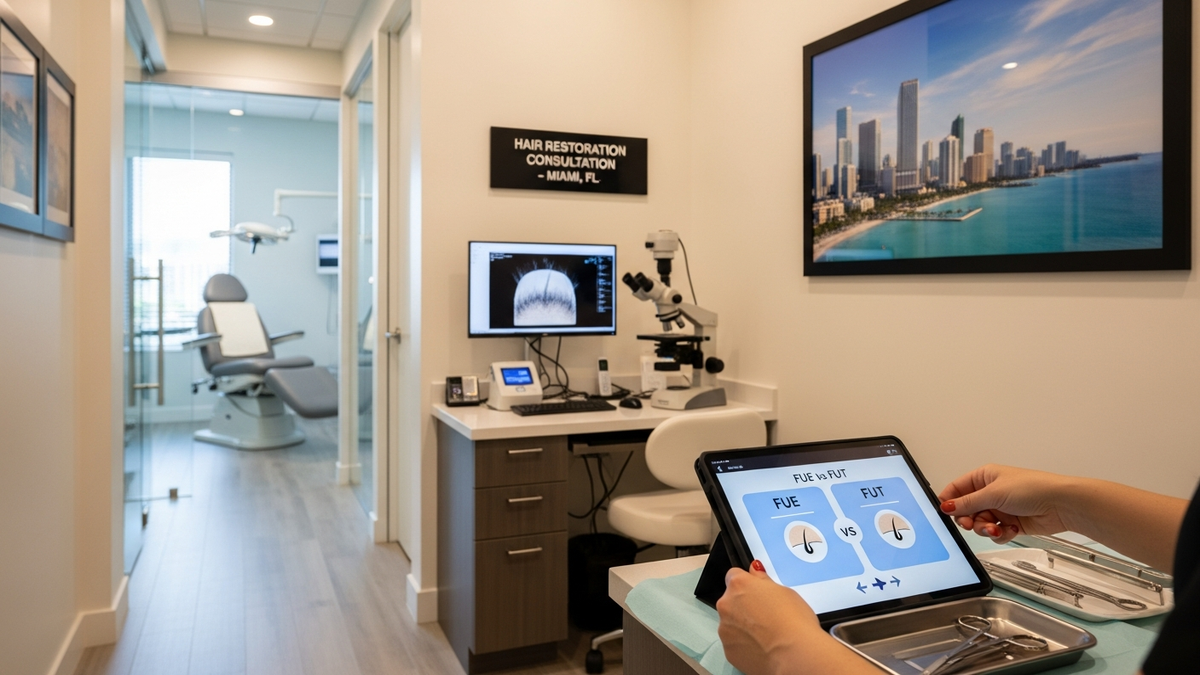
Most reputable providers will discuss FUE and FUT (also called strip harvesting). Understanding the differences helps you ask better questions during your search for hair restoration near me.
What is FUE?
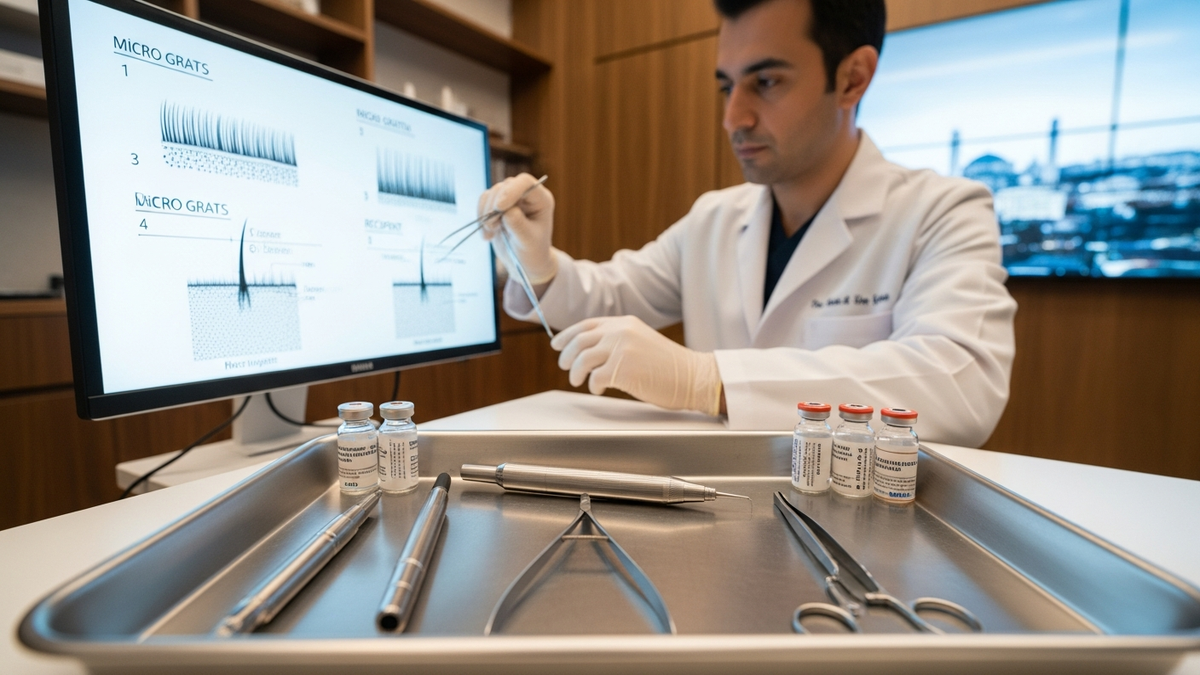
Follicular Unit Extraction (FUE) harvests individual follicular units and can be appealing for patients who prefer less linear scarring. Many modern clinics use advanced tools to help with consistency and extraction efficiency.
What is FUT?
Follicular Unit Transplantation (FUT) involves removing a strip of scalp tissue, then dividing it into grafts. FUT can be appropriate for certain donor conditions and goals, and it may be favored in some cases where large graft counts are planned.
How clinics match technique to your donor supply
A strong clinic evaluates your donor density, scalp laxity, hair caliber, and how your hair loss pattern affects coverage needs. According to the American Academy of Dermatology (AAD), hair transplant outcomes depend on factors such as graft survival and patient selection (see external citations below). When you compare clinics, ask which technique they recommend for your specific pattern and why.
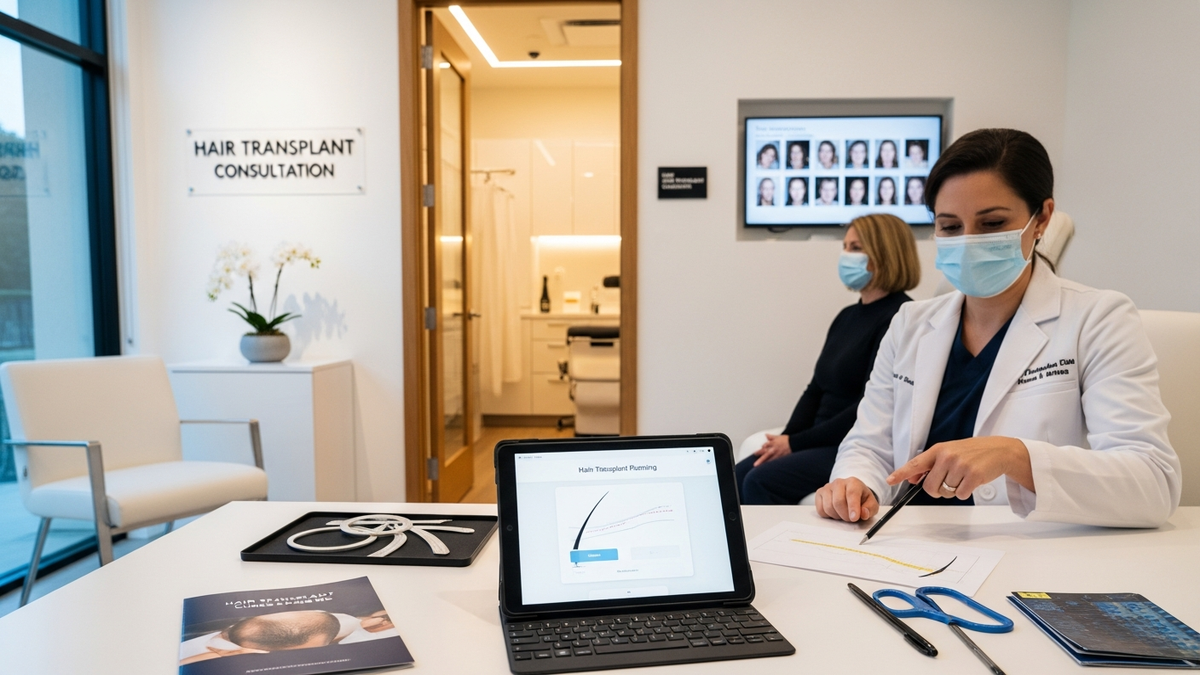
What to expect in a consult
During a consultation, you should typically receive:
- Hair loss assessment (often including photographs and density mapping)
- Donor evaluation to estimate graft availability
- Discussion of goals (hairline, crown density, or both)
- Technique recommendation (FUE, FUT, or a hybrid plan)
- Post-op care guidance and follow-up schedule
- Realistic timeline for visible growth
How to evaluate a clinic when searching hair restoration near me
Not all “near me” options are equal. Use this structured approach to compare clinics ethically and effectively.
1) Verify medical oversight and credentials
Ask who performs the procedure and whether qualified clinicians supervise key steps. A high-quality clinic will be transparent about roles (surgeon, technicians, and medical staff) and about how safety protocols are implemented.
2) Review portfolio quality—then ask the hard questions
Before-and-after photos are helpful, but they can be misleading without context. Ask:
- Were the results achieved using FUE, FUT, or both?
- What was the patient’s hair loss pattern and donor quality?
- How long after surgery were photos taken?
- Were growth outcomes typical or exceptional?
3) Understand graft planning and density strategy
Hair restoration is not only about graft count—it’s about distribution. A responsible clinic should explain:
- How the hairline design is planned (natural curvature, age-appropriate density)
- How grafts will be distributed across frontal, mid-scalp, and crown zones
- Whether additional procedures may be needed later
4) Ask about growth timeline and “shock loss”
Many patients experience temporary shedding after transplant (often called shock loss). Ask how the clinic manages expectations and what signs indicate normal vs concerning healing.
5) Confirm follow-up care and long-term monitoring
A great clinic supports you beyond surgery day. Ask about post-op check-ins, medication guidance, and what happens if you have questions during recovery.
Costs and financing: what to ask before you commit
Pricing for hair restoration near me varies widely based on graft numbers, technique, surgeon involvement, and clinic policies. Instead of focusing only on the lowest quote, compare what’s included.
Questions that protect your budget
- Is the quote based on grafts, sessions, or time?
- What’s included: medications, dressing supplies, follow-up visits, and post-op instructions?
- Are there additional costs for imaging, bloodwork, or revisions?
- What are the refund or revision policies if results don’t meet expectations?
How outcomes connect to value
Hair restoration is a long-term investment. A higher-quality plan—grounded in proper assessment and realistic graft strategy—can reduce the likelihood of avoidable revisions. When you compare clinics, consider value as: safety + planning + technique + support, not just price.
Statistic to consider: Hair loss is common worldwide. The AAD notes that about 80 million people in the United States experience hair loss, affecting both men and women (see external citation below). High prevalence can mean more clinic competition—so diligence matters.
Step-by-step: what your hair restoration journey may look like
Every clinic has a unique workflow, but a well-run program follows a predictable structure. Below is a practical “how it usually works” roadmap you can use when planning your search for hair restoration near me.
Step 1: Initial consultation and evaluation
You discuss your history, family patterns, prior treatments, medications, and goals. The clinic evaluates hair loss pattern and donor capacity and explains why a certain technique may be recommended.
Step 2: Treatment planning (design + graft estimate)
A natural hairline and appropriate density strategy are planned. You should receive a clear explanation of coverage zones and how many grafts are likely needed.
Step 3: Procedure day (FUE or FUT)
The clinic performs harvesting and implantation with sterile protocols. You should understand anesthesia approach and what comfort measures are used.
Step 4: Recovery and early healing
Expect redness, scabbing (varies by technique), and temporary shedding. Follow the clinic’s instructions closely to support graft survival.
Step 5: Growth phases and milestones
Hair growth typically evolves over months. Your clinic should explain what to expect at 3, 6, and 12 months, and when to schedule any follow-up assessments.
Step 6: Long-term maintenance and future planning
Some patients benefit from ongoing hair loss management (often including medical therapy) to protect native and transplanted hair. Discuss maintenance options with your clinician.
Questions to ask during your hair restoration near me consultation
If you only ask “how much,” you’ll miss the details that determine whether the plan fits you. Bring these questions to your consultation:
- What hair transplant method do you recommend for my pattern—FUE, FUT, or both—and why?
- How many grafts do you expect to use for my hairline and density goals?
- Who performs the procedure, and what is the role of the surgical team?
- How do you design a natural hairline for age-appropriate results?
- What are the most common risks for my case (e.g., scarring, shock loss, uneven growth)?
- What does follow-up care include for the first 3–12 months?
- What results are realistic given my donor supply and hair caliber?
When you ask these questions, listen for clarity. A good clinic explains trade-offs without pressure and provides documentation and timelines you can understand.
Where to find reputable care (and how to avoid red flags)
When searching for hair restoration near me, you may see many advertisements. Use a credibility lens to separate marketing from medical quality.
Common red flags
- No clear medical oversight or vague answers about who performs surgery
- Unrealistic promises (e.g., guaranteed full density without discussion of limitations)
- Limited transparency about technique, graft planning, and follow-up
- Pressure tactics that discourage thoughtful decision-making
- Photos without context (no timeline, no description of patient pattern)
Positive signals
- Evidence-based patient education and consent that explains risks
- Personalized planning based on donor evaluation and hair characteristics
- Documented follow-up and accessible aftercare support
How TestBiz Hair Clinic supports patients worldwide
If you’re comparing options beyond your immediate neighborhood, it can help to understand how a premium hair transplant clinic structures care. TestBiz Hair Clinic is a premium hair transplant clinic offering FUE and FUT procedures with state-of-the-art technology. The clinic serves clients worldwide, which can be useful if local availability is limited or if you want access to specialized workflows.
When exploring any provider, including TestBiz Hair Clinic, focus on the same fundamentals: medical oversight, transparent technique selection, realistic planning, and structured follow-up. You can review the clinic’s service approach for a deeper look at hair transplant pathways via the link below.
External references and supporting context
Hair restoration decisions benefit from credible medical sources. Here are a few authoritative references that align with how reputable clinics explain patient selection, hair loss, and expected outcomes:
- According to the American Academy of Dermatology (AAD), hair loss is common and can affect many people; the AAD also emphasizes evaluation and evidence-based options for hair loss management. (External source: AAD Hair Loss Overview)
- According to the National Institute for Health and Care Excellence (NICE), clinical guidance for hair loss management highlights the importance of diagnosis and appropriate treatment pathways (External source: NICE guidance resources)
- According to the American Society of Plastic Surgeons (ASPS), patients should seek qualified providers and understand risks and recovery expectations with cosmetic and reconstructive procedures (External source: ASPS Patient Resources)
Additional statistic (patient context): The AAD states that about 80 million people in the United States experience hair loss. This prevalence underscores why finding a trustworthy clinic matters—because demand can outpace quality. (External source: American Academy of Dermatology)
CTA: Get a clarity-first hair restoration plan
If you’re searching hair restoration near me, your next step should be a consultation that answers your questions—not just sells a package. Choose a clinic that evaluates your donor supply, explains FUE vs FUT in plain language, and provides a follow-up plan you can trust.
Action checklist for your consultation:
- Bring a list of questions (method, graft planning, risks, follow-up)
- Ask to see results with timelines and patient context
- Confirm who performs the procedure and who supervises aftercare
- Request a clear recovery and growth timeline
If you want to explore hair transplant options in more detail, review the services page here: hair transplant.
Frequently Asked Questions
How do I know which clinic is best for hair restoration near me?
Choose a clinic that performs a personalized evaluation of your donor supply and hair loss pattern, explains whether FUE or FUT fits your case, and provides clear follow-up care. Look for transparency about who performs the procedure and realistic timelines for growth.
Is FUE or FUT better for everyone?
No single method is best for everyone. The right choice depends on donor characteristics, your hair loss pattern, desired coverage, and how your scalp responds. A qualified clinic should recommend a technique based on your specific assessment—not a one-size-fits-all pitch.
What timeline should I expect after a hair transplant?
Most patients notice early changes within the first few months, but visible density typically develops gradually over time. Clinics usually explain growth milestones and discuss temporary shedding so you know what’s normal during healing.
What are common risks of hair restoration surgery?
Common risks can include infection, scarring (varies by technique), uneven growth, and temporary shock loss. Your clinic should review risks for your specific case and provide aftercare instructions to reduce complications.
How can I prepare for my consultation and procedure?
Come with your hair loss history, current medications, and prior treatments. Prepare questions about method selection, graft planning, follow-up visits, and expected recovery. If you have medical conditions, share them so the clinic can tailor care appropriately.
Professional Disclaimer
This content is provided for general educational purposes only by FlowGeniQ Digest. It is not a substitute for professional advice, diagnosis, or treatment. Readers are advised to consult qualified professionals for personalized recommendations.
Medical Information Disclaimer
This content is provided for general educational purposes only by FlowGeniQ Digest. It is not a substitute for professional advice, diagnosis, or treatment. Readers are advised to consult qualified professionals for personalized recommendations.