Hair restoration surgery cost is one of the most common questions people ask when they’re considering a long-term solution for thinning hair or baldness. The honest answer is that pricing varies widely—because “cost” depends on technique (FUE vs. FUT), graft count, surgeon expertise, geographic market, and the clinic’s approach to planning and follow-up care.
In this guide, you’ll learn what drives hair restoration surgery cost, how clinics estimate graft needs, what’s typically included in the final quote, and how to compare options without getting misled by low-ball pricing. If you’re researching providers in Los Angeles or considering worldwide options, you’ll also find a practical checklist for choosing a clinic that prioritizes safety and natural outcomes. FlowGeniQ Digest has compiled this editorial overview to help you make a well-informed decision.
What “Hair Restoration Surgery Cost” Really Includes
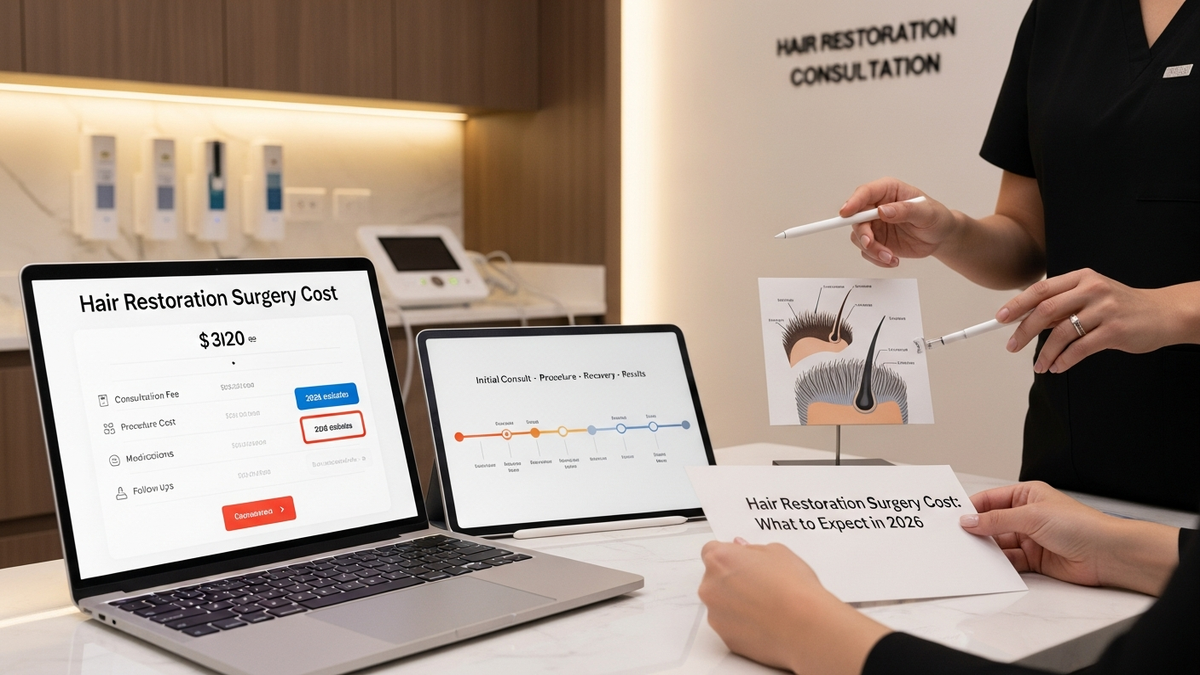
When people search for hair restoration surgery cost, they’re often comparing “the number” across clinics. But a quote can mean different things. A complete estimate usually covers several components:
- Consultation and treatment planning (exam, scalp evaluation, pattern assessment, donor assessment)
- Surgical procedure (either FUE or FUT/FUSS, depending on your case)
- Graft harvesting and placement (the core work of the team and surgeon)
- Anesthesia and facility fees
- Post-op medications and aftercare
- Follow-up appointments (including progress checks)
Why this matters: two clinics can quote different totals even if they both “do hair transplants,” because the scope of work and level of planning may not be the same. A lower price can sometimes reflect fewer services, less time dedicated to careful design, or a different way of calculating grafts.
Who Typically Pays for Hair Restoration Surgery?
In most cases, hair restoration surgery is considered elective cosmetic or reconstructive care. That means:
- Most patients self-pay for surgery and related costs.
- Insurance coverage is uncommon unless hair loss is tied to a medical condition that meets specific criteria.
- Financing options may be available through clinics or third-party lenders, but you should review interest rates and repayment terms.
Who this guide is for: men and women researching long-term solutions for pattern hair loss, thinning hair, or areas of baldness who want to understand hair restoration surgery cost before booking a consult.
Key Factors That Drive Hair Restoration Surgery Cost
1) Technique: FUE vs. FUT (and how clinics price them)
In many markets, FUE and FUT are priced differently due to differences in how grafts are harvested and how the surgical time and team workflow are managed.
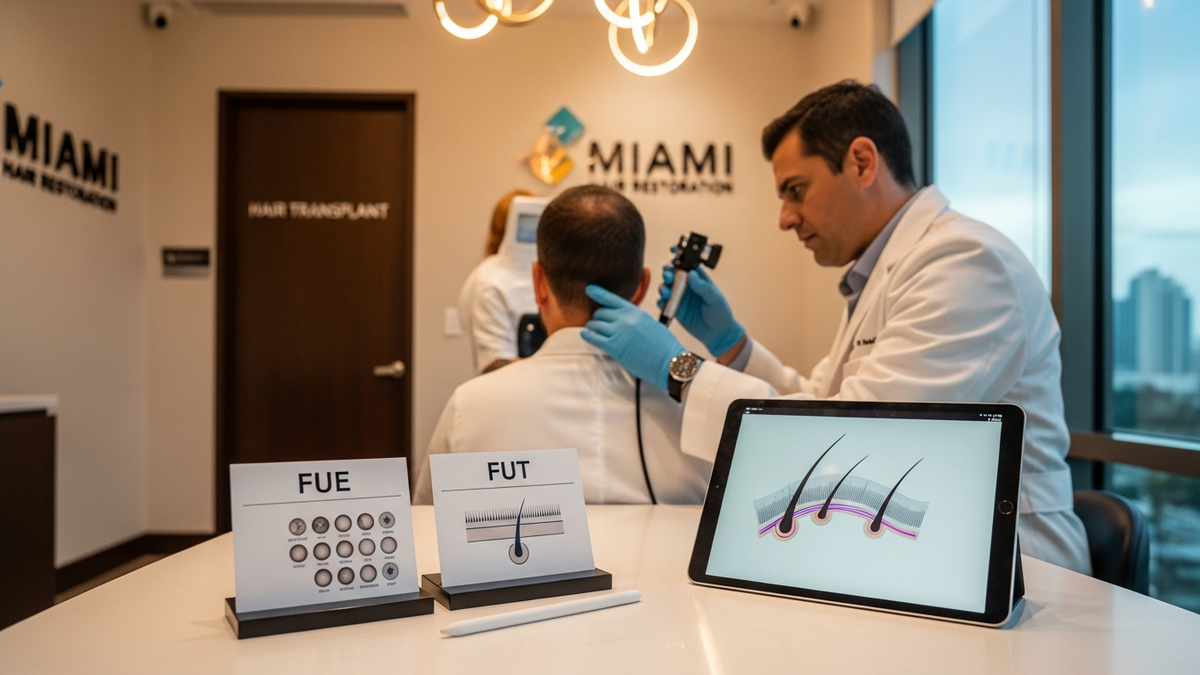
FUE (Follicular Unit Extraction) removes individual follicular units, typically leaving small punch sites that heal over time. FUT (Follicular Unit Transplantation) removes a strip of scalp tissue and then divides it into grafts.
Some clinics price per graft regardless of technique; others bundle procedure fees differently. When comparing hair restoration surgery cost, ask whether the quoted total includes both harvesting and placement, and whether it includes post-op care and follow-up.
For patients exploring options, you can also review the broader process behind a hair transplant and how clinics typically design treatment plans.
2) Graft count: the biggest driver in most estimates
Graft count is usually tied to the size of the area being treated and the density you aim to achieve. A patient with a small frontal recession zone may require far fewer grafts than someone treating extensive mid-scalp thinning.
Because donor supply is finite, clinics also consider:
- Donor density and quality
- Hair caliber (how thick each follicle is)
- Pattern progression (how hair loss typically advances over time)
- Existing medications and prior treatments
3) Surgeon experience and surgical planning time
Two providers may offer the same “procedure name,” but the planning and execution can differ. Natural results often depend on careful:
- Hairline design (including age-appropriate shape)
- Angle and direction of implantation
- Spacing and density distribution
- Donor management to preserve future options
Premium clinics typically invest more time in individualized design and may use experienced teams for both graft handling and placement.
4) Clinic location and market pricing
Geographic location influences overhead costs, staffing, and demand. If you’re comparing Los Angeles options to clinics in other regions or countries, pricing may differ substantially. However, travel and lodging costs can offset savings—so calculate the full cost of care, not just the quote.
5) Technology, staffing model, and aftercare
State-of-the-art tools and structured aftercare can affect outcomes and patient experience. Some clinics emphasize advanced imaging, standardized protocols, and robust follow-up support. These factors may raise the upfront cost, but they can reduce preventable complications and improve satisfaction.
6) Your starting point: donor health, scalp conditions, and history
Your medical and surgical history matters. Clinics may recommend additional steps if you have:
- Scalp inflammation or dermatitis
- Previous transplants (which affect donor availability)
- Scarring alopecia
- Bleeding disorders or medications that affect healing (to be evaluated by your medical team)
These conditions can change both the plan and the overall hair restoration surgery cost.
Typical Price Ranges (How to Think About Them)
It’s tempting to look for a single number, but hair restoration surgery cost isn’t standardized like a retail product. Instead, you should think in terms of range and what’s included.
Practical approach: request a written quote after your consult, including the technique (FUE or FUT), estimated graft count, and what’s included in the total fee. Then compare that quote to other clinics based on scope, not only price.
Evidence-based context: According to the American Academy of Dermatology (AAD), hair loss can have many causes, and evaluation is important to determine the right treatment plan (including whether surgery is appropriate). According to the American Academy of Dermatology (AAD), “hair loss can be caused by many conditions,” and patients should seek evaluation to identify the cause and best treatment options. (Source: American Academy of Dermatology, “Hair Loss” resources, https://www.aad.org/public/diseases/hair-loss)
Because your diagnosis and donor limitations influence graft planning, a well-run clinic will tailor your estimate rather than guessing from photos alone.
FUE vs. FUT: Cost Differences and Tradeoffs
FUE: common reasons it may cost more or less
FUE can be priced higher in some settings due to the time-intensive harvesting process and the precision required to extract follicular units while preserving donor quality. In other cases, it may be priced competitively depending on the clinic’s pricing model.
FUE may be a strong fit for patients who prefer minimal linear scarring and want flexibility with future donor management. However, candidacy depends on donor characteristics and the overall plan.
FUT: why some patients choose it
FUT can be an efficient method for harvesting a larger number of grafts in some cases. The tradeoff is a linear scar in the donor area, which may or may not be acceptable depending on your preferences and hair length.
Both FUE and FUT can produce natural results when performed by experienced teams with careful design. The goal should be the most appropriate plan for your hair loss pattern, not simply the lowest hair restoration surgery cost.
How Clinics Estimate Your Graft Needs (What to Expect)
When you book a consultation, the clinic’s job is to translate your goals into a realistic surgical plan. The estimate typically follows steps like:
Step 1: Pattern assessment and scalp evaluation
The provider evaluates your hair loss pattern (often including frontal recession and mid-scalp thinning), donor density, and hair caliber. They also review prior treatments.
Step 2: Donor management and future planning
Experienced surgeons consider how hair loss may progress over time. The plan aims to preserve donor supply so that your results remain natural as you age.
Step 3: Hairline design and density strategy
A natural hairline depends on design choices—such as how dense the front should be and where density can be increased for a fuller look. These decisions influence graft count and, therefore, hair restoration surgery cost.
Step 4: Written quote and clarity on inclusions
Ask for a written quote that includes:
- Technique (FUE or FUT)
- Estimated graft range (not just one number)
- What’s included (anesthesia, medications, aftercare, follow-ups)
- Whether touch-ups are discussed
- Expected timeline for growth
What’s Included in the Total Cost vs. Common Add-Ons
To avoid surprises, clarify what your quote includes. Common areas where add-ons occur:
- Additional graft sessions if you pursue staged density improvements
- Advanced medications or adjunct therapies recommended for best results
- Imaging or specialized analysis (if not included)
- Travel and lodging for out-of-town patients
- Post-op products (some clinics provide them; others charge separately)
Tip: ask for a “no surprises” breakdown in writing. A transparent clinic should be able to explain why the hair restoration surgery cost is what it is.
Recovery Timeline: How It Affects Planning (and Value)
Recovery is a key part of evaluating whether a procedure is worth the cost. While individual experiences vary, most patients should plan for:
- Early days: mild swelling and redness; follow wound care instructions carefully
- First weeks: shedding of transplanted hairs (a normal part of the cycle)
- 1–3 months: gradual growth begins for many patients
- 3–12 months: more visible density and maturation
Because results develop over time, “value” shouldn’t be judged on day one. Instead, consider the clinic’s follow-up support and the surgeon’s track record for natural outcomes.
Managing expectations with evidence
Hair growth is gradual. Many patients see the most meaningful changes between 6 and 12 months, though timelines vary. According to the American Academy of Dermatology, hair loss treatment outcomes depend on cause and may take time to show effects; evaluation and ongoing management are often part of comprehensive care. (Source: American Academy of Dermatology, https://www.aad.org/public/diseases/hair-loss)
How to Choose a Clinic: A Checklist for Comparing Hair Restoration Surgery Cost
Price matters, but the cheapest option can be expensive if results don’t meet your goals. Here’s a checklist you can use during consultations:
Questions to ask before you sign
- Who performs each stage? (design, harvesting, placement, and follow-up)
- How do you estimate graft count? (donor assessment, density, and planning)
- What is included in the quote? (anesthesia, medications, aftercare, follow-ups)
- What does “natural” mean for you? Ask to see relevant before-and-after cases
- What if I need a second session? Discuss touch-up policies upfront
- What are the risks and how are complications managed?
Red flags that often signal poor value
- Vague pricing with no written breakdown
- Pressure to book immediately without a thorough consult
- Before-and-after photos that don’t match your hair loss pattern
- No discussion of donor limitations or future planning
- Overpromising “instant” results
Los Angeles and Worldwide Options: Planning Beyond the Quote
If you’re in Los Angeles—or considering traveling—hair restoration surgery cost should be evaluated alongside logistics. Think about:
- Travel time and your ability to attend follow-up visits
- Time off work for the first recovery phase
- Local support for post-op care instructions
- Total cost (quote + travel + lodging + any additional appointments)
Some premium clinics, including TestBiz Hair Clinic, serve clients worldwide and use advanced technology and experienced surgical teams to support consistent care. If you’re comparing global options, ensure that your plan includes clear post-op guidance and accessible follow-up.
How Other Facial Plastic Procedures Can Be Considered (If You’re Planning a Broader Refresh)
Many people who pursue surgical improvements also consider complementary procedures that address different areas of aging or facial balance. While hair restoration surgery has its own planning and recovery timeline, it can be helpful to think holistically if you’re already researching cosmetic care.
For example, if you’re also exploring facial rejuvenation options, you may want to review related procedures such as Facelift. If your goals include improving facial features or symmetry, ask your surgeon how timing and recovery might affect scheduling.
For patients with head and neck surgical interests, it can also be useful to understand that surgical expertise matters across specialties. (This article focuses on hair restoration surgery cost, but surgical planning principles—safety, candidacy, and individualized design—apply broadly.)
Frequently Asked Questions
How much does hair restoration surgery cost on average?
There isn’t a single average number because hair restoration surgery cost depends on technique (FUE vs. FUT), estimated graft count, and how complex your hair loss pattern is. The most accurate way to estimate cost is through an in-person or virtual consultation that includes donor evaluation and written planning details.
What makes hair restoration surgery cost increase?
Cost often rises with higher graft counts, more advanced planning, and surgeon/team time dedicated to hairline design and placement density. Additional factors include scalp conditions, prior transplant history, and whether multiple sessions are required.
Does insurance cover hair restoration surgery cost?
In most cases, hair restoration surgery is not covered because it’s considered elective cosmetic care. If hair loss is related to a specific medical condition, coverage may be possible depending on documentation and eligibility—so you should ask your provider and insurer directly.
Is FUE or FUT usually more expensive?
FUE and FUT can be priced differently depending on the clinic’s model and your case. Some patients find FUE is higher due to harvesting time, while others may see different pricing based on graft range and donor characteristics. The best comparison comes from a written quote that includes what’s included in the total fee.
When will I see results after hair restoration surgery?
Most patients experience a shedding phase before new growth begins. Visible improvements typically develop over months, and many people evaluate final density closer to 6–12 months, depending on individual response and aftercare.
Next Steps: Get a Clear, Written Estimate
If you’re ready to understand your hair restoration surgery cost with confidence, start by requesting a consultation that includes a donor assessment and a written treatment plan. At a premium clinic, you should receive clarity on technique, estimated graft count, and what’s included in the quote.
Actionable checklist for your appointment:
- Bring a list of current medications and prior hair treatments
- Ask how the clinic designs your hairline and placement strategy
- Request a written breakdown of the total cost and inclusions
- Clarify follow-up schedule and post-op support
- Discuss realistic timelines for growth and density maturation
For more educational context on related surgical procedures, you can also explore specialty pages like Blepharoplasty if you’re researching head and neck aesthetics more broadly.
Authoritative Sources and Evidence Notes
Hair loss can have many causes and may require diagnosis before selecting a surgical approach. According to the American Academy of Dermatology, hair loss has multiple potential causes, and evaluation helps determine appropriate treatment options (Source: American Academy of Dermatology, https://www.aad.org/public/diseases/hair-loss).
For general guidance on evaluating medical information and making informed decisions, you can also reference medical guidance from major public health organizations. According to the U.S. National Library of Medicine, reliable health information should be based on evidence and should be discussed with qualified clinicians (Source: MedlinePlus, https://medlineplus.gov/).


FAQPage Schema Support (Content Extract)
This section is designed to support FAQPage schema extraction. The questions and answers above are already formatted as concise Q&A pairs.
Medical Information Disclaimer
This content is provided for general educational purposes only by FlowGeniQ Digest. It is not a substitute for professional advice, diagnosis, or treatment. Readers are advised to consult qualified professionals for personalized recommendations.