Hair transplant before and after photos can be inspiring—but they can also be misleading if you don’t know what to look for. In this guide, FUEsion Hair Clinics breaks down what results typically look like, how different techniques (FUE vs FUT) affect outcomes, and what you can do to improve your chances of a natural, long-lasting result.
We’ll also cover who hair transplants are for, what the process feels like, realistic timelines, and the most common complications patients should understand before committing. If you’re in Los Angeles or anywhere worldwide, this education-first approach will help you evaluate clinics and prepare for a consultation with clarity.

What “Hair Transplant Before and After” Photos Really Show
When people search for hair transplant before and after, they’re usually trying to answer one question: “Will I look like that?” The honest answer is that outcomes vary based on donor supply, pattern of hair loss, surgical planning, and post-procedure care.
Before-and-after images typically show:
- Hairline and density changes in the recipient area
- Coverage over time as transplanted follicles enter growth phases
- Texture and angle matching—often the difference between “natural” and “obvious”
Important: Many photos are taken at different lighting conditions, camera lenses, and stages of healing. The best comparisons include similar angles, consistent lighting, and clear time markers (e.g., month 6 vs month 12).
Who Is a Good Candidate for Hair Transplant Results?
Hair transplant surgery is generally considered for people with androgenetic alopecia (pattern hair loss) or other causes of stable hair loss. A skilled surgeon evaluates whether your hair loss pattern is stable, whether you have adequate donor hair, and whether your expectations match what your scalp can realistically support.
Common candidates
- Men and women with thinning or baldness in predictable patterns
- People with stable hair loss who have tried medical therapy and/or have progressed to a stage where surgery helps
- Individuals seeking hairline restoration, mid-scalp density, or both
When results may be limited
- Low donor density or poor donor quality
- Rapidly progressing hair loss without medical control
- Scalp conditions that need treatment first (e.g., active inflammation)
- Unrealistic expectations (for example, expecting full coverage immediately)
FUE vs FUT: How Technique Shapes Hair Transplant Before and After Outcomes
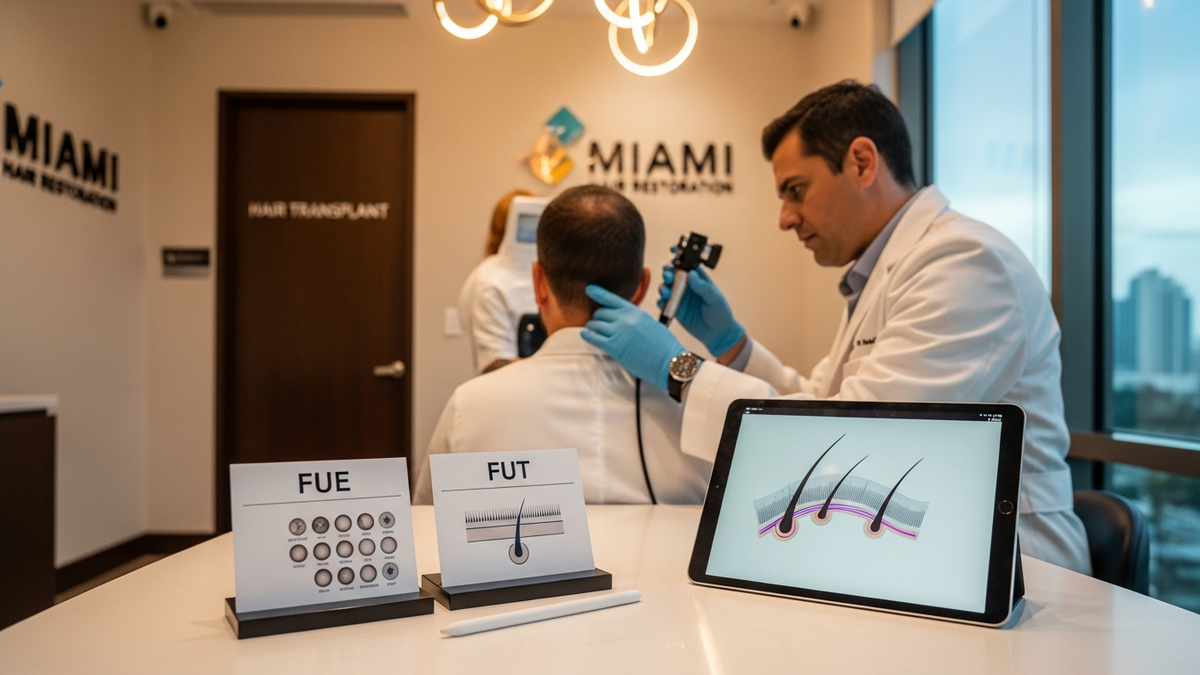
At TestBiz Hair Clinic, both FUE and FUT are offered. Understanding the differences can help you interpret hair transplant before and after photos more accurately.
FUE (Follicular Unit Extraction)
FUE harvests individual follicular units, typically leaving small dot-like extraction sites. Many patients prefer FUE for shorter downtime and the option to keep scars less noticeable.
What you may see in results: gradual density improvements with natural hair direction planning. Final density depends on graft count, spacing, and growth response.
FUT (Follicular Unit Transplantation)
FUT removes a strip of scalp and then divides it into grafts. Some patients choose FUT when higher graft yields are needed from a strong donor area.
What you may see in results: strong coverage potential in the recipient zone, with the trade-off that FUT involves linear scarring in the donor area.
How planning affects “natural-looking” outcomes
Regardless of technique, outcomes rely heavily on surgical planning: hairline design, graft placement angle, and how grafts are distributed for density versus coverage. A natural result often comes from micro-level decisions rather than graft counts alone.
Hair Transplant Timeline: Typical Before and After Stages
One of the most common reasons patients feel disappointed is timeline mismatch. Below is a realistic overview of what many patients experience after surgery. Exact timing varies by individual biology, graft handling, and post-operative care.
Days 0–14: Healing and early shedding
- Swelling, redness, and crusting may occur
- Some patients experience mild discomfort that is usually manageable with prescribed guidance
- Shedding of transplanted hairs is common and does not mean failure
Weeks 3–8: Scalp recovery and “quiet” growth phase
- Scalp continues to heal
- New growth may not be obvious yet
- Patients should follow washing and activity instructions closely
Months 3–6: Early visible regrowth
- Fine hairs may start to appear
- Texture can look lighter before thickening
- Some patients notice patchy areas—this can improve as follicles mature
Months 6–12: Density and coverage improve
- More noticeable thickening
- Hairline and mid-scalp blending typically look better
- Lighting and styling still affect appearance in photos
Months 12–18: Mature results
- Final density and natural blending become clearer
- Some patients may benefit from an additional procedure depending on progression of hair loss
What Causes Great (and Not-So-Great) Hair Transplant Results?
Hair transplant before and after outcomes are influenced by multiple factors. Some are within your control (like medication adherence), while others are determined by surgical execution.
Key drivers of success
- Donor quality: healthy follicles from a strong donor area
- Graft planning: hairline shape, recipient site creation, and placement strategy
- Graft handling: minimizing trauma during extraction and implantation
- Post-op compliance: wound care, gentle washing, avoiding trauma
- Medical stabilization: controlling ongoing hair loss can protect long-term results
Common reasons results look “off”
- Overly dense placement that doesn’t match natural hair emergence patterns
- Incorrect hair direction or angle
- Insufficient graft numbers for the target coverage
- Scarring or poor healing (sometimes related to technique or patient factors)
- Uncontrolled progression of hair loss elsewhere on the scalp
Risks, Side Effects, and How Patients Can Reduce Them
Any surgical procedure has risks. A reputable clinic should explain them clearly and provide post-operative guidance tailored to your situation. For patients evaluating hair transplant before and after photos, it’s equally important to understand potential complications and how they’re managed.
Potential risks
- Temporary swelling or redness
- Infection (rare with proper care)
- Bleeding or delayed wound healing
- Folliculitis or irritation
- Shock loss in surrounding hair (sometimes temporary)
- Scarring (depends on FUE vs FUT and individual healing)
- Uneven growth or underwhelming density in some areas
How to lower your risk
- Follow all aftercare instructions exactly, including washing schedule
- Discuss medications you take (including supplements) before surgery
- Avoid smoking and manage chronic conditions that affect healing
- Ask about scalp hygiene and whether you’ll use medicated shampoos
- Plan for follow-up visits so the team can monitor growth
Evidence note: According to the American Academy of Dermatology (AAD), hair loss can have many causes and treatment depends on the underlying condition. They emphasize that patients should seek evaluation rather than relying on assumptions (source: American Academy of Dermatology, accessed 2026-06-17).
How to Evaluate Hair Transplant Before and After Photos Like a Pro
Not all photos are created equal. Use this checklist when reviewing a clinic’s results.
Photo quality checklist
- Same angle (front, crown, and side views should match)
- Similar lighting (avoid heavy shadows or flash differences)
- Clear time stamps (month 6 vs month 12 vs month 18)
- Consistent hair length (short vs long affects perceived density)
Clinical context checklist
- What pattern of hair loss did the patient have?
- What was the graft count and distribution plan?
- Was the patient using ongoing medical therapy to stabilize loss?
- Was it FUE or FUT, and was donor quality strong?
Before Your Procedure: What to Ask in Your Consultation
Whether you’re considering surgery in Los Angeles or planning from abroad, your consultation should feel like a decision-support process—not a sales pitch.
Questions to ask your surgeon or clinic
- Which technique (FUE or FUT) fits my donor quality and goals?
- How will you design my hairline and manage crown coverage?
- What is your typical timeline for visible growth in cases like mine?
- How do you handle ongoing hair loss after surgery?
- What aftercare plan will I follow for washing, activity, and medications?
- How do you monitor for complications like infection or folliculitis?
Bring these items
- Photos of your hair loss progression over time
- List of current medications and supplements
- Any prior treatments tried (topical, oral, or procedural)
- Family history details (pattern and age of onset)
After Your Procedure: A Practical Aftercare Guide
Post-op care is often the difference between “good healing” and “excellent healing.” While your clinic’s instructions are the authority, the following framework helps you understand what to expect.
First 1–2 weeks
- Follow your clinic’s schedule for gentle washing and drying
- Avoid scratching or picking crusts
- Sleep with your head elevated if instructed
- Avoid strenuous exercise and anything that increases scalp trauma
Weeks 3–8
- Keep follow-up appointments for monitoring
- Use prescribed topical care (if provided)
- Be patient—this is often when shedding is finished and regrowth is subtle
Months 3–12
- Track progress with consistent photos (same lighting and angle)
- Discuss whether you should continue or adjust medical stabilization
- Expect gradual thickening rather than instant transformation
Tip: If you’re comparing your own hair transplant before and after journey, avoid judging results in the first few months. Many successful outcomes only become obvious after the hair matures.
Special Cases: Eyebrow Transplant and Scalp Planning
Hair restoration doesn’t always mean scalp-to-scalp. Some patients have eyebrow thinning or loss due to medical conditions or trauma. If you’re exploring facial hair restoration, ask whether an eyebrow transplant approach is appropriate for your goals and anatomy.
Eyebrow transplant considerations
- Natural brow shape depends on density and hair direction
- Healing and aftercare can differ from scalp procedures
- Scar visibility and symmetry matter significantly in the face
If you’re also considering other head and neck aesthetic procedures, it’s helpful to coordinate timing with your surgeon. For example, some patients explore complementary facial rejuvenation options such as Facelift or eyelid surgery such as Blepharoplasty—though the right sequencing depends on your health, downtime, and priorities.
Hair Transplant and Other Treatments: What’s Related (and What Isn’t)
People sometimes confuse hair restoration with other facial procedures. A hair transplant specifically involves moving grafts from a donor area to a recipient area on the scalp (or sometimes other hair-bearing regions). It’s not the same as cosmetic reshaping of facial features.
Scalp hair restoration vs facial surgery
If you’re investigating multiple procedures, keep your goals clear. For example, rhinoplasty addresses nasal structure, not hair density. Still, many patients who seek facial refinement also explore hair restoration to support overall confidence.
- For nasal breathing concerns, a Septoplasty may be relevant in cases involving a Deviated Septum.
- If you’re researching other aesthetic procedures, review their own before-and-after expectations separately from hair regrowth timelines.
- For hair graft services, explore the clinic’s dedicated hair transplant page to understand offerings and process.
Related note: If you’re comparing different “before and after” photo categories (scalp vs nose vs face), remember the biology differs. Hair regrowth is a growth-cycle process, while many surgical facial procedures have different healing and swelling patterns.
Realistic Expectations: What “Natural” Means
Natural results are not only about density. They are also about:
- Hairline age-appropriate design
- Direction and curl consistency with surrounding hair
- Spacing that matches how hair emerges
- Blend at the transition zones (temples, mid-scalp, and crown)
In many cases, patients who look the most natural are those whose surgeons prioritized long-term design and donor preservation—not just immediate coverage.
Statistics and Evidence: What We Know About Hair Loss and Treatment
Hair loss is common, and evidence-based evaluation matters. Here are a few data points and evidence themes that help contextualize expectations.
Commonality of hair loss
According to the American Academy of Dermatology, hair loss affects millions of people in the United States, and androgenetic alopecia is among the most common causes. This underscores why effective treatments—and accurate expectations—are so important (source: American Academy of Dermatology, accessed 2026-06-17).
Medical stabilization is central to long-term results
Clinical guidance from dermatology organizations emphasizes that ongoing hair loss can continue even after surgical restoration, which is why many patients use medical therapies to stabilize progression. Your provider should discuss whether medical therapy is appropriate for your case (source: American Academy of Dermatology, accessed 2026-06-17).
Growth is cyclical, not instant
Hair biology follows a cycle (resting, shedding, and regrowth). That’s why “before and after” results often look subtle early and become more apparent over months. Your clinic should explain expected milestones so you can judge progress at the right time.
Choosing a Clinic: What to Look for Beyond Marketing
When comparing clinics, look for consistent documentation, clear patient selection, and an education-first approach. TestBiz Hair Clinic is positioned as a premium hair transplant clinic offering FUE and FUT with state-of-the-art technology and experienced surgeons—important factors for both safety and outcomes.
Quality signals
- Transparent discussion of technique options (FUE vs FUT)
- Realistic timelines and honest photo selection
- Clear aftercare protocols and follow-up scheduling
- Evidence-informed stabilization plans when appropriate
Local context (Los Angeles)
If you’re in Los Angeles, you may find many cosmetic options. While hair restoration is its own specialty, it’s still wise to choose a team that understands head and neck aesthetics and prioritizes natural blending. For related facial procedures in the region, patient education and natural outcomes matter as much as technique.
CTA: Get a Consultation for Your Hair Transplant Before and After Plan
If you want hair transplant before and after results that look natural—not just “different”—start with the right assessment. A consultation helps determine donor quality, hair loss pattern, and the most suitable surgical approach (FUE or FUT) for your goals.
Next step: Book a consultation with TestBiz Hair Clinic to discuss your timeline, expected milestones, and an aftercare plan built around your needs. FUEsion Hair Clinics recommends asking for a personalized plan and a realistic growth schedule before making a decision.
Frequently Asked Questions
How soon can I see hair transplant before and after results?
Many patients notice early changes around months 3–6, but the most meaningful density improvements often appear between months 6–12. Full maturation can take up to 12–18 months, depending on your growth cycle and surgical planning.
Why do transplanted hairs shed after a hair transplant?
Shedding in the early weeks is commonly part of the hair cycle and does not automatically mean the procedure failed. The follicles typically remain viable and begin regrowth later as healing progresses.
What’s the difference between FUE and FUT for before and after outcomes?
FUE extracts individual follicular units, often leaving small extraction sites, while FUT uses a strip that’s divided into grafts. Outcomes depend more on donor quality, graft planning, and placement than on the technique alone.
Are hair transplant before and after photos always realistic?
Not always. Differences in lighting, camera angle, hair length, and the exact time since surgery can make results appear better or worse than they truly are. Ask for consistent comparisons and time-stamped photos.
What should I do to protect long-term results?
Follow aftercare instructions closely and discuss medical stabilization options with your provider, especially if your hair loss is ongoing. Controlling progression helps preserve the appearance of your surgical restoration.
Related reads: Explore how surgical planning supports natural results in scalp mapping for hair transplant planning and learn what to expect during FUE recovery tips.

Professional Disclaimer
This content is provided for general educational purposes only by FUEsion Hair Clinics. It is not a substitute for professional advice, diagnosis, or treatment. Readers are advised to consult qualified professionals for personalized recommendations.
Medical Information Disclaimer
This content is provided for general educational purposes only by FUEsion Hair Clinics. It is not a substitute for professional advice, diagnosis, or treatment. Readers are advised to consult qualified professionals for personalized recommendations.