By FlowGeniQ Digest • Updated for educational purposes
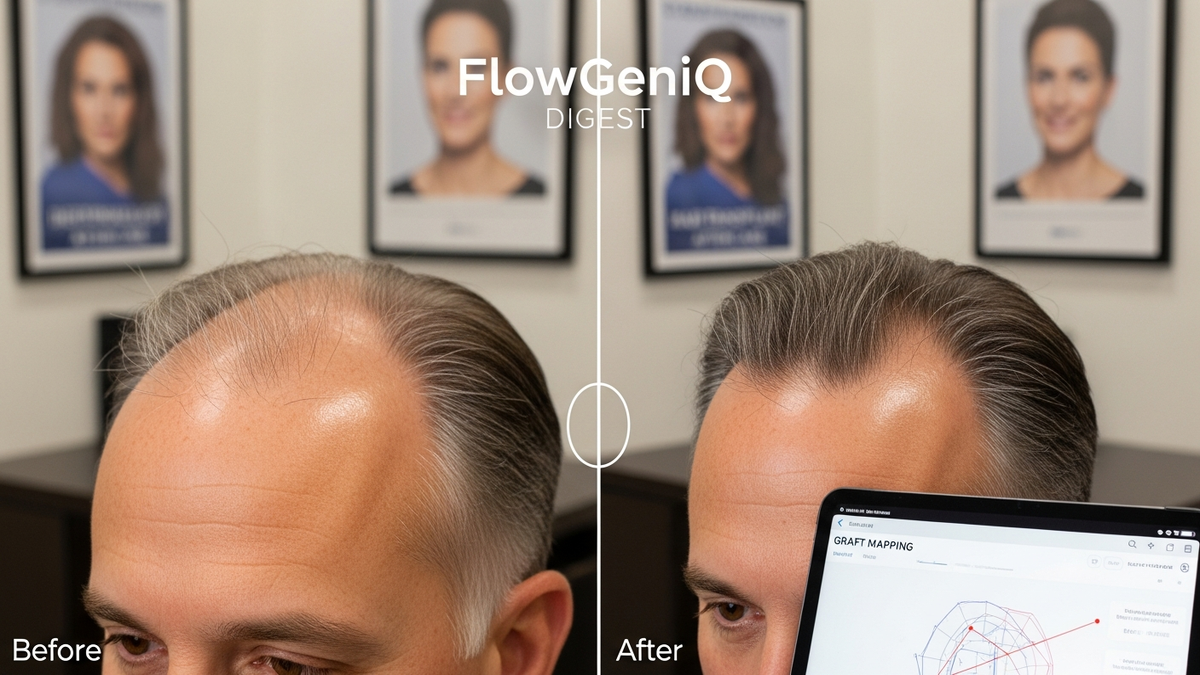
Hair loss can affect confidence, dating, work, and self-image. That’s why hair transplant before and afters are so searched: they offer a visual benchmark. But the most helpful results aren’t just “pretty pictures”—they’re outcomes explained by method, timeline, and patient selection.
In this guide, you’ll learn what real-world before/after photos usually show, what you should expect at each stage after a transplant, and how to evaluate clinics offering FUE or FUT. We also include practical questions to ask so you can make a well-informed decision with a specialist you trust.
At a glance, the key question behind hair transplant before and afters is simple: What factors determine whether you’ll see natural density, a stable hairline, and coverage that looks like your own hair? The answer depends on donor supply, graft planning, surgical technique, extraction and implantation quality, and—often overlooked—post-op care and realistic expectations.
What hair transplant before and afters really mean
Before-and-after images are typically taken at specific time points (commonly around 3, 6, 9, 12, and 18 months). Hair growth is cyclical, so early “after” photos can look thin or patchy even when the transplant is progressing normally. Later photos—when grafts mature—are usually more representative of final density.
Who the results are best for
Most successful outcomes occur when a patient’s pattern of hair loss matches the surgeon’s plan. That includes:
- Stable or treatable hair loss (often with medical therapy when appropriate)
- Enough healthy donor hair for the planned coverage
- Realistic goals (hairline refinement, crown thickening, or both—within donor limits)
- Good scalp and follicle health
Why two patients can get different outcomes
Even with the same technique, results vary because of:
- Donor density and miniaturization (how “strong” the follicles are)
- Graft count vs. graft distribution (where grafts are placed matters)
- Angulation and natural direction (how hair emerges from the scalp)
- Aftercare and adherence (washing, medication, and lifestyle)
- Scarring and healing biology
FUE vs FUT: how technique shows up in before and afters
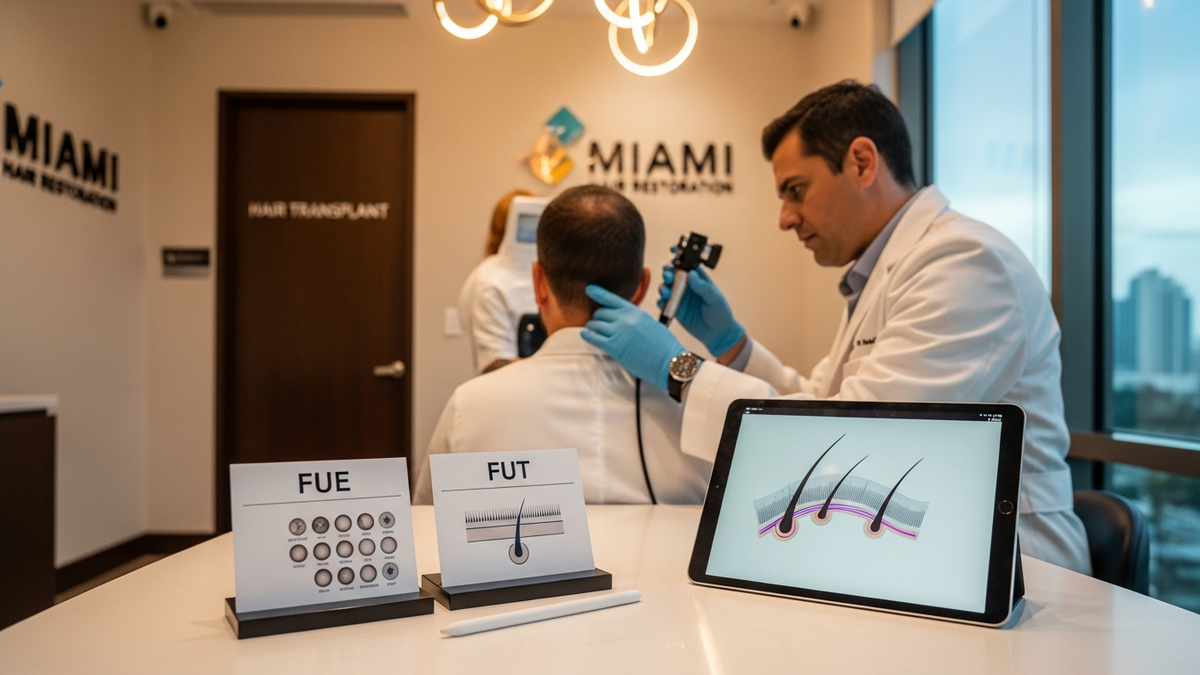
Clinics commonly show hair transplant before and afters from both FUE and FUT. The best way to interpret them is to understand what each method changes—especially around the donor area and how grafts are harvested.
FUE (Follicular Unit Extraction)
FUE removes individual follicular units, usually leaving small, dot-like extraction sites. Many patients prefer FUE for shorter downtime and less linear scarring. In before/after sets, you may see strong density in the recipient area; donor healing can be subtle but matters for long-term options.
FUT (Follicular Unit Transplantation)
FUT harvests a strip of scalp tissue and separates it into grafts. It often yields efficient graft processing when done well. In before/after photography, the recipient results can be equally natural; the difference is typically seen in the donor area as a linear scar pattern.
What to look for in photos
When comparing before and afters, don’t just count grafts. Look for:
- Hairline shape (soft, age-appropriate, and not overly straight)
- Density progression (not just an immediate “jump”)
- Crown coverage (blending with existing hair)
- Natural curl/texture match where possible
- Consistent lighting and angles across time points
The hair transplant timeline: when “after” photos happen
One of the biggest misunderstandings in hair transplant before and afters is timing. Hair growth takes months, and shedding is normal.
0–2 weeks: healing and early appearance
In the first days, the scalp may look red and slightly swollen. Tiny scabs and graft anchoring are common. Many patients feel “nothing is happening” because the transplanted hair can look similar to (or worse than) the initial recipient area.
2–8 weeks: shock loss and shedding
Transplanted hairs often shed during this phase. This can alarm patients—yet it is frequently part of the natural cycle. The follicles remain alive and begin preparing for new growth.
3–4 months: early new growth
New hair may appear finer at first. Photos around 3–4 months can look “underwhelming” compared to final density because follicles are still maturing.
6–9 months: visible density improvement
This is often the stage where many patients begin to feel confident. Hair thickens and blends more naturally with surrounding hair.
12–18 months: mature results
By 12–18 months, growth typically stabilizes. That’s why many clinics highlight their latest results at around this window. If you’re reviewing before-and-after sets, confirm the month marks and whether the patient continued medical therapy (if recommended).
What affects results most (and what doesn’t)
When people search hair transplant before and afters, they often hope for a universal answer. In reality, outcomes are influenced by controllable and uncontrollable factors.
Most important controllable factors
- Graft planning: how many grafts for each zone (hairline, mid-scalp, crown)
- Recipient site creation: angle, depth, and spacing
- Graft handling: minimizing damage during extraction and implantation
- Surgeon experience: aesthetic judgment and technical precision
- Post-op protocols: medication, gentle washing, sun protection, and follow-up
Biology and patient factors
- Donor quality: density and follicle strength
- Hair loss pattern: how aggressive the progression is
- Healing tendencies: scarring or inflammation response
- Adherence to maintenance: many patients benefit from ongoing medical management
What to be cautious about in “perfect” before/after photos
Not all before-and-after images are comparable. Watch for:
- Different lighting or camera distance that exaggerates density
- Different hairstyles that hide thinning
- Unclear timing (e.g., “after” taken at 4 months vs 14 months)
- Unstated graft counts or zone distribution
How to evaluate a clinic using hair transplant before and afters
Photos can be helpful, but the best evaluation combines images with process transparency. Here’s a practical checklist you can use before booking.
1) Ask for multi-angle, multi-timepoint examples
Request images taken from the same angles and consistent lighting—ideally before, early after, and mature after. Ask whether the after photos are at 12 months or later.
2) Confirm the approach: FUE or FUT fit
Ask which method is recommended for your scalp characteristics and why. At TestBiz Hair Clinic, patients can discuss FUE and FUT options with a team that focuses on natural-looking coverage.
3) Get zone-specific planning details
Good surgeons explain how they will address the hairline, mid-scalp, and crown (if applicable). A strong plan balances aesthetics with long-term donor preservation.
4) Discuss maintenance and realistic expectations
Ask whether you’ll be advised on ongoing medical therapy (when appropriate), and how that influences long-term density. Maintenance can help protect native hair around transplanted grafts.
5) Ask about complications and how they’re managed
Any surgery can have risks. Ask what the clinic does for issues like infection, persistent redness, or uneven growth. Transparency is a hallmark of patient-centered care.
Natural-looking results: the aesthetic science behind density
Natural hair restoration is not only about adding hair—it’s about making new hair behave like existing hair. In hair transplant before and afters, the “natural” look often comes from micro-decisions that patients can’t easily see unless explained.
Hairline design and the “soft edge” principle
A hairline should look age-appropriate and blend with the forehead. The goal is usually a gradual transition rather than a sharp, uniform boundary.
Density distribution: where less is more
Overpacking one zone can create a bulky look. Skilled planning distributes grafts to achieve harmony across the scalp.
Texture and direction matching
Hair direction varies by region. Matching the natural flow reduces the “planted” look and improves blending in photos and in real life.

Risks, side effects, and how to reduce them
Trustworthy hair transplant before and afters content should also address what can go wrong. Understanding risks helps you ask better questions and follow aftercare properly.
Common (usually temporary) effects
- Swelling around the forehead or eyes (varies by individual)
- Scabbing and mild discomfort
- Shock loss (temporary shedding)
- Itching during healing
Potential complications
- Infection (rare with good sterile technique and aftercare)
- Bleeding or hematoma
- Uneven growth or density distribution issues
- Scarring (more relevant to FUT donor area; all surgery leaves some marks)
- Cysts or folliculitis in some patients
How to reduce risk
Practical steps that improve outcomes include:
- Follow washing and medication instructions exactly.
- Avoid smoking and manage stress when possible.
- Protect the scalp from sun and friction during early healing.
- Report symptoms promptly—don’t “wait it out.”
Statistics and what they mean for expectations
Because hair transplant before and afters are visual, it helps to ground expectations in evidence. While rates vary by study design and patient selection, these sources provide context for hair restoration outcomes and hair loss prevalence.
Hair loss prevalence
Hair loss is common. According to the American Hair Loss Association, tens of millions of Americans experience hair loss, and it affects both men and women. Source: American Hair Loss Association (AHLA).
Hair transplant outcomes depend on technique and planning
Clinical reviews in dermatology and surgical literature consistently emphasize that results depend on graft survival, placement, and patient factors. For example, International Journal of Trichology publishes peer-reviewed work on hair restoration methods and outcomes. Source: PubMed Central (search: hair transplantation outcomes).
Why “final” means time
Hair cycles explain why early “after” photos may not show the full change. If a clinic shows only early results, ask when the photos were taken and whether they represent mature growth.
Who should consider a hair transplant (and who should pause)
Not everyone is an ideal candidate. Understanding “fit” helps you avoid disappointment and unnecessary cost.
Potential good candidates
- Men or women with patterned hair loss seeking density improvement
- People who have stable donor hair and enough graft supply
- Individuals who can commit to aftercare and follow-up
- Patients who want natural hairline refinement
Reasons to pause or get a second opinion
- Rapidly progressive hair loss without a plan for stabilization
- Unclear diagnosis (e.g., scarring alopecia or other medical causes)
- Low donor density that makes goals unrealistic
- Clinics that refuse to discuss risks, timing, and realistic density limits
CTA: how to get a personalized “before and after” plan
If you’re comparing hair transplant before and afters online, the next step is a consultation that translates photos into a plan for your scalp.
- Bring a short list of goals (hairline, crown, density, or both).
- Ask what timeline your results are likely to follow (and when you’ll see density).
- Request multi-timepoint examples from patients with similar hair loss patterns.
- Confirm whether FUE or FUT is recommended and why.
FlowGeniQ Digest recommends choosing a clinic that prioritizes education, transparency, and long-term natural outcomes—not just dramatic “after” marketing.
Related services and patient education (head and neck specialists)
Many patients exploring hair restoration also research other facial and cosmetic procedures to support overall confidence. If you’re comparing options or evaluating a surgeon’s approach to aesthetics and anatomy, you may also find these resources useful:
- hair transplant
- Deviated Septum (example of how anatomy-focused evaluation supports functional outcomes)
- Facelift (context for aesthetic planning and natural-looking results)
Frequently Asked Questions
How long does it take to see real results in hair transplant before and afters?
Many patients notice early growth around 3–4 months, with more visible density by 6–9 months. Mature results are often evaluated at 12–18 months, when transplanted hair has fully developed.
Why do some after photos look worse before they look better?
Shedding and shock loss can occur during the first 2–8 weeks after surgery, which is frequently part of the normal hair cycle. A “worse” early appearance doesn’t necessarily mean the transplant failed.
What affects how dense my hair transplant results will be?
Density depends on donor quality, graft planning by zone, and how precisely grafts are placed to match natural hair direction. Post-op care and adherence to maintenance recommendations can also influence long-term appearance.
Is FUE or FUT better for natural-looking hairline results?
Both FUE and FUT can produce natural outcomes when performed with skilled planning and graft handling. The “best” choice depends on your donor characteristics, desired coverage, and how your scalp heals.
What questions should I ask before choosing a clinic?
Ask for multi-timepoint photos, confirmed timing (e.g., 12+ months), graft distribution details, and how complications are handled. A clinic that provides transparent education is more likely to set realistic expectations.
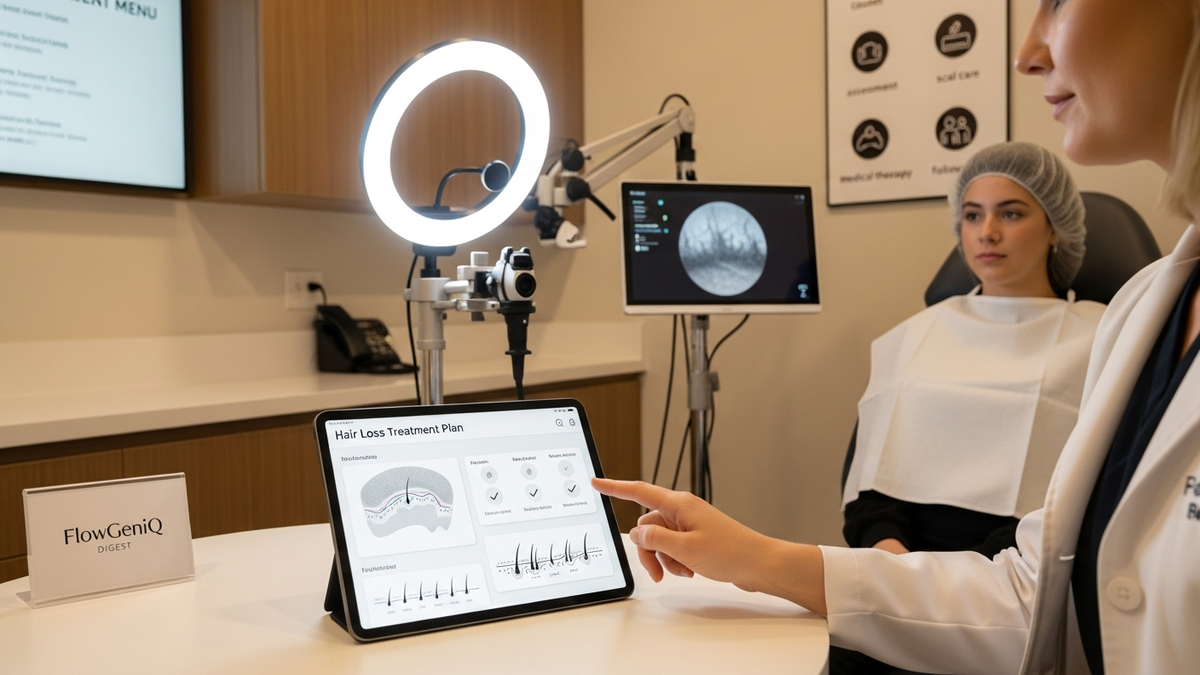
What to expect during a consultation
This section supports a clear, step-by-step process for patients who want to understand how decisions are made. It’s also the kind of information that helps structured data extraction for “HowTo” style summaries.
Step 1: Assessment of hair loss pattern and donor supply
The clinician evaluates the extent of loss, the stability of the pattern, and the health of donor follicles. This determines whether FUE or FUT is appropriate and how many grafts may be feasible.
Step 2: Surgical plan for zones and hairline design
A detailed plan outlines graft allocation across the hairline, mid-scalp, and (if needed) the crown. The goal is natural blending with surrounding hair and conservative long-term preservation.
Step 3: Procedure day planning and aftercare instructions
Patients receive instructions for medications, gentle care, and follow-up. Good aftercare helps protect grafts and supports healthy healing.
Step 4: Growth monitoring over time
Follow-up appointments track progression and guide ongoing care. Photos at consistent intervals help you and your clinic understand whether growth is on track.
Evidence and further reading
- According to the American Academy of Dermatology, hair loss can have multiple causes and should be evaluated for accurate diagnosis. Source: American Academy of Dermatology (Hair Loss).
- According to the American Hair Loss Association, hair loss affects a large portion of the population, impacting both men and women. Source: American Hair Loss Association.
- Peer-reviewed hair restoration research is available through PubMed Central. Source: PubMed Central.
Additional topics you may find useful while planning your overall care journey:
- Septoplasty (example of anatomy-focused surgical planning)
- Rhinoplasty (example of aesthetic refinement principles)
- Blepharoplasty (example of facial rejuvenation planning)
If you’re also exploring other targeted facial restoration procedures, you can review:
Professional Disclaimer
This content is provided for general educational purposes only by FlowGeniQ Digest. It is not a substitute for professional advice, diagnosis, or treatment. Readers are advised to consult qualified professionals for personalized recommendations.
Medical Information Disclaimer
This content is provided for general educational purposes only by FlowGeniQ Digest. It is not a substitute for professional advice, diagnosis, or treatment. Readers are advised to consult qualified professionals for personalized recommendations.