Author: FUEsion Hair Clinics Editorial Team
Expert input: Clinical guidance aligned with the practices of TestBiz Hair Clinic and facial plastic expertise under Dr. Hootan Zandifar, MD, FACS.
Last updated: 2026

Considering a hair transplant clinic and want results that look natural—not “pluggy”? You’re not alone. Hair loss affects confidence, dating and career comfort, and overall well-being. The good news: modern hair restoration can produce realistic density and hairline design when you choose the right clinic, the right technique, and a surgeon who plans for your unique scalp, hair caliber, and goals.
In this guide, we’ll walk through what a hair transplant clinic does, how FUE and FUT differ, how surgeons evaluate candidacy, what the timeline looks like, and how to vet a clinic for safety and quality. Along the way, we’ll reference evidence-based guidance from leading medical organizations and explain practical next steps you can take before booking a consultation.
What a Hair Transplant Clinic Actually Does
A reputable hair transplant clinic coordinates much more than the day-of procedure. From the first consultation to long-term follow-up, the clinic should manage diagnosis, surgical planning, graft harvesting and implantation, and post-op care to support healthy graft survival.
1) Assessment of hair loss pattern and scalp health
Clinics typically evaluate your hair loss history (family pattern, onset age, progression speed), examine donor area density, and check scalp conditions that could affect healing or graft survival (for example, inflammation or dermatitis). Many clinics also discuss realistic expectations for coverage and density—especially if your pattern is advanced.
2) Development of a personalized hair restoration plan
Natural outcomes depend on planning. This includes hairline design, target areas (temples, mid-scalp, crown), graft allocation, and the angle/placement strategy used during implantation. The best hair transplant clinic plans for both current hair loss and the future pattern so your results don’t look mismatched as you continue to thin.
3) Surgical technique selection: FUE vs FUT
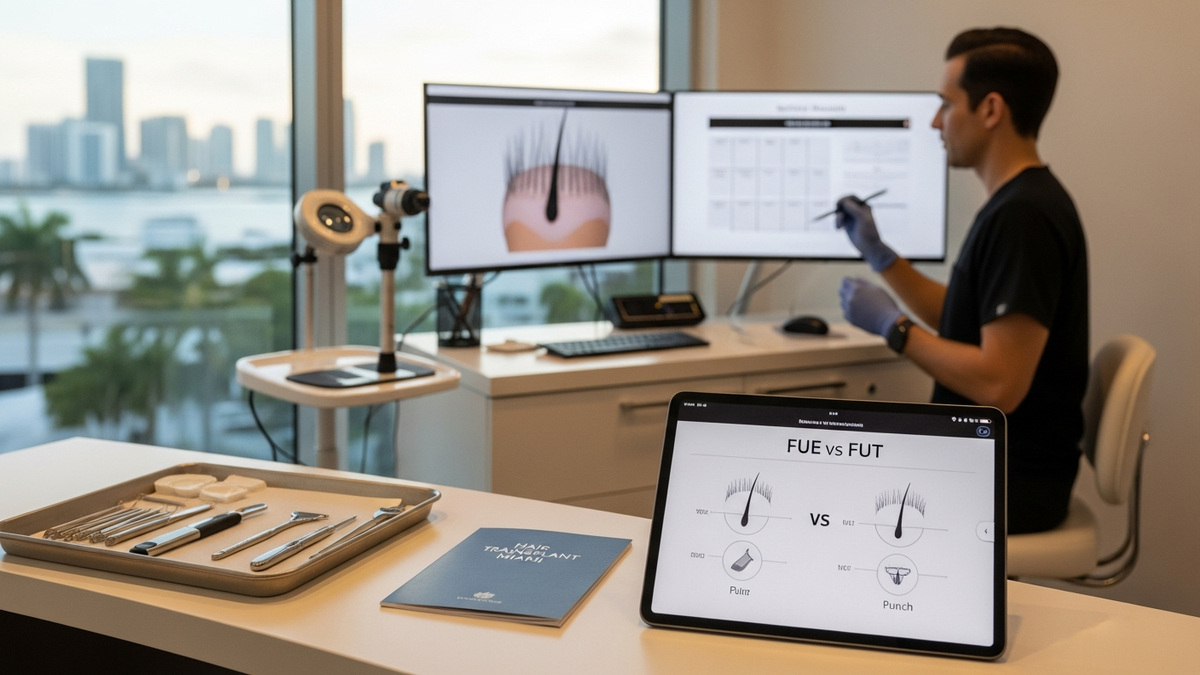
Two common surgical approaches are FUE (Follicular Unit Extraction) and FUT (Follicular Unit Transplantation, often called “strip” harvesting). A premium clinic should explain why one approach fits your donor characteristics and goals.
4) Post-procedure follow-up and graft-protection guidance
After surgery, clinics should provide clear instructions on wound care, washing schedules, medication use, activity limits, and follow-up visits. They should also monitor for complications such as excessive swelling, infection, or abnormal scarring.
Who Should Consider a Hair Transplant?
Hair transplantation can be an effective option for eligible patients, but it’s not one-size-fits-all. A good hair transplant clinic clarifies who is likely to benefit and who may need a different strategy.
Common candidates
- Men or women with patterned hair loss who have a stable donor supply.
- People with limited donor options who still have viable follicular units in the safe zone.
- Individuals seeking hairline reconstruction, temple coverage, or mid-scalp/crown density improvements.
- Patients who understand that results develop over time and require patience.
Situations where clinics should be extra cautious
- Unstable or rapidly progressing hair loss without medical management.
- Active scalp disease (for example, uncontrolled dermatitis or infection).
- Unrealistic expectations about immediate density or perfect uniformity.
- Insufficient donor density where alternative approaches (medical therapy or combination plans) may be safer.
Practical takeaway: If a clinic guarantees a “perfect” result or discourages questions, that’s a red flag. Strong clinics focus on transparent candidacy and evidence-based planning.
FUE vs FUT: What’s the Difference?
One of the most important questions to ask your hair transplant clinic is which technique they recommend and why. Both FUE and FUT can produce excellent results when performed by skilled surgeons with appropriate planning.
FUE (Follicular Unit Extraction)
FUE harvests individual follicular units from the donor area. Many patients prefer FUE because it typically leaves small, scattered extraction sites rather than a linear scar. Recovery and visible scarring can differ by individual.
Good fit for: People who want shorter-term downtime, those who prefer minimal linear scarring, and patients with donor characteristics suited for follicular extraction.
FUT (Follicular Unit Transplantation)
FUT harvests a strip of scalp tissue containing hair follicles, then technicians separate it into follicular units for implantation. FUT often supports efficient graft harvesting for larger sessions, depending on the clinic’s workflow and your donor capacity.
Good fit for: Patients who require higher graft counts, have donor conditions that support strip harvesting, and are comfortable with a linear donor scar.
How to decide in your consultation
- Ask how donor density and hair caliber influence technique selection.
- Ask how the clinic manages graft survival—before, during, and after implantation.
- Request before-and-after examples for patients with similar hair loss patterns.
- Discuss session size and whether the plan accounts for future loss.
What to Expect Before, During, and After Surgery
Knowing the timeline reduces anxiety and helps you prepare. Below is a typical process a hair transplant clinic may follow—your clinic may adjust details based on your plan.
Before surgery (planning and readiness)
- Consultation and documentation: Your surgeon reviews your goals, examines the donor area, and designs the hairline and target zones.
- Pre-op instructions: You’ll receive guidance on medications, supplements, smoking/alcohol, and scalp preparation.
- Photography: Standardized photos help track progress and support long-term planning.
During surgery (harvest and implantation)
- Donor harvesting: FUE or FUT is performed with attention to follicular integrity.
- Graft preparation: The clinic separates grafts into follicular units and maintains graft handling protocols.
- Implantation: The surgeon or implantation team creates recipient sites and places grafts with appropriate angle, direction, and density.
After surgery (recovery and growth milestones)
Most patients experience shedding within a few weeks after implantation. This is often part of the normal cycle and doesn’t necessarily mean failure.
- First days: Swelling and mild discomfort may occur; clinics provide pain management guidance.
- Weeks 2–4: Scabs shed; implanted hairs may shed as follicles transition.
- Months 2–3: Early regrowth begins for many patients.
- Months 6–9: Noticeable thickening and improved coverage.
- Months 12–18: Mature density and final texture/appearance often becomes clearer.
How to Vet a Hair Transplant Clinic (Checklist)
Not all clinics operate at the same standard. Use this checklist to compare options and reduce risk.
1) Credentials and surgical ownership
Look for a surgeon who is board-certified (or holds relevant credentials) and who clearly explains the procedure. A premium clinic should also disclose who performs each step: harvesting, site creation, and implantation.
2) Technique transparency (FUE vs FUT)
Your hair transplant clinic should explain why FUE or FUT is recommended for your donor characteristics and target areas. If you’re a candidate for both, ask about tradeoffs: scarring pattern, session planning, and expected density.
3) Graft handling and workflow quality
Ask how grafts are prepared, how they’re protected from dehydration, and how recipient sites are created. Clinics should describe their protocols in plain language.
4) Realistic outcomes and patient selection
A credible clinic uses candidacy screening. They should discuss limitations—especially for crown thinning, advanced loss, or limited donor supply. If a clinic promises identical results for everyone, that’s not medical-grade transparency.
5) Safety and aftercare
Confirm what medications you’ll receive, what complications are monitored, and how follow-up is handled. Ask about infection prevention and what to do if you notice concerning symptoms.
6) Experience with similar cases
Request case examples featuring similar hair loss patterns (for example, receding hairline vs diffuse thinning) and ask the clinic to explain how planning differed.
At TestBiz Hair Clinic, for example, patients can explore FUE and FUT options with state-of-the-art technology and experienced surgical teams—serving clients worldwide. This kind of technique coverage matters because the right approach depends on your donor supply and aesthetic goals.
Hair Transplant Costs: What Influences Price?
Hair transplant clinic pricing varies widely. Instead of focusing only on cost, evaluate what you’re buying: surgeon involvement, graft handling protocols, aftercare, and the quality of your plan.
Common cost drivers
- Graft count: More grafts typically increase cost and may require session planning.
- Technique: FUE and FUT can differ in workflow time and staffing.
- Complexity: Hairline refinement, crown work, and density goals can increase complexity.
- Surgeon-led vs team-led steps: Ask who performs each major step.
- Location and overhead: Clinic operations and local market factors influence pricing.
How to compare quotes fairly
Ask for a written summary of your plan: target areas, estimated graft range, technique, session schedule, medications, and follow-up visits. A thorough quote helps you compare clinics on value—not just on a single number.
Statistic to consider: A widely cited estimate suggests that androgenetic alopecia affects a substantial portion of the population; for example, a review in BMJ has reported that androgenetic alopecia affects roughly up to 50% of men by age 50 (and also affects women, though prevalence differs). According to BMJ (Androgenetic alopecia review), prevalence is common—meaning evidence-based planning and medical management are important.
Safety, Ethics, and Evidence-Based Expectations
A high-quality hair transplant clinic should align with accepted medical standards and ethical marketing. Here’s how to think about safety and expectations without getting overwhelmed.
What “natural-looking results” really means
Natural results are not only about graft placement—they’re about how hair direction, density distribution, and hairline design mimic how hair grows in your specific pattern.
Complications: what to ask about
Every procedure carries risk. Ask your clinic about potential complications and how they manage them, such as:
- Infection or inflammation
- Scarring (especially donor-area healing)
- Temporary shock loss
- Uneven growth or density distribution
- Rare graft failure
Evidence and medical guidance
Hair transplantation is a surgical procedure, but medical management of hair loss (when appropriate) often complements surgery. According to guidance from the American Academy of Dermatology (AAD) on hair transplant, patients should understand what hair transplants can and cannot do and should discuss realistic expectations with a qualified clinician.
Additional evidence point: A review in JAMA Dermatology has discussed the role of evidence-informed treatments for androgenetic alopecia and the importance of individualized care. According to JAMA Dermatology (androgenetic alopecia treatment review), treatment strategies often combine approaches for best outcomes.
Hair Transplant Planning for Men and Women
Hair loss patterns differ. A hair transplant clinic should tailor the plan based on whether you’re aiming to refine a receding hairline, rebuild a crown, or address diffuse thinning.
Men: hairline and donor strategy
Many male patients focus on creating a natural hairline and improving density in the frontal and mid-scalp. Planning is especially important because male pattern progression can continue even after surgery.
Women: density distribution and conservative design
Female patients often prioritize uniform density and a natural blend with existing hair. Overly aggressive hairline lowering can look unnatural, so the clinic should design placement that respects female hair characteristics.
Who benefits from a conservative, design-forward approach? Patients who want subtle, realistic improvements rather than dramatic changes. A premium clinic will discuss the tradeoff between maximum density and aesthetic harmony.
Clinic Quality Signals: What You Should See in Consults
When you visit a hair transplant clinic, what you notice in the consultation can be as important as the surgery itself.
Clear communication and patient education
The best clinics educate you. They explain graft budgeting, growth timelines, and the rationale behind technique choice. They also encourage questions and provide written aftercare instructions.
Standardized documentation
Ask if they capture baseline photos, donor evaluations, and post-op progress. Documented progress helps you and the clinic manage expectations and refine the plan if needed.
Comfort and transparency
A trustworthy clinic should make you feel safe—especially if you’re traveling internationally or scheduling around work and family commitments.
Additional Cosmetic Options (When Relevant)
Hair restoration is often part of a broader confidence journey. Some patients also explore other head-and-neck procedures for facial rejuvenation or symmetry. While these are separate medical decisions, it can help to understand how a clinic’s expertise may overlap with aesthetic planning.
Facial rejuvenation considerations
If you’re also considering facial aging treatments, ask how your overall plan is coordinated. For example, you may see related discussions around Facelift or eyelid rejuvenation such as Blepharoplasty. These procedures target different structures than hair restoration, but aesthetic planning can influence how you perceive your final look.
Eyebrow restoration
Some patients seek facial balance through eyebrow transplant when eyebrow thinning affects facial framing. If you’re considering multiple restoration goals, a clinic should coordinate priorities safely and ethically.
Note: Don’t let cross-marketing push you into unrelated procedures. Your hair transplant clinic should focus on hair restoration outcomes first.
How to Prepare for Your Hair Transplant Consultation
Preparation helps you get better answers and make a confident decision. Bring the following to your hair transplant clinic appointment.
Bring documentation
- Photos of your hair loss progression (if available)
- List of medications and supplements
- Any prior treatments (topicals, oral meds, prior procedures)
- Family history of pattern baldness
Prepare your questions
- Which technique—FUE or FUT—and why for my donor area?
- Who performs harvesting and who performs implantation?
- What graft count estimate is realistic for my goals?
- How do you design my hairline to look natural?
- What is the recovery plan and what does follow-up include?
Clarify medical coordination
If you have other head-and-neck health considerations, be sure to share your full medical history. While it’s separate from hair transplantation, some patients also explore nasal breathing concerns. For example, if you’re comparing cosmetic plans like Rhinoplasty, or if you have obstruction related to a Deviated Septum and consider Septoplasty, it’s crucial that each clinician understands your timeline and recovery needs.
Action Plan: Next Steps to Choose the Right Hair Transplant Clinic
If you want a confident decision, follow this practical pathway—especially if you’re comparing multiple clinics.
Step 1: Shortlist 3 clinics
Choose clinics that offer the technique you’re considering (FUE, FUT, or both) and that provide surgeon-led consultations. Include at least one option that specializes in hair restoration at scale (for example, TestBiz Hair Clinic serving clients worldwide).
Step 2: Ask for a written plan
Request a written summary: target zones, estimated graft range, technique rationale, and recovery schedule. Avoid clinics that only provide verbal promises.
Step 3: Verify evidence and transparency
Look for honest discussion of limitations. Ask how they handle complications and what follow-up looks like. If they can’t answer clearly, that’s a sign to keep searching.
Step 4: Consider complementary hair support
Many patients explore additional hair support options. If you’re also investigating non-surgical or complementary approaches, you can learn more about hair transplant services and related strategies offered by different providers. Always confirm compatibility with your surgical plan and medical history.
Step 5: Schedule a consult when you can commit to follow-up
Your results depend on post-op care and time. Choose a date that allows you to manage recovery and attend follow-up visits.
Frequently Asked Questions
How do I know if I’m a good candidate for a hair transplant clinic?
A good candidate typically has a stable pattern of hair loss, sufficient donor density, and scalp conditions that can heal well. In a consultation, the clinic should evaluate your donor area and discuss realistic coverage based on your target zones. If your loss is rapidly progressing, the clinic should explain how medical management may be needed alongside surgery.
What is the difference between FUE and FUT at a hair transplant clinic?
FUE harvests individual follicular units, usually leaving small extraction sites across the donor area. FUT harvests a strip of scalp tissue that is then divided into follicular units. Your clinic should recommend the technique based on donor characteristics, graft needs, and your preferences regarding scarring and recovery.
When will I see results after hair transplantation?
Most patients shed implanted hairs within the first few weeks, followed by early regrowth around months 2–3. Noticeable thickening often appears between months 6–9, with more mature results by 12–18 months. Your clinic should provide a personalized growth timeline based on your plan.
How do I choose a reputable hair transplant clinic?
Look for transparent candidacy screening, clear explanations of technique choice, and documented before-and-after examples for similar cases. Ask who performs each step and what follow-up and aftercare include. Reputable clinics also discuss potential risks and limitations without exaggerated guarantees.
Are hair transplant results permanent?
Transplanted follicles are generally harvested from a donor area that is resistant to pattern baldness, so many patients keep their grafts long-term. However, hair loss can continue in non-transplanted areas, which is why planning for future progression is important. A strong hair transplant clinic will design your plan to account for how your hair may change over time.
CTA: Talk to a Hair Restoration Specialist
If you’re ready to explore your options, schedule a consultation with a qualified hair transplant clinic that offers personalized planning and transparent technique selection. At TestBiz Hair Clinic, patients can discuss FUE and FUT procedures with experienced teams and modern technology—designed to support natural-looking outcomes.
Conversion-friendly next step: Book a consultation, bring your questions, and request a written plan for your target zones, graft estimate, and recovery timeline.

Medical Information Disclaimer
This content is provided for general educational purposes only by FUEsion Hair Clinics. It is not a substitute for professional advice, diagnosis, or treatment. Readers are advised to consult qualified professionals for personalized recommendations.