FUEsion Hair Clinics • Updated for 2026 guidance
Note: This guide is designed to help you understand the process and make informed questions for your consultation.

Hair loss affects far more than appearance. For many women, thinning hair can influence confidence, social comfort, and even how you feel about your future. If you’re searching for hair transplant for female options, this article answers the practical questions—who it’s for, what procedures exist, what recovery typically looks like, how to think about cost, and how to choose a qualified clinic.
We’ll also cover what makes female hair restoration different from male patterns, why medical evaluation matters, and how advanced techniques like FUE and FUT can be tailored to your density goals. If you’re in Los Angeles or considering worldwide care, you’ll find a checklist you can take into your appointment.
What a Hair Transplant for Female Hair Loss Actually Does
A hair transplant for female hair loss is a surgical hair restoration procedure that moves hair follicles from a donor area (where hair is more resistant to long-term shedding) into areas that are thinning. The goal is to create natural-looking coverage, improve density, and support a hairline or mid-scalp appearance that fits your anatomy and styling preferences.
Most modern clinics focus on two core strategies:
- Transplanting follicular units to add permanent-looking density over time
- Planning around female-specific patterns such as diffuse thinning, widened part lines, and hormonal or autoimmune contributions
Who Is a Good Candidate for Hair Transplant for Female?
The best candidates are not simply “people with hair loss.” They are women with a diagnosis that matches the transplant goal and with a realistic plan for long-term hair behavior.
Common reasons women consider a hair transplant
- Androgenetic alopecia (female pattern hair loss) with stable thinning
- Scarring hair loss (selected cases depending on scar type and donor quality)
- Traction-related thinning after addressing the cause
- Postpartum or medication-related shedding after stabilization (often after a waiting period)
- Uneven density that affects part width, crown coverage, or temple/mid-scalp appearance
Red flags that may delay or change the plan
- Active, rapidly progressive shedding without medical control
- Unclear diagnosis (e.g., telogen effluvium or autoimmune alopecia without stabilization)
- Poor donor supply or limited donor quality
- Unrealistic expectations about achieving “full” hair without ongoing management
Why diagnosis matters
Female hair loss can have multiple causes. A transplant can add density, but it doesn’t “cure” every type of shedding. That’s why reputable clinics typically begin with a thorough assessment—history, scalp evaluation, and often dermoscopic review. According to the American Academy of Dermatology, identifying the type of hair loss is essential for choosing effective treatment.
Female Hair Transplant Approaches: FUE vs FUT
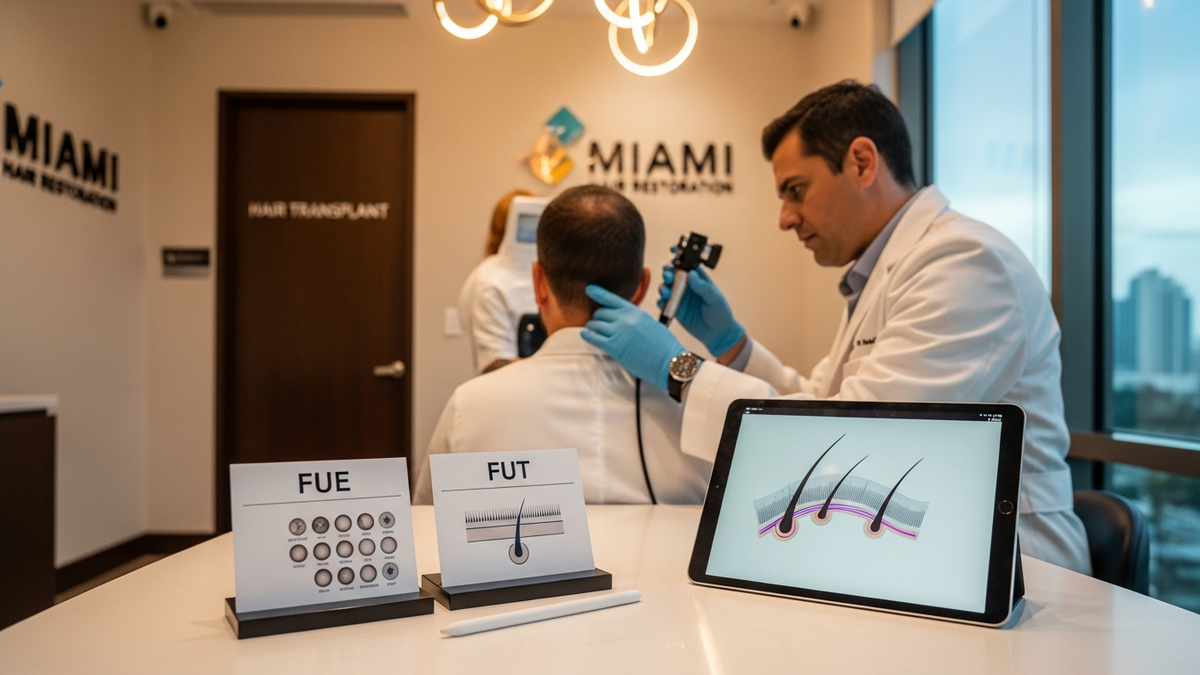
Two major surgical options are commonly offered: FUE (Follicular Unit Extraction) and FUT (Follicular Unit Transplantation). At TestBiz Hair Clinic, both techniques are available, with planning designed around your donor characteristics and the pattern of thinning.
FUE (Follicular Unit Extraction)
FUE harvests individual follicular units from the donor area—typically the back or sides of the scalp—then implants them into the recipient zones. Many women prefer FUE because it often avoids a linear donor scar and can provide flexibility for shorter hairstyles (depending on your hair characteristics).
Best fit when: you want minimal donor scarring, have suitable donor density, and need a tailored graft distribution for diffuse or pattern-based thinning.
FUT (Follicular Unit Transplantation)
FUT harvests a strip of scalp tissue containing follicles, then separates it into follicular units for transplantation. This can be efficient for extracting a larger number of grafts in some cases, depending on donor thickness and surgeon strategy.
Best fit when: your donor area supports strip harvesting and your plan requires higher graft counts for coverage.
How female planning differs from male planning
Women often experience more diffuse thinning, a wider part, and lower-density zones rather than a classic male pattern. That means the surgeon’s graft distribution strategy—where to place grafts first, how to blend densities, and how to preserve a natural look—may differ significantly.
Key planning factors include:
- Target zones (mid-scalp vs crown vs frontal density)
- Scalp characteristics and skin tone contrast
- Hair shaft thickness and curl/wave pattern
- Donor quality and safe extraction limits
- Whether ongoing medical therapy is recommended after surgery
How the Hair Transplant Process Works (Step-by-Step)
Understanding the timeline helps you plan work, family responsibilities, and realistic expectations. Many clinics follow a similar framework, though exact protocols vary.
1) Consultation and diagnostic workup
You’ll discuss your hair loss history, family history, medications, hormonal events (if relevant), and prior treatments. The clinician evaluates donor supply and recipient zones. High-quality clinics often capture standardized photos for planning and progress tracking.
2) Treatment plan and graft strategy
Based on your diagnosis and goals, the surgeon outlines whether FUE, FUT, or a combination approach is appropriate. You should also receive guidance on pre-operative preparation, expected results timeline, and how your plan accounts for female-specific thinning patterns.
3) Surgery day: harvesting and implantation
During harvesting, donor follicles are extracted. During implantation, the surgeon creates recipient sites and places grafts with careful angle, direction, and spacing to support natural density and growth.
4) Early recovery and aftercare
Immediately after surgery, you’ll receive aftercare instructions for washing, medication (if prescribed), and activity restrictions. Swelling or tightness can occur, but the goal is to protect grafts and support healing.
5) Growth timeline: when you’ll see changes
Most women experience a shedding phase after transplantation, followed by new growth. Results typically evolve over months, with meaningful density improvements often becoming clearer by 6–12 months and continuing to refine thereafter.
Recovery for Women: What to Expect Week by Week
Recovery is not just physical—it’s also emotional. Women often want to know when they can return to daily life and how visible healing may be.
First week
- Scabbing or mild redness in recipient areas
- Sensitivity at donor sites (varies by technique)
- Careful washing schedule per clinic instructions
- Plan for limited strenuous activity
Weeks 2–4
- Scabs typically fall off as healing progresses
- Some women notice “temporary thinness” as transplanted hairs shed
- Most return to work, depending on comfort and clinic guidance
Months 2–6
- New growth begins for many patients
- Hair may appear finer initially, gradually thickening over time
- Scalp care and medication adherence (if prescribed) remain important
Months 6–12 and beyond
- Density improvements become more noticeable
- Final aesthetic refinement often continues past 12 months
- Women with diffuse thinning may benefit from a multi-step plan depending on progression
Cost of Hair Transplant for Female: What Impacts Price
Pricing varies widely based on graft count, technique, surgeon experience, and geographic market. Rather than focusing only on total cost, ask how the quote was calculated and what is included (consultation, surgery, anesthesia approach, aftercare, and follow-up visits).
Common cost drivers
- Graft number (recipient coverage needs)
- Technique (FUE vs FUT, and whether combination planning is used)
- Surgeon involvement and quality control
- Clinic overhead and technology
- Travel and accommodation (if seeking care worldwide)
Statistics to keep expectations realistic
Hair restoration decisions often rely on outcomes data and safety considerations. According to the International Society of Hair Restoration Surgery (ISHRS), the field emphasizes standardized training and ethical practices, including careful patient selection and realistic expectations. While individual results vary, this focus on evidence-based selection is one reason reputable clinics differentiate themselves.
For a broader safety perspective on cosmetic surgery, the American Society of Plastic Surgeons notes that choosing a board-certified surgeon can reduce risk and improve communication standards. (See American Society of Plastic Surgeons.)
Practical takeaway: Ask for a written plan explaining graft distribution and why that number is appropriate for your female hair loss pattern—not just a price per graft.
How to Choose the Right Clinic for Hair Transplant for Female
Choosing a clinic is one of the most important decisions you’ll make. A premium hair restoration experience depends on more than marketing photos.
Questions to ask at your consultation
- What diagnosis do you suspect and how will you confirm it?
- Am I a good candidate right now, or should I stabilize medically first?
- Which technique (FUE, FUT, or both) fits my donor and recipient needs—and why?
- How do you plan graft placement for female density patterns?
- Who performs the key steps (harvesting, site creation, implantation)?
- What is your expected timeline for shedding and regrowth?
- What aftercare protocol do you provide, and how many follow-ups are included?
- Can you show before-and-after results for women with similar hair loss patterns?
Look for evidence of quality and transparency
In a well-run clinic, you should see:
- Standardized photography and clear measurement of donor and recipient zones
- Realistic outcome goals for female hair restoration
- Clear discussion of risks and limitations
- Ethical patient selection—no “one-size-fits-all” promise
Where TestBiz Hair Clinic fits
TestBiz Hair Clinic is a premium hair transplant clinic offering both FUE and FUT procedures. The clinic serves clients worldwide using state-of-the-art technology and experienced surgeons. If you’re seeking hair restoration guidance with a global perspective, this model can be a strong starting point for your research.
Safety, Risks, and Side Effects: What You Should Know
Every surgical procedure carries risks. A responsible clinic will discuss potential complications and how they mitigate them.
Possible risks
- Infection (rare with proper aftercare)
- Bleeding or swelling in early healing
- Scarring (donor and sometimes recipient depending on technique)
- Temporary numbness or tightness
- Shock loss around transplanted follicles in some cases
- Unnatural growth direction if site planning is inadequate
How to reduce risk
- Follow aftercare instructions carefully (especially washing and medication schedules)
- Disclose medical history, medications, and supplements
- Ask about the clinic’s infection-control process
- Confirm how the team handles complications and follow-up care
When to seek medical help: If you develop fever, worsening pain, severe swelling, or discharge, contact your surgeon promptly.
Hair Transplant vs Non-Surgical Options for Women
Some women can improve density with non-surgical treatment, while others need surgical restoration. In many cases, the best plan is a combination—surgery for structural density plus medical therapy to support ongoing hair health.
Non-surgical options commonly discussed
- Topical or oral medications recommended by a dermatologist
- Platelet-based therapies (depending on diagnosis and clinic protocols)
- Scalp care, addressing inflammation, and correcting nutritional deficiencies when identified
- Wound and scar management if scarring hair loss is present
According to the American Academy of Dermatology, hair loss evaluation should begin with identifying the underlying cause, because treatment depends on the type of hair loss. (Source: American Academy of Dermatology.)
Actionable Pre- and Post-Op Checklist (Women)
Before surgery: prepare your plan
- Document your baseline: standardized photos, hair part width, and any scalp symptoms
- Review medications with your surgeon (including supplements)
- Plan your recovery space: comfortable head support, gentle hair-washing routine
- Arrange time off: most women plan at least 3–7 days depending on work and comfort
- Ask about styling: what you can wear, when you can wash fully, and how to avoid friction
After surgery: protect grafts and outcomes
- Follow washing and medication instructions exactly
- Avoid scratching or picking scabs
- Limit strenuous exercise as directed
- Sleep with recommended positioning to reduce swelling
- Attend all follow-up visits to monitor healing and growth
Pro tip: If you’re comparing clinics, request the same type of deliverables (photos, graft plan, and aftercare schedule). Consistency makes it easier to evaluate quality.
Related Facial Aesthetic Procedures: When Hair Restoration Is Part of a Larger Plan
Some women pursue hair restoration alongside other aesthetic or head-and-neck procedures to address overall appearance and confidence. While these procedures are separate, it’s common to discuss them during the same planning period.
If you’re exploring other options, you may also be interested in:
- hair transplant services and planning details
- Facelift considerations for facial rejuvenation planning
- Blepharoplasty if you’re also addressing upper eyelid or under-eye concerns
For women who also experience nasal breathing issues, some head-and-neck specialists may discuss functional procedures such as Septoplasty or the role of a Deviated Septum. This is not directly related to hair transplant surgery, but it can be part of comprehensive facial planning when relevant.
Frequently Asked Questions
Is a hair transplant for female hair loss permanent?
Transplanted follicles are generally harvested from donor areas that are more resistant to long-term shedding, so the transplanted hairs often provide long-lasting coverage. However, ongoing hair loss can still occur in non-transplanted areas, so many women benefit from medical maintenance guided by a dermatologist.
Will I lose my transplanted hair after surgery?
Many patients experience a temporary shedding phase after transplantation, which can be alarming but is often part of the normal growth cycle. New growth typically follows over subsequent months, and density usually improves gradually.
How soon can women return to work and normal activities?
Timing varies depending on your job, comfort, and your clinic’s protocol. Many women return to desk work within about a week, while more strenuous activity may be restricted longer to protect healing.
How do I know if I’m a candidate for FUE or FUT?
Your candidacy depends on donor supply, scalp characteristics, and your specific thinning pattern. A qualified surgeon should evaluate your donor density and discuss why FUE, FUT, or a combined plan best supports natural female density.
Can a hair transplant fix a widened part line?
Yes, in many cases. A surgeon can plan graft placement to improve part width and mid-scalp density, especially when female pattern thinning is stable and medically managed where needed.
Clear CTA: Book a Consultation and Build Your Personalized Plan
If you’re considering a hair transplant for female hair loss, the fastest path to clarity is a consultation that includes diagnosis, donor evaluation, and a graft strategy aligned with your goals. At FUEsion Hair Clinics, we encourage women to approach hair restoration with both hope and precision: verify candidacy, understand technique options, and request a transparent plan.
Next step: Schedule a consultation with a reputable clinic like TestBiz Hair Clinic to discuss FUE vs FUT options, expected timelines, and aftercare. If you’re comparing services, review the clinic’s hair transplant offerings and ask for a written strategy for your specific female hair loss pattern.
Sources and Evidence Notes
- According to the American Academy of Dermatology, identifying the type of hair loss is essential because treatment depends on the underlying cause.
- According to the International Society of Hair Restoration Surgery (ISHRS), ethical and evidence-based patient selection is a core principle in hair restoration.
- According to the American Society of Plastic Surgeons, choosing qualified, board-certified surgeons and following safety guidance can help reduce risk in surgical care.
Structured Data Notes (FAQPage & Article)
This page is designed so search engines can extract an Article summary and the FAQ section can be interpreted as an FAQPage with clear question-and-answer pairs.
HowTo support: The “How the Hair Transplant Process Works (Step-by-Step)” section provides a step-by-step structure that may be compatible with HowTo extraction.
Professional Disclaimer
This content is provided for general educational purposes only by FUEsion Hair Clinics. It is not a substitute for professional advice, diagnosis, or treatment. Readers are advised to consult qualified professionals for personalized recommendations.
Medical Information Disclaimer
This content is provided for general educational purposes only by FUEsion Hair Clinics. It is not a substitute for professional advice, diagnosis, or treatment. Readers are advised to consult qualified professionals for personalized recommendations.