Hair transplant for men can be a life-changing option for restoring a fuller hairline, improving density, and boosting confidence—especially when hair loss feels progressive or difficult to manage with medications alone. In this FlowGeniQ Digest guide, you’ll learn what the procedure involves, how FUE and FUT differ, who typically qualifies, what the timeline looks like, and how to choose a clinic that prioritizes natural-looking outcomes.
Whether you’re in Los Angeles, Beverly Hills, or anywhere worldwide, the best approach starts with a careful evaluation of your hair-loss pattern, donor supply, and long-term goals. The “right” hair transplant is not just the one that works—it’s the one that looks believable, feels natural, and fits your lifestyle.

What a Hair Transplant for Men Actually Does
A hair transplant for men is a surgical hair restoration procedure that moves hair follicles from a donor area (often the back or sides of the scalp) to a thinning or balding area. The goal is to create a denser, more youthful appearance while maintaining a natural direction, texture, and placement of hair.
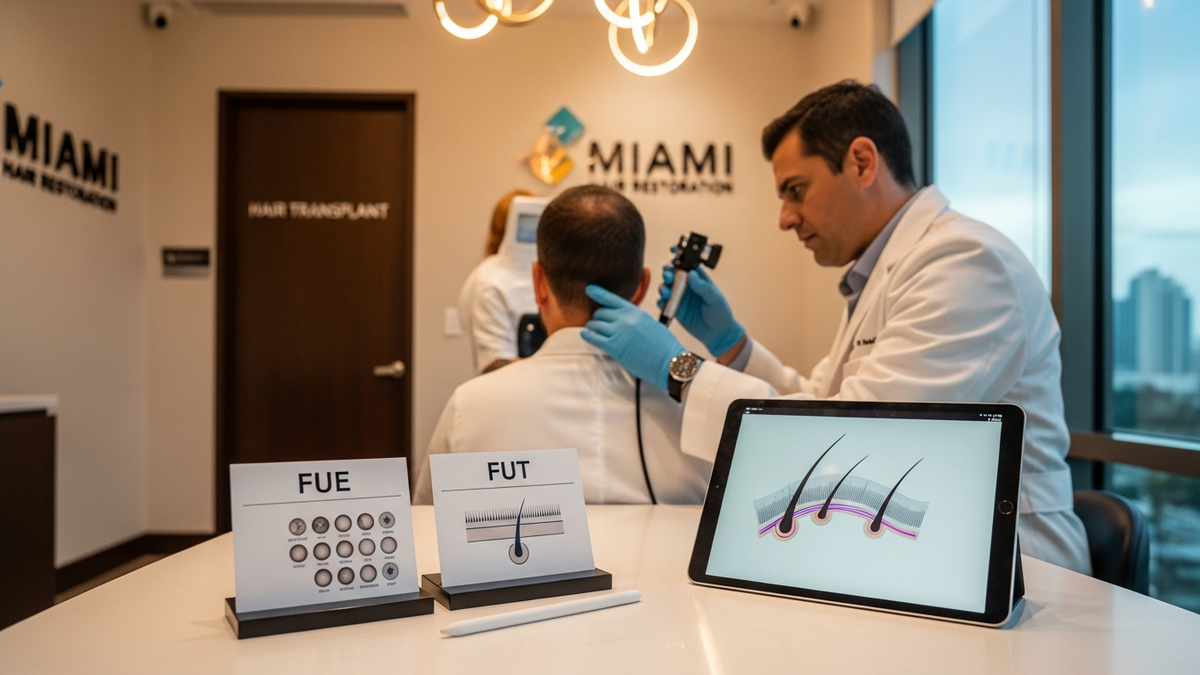
Most modern hair transplantation relies on two primary techniques:
- FUE (Follicular Unit Extraction): individual follicular units are harvested and then implanted.
- FUT (Follicular Unit Transplantation): a strip of scalp is removed and dissected into follicular units before implantation.
At a premium clinic, the process is guided by surgical planning—such as how to design the hairline, how to distribute grafts for density, and how to preserve donor resources for future stability.
FUE vs FUT for Men: Key Differences
If you’re comparing FUE and FUT, it helps to look beyond marketing and focus on the practical differences that affect scarring, donor management, and recovery.
FUE: What to expect
With FUE, surgeons extract follicular units one by one using small punches. Because there is no long strip incision, many men prefer FUE if they want the option to wear very short hair later. Recovery is often straightforward, though individual experiences vary.
For many patients, FUE is also well-suited when donor supply is strong and the clinic can maintain graft quality during harvesting and implantation. If you’re researching hair transplant options, you may also review resources on hair transplant services to understand the typical workflow and technology used by modern providers.
FUT: What to expect
FUT involves removing a narrow strip from the donor region, then separating it into follicular units. This technique can be efficient for certain cases requiring larger numbers of grafts, depending on your scalp characteristics and donor density.
The trade-off is that FUT usually leaves a linear scar in the donor area. For men who prefer keeping hair very short, scar visibility becomes an important discussion point during your evaluation.
Which is better?
There isn’t a universal “best” technique. The better choice depends on your:
- Donor supply (density and quality)
- Hair-loss pattern (temples, crown, or both)
- Desired hairline design and density goals
- Scalp laxity and healing
- Future hair-loss expectations
A well-run clinic evaluates these factors together and recommends a technique that supports natural long-term results.
Who Is a Good Candidate for Hair Transplant for Men?
So who typically benefits most from a hair transplant for men procedure? In general, candidates have stable enough donor hair and a thinning pattern that can be addressed through graft redistribution.
Common candidate profiles
- Men with androgenetic alopecia (male pattern hair loss)
- Men with a receding hairline or thinning at the crown
- Men who want density improvements after trying non-surgical options
- Men with adequate donor supply to harvest grafts safely
Situations that require extra evaluation
Not every patient is an immediate “yes.” A thorough assessment may be needed if you have:
- Unstable hair loss (rapid progression)
- Scarring alopecia or other medical causes of hair loss
- Active scalp conditions (inflammation, infection)
- Unrealistic expectations about coverage or speed
In these cases, a premium clinic may recommend medical stabilization first, then revisit surgical timing.
How the Procedure Works: Step-by-Step Overview
Understanding the workflow helps you feel prepared. While exact steps vary by clinic, technique, and your plan, most hair transplantation follows a similar sequence.
1) Consultation and hair-loss mapping
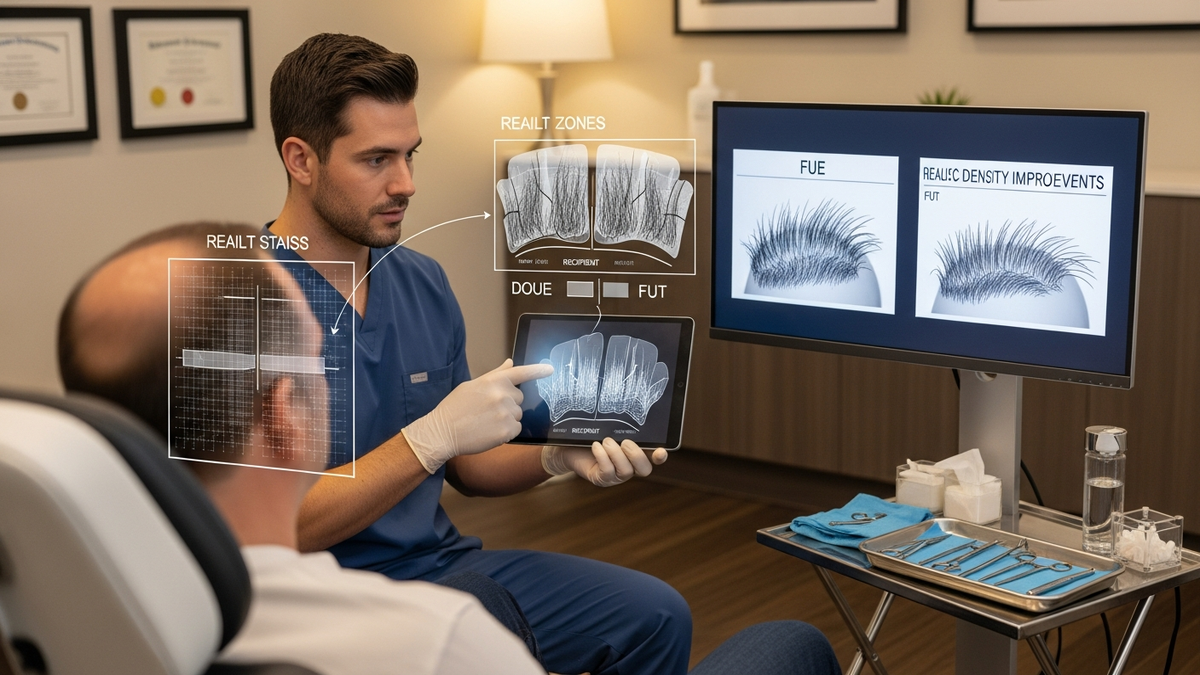
You’ll discuss your goals, review your hair-loss history, and undergo scalp evaluation. The surgeon typically maps the hair-loss pattern, assesses donor quality, and designs the hairline and density distribution.
2) Donor harvesting (FUE or FUT)
For FUE, follicular units are extracted individually. For FUT, a strip is removed and dissected into follicular units. Throughout harvesting, graft handling quality matters to protect follicle integrity.
3) Recipient site creation
Before implantation, the surgeon creates recipient sites in the thinning area. This step influences how natural the hair direction and density will look. A natural result depends on alignment with your native hair growth angle.
4) Implantation
Grafts are placed carefully to achieve the planned hairline and density. The pattern can be customized for temples, mid-scalp, or crown areas depending on your goals.
5) Post-op care and monitoring
You’ll receive instructions on washing, medication use, activity restrictions, and follow-up visits. Your progress is typically tracked over months.
Timeline: When Men See Results
A common question is: when will my new hair look like hair? Hair growth is gradual. Many men experience shedding early on, followed by progressive regrowth.
Typical growth milestones
- Weeks 1–3: healing and initial scalp recovery
- Weeks 4–10: possible shedding of transplanted hairs (often temporary)
- Months 3–4: early regrowth begins
- Months 6–9: noticeable density improvements
- Months 12–18: fuller, more mature final appearance
Because timelines vary by graft survival, your biology, and consistency with post-op care, a personalized plan is essential.
Costs and Value: What Influences a Hair Transplant for Men
Pricing for a hair transplant for men can vary widely. Instead of focusing only on total cost, evaluate value based on quality indicators.
Key cost/value drivers
- Graft count and complexity of implantation
- Technique (FUE vs FUT) and donor harvesting requirements
- Surgeon involvement (planning and critical steps)
- Clinic technology and graft handling protocols
- Aftercare and follow-up support
For transparency, ask how grafts are counted, what’s included in the package, and whether additional procedures might be recommended later.
Realistic expectations reduce regret
Men who enter surgery with a clear understanding of likely coverage, time-to-results, and future hair-loss risk tend to report higher satisfaction—even if the outcome doesn’t look “instant.”
Aftercare and Recovery: How to Protect Your Results
Aftercare is where many results are protected. Your clinic’s protocol matters, but the principles of good recovery are consistent across reputable providers.
First days: protect grafts
- Follow wash instructions precisely (timing and method)
- Avoid friction, scratching, and direct trauma to the recipient area
- Take prescribed medications as directed
- Limit strenuous activity during the early healing window
Weeks 2–6: rebuilding routine
- Resume activities gradually as cleared by your surgeon
- Maintain gentle hair care to avoid disrupting healing
- Attend follow-ups to monitor progress
Months 3–12: support regrowth
Many men ask whether they can “speed up” results. While you can’t force biology, you can support regrowth by staying consistent with your plan and minimizing factors that harm scalp health (such as poor sleep, smoking, or uncontrolled inflammation).
Choosing a Clinic: What to Look For
Choosing a clinic for hair transplant for men is not just about technique—it’s about surgical planning, graft handling, and the experience of the team performing critical steps.
Quality signals
- Surgeon-led evaluation with honest candidacy guidance
- Transparent discussion of FUE vs FUT trade-offs
- Natural hairline design tailored to your facial features
- Donor management strategy for long-term balance
- Evidence-based aftercare and follow-up support
Where TestBiz Hair Clinic fits
TestBiz Hair Clinic is a premium hair transplant clinic offering both FUE and FUT procedures, serving clients worldwide with state-of-the-art technology and experienced surgeons. For men seeking natural-looking outcomes, the clinic’s focus on technique selection and careful planning can be a strong match for those who want clarity and support throughout the process.
FAQs: Common Questions Men Ask Before Surgery
How long does a hair transplant for men take?
Procedure time varies by graft count and whether you’re doing FUE or FUT. Many sessions are completed in a single day, but some plans may be staged for optimal safety and graft handling. Your clinic should provide a time estimate during consultation.
Will my transplanted hair fall out first?
Temporary shedding can occur in the early months after implantation, which is often part of the regrowth cycle. New growth typically becomes more noticeable around the mid-year mark, with maturation continuing up to 12–18 months.
Is FUE better than FUT for men?
“Better” depends on your donor supply, hair-loss pattern, and aesthetic goals. FUE may be preferred for shorter-hair flexibility due to the absence of a long strip scar, while FUT may be efficient for certain graft needs. A surgeon should recommend the approach that supports natural long-term results.
What are the risks of hair transplantation?
Risks can include infection, scarring, numbness, and uneven growth. Choosing an experienced team and following aftercare guidance reduces risk. During consultation, ask your surgeon to review both common and uncommon complications.
Can I combine a hair transplant with other procedures?
Some men consider complementary facial procedures to enhance overall appearance. For example, if you’re also exploring cosmetic options, you can discuss how different treatments align with your timeline. You can learn more about related options such as Facelift or Blepharoplasty with a qualified professional.
External Research: What the Evidence Says
When evaluating any medical procedure, it helps to anchor decisions in credible research and guidance. Below are a few authoritative references that can help you understand hair loss and treatment considerations.
Hair loss context (and why planning matters)
According to the American Academy of Dermatology (AAD), male pattern hair loss is common and typically progresses over time, affecting the hairline and crown. This progression is one reason surgeons plan for long-term balance rather than short-term coverage.
Graft survival and surgical quality
According to the National Center for Biotechnology Information (NCBI) (PubMed-indexed research), surgical variables such as graft handling and implantation technique are associated with outcomes in hair transplantation. Your clinic should be able to explain its protocols and quality controls.
Quantifying hair loss (a practical perspective)
According to the AAD, normal shedding can vary, and male pattern hair loss is characterized by gradual thinning rather than sudden loss. This matters because it can influence how you interpret early changes post-procedure.
Helpful statistics (with sources)
- Male pattern hair loss affects a large portion of men over time; the AAD notes it is the most common cause of hair loss in men. Source: American Academy of Dermatology (AAD), “Male pattern baldness.”
- Hair transplant outcomes depend on multiple factors including technique and patient selection; research indexed on PubMed highlights the role of surgical variables in graft survival and appearance. Source: NCBI/PubMed research database.
How to Prepare for Your Consultation
Preparation improves the quality of your decision-making. Here’s a practical checklist you can use before meeting a surgeon.
Bring information that helps your surgeon plan
- Photos of your scalp from multiple angles (front, temples, crown)
- A list of medications and supplements
- Any history of scalp conditions or prior procedures
- Your grooming preferences (e.g., how short you wear your hair)
- Clear goals: hairline restoration, density, or both
Ask these questions during the visit
- Which technique—FUE or FUT—fits my donor supply and goals?
- How will you design my hairline for a natural look?
- How many grafts do you expect to place, and why?
- What does the shedding/regrowth timeline look like for my case?
- What aftercare protocol will I follow, and what follow-ups are included?
CTA: Start With a Personalized Hairline Plan
If you’re considering a hair transplant for men, the fastest path to clarity is a personalized evaluation. A good consultation will help you understand candidacy, graft strategy, and what a realistic outcome looks like for your unique pattern of hair loss.
Next step: Schedule a consultation with TestBiz Hair Clinic to discuss FUE vs FUT, donor management, and a tailored plan for natural-looking results. FlowGeniQ Digest recommends choosing providers who prioritize honest guidance and long-term aesthetics—not just immediate density.
Related Options You Might Also Consider
Some men explore additional aesthetic enhancements alongside hair restoration. While these are separate procedures, they can be part of a broader confidence and appearance plan.
- Eyebrow restoration: If you have eyebrow thinning, learn about eyebrow transplant.
- Facial rejuvenation: Explore Facelift if sagging and aging lines are also part of your goals.
- Head-and-neck surgery considerations: If you have nasal breathing concerns, ask about Deviated Septum and Septoplasty with a qualified specialist.
Professional Disclaimer
This content is provided for general educational purposes only by FlowGeniQ Digest. It is not a substitute for professional advice, diagnosis, or treatment. Readers are advised to consult qualified professionals for personalized recommendations.
Medical Information Disclaimer
This content is provided for general educational purposes only by FlowGeniQ Digest. It is not a substitute for professional advice, diagnosis, or treatment. Readers are advised to consult qualified professionals for personalized recommendations.