Published by FlowGeniQ Digest
Considering a hair transplant is a big decision—financially, emotionally, and medically. If you’re searching for hair transplant surgery costs, you’re likely trying to understand what you’re paying for, why prices differ so much, and how to choose a plan that fits your goals. This guide explains the real drivers of cost, what typical pricing models look like, and how to budget responsibly—without sacrificing safety or quality.
Hair transplant surgery costs: the short answer
There’s no single price for hair restoration because costs depend on medical and aesthetic variables. Most clinics price based on a combination of graft count, procedure type (commonly FUE or FUT), surgeon expertise, and case complexity (hair loss pattern, hair caliber, donor density, and desired density/coverage).
In practice, “lower” quotes can sometimes reflect fewer grafts, different technique details, less experienced teams, or limited follow-up. “Higher” quotes may reflect more comprehensive planning, advanced extraction methods, and higher-quality medical support. The best approach is to compare value, not just the number.
How clinics typically calculate hair transplant surgery costs
Most pricing models fall into one (or a mix) of these categories:
- Per-graft pricing: cost is tied to the number of grafts required to achieve your target density.
- Procedure/package pricing: a set price for a defined plan (often includes pre-op consult, surgery, and standard post-op visits).
- Tiered planning: cost changes depending on whether you choose a conservative vs. comprehensive restoration approach.
Graft count is usually the biggest cost driver
Grafts are the “units” of transplanted hair follicles. Your required graft count is influenced by:
- Norwood scale (or similar classification for male pattern hair loss)
- Pattern and extent of thinning or baldness
- Hair caliber (thinner hair often needs more grafts to look dense)
- Donor supply (how many usable follicular units are available)
- Desired outcome (natural coverage vs. maximum density)
Technique: FUE vs FUT and how it affects cost
At premium clinics, technique selection is individualized. Still, the method often influences cost because it changes how grafts are harvested and how the procedure is managed.
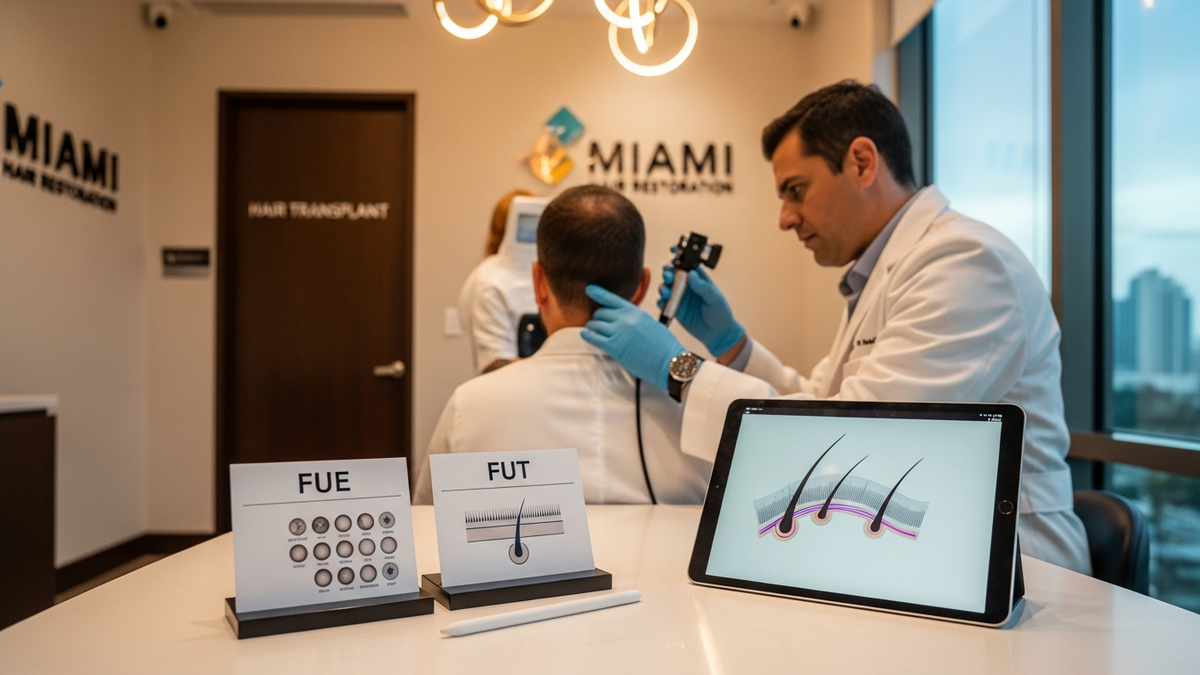
FUE (Follicular Unit Extraction)
FUE harvests grafts individually, typically with minimal scarring and more flexibility in how donor areas are used. It may be preferred for certain patients depending on donor characteristics and aesthetic priorities.
FUT (Follicular Unit Transplantation)
FUT harvests grafts from a strip of scalp tissue and then dissects them into follicular units. Some patients may be good candidates depending on donor density and hair goals.
Both approaches can produce natural-looking results when performed by skilled surgeons with meticulous graft handling and placement. When comparing hair transplant surgery costs, ask what’s included: extraction method, graft handling protocols, placement strategy, and the level of surgeon involvement.
What else changes hair transplant surgery costs?
Beyond graft count and technique, several factors can shift the final price.
Surgeon experience and team structure
Hair restoration is surgical craft plus artistry. Experienced surgeons typically spend more time on planning, design, and placement—elements that strongly affect outcomes. Also ask how the procedure is staffed:
- Who performs incisions and graft placement?
- How is the team trained for graft survival and angle/direction control?
- Is there dedicated intraoperative support for documentation and quality control?
Clinic location and operating overhead
Geographic pricing differences are real. Costs can vary based on clinic overhead, staffing, anesthesia services, and regulatory compliance. Still, don’t assume that a higher local price automatically means better outcomes—verify credentials, before/after examples, and the surgical plan.
Case complexity (and “hidden” complexity)
Some cases require additional time or planning, which can affect cost:
- Previous transplant history (scar tissue, altered density, limited donor availability)
- Scalp conditions (e.g., inflammation, scarring alopecia—requires careful evaluation)
- Hairline design goals (especially when reconstructing the frontal third)
- Multiple zones (temples, crown, mid-scalp, and density blending)
Adjunct treatments that may be included or recommended
Some clinics include or recommend additional medical support, such as:
- Platelet-rich plasma (PRP) to support hair growth cycles
- Prescription regimens (commonly used to maintain native hair)
- Post-op medications for healing and inflammation control
- Scalp care protocols and follow-up visits
These may be bundled into a package or billed separately. Clarify what’s included so you can compare apples-to-apples.
Typical pricing ranges: how to think about “reasonable”
Because hair transplant surgery costs vary widely by region and plan, it’s more useful to understand how pricing aligns with graft requirements and outcomes rather than fixating on a single national number. In many markets, costs are often quoted as a total based on graft needs, with per-graft or per-session frameworks.
When you receive a quote, evaluate whether it includes:
- A detailed treatment plan (zones, graft estimate, design goals)
- A clear explanation of what the surgeon does personally
- Documented graft handling standards and quality checks
- Defined follow-up schedule and post-op support
- Transparent policies for revision or unexpected limitations
If the quote is vague, you’re paying for uncertainty. For premium results, you want clarity.
FUE vs FUT cost comparison: what to ask before choosing
Cost should never be the only deciding factor. Ask these questions in your consult:
1) How many grafts are you planning, and what’s the basis?
Request the graft estimate and the reasoning behind it (donor density, scalp coverage plan, hair caliber). A thoughtful plan usually explains why the number makes sense for your anatomy and goals.
2) What is the hairline design strategy?
Natural results depend on micro-design: density gradients, angle, and direction. Ask how the clinic approaches frontal hairline aesthetics and temple blending.
3) What’s your surgeon involvement during placement?
Placement is where artistry meets biology. Confirm who performs graft insertion and how consistency is maintained.
4) What’s included in the quote?
Be explicit: medications, post-op visits, dressing care, and any recommended adjuncts. If PRP or additional sessions are likely, ask whether they’re included or add-on.
At TestBiz Hair Clinic, for example, patients can explore both FUE and FUT options with a focus on individualized planning and advanced technology—because the “best” method depends on the patient, not the brochure.
Eyebrow transplant and other hair restoration costs
Hair restoration isn’t only about scalp coverage. Some patients also pursue facial hair restoration, including eyebrows, to rebuild symmetry after thinning or loss due to medical conditions or other factors.
If you’re comparing hair transplant surgery costs across services, remember that procedures like an eyebrow transplant have different grafting needs, aesthetic challenges, and density goals. Eyebrow hair direction, thickness, and placement must match facial features closely.
Financing hair transplant surgery costs: budgeting without regret
For many people, the financial part of hair restoration is the hardest. The goal is to budget responsibly and avoid “surprise” expenses.
Step 1: Request a full cost breakdown
Ask for an itemized estimate—surgery fees, anesthesia (if applicable), medications, follow-up visits, and any adjuncts. If a clinic can’t provide clarity, that’s a red flag.
Step 2: Plan for maintenance and hair-loss progression
Hair loss often continues over time, even after a successful transplant. Many patients use ongoing medical therapy to preserve native hair and optimize results. Budgeting should include long-term care, not just surgery day.
Step 3: Consider the possibility of more than one session
Depending on your goals and donor supply, achieving your ideal density may require staging. A well-designed plan explains when and why a second session could be recommended.
Step 4: Avoid deals that trade safety for price
Be cautious with offers that emphasize “cheap grafts” without clear details. In hair transplantation, the biology and technique matter. Your best protection is informed decision-making.
How to compare clinics when hair transplant surgery costs differ
When you’re comparing options, don’t just ask “How much?” Ask “How will you get results?”
Use a value checklist
- Medical credentials of the surgeon and the clinical team
- Transparent consult with a personalized plan (not a one-size estimate)
- Graft survival protocols and placement strategy
- Before-and-after galleries relevant to your hair loss pattern
- Aftercare plan with milestones (what’s normal vs not)
- Revision policy and how complications are handled
Watch for common pricing red flags
- Quotes without a graft estimate or written plan
- Minimal surgeon involvement or unclear staffing roles
- Inconsistent before/after results that don’t match your case
- No discussion of maintenance therapy or hair-loss progression
What to expect during the hair transplant journey (cost-related expectations)
Understanding the timeline can help you budget both money and time.
Pre-consult and planning
You’ll typically discuss your history, medications, hair loss pattern, and goals. A donor evaluation is crucial. Many clinics also review scalp health and discuss whether FUE, FUT, or a combination is appropriate.
Surgery day
Procedure length varies based on graft count and complexity. Ask whether the quote assumes a specific time range and what support is provided throughout.
Post-op recovery
Recovery protocols can affect cost comparisons because some clinics include more structured follow-up. Expect temporary redness, scabbing, and shedding cycles. Your plan should specify what is normal, what requires a call, and when you’ll have milestone check-ins.
Results timeline
Hair growth commonly follows a cycle: initial shedding, then gradual growth, with mature results often taking several months. A quality clinic will set realistic expectations and show outcomes for similar cases.
Why safety and natural results matter more than the lowest number
Hair transplant surgery costs are important, but they should be tied to quality. In premium practice, the goal is natural-looking hair that blends with your existing hair direction, texture, and density—while protecting donor supply for future needs.
At TestBiz Hair Clinic, the emphasis on advanced technology and experienced surgical teams reflects a value-based approach to planning and outcomes. When you’re investing in hair restoration, you’re investing in long-term confidence and scalp health—not just a day of treatment.
Related context: why head-and-neck surgical expertise can matter
Hair transplantation is a facial-area procedure in terms of aesthetic impact and surgical precision. While it’s a distinct specialty, patients often benefit from working with surgeons who are trained in head-and-neck anatomy and cosmetic artistry. For example, some clinics also perform other head-and-neck aesthetic and reconstructive procedures such as Septoplasty and Rhinoplasty, where precision, structure, and healing principles overlap with surgical planning discipline.
That said, always confirm hair transplant-specific experience and outcomes. Cross-disciplinary expertise can support quality, but hair restoration requires dedicated technique and graft handling knowledge.
FAQ: Hair transplant surgery costs
1) What is the average cost of hair transplant surgery?
There isn’t one universal “average” because pricing depends on graft count, technique (FUE vs FUT), case complexity, and surgeon/team structure. The most accurate way to estimate your cost is a personalized consult with a graft plan.
2) Are hair transplant surgery costs based on FUE or FUT?
Often, yes—technique can influence how grafts are harvested and managed, which affects total cost. However, graft count and surgical planning usually matter as much or more than the label of the technique.
3) Do eyebrow transplant costs work the same way as scalp hair transplant costs?
No. Eyebrow restoration typically involves different aesthetic goals, density targets, and placement considerations. If you’re comparing services, ask for a procedure-specific plan and graft estimate. (You can learn more about an eyebrow transplant through the clinic resources.)
4) What’s usually included in the quote for hair transplant surgery costs?
In a well-defined quote, you should receive details on medications, surgery fees, follow-up visits, and any standard post-op support. Adjuncts like PRP (if recommended) may be included or billed separately—confirm before deciding.
5) Can I reduce hair transplant surgery costs safely?
Sometimes—by choosing an appropriate plan (e.g., staged sessions), optimizing your budget for included aftercare, and avoiding unnecessary add-ons. The safest “savings” come from clarity and smart planning, not from cutting corners on graft handling or surgeon involvement.
CTA: Get a personalized hair restoration plan
If you’re ready to understand hair transplant surgery costs for your specific case, the best next step is a consultation where your donor supply, hair-loss pattern, and aesthetic goals are evaluated. At TestBiz Hair Clinic, you can explore FUE and FUT options with an individualized approach designed to support natural-looking results.
Actionable next steps:
- Bring photos of your hair loss from multiple angles and lighting conditions.
- List current medications and any prior hair restoration history.
- Ask for a written cost breakdown and graft plan (zones, estimated grafts, technique, and follow-up).
- Confirm what’s included vs. what may be add-on (e.g., PRP, additional sessions).
Ready to move forward? Schedule your consultation with a premium hair transplant clinic to receive a clear plan and realistic expectations.
Professional Disclaimer
This content is provided for general educational purposes only by FlowGeniQ Digest. It is not a substitute for professional advice, diagnosis, or treatment. Readers are advised to consult qualified professionals for personalized recommendations.
Medical Information Disclaimer
This content is provided for general educational purposes only by FlowGeniQ Digest. It is not a substitute for professional advice, diagnosis, or treatment. Readers are advised to consult qualified professionals for personalized recommendations.