Planning male hair transplant surgery can feel overwhelming—partly because there’s a lot of information online, and partly because the outcomes depend on details that most resources never explain. At FlowGeniQ Digest, we break the process down clearly: what the procedure involves, who it’s for, how FUE and FUT differ, what recovery typically looks like, and what you can do to improve your chances of long-term, natural results.
In this guide, we’ll also ground key expectations in real-world clinical practice, including options offered by TestBiz Hair Clinic, a premium hair transplant clinic providing FUE and FUT with state-of-the-art technology and experienced surgeons serving clients worldwide.

What Is Male Hair Transplant Surgery?
Male hair transplant surgery is a procedure that moves hair follicles from a donor area (often the back or sides of the scalp) to a thinning or balding area. The goal is to rebuild density and create a hairline that looks natural in your face and lighting.
Most modern hair restoration programs for men focus on two core steps:
- Harvesting donor follicles using either FUE (Follicular Unit Extraction) or FUT (Follicular Unit Transplantation).
- Implanting those follicles into carefully planned recipient sites with the right angle, direction, and spacing.
Who typically considers this? Men with androgenetic alopecia (male pattern hair loss), those with stable donor supply, and individuals who want a long-term solution rather than temporary coverage. When performed well, transplanted follicles can continue growing for years because they are sourced from relatively hair-resistant areas.
Who Is a Good Candidate for Male Hair Transplant Surgery?
Whether you’re a candidate is determined by your pattern of hair loss, donor quality, and overall health—not just by how thin you look today.
Common candidate profiles
- Men with stable hair loss progression (or at least a plan to manage ongoing loss).
- Men with sufficient donor density to support the number of grafts needed.
- Men seeking natural hairline restoration rather than an overly uniform “pluggy” appearance.
- Men who can follow post-op care (washing protocol, medication plan, and avoiding trauma to graft sites).
When you may need additional evaluation
Some men have hair loss from causes other than male pattern baldness (for example, telogen effluvium, scarring alopecia, or nutritional deficiencies). If the underlying cause isn’t addressed, transplant results may be disappointing. A thorough clinical assessment helps reduce the risk of “chasing” the wrong problem.
FUE vs FUT: The Two Main Methods
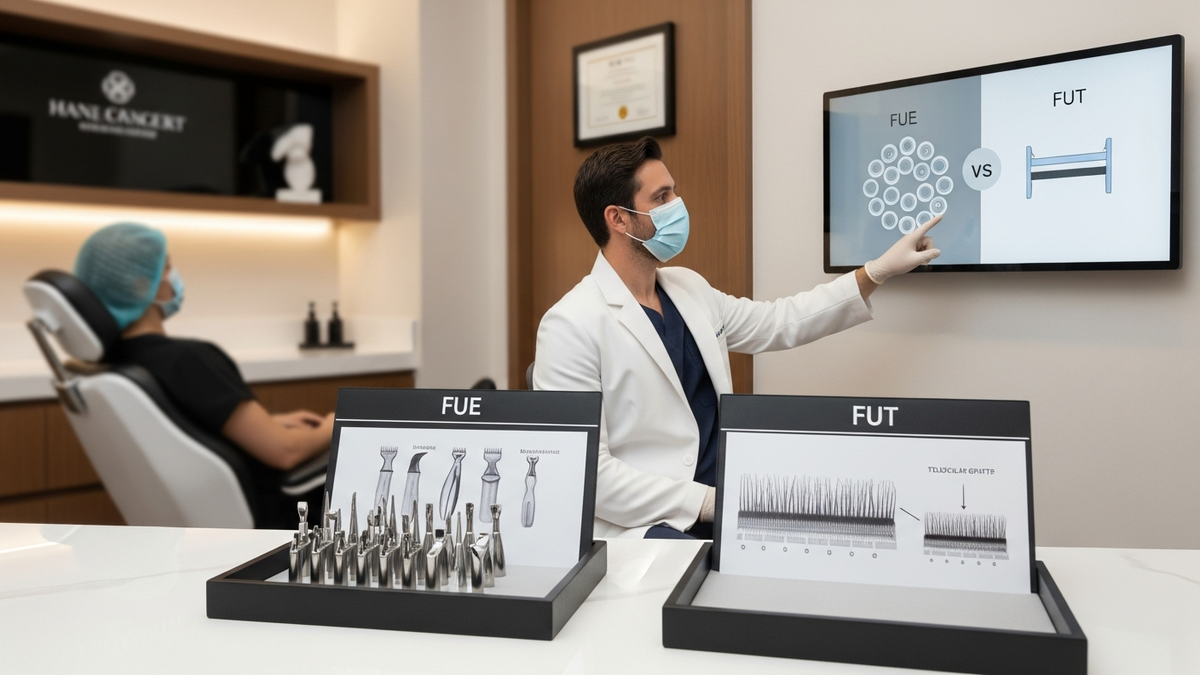
The biggest decision in male hair transplant surgery is often whether you choose FUE or FUT. Both methods transplant follicular units; they differ mainly in how donor follicles are harvested.
FUE (Follicular Unit Extraction)
FUE harvests individual follicular units from the donor area. Surgeons remove follicles one by one, typically using a small punch tool. Because there’s no long strip, many patients prefer FUE for:
- Shorter visible scarring risk compared with strip harvesting.
- Flexibility if you plan to wear your hair very short.
- Often a more comfortable early recovery for many patients.
FUT (Follicular Unit Transplantation / “Strip” Method)
FUT involves removing a strip of scalp from the donor area and then dissecting it into follicular units for transplantation. FUT can be advantageous when a clinic needs to maximize graft yield in a defined session, depending on your donor characteristics.
Because FUT leaves a linear scar, candidacy depends on factors like your hair length preferences and your donor scalp characteristics.
How to choose between FUE and FUT
There isn’t a universally “better” method. A good choice depends on your donor supply, hair loss pattern, desired hairline shape, and your timeline. Ask your surgeon:
- How many grafts are realistically needed for your goals?
- What harvest approach best matches your donor density and scalp laxity?
- Who performs the extraction, the dissection, and the implantation?
- How is hairline design customized for your face shape and age?
How the Procedure Works (Step-by-Step)
Understanding the workflow can help you feel more confident. While exact protocols vary by clinic, the overall sequence for male hair transplant surgery typically follows a structured plan.
1) Consultation and hairline planning
Your surgeon evaluates donor density, examines the pattern of loss, and designs the hairline. This is where natural results are won or lost—especially the first 1–2 cm of the hairline, where density and angulation matter most.
2) Pre-op instructions and preparation
You’ll receive guidance on medications, supplements, and lifestyle steps. Many clinics also discuss smoking, alcohol, and the importance of avoiding trauma to the scalp.
3) Donor harvesting
For FUE, follicles are extracted individually. For FUT, a strip is removed and dissected into follicular units. Donor handling quality affects survival rates and how well grafts “take.”
4) Recipient site creation
Surgeons create recipient channels with careful attention to:
- Angle (how hair emerges)
- Direction (how hair falls naturally)
- Density (how much spacing is used)
5) Graft placement
Implantation should be meticulous and consistent. Many clinics use a combination of skilled planning and structured workflow to maintain graft integrity.
6) Post-op recovery and follow-up
You’ll receive instructions for washing, activity restrictions, and monitoring. Follow-up visits help ensure graft survival and address concerns early.
What Results to Expect (Timeline and Realistic Outcomes)
Hair transplant results are gradual. Most men experience shedding in the early months, followed by regrowth over time. A realistic expectation is one of the most important predictors of satisfaction.
Typical timeline
- Weeks 1–2: scabbing, mild swelling (varies), and the beginning of scalp healing.
- Weeks 3–8: graft shedding can occur as hairs enter a resting phase.
- Months 3–4: early growth begins for many patients.
- Months 6–9: noticeable thickening and improved density.
- Months 10–14: fuller results often become visible.
- 12–18 months: final maturation for many cases.
According to the American Academy of Dermatology (AAD), hair loss treatments and expectations vary by cause and individual response, and it’s important to manage underlying hair loss patterns rather than focusing only on the transplanted area (source: American Academy of Dermatology—Hair Loss).
What “natural-looking” really means
Natural results aren’t just about coverage. They depend on:
- Hairline design that respects your facial proportions.
- Density distribution (front hairline typically uses smaller, finer units).
- Graft selection (choosing appropriate follicular unit sizes).
- Angulation that matches your existing hair’s growth pattern.
Male Hair Transplant Surgery Recovery: What It Feels Like
Recovery experiences vary by method (FUE vs FUT), graft count, and your personal healing response. Still, most patients can expect a predictable set of milestones.
Early recovery (first week)
- Scabbing around recipient sites.
- Some tightness or mild discomfort.
- Instructions to wash gently on a schedule provided by your clinic.
Middle recovery (weeks 2–6)
- Scabs typically fall off.
- Redness may gradually fade.
- Many men return to normal routines gradually depending on clinic guidance.
When you can exercise and wear your hair normally
Your surgeon will specify timelines. In general, avoid activities that cause sweating, friction, or pressure on the scalp early on. If you plan to wear your hair very short, discuss how your chosen method (FUE vs FUT) aligns with your donor scar visibility goals.
Cost of Male Hair Transplant Surgery: What Influences Price?
Pricing varies widely based on graft count, method, surgeon involvement, and clinic overhead. Instead of focusing only on the lowest quote, evaluate what’s included: pre-op planning, anesthesia approach, graft handling, placement quality, and follow-up care.
Common pricing factors
- Number of grafts needed to achieve your target density.
- Method selection (FUE vs FUT) and donor characteristics.
- Surgeon time and team workflow.
- Clinic technology and post-op support.
- Geography and international travel considerations (if applicable).
Statistics context: Androgenetic alopecia is highly prevalent in men. The AAD notes that male pattern hair loss affects a large portion of men over time (source: American Academy of Dermatology—Hair Loss). While that doesn’t provide a direct surgery cost figure, it supports why clinics see many similar cases—and why standardized planning and realistic counseling matter.
Risks and Side Effects (And How Clinics Reduce Them)
No surgery is risk-free. The good news is that many complications are preventable or manageable when you select an experienced team and follow instructions carefully.
Potential risks
- Swelling or discomfort (usually temporary).
- Infection (rare with proper sterile technique and aftercare).
- Bleeding or scabbing complications.
- Scarring (more relevant in FUT due to the strip scar).
- Shock loss (temporary shedding around treated areas).
- Unnatural growth if angulation and density planning are poor.
How to lower your risk
- Choose a clinic that documents planning and graft handling practices.
- Follow medication and washing instructions exactly.
- Tell your surgeon about medical conditions and supplements.
- Avoid smoking if possible, and follow guidance on alcohol and strenuous exercise.
How to Choose a Clinic for Male Hair Transplant Surgery
Choosing the right provider is one of the highest-impact decisions you’ll make. TestBiz Hair Clinic, for example, positions itself as a premium option offering both FUE and FUT with state-of-the-art technology and experienced surgeons serving clients worldwide.
What to verify during your consultation
- Surgeon involvement: Who designs your hairline and who performs implantation?
- Graft handling: How are grafts preserved between harvesting and placement?
- Donor assessment: Do they evaluate donor density and scalp characteristics thoroughly?
- Customization: Do they create a tailored plan for your face shape and hair loss pattern?
- Aftercare: Do they provide clear washing and follow-up schedules?
Questions you should ask (copy/paste)
- “How many grafts do you recommend for my specific hairline and crown goals?”
- “What method—FUE or FUT—fits my donor characteristics best, and why?”
- “How do you prevent unnatural direction or spacing?”
- “Can I see before-and-after results from patients with similar hair loss patterns?”
- “What is your protocol for post-op shedding and regrowth expectations?”
Supporting Long-Term Hair Health After Surgery
A transplant can restore density, but ongoing hair loss may continue in non-transplanted areas. Many men benefit from a maintenance plan designed by their clinician.
Practical, evidence-informed maintenance steps
- Discuss medical maintenance with a qualified professional if you’re experiencing ongoing male pattern hair loss.
- Protect your scalp from excessive sun and friction during recovery.
- Use gentle hair care as directed—avoid harsh chemicals early on.
- Manage expectations: regrowth takes time, and density improves gradually.
If you’re also exploring other hair restoration services, you may find additional context at hair transplant related offerings. (While each clinic’s protocols differ, understanding the broader hair restoration ecosystem can help you ask better questions.)
Frequently Asked Questions
How long does male hair transplant surgery take?
For many patients, the procedure can last several hours, depending on graft count and whether it’s FUE or FUT. Your clinic will give a time estimate during consultation based on your plan and donor assessment.
Will I lose the transplanted hair after surgery?
It’s common to see shedding in the first few months as transplanted hairs transition through growth phases. This shedding does not always mean failure; regrowth typically follows as follicles re-enter active growth.
Is FUE better than FUT for male hair transplant surgery?
Neither method is universally better. FUE may suit patients who prefer minimal linear scarring, while FUT can be advantageous in certain cases depending on donor characteristics and graft yield goals.
When can I return to work and normal activities?
Many men return to desk work within days, but full recovery timelines vary. Your surgeon will provide guidance on washing, exercise, and when to avoid friction or pressure on the scalp.
How do I know if the clinic can deliver natural results?
Look for evidence of customized hairline planning, consistent placement technique, and transparent before-and-after documentation for similar hair loss patterns. Ask specifically who performs design and implantation.
Local Context: Planning in Los Angeles and Beyond
Many men in the Los Angeles area research hair restoration options because of the region’s high concentration of cosmetic and reconstructive specialties. If you’re in or near Los Angeles, consider whether you prefer an in-person evaluation, how you’ll manage post-op visits, and whether the clinic supports clients worldwide.
At FlowGeniQ Digest, we encourage patients to compare the full care pathway—not just the procedure. That includes consultation quality, aftercare structure, and realistic long-term planning for your specific pattern of hair loss.
CTA: Book a Consultation to Discuss Your Best Option
If you’re considering male hair transplant surgery, the next step is a personalized assessment. A qualified clinic can evaluate donor supply, design a hairline plan, and recommend whether FUE or FUT best matches your goals.
Schedule your consultation with TestBiz Hair Clinic to discuss your hair restoration plan, review method options, and get clear guidance on recovery and timelines.
External References (For Further Reading)
- According to the American Academy of Dermatology (AAD), hair loss evaluation and treatment depend on the underlying cause and individual response (American Academy of Dermatology—Hair Loss).
- According to the U.S. National Library of Medicine (MedlinePlus), hair loss can be caused by many conditions, and medical evaluation helps determine the cause (MedlinePlus—Hair Loss).
- According to the NHS, surgical and non-surgical treatments vary by condition, and specialist assessment is important for appropriate care (NHS Conditions and Services).
Author and Clinical Attribution
Written by: FlowGeniQ Digest Editorial Team. We reference general clinical principles and publicly available medical information to support educational understanding of male hair transplant surgery.
Clinical context: TestBiz Hair Clinic offers FUE and FUT procedures using state-of-the-art technology and experienced surgeons for clients worldwide.

How to Prepare for Your Consultation (Quick Checklist)
- Bring photos of your hair loss in different lighting and from multiple angles.
- List current medications, supplements, and any prior treatments.
- Write down your goals (hairline restoration, crown density, or both).
- Ask how your clinic plans to handle ongoing hair loss beyond the transplanted area.
- Confirm post-op support: washing schedule, follow-up visits, and who to contact if concerns arise.
Important Note on Related Procedures
Some patients explore multiple facial procedures alongside hair restoration. If you’re also considering other cosmetic or reconstructive options, it’s best to keep decision-making separate and individualized. For example, facial procedures like Facelift or eyelid surgery such as Blepharoplasty have different recovery timelines and planning priorities than hair restoration.
And if you’re researching eyebrow restoration, you may find relevant information in eyebrow transplant. These are distinct goals from male hair transplant surgery, but the principle remains: match the procedure to the correct anatomical target and consult qualified specialists.
Frequently Misunderstood Questions (Quick Clarifications)
Will a hair transplant stop future hair loss?
Transplanted follicles are moved from a donor area that is relatively resistant to male pattern hair loss. However, hair loss can continue in areas that were not transplanted, so maintenance planning may be recommended.
Does shaving the head affect results?
Clinics may request short hair for planning and harvesting. Shaving itself is usually not the issue; follow the surgeon’s instructions to avoid trauma during early healing.
Can I combine hair restoration with other procedures?
Sometimes men pursue other facial procedures, but timing matters. Discuss sequencing with your providers to avoid overlapping recovery periods and to ensure graft sites heal properly.
Professional Disclaimer
This content is provided for general educational purposes only by FlowGeniQ Digest. It is not a substitute for professional advice, diagnosis, or treatment. Readers are advised to consult qualified professionals for personalized recommendations.
Medical Information Disclaimer
This content is provided for general educational purposes only by FlowGeniQ Digest. It is not a substitute for professional advice, diagnosis, or treatment. Readers are advised to consult qualified professionals for personalized recommendations.