Published by FlowGeniQ Digest • Updated guidance for men considering hair restoration
For men dealing with thinning hair or a receding hairline, a men's hair transplant can be a practical, long-term option—when the plan is tailored to your hair pattern, donor supply, lifestyle, and expectations. In this guide, you’ll learn how FUE and FUT work, who typically qualifies, what results realistically look like, and how to prepare for the process from consultation to aftercare.
Men's hair transplant basics: what it is and how it works
A men’s hair transplant is a surgical hair restoration procedure that moves hair follicles from a donor area (usually the back or sides of the scalp) to areas experiencing thinning or balding. The goal is to create a natural-looking density and hairline that fits your facial structure and your pattern of hair loss.
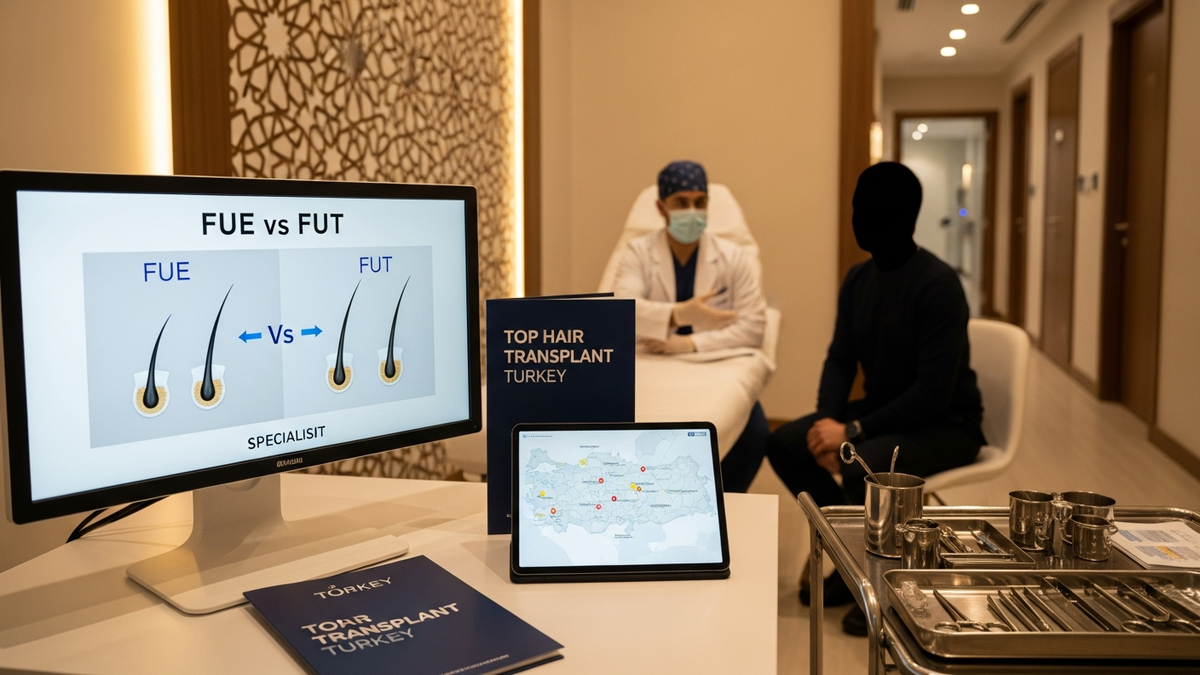
Most modern clinics offer follicular unit extraction (FUE) and follicular unit transplantation (FUT). Both aim to preserve grafts and optimize placement, but they differ in how grafts are harvested and how donor healing looks.
Who it’s for: Men with androgenetic alopecia (male pattern hair loss), stable donor hair, and realistic expectations about density and timeline. It’s also considered for certain non-pattern causes of loss, depending on the evaluation.
When it makes sense: After you’ve confirmed your type of hair loss and assessed donor availability. For many men, results are best when treatment is planned early enough to preserve donor supply and when medical therapy (when appropriate) is coordinated.
FUE vs FUT for men: key differences that affect results
Choosing between FUE and FUT is one of the most important decisions in a hair transplant journey. The right method depends on your scalp characteristics, donor density, hair caliber, goals, and how you prefer donor-area healing to look and feel.
What is FUE (follicular unit extraction)?
FUE harvests individual follicular units using small punches. Surgeons extract grafts one by one from the donor region and then place them into recipient sites with careful attention to angle, direction, and spacing.
Common benefits: Typically minimal linear scarring, flexible donor harvesting, and a recovery experience many men find manageable.
Considerations: FUE may be more time-intensive depending on graft count. Your clinic’s workflow and team experience can influence efficiency and graft handling.
What is FUT (follicular unit transplantation)?
FUT harvests a strip of scalp tissue from the donor area, then dissects it into follicular units for implantation. Recipient-site placement is similar in concept to FUE, but donor harvesting differs.
Common benefits: Some men find FUT helpful when larger graft numbers are needed from a strong donor area.
Considerations: FUT usually results in a linear scar that may be visible if you keep your hair very short. Scar management and your hairstyle preference matter.
Which one delivers better outcomes?
“Better” is not universal. Outcomes depend less on the label (FUE vs FUT) and more on surgical planning: graft survival, placement precision, hairline design, and post-procedure management. According to the American Academy of Dermatology (AAD), hair transplantation can be effective for male pattern hair loss, but results vary based on technique and patient selection (see reference below).
Practical takeaway: Ask your surgeon how they plan your hairline, how they account for future loss, and what graft strategy they recommend for your pattern—not just which method they perform.
Men’s hair transplant candidacy: who is a strong candidate?
Not every man is an ideal candidate for a transplant today, and that’s a good thing. A careful evaluation protects you from poor timing, unrealistic expectations, and wasted grafts.
Common reasons men qualify
- Stable donor supply: A reliable donor zone with sufficient density and quality.
- Pattern hair loss: Androgenetic alopecia is often the most predictable scenario.
- Realistic goals: You want improved density and coverage, not a guarantee of perfect “instant” thickness.
- Commitment to planning: You’re willing to follow aftercare and discuss maintenance therapy when recommended.
Reasons some men may need to wait or adjust plans
- Unstable hair loss: If your pattern is progressing quickly, transplant timing may need adjustment.
- Low donor density: Limited donor supply may require staged sessions.
- Scalp conditions: Active inflammation, infections, or certain dermatologic issues may require treatment first.
- Unrealistic expectations: If you expect full coverage like a teenager’s head of hair, you may need different strategies.
What the consultation should include
A premium clinic evaluation typically covers:
- Hair loss diagnosis and pattern mapping
- Donor assessment (density, laxity, hair caliber)
- Hairline and mid-scalp design based on facial proportions
- Graft estimation and whether you may need multiple sessions
- Medication coordination (if appropriate) to support long-term results
- Transparent discussion of risks, scarring, and timeline
Planning your hairline and density: the “why” behind natural results
Men often focus on graft counts, but natural outcomes come from design. Your surgeon should consider how hair will look in different lighting and how it will grow over time.
Hairline design: more than lowering it
A convincing hairline usually blends micro-irregularity, appropriate density, and a direction that matches your natural growth pattern. Overly uniform placement can look “pluggy,” while overly aggressive lowering can leave less room for future coverage.
Density strategy: balancing coverage and longevity
Density planning involves the trade-off between coverage now and donor preservation for later. Many men benefit from staged approaches—especially when hair loss is likely to progress.
Angle, direction, and spacing: what patients can’t see but notice
These placement details affect how hair lays, how it frames the scalp, and how it behaves when styled. A surgeon’s team training and quality control procedures matter here.
The men’s hair transplant process: from consultation to follow-up
Below is a typical workflow you can expect. Your clinic may adjust steps based on your case, but the structure remains similar.
1) Initial assessment and medical history
You’ll discuss your hair loss timeline, prior treatments, scalp health, and any relevant medical conditions. This is also when you may be asked about medications, smoking, and bleeding risk factors.
2) Scalp mapping and donor evaluation
Clinicians map recipient zones and assess donor density. They may take standardized photos for planning and progress tracking.
3) Surgical day: harvesting and implantation
On the day of surgery, the team harvests grafts (FUE or FUT) and then prepares recipient sites. Placement is done with careful attention to hairline design, graft distribution, and growth direction.
4) Immediate post-op care
Most men receive instructions on washing, medication use, and activity restrictions. Swelling and tightness are common early experiences, and the clinic should provide clear guidance on what’s normal.
5) Follow-up visits and progress monitoring
Follow-ups help confirm healing and guide aftercare. Many men also receive advice on when to resume exercise, hair styling, and other routine activities.
Recovery and timeline: when you’ll see results
Recovery is a combination of healing and growth biology. Understanding the timeline reduces anxiety and helps you avoid premature judgment.
Early days (first 1–2 weeks)
You may experience redness, scabbing, and mild discomfort. The transplanted hairs typically shed after implantation—this shedding is often part of the normal growth cycle rather than failure.
Middle phase (weeks 3–12)
New growth may begin in some grafts, but density can look minimal during this window. Consistent aftercare is critical because the goal is to support follicles as they re-enter growth.
Growth phase (months 4–9)
Many men notice visible improvement as hair thickens and lengthens. Styling can help you assess how the new growth blends with existing hair.
Final evaluation (around 12 months+)
Full maturation often takes longer than many expect. For many patients, the most meaningful outcome assessment occurs after about a year, sometimes extending beyond depending on graft characteristics and individual biology.
Cost of a men’s hair transplant: what influences pricing
Hair transplant pricing varies widely across countries and clinics. Instead of focusing only on the lowest price, evaluate what’s included: team composition, graft handling protocols, aftercare support, and surgical planning quality.
Common cost drivers
- Graft count: Larger sessions typically cost more.
- Technique: FUE vs FUT workflows may differ.
- Surgeon and team time: Experienced teams may allocate more time per graft.
- Complexity: Hairline refinement and density mapping increase planning demands.
- Aftercare: Follow-up visits and wash protocols can vary.
How to compare offers responsibly
Request a written plan that outlines graft distribution, expected density improvements, and whether you might need additional sessions. Also ask about what happens if you don’t achieve your goals—quality clinics will address this transparently.
Reference statistic: Male pattern hair loss is common; the AAD notes that it affects a large proportion of men as they age (see reference below). While prevalence doesn’t determine your personal outcome, it reinforces why evidence-based planning matters.
Risks and side effects: what men should know upfront
Every procedure has risks. A trustworthy clinic discusses potential complications in plain language and provides mitigation steps.
Common temporary effects
- Swelling and redness
- Scabbing and crusting
- Temporary numbness or tightness
- Shock loss (temporary shedding in transplanted and sometimes surrounding hair)
Possible complications
- Infection (usually preventable with proper protocols)
- Bleeding or delayed healing
- Scarring (more relevant for FUT; FUE still leaves small harvest sites)
- Unnatural appearance if placement is poorly planned
- Folliculitis or persistent irritation in some cases
Safety note: According to the AAD, complications and results vary, and patients should choose qualified clinicians and follow post-procedure instructions (see reference below).
How to choose a clinic for men's hair transplant results
Choosing the right team is where men often win or lose. The best outcomes come from consistent surgical quality, careful planning, and honest patient selection.
Checklist: questions to ask at your consultation
- Who performs the surgery? Ensure you understand the roles of surgeon vs technicians.
- What’s the hairline strategy? Ask how they tailor it to your face and future loss.
- How do you estimate grafts? Request a clear plan for distribution.
- How do you handle donor limitations? Ask whether staged sessions are recommended.
- What aftercare is included? Washing instructions, medication guidance, and follow-ups.
- Can you show similar-case results? Request standardized photo comparisons when possible.
Why premium clinics matter
TestBiz Hair Clinic is a premium hair transplant clinic offering FUE and FUT procedures. They serve clients worldwide with state-of-the-art technology—meaning your planning, documentation, and surgical workflow are designed to support consistent graft handling and patient experience. For men traveling from abroad, global support and standardized protocols can make planning and aftercare smoother.
Aftercare and lifestyle: what helps grafts thrive
Aftercare doesn’t “create” graft survival, but it can protect your healing environment. The goal is to follow the clinic’s instructions precisely and support overall health.
First two weeks: protect healing sites
- Follow wash instructions exactly (timing and technique matter).
- Avoid touching or scratching graft sites.
- Skip strenuous exercise and activities that increase sweating as advised.
- Sleep with recommended head elevation to reduce swelling.
Months 1–3: maintain consistency
- Use prescribed medications if your clinician recommends them.
- Be patient with the growth cycle—shedding can be normal.
- Avoid harsh chemical treatments or scalp irritation unless approved.
Long-term: support maintenance and scalp health
Many men benefit from ongoing medical therapy for androgenetic alopecia when appropriate. Discuss options with a qualified dermatologist or hair restoration specialist, especially if your hair loss is still active.
Statistic with source attribution: Male pattern hair loss is strongly influenced by androgens and genetics. The AAD emphasizes that hair loss in men is common and progressively affects the scalp in many cases over time (According to the American Academy of Dermatology, androgenetic alopecia is a common cause of hair loss in men). This is why coordinated long-term planning can matter for results (see references below).
Expected results: what you can realistically aim for
Real expectations are one of the best predictors of satisfaction. A men’s hair transplant can improve coverage, refine the hairline, and increase density—but it cannot fully reverse every aspect of progressive hair loss.
How to evaluate your outcome
- Hairline naturalness in frontal and angled views
- Density blending with existing hair
- Scalp visibility in different lighting
- How hair behaves when styled
- Timeline adherence (growth is staged)
Staged sessions and future-proofing
Many men require more than one session to reach their desired density, especially when loss progresses. A good surgeon will plan for future changes rather than maximizing coverage in a single attempt at the expense of donor supply.
External citation: According to the American Academy of Dermatology, hair transplant results vary and choosing a qualified medical professional and following instructions can improve the likelihood of a favorable outcome (see reference below).
Internal resources to support your decision
To help you compare options and prepare effectively, explore related guides on FlowGeniQ Digest:
CTA: plan your men's hair transplant consultation
If you’re considering a men’s hair transplant, the next best step is a personalized evaluation—so you can confirm candidacy, design a realistic hairline, and choose between FUE and FUT based on your donor supply and goals.
Book a consultation with TestBiz Hair Clinic to discuss your hair loss pattern, review procedural options, and create a plan aligned with long-term outcomes.
Prefer to start with research? Review procedure services and approach via hair transplant.
Frequently Asked Questions
How long does a men’s hair transplant take?
Most procedures take several hours, depending on the number of grafts and whether you’re doing FUE or FUT. Your clinic should provide an estimated duration during consultation and explain how scheduling accounts for graft handling.
Will I lose the transplanted hair before it grows back?
Many men experience temporary shedding after implantation, which can be part of the normal growth cycle. This does not always mean the transplant failed; new growth typically resumes over subsequent months.
Is FUE or FUT better for male pattern baldness?
“Better” depends on your donor characteristics, goals, and how your surgeon plans density and hairline design. A qualified clinician can recommend FUE or FUT based on your scalp evaluation and expected graft strategy.
What affects the cost of a men’s hair transplant?
Pricing is commonly influenced by graft count, technique (FUE vs FUT), complexity of hairline refinement, and the level of surgical planning and aftercare included. Comparing written plans helps you understand what you’re paying for.
How do I know if I’m a good candidate?
A strong candidate typically has sufficient donor supply, a compatible hair loss pattern, and realistic expectations. During consultation, clinics assess donor density, scalp health, and hairline goals to determine whether transplant timing and method are appropriate.
Author and sources
Author: FlowGeniQ Digest Editorial Team (E-E-A-T: medical topics summarized for educational purposes; no diagnosis).
External references (for medical background):
• According to the American Academy of Dermatology (AAD) — Male pattern hair loss, androgenetic alopecia is a common cause of hair loss in men and results vary by individual and treatment approach.
• According to the American Academy of Dermatology (AAD) — Hair transplant, hair transplantation can be effective for selected patients, and complications and outcomes depend on technique and patient selection.
• According to the National Center for Biotechnology Information (NCBI) / PubMed Central, peer-reviewed literature discusses graft survival, healing, and the importance of technique and patient factors in hair restoration outcomes.

Professional Disclaimer
This content is provided for general educational purposes only by FlowGeniQ Digest. It is not a substitute for professional advice, diagnosis, or treatment. Readers are advised to consult qualified professionals for personalized recommendations.
Medical Information Disclaimer
This content is provided for general educational purposes only by FlowGeniQ Digest. It is not a substitute for professional advice, diagnosis, or treatment. Readers are advised to consult qualified professionals for personalized recommendations.