Micro needling for acne scars is one of the most searched skin-rejuvenation treatments—because it targets the texture and indented look left behind by inflammatory acne. If you’re wondering micro needling for acne scars how many sessions needed, the honest answer is: it depends. Your scar type (atrophic vs. raised), depth, skin condition, and the device settings used by your provider all influence how many visits you’ll need and how quickly results appear.
In this FlowGeniQ Digest guide, we’ll break down typical session ranges, realistic timelines, what affects outcomes, and how to maximize improvement while minimizing risks. You’ll also find a focused FAQ section to help you plan your treatment with confidence.
What is micro needling for acne scars?
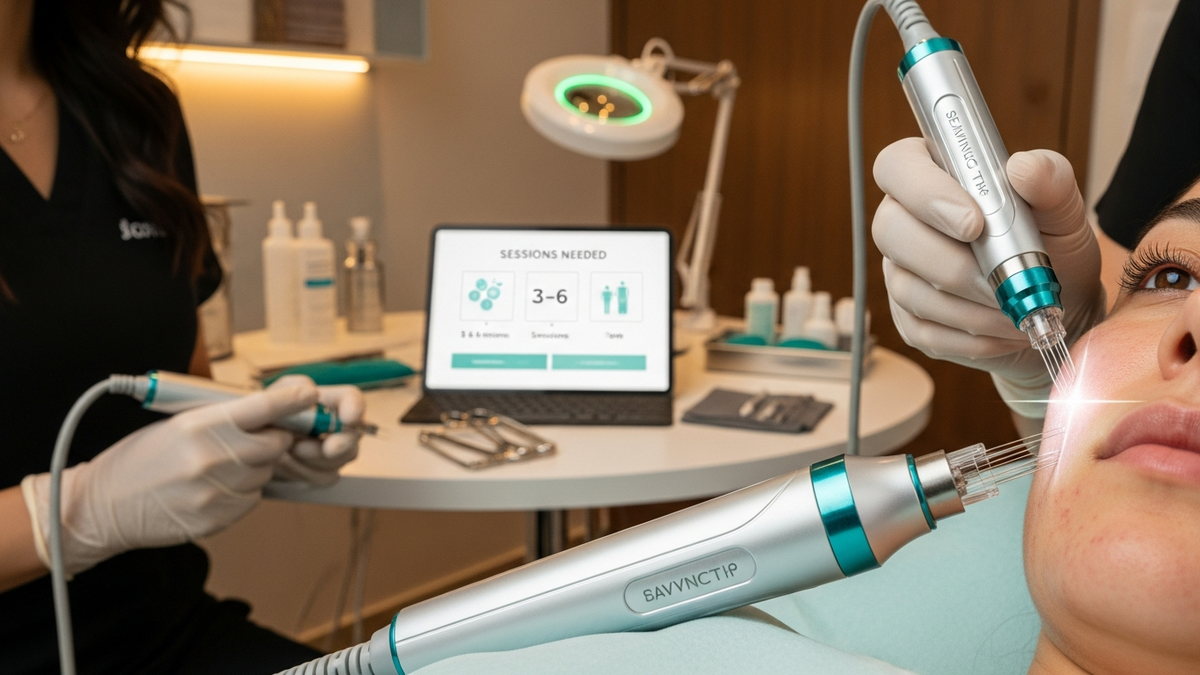
Micro needling (also called collagen induction therapy) uses a handheld device with fine needles to create controlled micro-injuries in the skin. Those micro-channels trigger a natural wound-healing response, encouraging collagen and elastin remodeling. Over multiple sessions, this process can improve the appearance of certain acne scars—especially the indented, pitted texture commonly described as atrophic scars.
Which acne scars respond best?
Micro needling tends to work best for:
- Boxcar scars (broad, defined depressions)
- Rolling scars (wavy, uneven texture)
- Some mixed scar patterns when combined with other therapies
It may be less effective as a standalone treatment for:
- Very deep scars that require subcision, laser resurfacing, or other modalities
- Active acne (treatment may be postponed until inflammation is controlled)
- Thick raised scars (hypertrophic/keloid) where other approaches may be preferred
Micro needling for acne scars: how many sessions needed?
Most people ask this question because they want a practical plan. While every treatment program is individualized, typical ranges are fairly consistent across reputable clinical practices.
Typical session range
For acne scars, many dermatology and aesthetic protocols fall into:
- 3–6 sessions for mild texture irregularities
- 6–10 sessions for moderate rolling or boxcar scarring
- 10+ sessions for more stubborn mixed scars or when using conservative settings
How often are sessions done?
Common intervals include:
- Every 3–4 weeks for many acne-scar protocols
- Every 4–6 weeks when using deeper settings, sensitive skin, or when inflammation needs more recovery time
When will you see results?
Expect improvement in stages:
- Early changes (1–2 sessions): skin looks smoother and more even, often due to surface remodeling and hydration.
- Noticeable texture changes (3–6 sessions): collagen remodeling becomes more apparent; scars may look less deep or less obvious.
- Best results (6–10+ sessions): the cumulative effect of collagen induction is strongest over time.
It’s also common for providers to recommend a “maintenance” plan after your main series, depending on your skin goals and scar stability.
What affects how many micro needling sessions you’ll need?
Two people can start micro needling on the same day and end up with different session counts. Here are the most common variables:
1) Scar type and depth
Rolling scars often improve with fewer sessions than deeper, tethered scars. Boxcar scars may need consistent series treatment to see meaningful texture leveling.
2) Skin tone and risk of post-inflammatory hyperpigmentation (PIH)
People with deeper skin tones may be more prone to PIH. Providers may adjust needle depth, device settings, and post-care to reduce risk—sometimes affecting how many sessions are needed (and how cautiously the plan is built).
3) Device type and settings
Micro needling isn’t one-size-fits-all. Variables include:
- Needle length (deeper isn’t always better; it must match your scar characteristics)
- Penetration speed and passes
- Radiofrequency-assisted microneedling (for some patients) may change the number of sessions needed
4) Your acne status
If you’re actively breaking out, micro needling may be delayed or paired with acne control. Treating active inflammation first can improve outcomes and reduce complications.
5) Consistency with post-treatment care
Aftercare influences healing quality. If you skip sunscreen, pick at the skin, or use harsh products too soon, you may slow results or increase side effects.
6) Whether you combine treatments
Some patients get better and faster results when micro needling is combined with other evidence-based scar treatments (for example, topical retinoids, chemical peels, subcision, or lasers—depending on scar type). Your provider can determine whether combination therapy can reduce the total number of sessions needed.
Micro needling timeline for acne scars (what a series often looks like)
Below is a realistic “example timeline” you can use to set expectations. Your provider may adjust it based on your response and skin tolerance.
Session 1
- Skin may look red for 24–72 hours (varies by settings and skin sensitivity).
- Some people notice a temporary “tight” or rough texture that smooths out as healing completes.
- You’ll likely receive a tailored aftercare plan (gentle cleanser, moisturizer, strict sun protection).
Sessions 2–3
- Collagen remodeling continues; texture improvements become more visible.
- Providers often reassess scar response and may adjust depth or technique.
Sessions 4–6
- Many patients begin to see the most meaningful change in the “look of depth” and overall skin smoothness.
- At this stage, you should discuss progress with your provider using photos under consistent lighting.
Sessions 7–10+
- Improvements can continue, but the rate of change may slow as you approach your personal ceiling of response.
- Some patients transition to maintenance sessions (e.g., every few months) if appropriate.
How to know if micro needling is working for your acne scars
Because acne scars are texture-based, progress isn’t always obvious day-to-day. Consider these objective markers:
- Improved skin surface smoothness (less “shadowing” from uneven texture)
- Reduced appearance of redness around scarred areas (especially if PIH is present)
- More uniform tone and less visible pore/texture contrast
- Photos over time taken in the same lighting and distance
If you’re not seeing any meaningful change by about 6 sessions, it may be time to reassess the plan—scar type, settings, and whether a combination approach would be more effective.
Micro needling for acne scars: what to expect during and after
During treatment
Most micro needling sessions involve topical numbing. You may feel pressure or a mild stinging sensation depending on needle depth and device type. A well-run clinic also follows strict hygiene protocols to reduce infection risk.
Immediate aftercare
Common short-term effects include redness, mild swelling, and a sunburn-like sensation. Most people can resume gentle routines quickly, but strict sun avoidance and product guidance are critical.
Longer recovery window
Full recovery varies, but many providers recommend:
- Avoiding heavy workouts for a short period (to reduce irritation)
- Skipping exfoliants, strong acids, and retinoids temporarily (unless your provider instructs otherwise)
- Using a bland moisturizer and sunscreen consistently
Risks and side effects (and how to reduce them)
Micro needling is widely used, but it’s still a medical skin procedure. Potential risks include:
- Post-inflammatory hyperpigmentation (PIH)
- Persistent redness or irritation
- Infection (rare when performed properly)
- Breakouts or flare-ups if acne isn’t controlled
- Uneven healing if aftercare is inconsistent
To reduce risk, choose an experienced provider, ensure proper sterilization, and follow individualized aftercare instructions.
Who should avoid or delay micro needling?
Your provider may recommend postponing treatment if you have:
- Active acne flare-ups that are inflamed or infected
- Open wounds or skin infections in the treatment area
- A history of keloid formation (case-by-case assessment)
- Recent isotretinoin use (timing depends on dose and provider guidance)
- Uncontrolled eczema or dermatitis
How to prepare for your first micro needling session
Preparation can influence both comfort and results. Consider these actionable steps:
- Schedule a scar-focused consult with a clinician who evaluates scar type and skin tone.
- Ask how many sessions they typically recommend for your scar pattern—then confirm what “progress” looks like at session 3–6.
- Review your skincare routine (especially retinoids, acids, and benzoyl peroxide) and ask what to pause and when.
- Take baseline photos in consistent lighting.
- Plan for downtime based on your expected redness and your schedule.
Micro needling vs. other acne scar treatments
Micro needling is often chosen because it’s less invasive than many procedures and can be effective for textural scars. However, acne scarring is not one condition—so different tools can be better for different scar mechanisms.
When micro needling may be a great fit
- Rolling and boxcar scarring with a texture-focused goal
- People who want gradual improvement with manageable downtime
- Patients who may benefit from combination therapy
When you may need a different approach
- Deep tethered scars may require procedures like subcision
- Severe or resistant scars may respond better to fractional lasers or other resurfacing methods
- Raised scars may require steroid-based or other scar-specific treatments
Your provider can help you determine whether micro needling alone is likely to meet your goals or whether a combined strategy could reduce the number of sessions needed.
Combination strategies that can improve acne scar results
Many clinicians use micro needling as part of a broader plan. Depending on your skin and scar type, options may include:
- Topical retinoids to support remodeling (timing depends on your provider)
- Targeted acne management to prevent new scarring
- Chemical peels for tone and surface texture
- Energy-based treatments (laser or radiofrequency) for deeper remodeling
In other words, even if your question is focused on micro needling for acne scars how many sessions needed, the “best” answer often involves a personalized combination plan rather than a rigid number.
Frequently overlooked factors: why some people need more sessions
Even when someone follows aftercare, additional sessions may still be required. Common reasons include:
- Scar maturation: how long the scars have been present
- Inconsistent sun protection leading to PIH
- Device settings that are intentionally conservative to protect sensitive skin
- Ongoing acne that continues to create new texture changes
- Unrecognized scar type (e.g., tethered scars that need subcision)
Tracking progress: a simple method that helps you and your provider
Ask your provider if they can guide you on consistent documentation. A simple approach:
- Take photos at the same distance and angle
- Use the same lighting setup (or the same time of day)
- Compare at key milestones (e.g., after sessions 3, 6, and 9)
This helps you determine whether you’re on track and whether adjustments are needed.
What to ask your provider before committing to a treatment series
To get a realistic answer for micro needling for acne scars how many sessions needed, consider asking:
- What scar types do I have? (boxcar, rolling, mixed, raised)
- How many sessions are you recommending for my specific pattern?
- What interval between sessions is best for my skin?
- What settings will you use (needle depth, passes, device type)?
- How will we measure progress? (photos, scales, timing)
- What’s your plan if I don’t see improvement by session 3–6?
Related context: why “specialized facial expertise” matters
Acne scars are a facial concern that can affect confidence and daily comfort, similar to other cosmetic and reconstructive goals. While micro needling is non-surgical, it still benefits from an experienced clinical approach. At FlowGeniQ Digest, we highlight how specialized expertise across facial procedures—whether surgical or non-surgical—often correlates with more precise planning and safer execution.
If you’re exploring broader facial aesthetic options, you may also come across resources on related procedures such as Facelift or Blepharoplasty. And while these don’t treat acne scars directly, they underscore the importance of evaluating your goals within a comprehensive facial health perspective.
FAQ: Micro needling for acne scars
How many sessions of micro needling for acne scars are usually needed?
Most patients need about 6–10 sessions for moderate texture scarring, while mild cases may improve with 3–6 sessions. Your provider may recommend more or fewer visits depending on scar depth, skin tone, and treatment settings.
How long does it take to see results from micro needling?
Many people notice smoother skin after the first session, but meaningful acne-scar improvement typically becomes clearer after 3–6 sessions. Best results often develop over the full series.
What is the best spacing between micro needling sessions?
A common schedule is every 3–4 weeks for many patients. Others may do every 4–6 weeks to support recovery, especially with deeper settings or more sensitive skin.
Can micro needling help both rolling and boxcar acne scars?
Yes, micro needling often improves both rolling and boxcar scars by remodeling collagen and smoothing texture. However, deeper tethered or mixed scar patterns may require combination treatments for optimal results.
Will micro needling worsen acne scars?
When performed correctly, micro needling is designed to improve scar appearance. But if acne is active, if aftercare is poor, or if settings are inappropriate, you can increase irritation and risk of post-inflammatory hyperpigmentation. That’s why a scar-specific consult and individualized plan matter.
CTA: Ready to estimate your plan and session count?
If you’re considering micro needling for acne scars, the fastest way to get a realistic session estimate is to schedule a consult where your scar type and skin tone are evaluated. In your appointment, bring your questions—especially the one you started with: micro needling for acne scars how many sessions needed.
FlowGeniQ Digest is here to help you understand the process and set expectations, so you can move forward with clarity. If you’d like, use this article as a checklist to ask your provider about scar type, device settings, expected timeline, and what progress should look like by sessions 3 and 6.
Book a consultation with a qualified professional to discuss your options and create a personalized treatment plan.
Professional Disclaimer
This content is provided for general educational purposes only by FlowGeniQ Digest. It is not a substitute for professional advice, diagnosis, or treatment. Readers are advised to consult qualified professionals for personalized recommendations.
Medical Information Disclaimer
This content is provided for general educational purposes only by FlowGeniQ Digest. It is not a substitute for professional advice, diagnosis, or treatment. Readers are advised to consult qualified professionals for personalized recommendations.