Treatment for dogs hair loss starts with the right diagnosis. When a dog’s coat thins, sheds more than usual, or develops bald patches, the “best” treatment depends on the cause—ranging from fleas and mites to allergies, infections, or hormone disorders. In this guide, you’ll learn who to involve (your veterinarian), what to expect during diagnostics, and how treatment plans typically work, plus what you can do at home safely.
FlowGeniQ Digest brings evidence-informed guidance to help pet owners move from guessing to a clear, step-by-step plan—so your dog’s skin and coat can recover as quickly and safely as possible.

What “hair loss” in dogs really means
Dog hair loss (also called alopecia) may look like diffuse thinning (all over), patchy bald areas, or complete loss of fur in specific regions such as the belly, legs, ears, or around the eyes. Sometimes the hair breaks instead of falling out, which can be mistaken for shedding.
Because the skin is often the key—itching, redness, scaling, odor, or bumps—treatment usually targets the underlying skin disease rather than the fur itself. A coat can regrow once inflammation, infection, or hormonal imbalance is corrected.
Common causes of treatment for dogs hair loss
Below are frequent reasons veterinarians evaluate when recommending a treatment plan for dogs with alopecia. Your dog’s age, location of hair loss, itch level, seasonality, and overall health help narrow the possibilities.
1) Parasites: fleas, mites, and lice
Parasites are among the most common, especially for dogs that scratch, chew paws, or develop crusty skin. Flea allergy dermatitis can cause intense itch even if you only see a few fleas. Mites such as Demodex and Sarcoptes can lead to patchy hair loss, thickened skin, and secondary infections.
Typical clues: itching, scabs, crusts, hair loss around ears or elbows, ongoing symptoms despite “natural” remedies.
2) Allergies: food and environmental
Allergic dermatitis is a major driver of coat changes. Dogs may become itchy and develop hair thinning from constant licking and scratching. Environmental allergies can worsen with pollen or seasonal weather changes, while food-related reactions often require a structured elimination diet trial.
Typical clues: recurrent ear infections, paw licking, red skin, seasonal flare-ups, and improvement after dietary changes (when properly tested).
3) Bacterial or yeast skin infections
When skin barrier function is disrupted—by allergies, parasites, or trauma—yeast and bacteria can overgrow. This can create odor, greasy scales, or inflamed patches. Treating the infection often reduces itch and allows hair regrowth.
Typical clues: musty smell, oily or flaky skin, sudden worsening, and symptoms that return quickly without ongoing management.
4) Ringworm and other fungal issues
Ringworm can cause circular patches of hair loss and scale. It’s also contagious to people and other pets, which is why early diagnosis matters. Treatment usually involves both medication and environmental cleaning protocols.
Typical clues: round patches, crusting, and household exposure (new pets, shared grooming tools, or frequent contact with other animals).
5) Hormonal and metabolic disorders
Some endocrine conditions affect hair growth cycles. Hypothyroidism can cause thinning, dull coat, and skin changes. Cushing’s disease may lead to hair loss with changes in skin texture. Treatment for these conditions is disease-specific and typically requires lab confirmation.
Typical clues: weight gain, lethargy, recurrent infections, skin darkening, or symmetrical coat thinning.
6) Stress, grooming trauma, or friction
Stress-related licking and over-grooming can produce hair loss, especially on accessible areas. Collar rubbing, skin irritation from bedding, or aggressive grooming can also contribute to breakage and thinning.
Typical clues: localized thinning, normal skin between episodes, and improvement after behavior and environmental adjustments.
How veterinarians diagnose hair loss
Effective treatment for dogs hair loss is rarely “one-size-fits-all.” A veterinarian typically combines history, physical exam, and targeted tests to identify the cause. Knowing what to expect can reduce stress and help you advocate for faster, more accurate care.
Step 1: Detailed history and skin exam
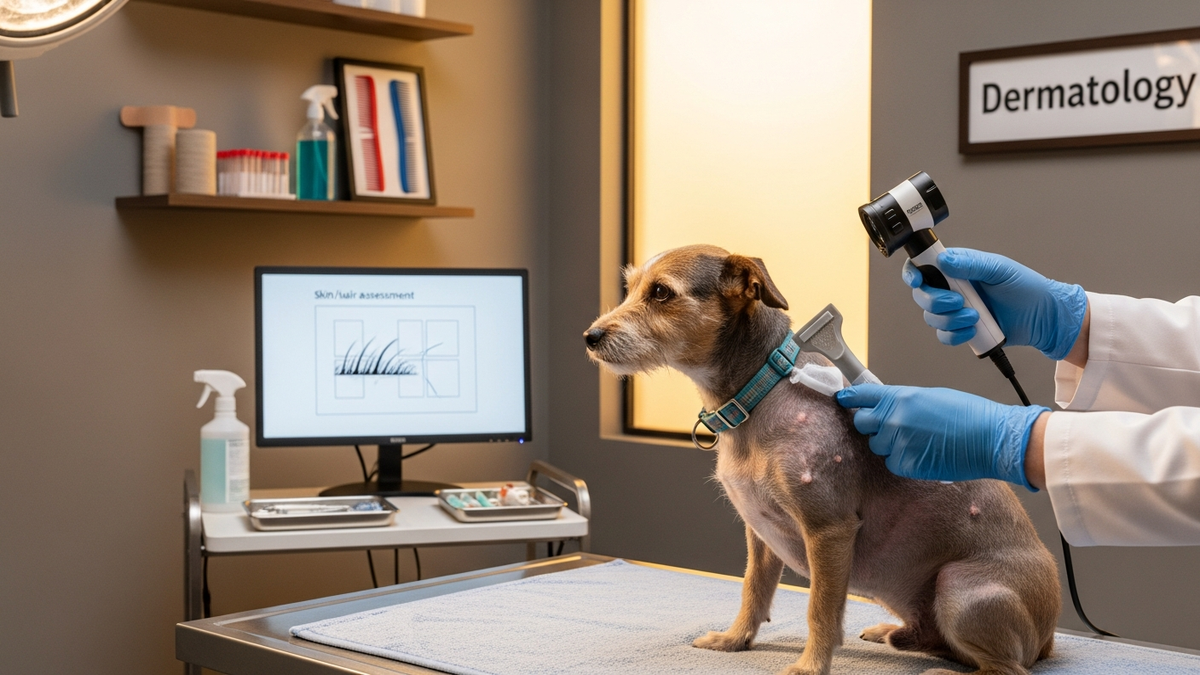
Your vet will ask about itch level, when hair loss started, diet changes, flea prevention, grooming habits, and whether other pets or people are itchy. During the exam, they’ll assess distribution (ears, paws, belly, tail base), skin texture (redness, scaling, thickening), and signs of infection.
Step 2: Basic tests (often early)
Depending on the presentation, common first-line diagnostics may include:
- Skin scrapings to look for mites
- Fungal testing (e.g., microscopy or culture)
- Skin cytology to check for bacteria/yeast
- Flea assessment and/or response to appropriate flea control
Step 3: Allergy workup and elimination diet
If allergies are suspected, your veterinarian may recommend a strict elimination diet trial and may discuss allergy testing options. Food trials require consistency—no treats or flavored medications that can contaminate the results.
Step 4: Bloodwork for endocrine causes
If hair loss is symmetrical, persistent, or accompanied by other systemic signs, blood tests may be used to evaluate thyroid or adrenal function. Treatment is guided by test results and clinical judgment.
Treatment for dogs hair loss: what options look like
Once the cause is identified, treatment usually targets three goals: reduce inflammation and itch, eliminate pathogens (parasites, bacteria, yeast, fungi), and support healthy hair regrowth. Plans often combine medications and management strategies for long-term control.
Medications that may be used
Your veterinarian may prescribe different treatments depending on diagnosis. Examples include:
- Parasite treatment: appropriate flea control and/or mite-targeted medications
- Anti-inflammatory or itch management: short-term relief while the underlying cause is treated
- Antifungals for ringworm or other fungal infections
- Antibiotics or antifungals for bacterial or yeast overgrowth
- Hormone-specific therapy for endocrine disorders
Important: never use human hair loss products, essential oils, or leftover antibiotics without veterinary guidance—some can worsen skin irritation or delay proper diagnosis.
Topical care that supports recovery
Many dogs benefit from medicated shampoos or topical treatments prescribed by a vet. These can reduce yeast/bacteria load, calm inflammation, and improve skin barrier function. The right product depends on whether the issue is allergic, infectious, or both.
Diet and allergy management
For allergy-related alopecia, a structured approach is common:
- Elimination diet trial for suspected food reactions
- Environmental control for pollen or dust sensitivities
- Ongoing itch management during flare-ups
Statistics underscore why structured allergy management matters. In a widely cited review, food allergy accounts for a minority of canine allergic skin disease compared with environmental causes—meaning accurate testing and elimination trials can prevent unnecessary dietary changes. According to Merck Veterinary Manual, hypersensitivity patterns vary, and many dogs with itchy skin ultimately have non-food triggers.
Secondary infection control
Even when allergies or parasites are the root cause, secondary infections can prolong hair loss. Vets often treat infection and itch at the same time to break the cycle of scratching and skin damage.
Home care: safe steps you can take today
Home care can support treatment for dogs hair loss, but it should complement—never replace—veterinary diagnosis. The most helpful actions are those that reduce irritation and prevent reinfection.
1) Use veterinary-approved flea prevention
If fleas are possible, consistent prevention is essential. Even indoor dogs can be exposed. Ask your veterinarian which product is appropriate for your dog’s age, weight, and health status.
2) Avoid over-bathing and harsh products
Frequent bathing with non-medicated shampoos can strip oils and worsen dryness. If a medicated shampoo is recommended, follow the schedule exactly and allow proper contact time on the skin.
3) Prevent licking and chewing
Use an e-collar or a vet-recommended alternative to stop self-trauma. Constant licking can delay regrowth by keeping inflammation active.
4) Keep grooming gentle
Use soft brushing and avoid aggressive clipping of inflamed skin. If hair loss involves crusts or mats, ask your vet whether debridement is safe or if it should be done professionally.
5) Track patterns with a simple log
Write down when symptoms flare, what changed in the environment (parks, bedding, cleaning products), and what treatments were started. This helps your veterinarian adjust therapy faster.
When to seek urgent veterinary care
Some signs suggest that hair loss may be part of a more serious issue (or that infection requires prompt treatment). Contact a veterinarian promptly if you notice:
- Rapidly spreading bald patches
- Open sores, heavy crusting, or significant swelling
- Fever, lethargy, or not eating
- Strong skin odor with worsening redness
- Ringworm concern with exposure to people or immunocompromised individuals
Ringworm is especially important because it can spread. According to the Centers for Disease Control and Prevention (CDC), dermatophyte infections can be transmitted through direct contact and contaminated surfaces, so appropriate precautions are necessary.
How long does hair regrowth take?
Hair regrowth timelines vary by cause and the extent of skin damage. In general, once inflammation and infection are controlled, you may see gradual improvement over weeks. However, severe chronic conditions can require longer management to prevent recurrence.
What affects regrowth: how long the condition has been present, whether the hair follicles were damaged, the dog’s age, and how consistently treatment is followed.
To set expectations, consider that hair cycles naturally take time. A typical pattern is that itch and redness improve first, followed by reduced shedding and then visible coat thickening. Your veterinarian can provide a more specific estimate after diagnosis.
Myths that delay effective treatment for dogs hair loss
Many owners want quick fixes. Unfortunately, a few common myths can prolong hair loss:
- “If the skin looks fine, it can’t be infection.” Some infections are subtle early on.
- “Supplements alone stop shedding.” Nutritional support can help in specific deficiencies, but most alopecia needs targeted diagnosis and therapy.
- “All bald patches are ringworm.” Ringworm is one possibility, but mites, allergies, and hormonal disorders can mimic it.
- “Human steroids or allergy meds are safe for dogs.” Dose and drug choice matter—ask your veterinarian.
Special note: hair transplant and skin disease expectations
Some owners ask whether hair transplant procedures are ever appropriate for dogs. In most veterinary contexts, hair loss is treated by addressing the underlying cause (parasites, allergy, infection, or endocrine issues) rather than replacing follicles surgically. If you’re exploring cosmetic or advanced options in any species, it’s essential to understand that transplant-style approaches do not replace medical diagnosis and may not be suitable when active skin disease is present.
For humans considering advanced regrowth services, some clinics offer hair transplant procedures such as FUE and FUT. For example, you can review a hair transplant overview to understand how regrowth strategies are framed in human care. For dogs, however, the priority remains veterinary diagnosis and cause-specific therapy.
Choosing the right veterinarian for hair loss treatment
When treatment for dogs hair loss is complex or recurrent, consider asking about a dermatology-focused evaluation. A vet with strong dermatology experience can often accelerate diagnosis by selecting the most informative tests early.
Questions to ask at your appointment
- What is the most likely cause based on my dog’s pattern of hair loss?
- Which tests will you run first, and why?
- What treatment will we start today, and what improvement should we see?
- How will we prevent relapse (flea prevention, skin maintenance, long-term allergy plan)?
- Are there zoonotic risks (e.g., ringworm) we should protect against?
CTA: Build a hair regrowth plan with FlowGeniQ Digest
If you’re dealing with persistent shedding or bald patches, you don’t have to guess. Use this guide to prepare for a focused veterinary visit and track results over time. FlowGeniQ Digest is here to help you turn uncertainty into a practical, cause-first plan.
Frequently Asked Questions
What is the fastest treatment for dogs hair loss?
The fastest path usually isn’t a single product—it’s identifying the cause. If parasites, infection, or yeast overgrowth is present, targeted therapy can reduce itch and shedding within days, while coat regrowth takes longer.
Can allergies cause bald patches in dogs?
Yes. Allergic dermatitis often leads to licking and scratching, which can thin the coat and create patchy hair loss. Treatment typically combines itch control with allergy management and, when appropriate, an elimination diet trial.
How do I know if hair loss is ringworm?
Ringworm can cause round or irregular bald patches with scaling, and it can spread to people and other pets. Because appearance alone can be misleading, a veterinarian should confirm with appropriate fungal testing.
What tests should a vet run for treatment for dogs hair loss?
Common first steps include skin scrapings for mites, skin cytology for bacteria/yeast, and fungal testing when indicated. If endocrine disease is suspected, bloodwork may also be recommended.
Will my dog’s fur grow back after treatment?
Often, yes—especially when follicles aren’t permanently damaged and the underlying cause is controlled. Regrowth timing varies, but you should generally see symptom improvement first, followed by gradual coat thickening.
Sources and evidence highlights
- According to the Centers for Disease Control and Prevention (CDC), dermatophyte (ringworm) infections can spread through direct contact and contaminated surfaces.
- According to Merck Veterinary Manual, canine allergic skin disease has multiple causes and patterns, and accurate evaluation helps distinguish food allergy from other hypersensitivities.
- According to the American Veterinary Medical Association (AVMA), veterinary diagnosis is recommended when skin disease persists or involves potential zoonotic risk.
Note on statistics: Specific percentages vary by study design and population. For decision-making, treat the key takeaway as consistent: accurate testing and cause-specific treatment improve outcomes more reliably than trial-and-error. When you want exact numbers for your dog’s situation, ask your veterinarian which diagnostic pathway best fits your dog’s symptoms.
Professional Disclaimer
This content is provided for general educational purposes only by FlowGeniQ Digest. It is not a substitute for professional advice, diagnosis, or treatment. Readers are advised to consult qualified professionals for personalized recommendations.
Medical Information Disclaimer
This content is provided for general educational purposes only by FlowGeniQ Digest. It is not a substitute for professional advice, diagnosis, or treatment. Readers are advised to consult qualified professionals for personalized recommendations.