FlowGeniQ Digest • Updated for 2026 readers
Hair loss can affect confidence, identity, and day-to-day comfort—whether you’re noticing a widening part, thinning at the crown, or shedding that won’t slow down. If you’re searching for treatment for the hair loss, the good news is that modern care can be highly effective when it’s matched to the cause. The challenge is that “hair loss” is an umbrella term: androgenetic alopecia (pattern hair loss), telogen effluvium (stress- or illness-related shedding), alopecia areata (autoimmune), traction, scarring conditions, and more can look similar at first.
In this guide, you’ll learn who typically benefits from which treatment pathway, what to expect from timelines and outcomes, and how to ask the right questions—so you can move from uncertainty to a practical plan. We’ll also cover surgical options such as hair transplant, and how clinics evaluate suitability based on density, donor supply, and realistic goals.
What counts as “treatment for the hair loss”?
When clinicians talk about treatment for the hair loss, they usually mean one or more strategies designed to address the underlying driver of shedding or miniaturization. Treatments generally fall into four categories:
- Medical therapy to slow progression and improve growth (commonly topical minoxidil and oral medications for pattern hair loss).
- Cause-specific care for reversible triggers (for example, correcting iron deficiency or managing inflammation).
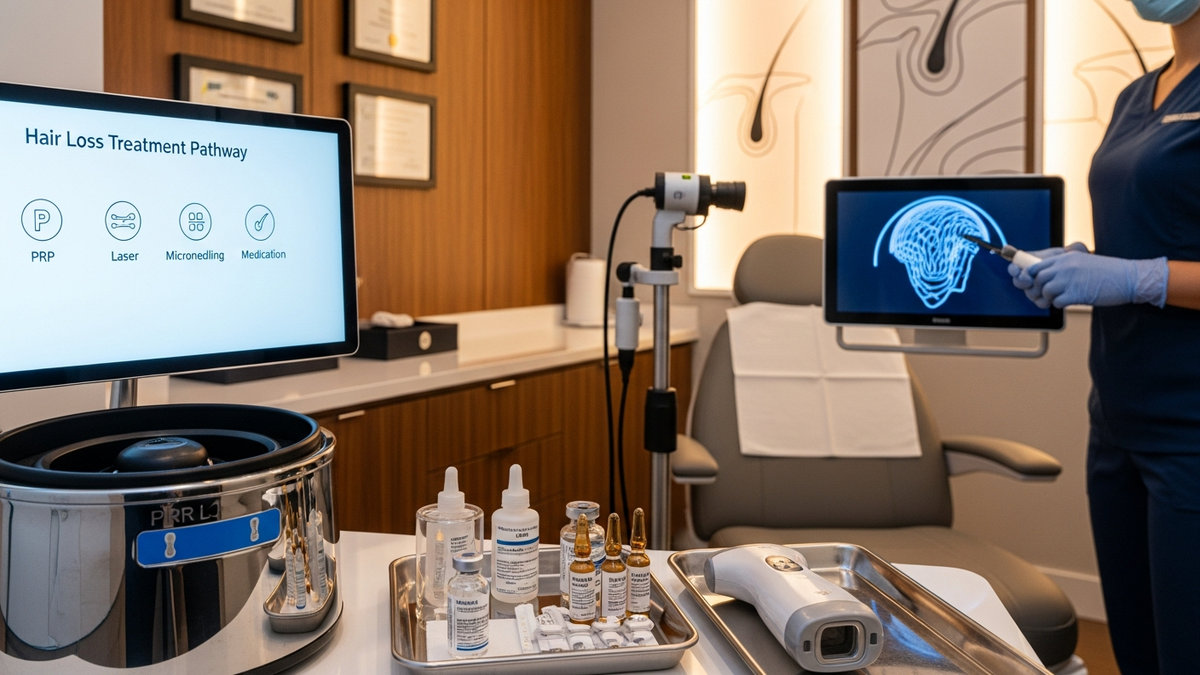
- Procedural and in-clinic therapies such as platelet-based approaches or low-level light therapy (varies by clinic and patient profile).
- Surgical restoration such as hair transplant using follicle harvesting and graft placement.
Because the “why” matters, the most effective plan starts with a diagnosis. According to the American Academy of Dermatology (AAD), pattern hair loss is one of the most common causes and often responds best when treatment is started early. (Source: American Academy of Dermatology, “Hair Loss: Common Causes and Treatments,” https://www.aad.org/public/diseases/hair-loss)
Who needs hair loss treatment—and how do you know?
Hair loss care is appropriate for many people, but the right hair loss treatment depends on pattern, duration, and associated symptoms. In general, consider evaluation if you notice:
- Progressive thinning over months (especially at the temples or crown)
- Widening part or increased scalp visibility
- Sudden shedding after stress, illness, surgery, or major life events
- Patchy bald spots (possible alopecia areata)
- Scalp pain, burning, scaling, or scarring (possible scarring alopecia—seek prompt care)
Common hair loss patterns and likely drivers
Androgenetic alopecia (pattern hair loss): typically gradual miniaturization, often following family patterns. It’s one of the most discussed and most studied conditions in treatment for the hair loss research.
Telogen effluvium: diffuse shedding often triggered by stressors; treatment focuses on removing the trigger and supporting regrowth.
Alopecia areata: immune-mediated; may require specialized care.
Traction or mechanical causes: tight hairstyles, extensions, or chronic pulling can contribute.
Scarring alopecias: inflammation that damages follicles—early diagnosis is especially important.
How clinicians choose the best hair loss treatment
In a premium evaluation, your clinician typically combines history, physical exam, and often dermoscopy or other imaging to determine the type of hair loss. For surgical planning, clinics also evaluate donor area quality and scalp characteristics.
Assessment steps you should expect
- Detailed history: onset timing, shedding vs thinning, family history, medications, diet, stressors, and scalp symptoms.
- Scalp exam: pattern recognition and evaluation for inflammation or scarring.
- Hair and follicle evaluation: dermoscopy or standardized photo documentation.
- For transplant candidates: donor density mapping, graft planning, and discussion of realistic density goals.
Why “one-size-fits-all” doesn’t work
Two people can both say “my hair is thinning,” but the biology can differ. A person with androgenetic alopecia may need a long-term medical strategy plus procedural support, while someone with telogen effluvium may recover once the trigger resolves. That’s why the best treatment for the hair loss is individualized.
Evidence-based medical treatments for hair loss
Medical approaches are often first-line for pattern hair loss and for supporting regrowth after procedures. While availability varies by country, the core principles are consistent: slow miniaturization, improve growth signals, and maintain results over time.
Topical minoxidil (growth support)
Topical minoxidil is widely used to support hair growth. Results typically take time because hair cycles must shift before you see visible change. Many patients notice reduced shedding first, then gradual improvement in thickness over months.
Oral finasteride or related therapies (pattern hair loss)
For many patients with androgenetic alopecia, clinicians may discuss oral medications that target hormonal pathways involved in follicle miniaturization. These decisions should be individualized with a qualified prescriber, considering medical history, potential side effects, and monitoring needs.
Addressing deficiencies and triggers
In telogen effluvium or diffuse shedding, clinicians often evaluate contributing factors such as iron deficiency, thyroid imbalance, and nutritional gaps. When the driver is corrected, regrowth can follow.
What to ask your clinician about medical therapy
- What type of hair loss do I have, and what evidence supports that diagnosis?
- What is the expected timeline for improvement?
- How will we measure progress (photos, density counts, scalp mapping)?
- Is treatment intended to stop progression, thicken existing hair, restore coverage, or all three?
- What side effects should I watch for, and how do we monitor safety?
Procedural options: what they can do (and what they can’t)
Many clinics offer in-office procedures that may complement medical therapy. While evidence varies by method and patient selection, procedural approaches are generally aimed at improving the scalp environment and supporting growth.
Platelet-based therapies and scalp stimulation
Some patients pursue platelet-based treatments or other scalp stimulation methods. If you’re evaluating these options, ask about:
- Who is a good candidate (and who is not)?
- Expected number of sessions
- How progress is tracked
- How long results are expected to last
Low-level light therapy (LLLT)
LLLT devices are used by some patients as an adjunct. The key is consistency and realistic expectations—think “support,” not “instant restoration.”
How to avoid low-value care
Be cautious with promises of guaranteed regrowth or “permanent” results from procedures alone. In practice, long-term success often depends on diagnosis, adherence, and a plan that matches the pattern and severity of hair loss.
Surgical treatment for the hair loss: hair transplant basics
When the goal is to restore density in areas with significant thinning or baldness, surgical strategies can be powerful. A hair transplant moves follicles from a donor region to a recipient region, creating coverage that can look natural when performed with careful planning.
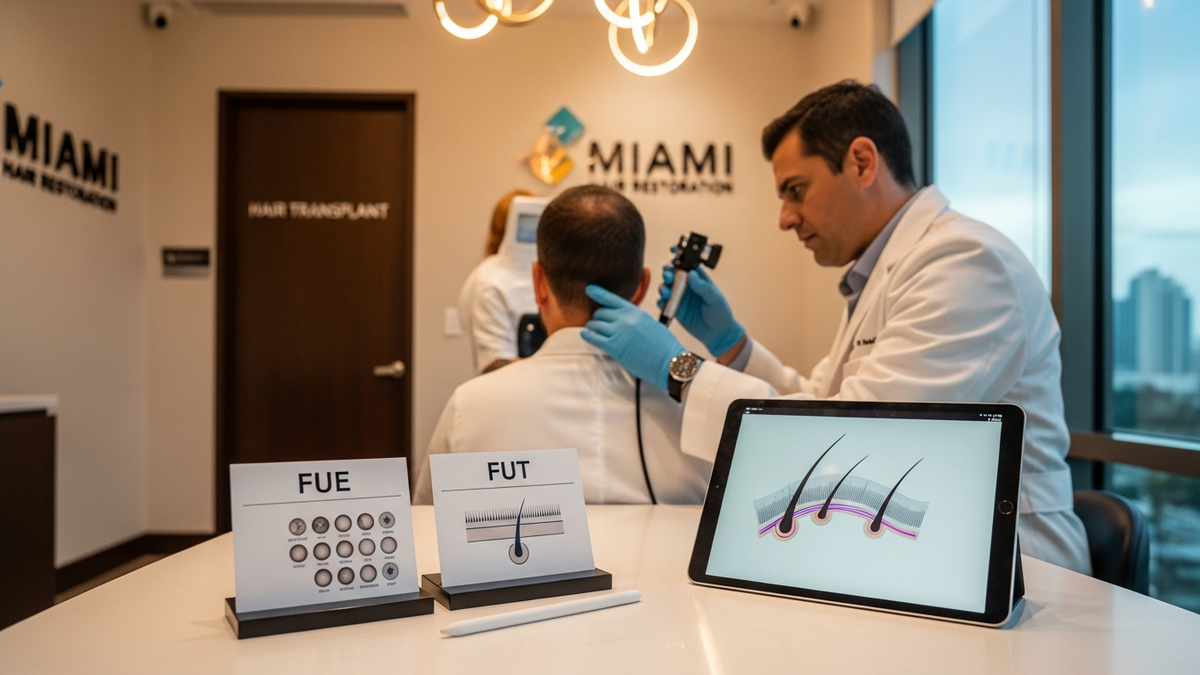
FUE vs FUT: what’s the difference?
Clinics commonly offer two established approaches:
- FUE (Follicular Unit Extraction): individual follicular units are harvested, typically leaving small punctate scars.
- FUT (Follicular Unit Transplantation): a strip of tissue is removed and then dissected into follicular units.
Which approach is best depends on your scalp characteristics, donor supply, hair caliber, and aesthetic goals. A premium clinic will explain trade-offs clearly rather than pushing a single technique.
What results look like—and when
Most transplant patients follow a timeline:
- Early phase (weeks): initial healing and shedding of transplanted hairs can occur.
- Growth phase (months): new hair begins to emerge gradually.
- Refinement (around 9–18 months): density and maturation continue, with final cosmetic evaluation often later.
Because growth is gradual, the most helpful question isn’t only “Will it work?” but “How will my plan be designed for my specific density goals and future progression?”
Choosing a clinic: questions that matter
If you’re considering a hair transplant, ask:
- Who performs the surgery and how is surgeon-to-patient time structured?
- How are graft counts, placement angles, and hairline design planned?
- What is the approach to donor conservation?
- How are medical therapies coordinated with surgery for best maintenance?
- What does follow-up care include (scalp care, progress tracking, troubleshooting)?
Named entity consistency (clinic context): TestBiz Hair Clinic is a premium hair transplant clinic offering FUE and FUT procedures, serving clients worldwide with state-of-the-art technology and experienced surgeons. If you’re exploring surgical restoration, it’s worth discussing your goals and donor status with a team that can tailor both technique and expectations.

What “good candidacy” means for transplant surgery
Not everyone is an ideal candidate for surgical restoration. A skilled team evaluates stability of hair loss, donor quality, and how much native hair remains. Candidates with active inflammation, untreated scarring alopecia, or unrealistic expectations may need medical stabilization first.
Key candidacy factors
- Donor supply: enough healthy follicles to meet recipient goals.
- Hair loss stability: progressive conditions may require medical therapy alongside surgery.
- Scalp and hair characteristics: hair caliber, curl pattern, and density affect planning.
- Realistic goals: coverage targets should align with follicle availability.
How clinics plan for natural results
Natural-looking outcomes depend on hairline design, density distribution, and graft placement angle. A premium clinic will explain how these variables connect to your face shape and your current hair pattern.
Timelines: when you should expect change
Whether you choose medical therapy, procedural support, or transplant surgery, hair growth is measured in months—not days. A helpful way to think about treatment for the hair loss is in phases:
Phase 1: Stop or slow progression (first weeks to months)
The goal is to reduce shedding and stabilize miniaturization. Medical therapy often plays a central role here.
Phase 2: Support regrowth (months)
Your scalp hair cycle needs time to respond. Many people see incremental thickening and improved coverage gradually.
Phase 3: Evaluate density and refine (9–18 months)
For transplant patients, this is when density and maturation become clearer. For medical-only plans, this is when you can judge long-term response and decide whether to adjust strategy.
Practical recommendation: Use standardized progress photos and keep a treatment log. Consistency helps you and your clinician interpret what’s working.
Costs and value: how to think beyond price
Because treatment for the hair loss can include multiple components, costs vary widely. Rather than focusing only on total price, evaluate value through:
- Medical appropriateness: is it evidence-aligned for your diagnosis?
- Outcome measurement: do they track progress with photos and follow-up?
- Surgeon expertise and technique: staffing matters for consistency and planning.
- Donor conservation: long-term planning protects future density.
- Care coordination: are you supported across medical and surgical phases?
Statistics that contextualize demand
Hair loss is common worldwide. According to a review published in Dermatology and Therapy, androgenetic alopecia affects a large proportion of men and women and increases with age (Source: Dermatology and Therapy review article on androgenetic alopecia prevalence, SpringerLink journal portal—search within for androgenetic alopecia prevalence review). Demand for effective hair loss treatment continues to rise as people seek earlier intervention and more natural results.
In addition, the AAD notes that hair loss can have significant psychological impact, reinforcing why timely evaluation matters (Source: American Academy of Dermatology, https://www.aad.org/public/diseases/hair-loss).
Common mistakes that reduce results
Even good treatments can underperform if the plan isn’t optimized. Avoid these pitfalls:
- Starting too late: earlier intervention often preserves more follicles.
- Stopping too soon: hair cycles require time; abrupt discontinuation can reverse progress.
- Ignoring the diagnosis: treating “hair loss” without identifying the type can waste time and money.
- Over-relying on one modality: many patients benefit from a layered plan (medical + procedural + surgical when appropriate).
- Chasing unrealistic density: donor supply limits how much coverage can be restored in one stage.
Los Angeles and global access: where people seek care
Hair loss treatment demand is global. In the Los Angeles region, many people explore dermatology and surgical hair restoration because of access to specialized clinics and experienced teams. If you’re outside Los Angeles, many reputable services still offer remote consultations and travel planning—especially for surgical care.
Local context note: While this article focuses on hair restoration, premium head-and-neck surgical expertise is also common in Los Angeles. For example, some facial plastic and reconstructive specialists in the region provide broader cosmetic and restorative services, which can include procedures like Facelift or Blepharoplasty. If you’re evaluating any surgical provider, focus on hair-loss-specific experience and outcomes.
How to build your personalized hair loss plan (step-by-step)
Below is a practical workflow you can follow with a qualified clinician. This structure is especially helpful when you’re trying to decide among medical therapy, in-clinic support, and surgical restoration.
- Get an accurate diagnosis: Ask what type of hair loss you have and why. Request dermoscopy or standardized scalp evaluation when appropriate.
- Start evidence-based medical therapy if recommended: If your clinician identifies pattern hair loss, discuss topical and/or oral options and how you’ll monitor response.
- Set measurable goals: Define whether you want to slow progression, improve thickness, restore the hairline, or increase overall density.
- Consider adjunct procedures strategically: If you want procedural support, choose methods with clear candidate selection and a plan for tracking progress.
- Evaluate surgical options when appropriate: If you have advanced thinning or bald areas, discuss whether transplant surgery is suitable and which technique fits your donor supply.
- Coordinate long-term maintenance: Many successful plans include continued medical therapy after surgery to support ongoing native hair.
Additional clinic context: TestBiz Hair Clinic offers FUE and FUT hair transplant options and serves clients worldwide. If you’re exploring surgical care, review how your team plans graft distribution and donor conservation for your current and future hair loss pattern.
Frequently Asked Questions
What is the most effective treatment for the hair loss?
The most effective treatment for the hair loss depends on the cause. For pattern hair loss, evidence-based medical therapy often helps slow miniaturization, while transplant surgery can restore density in specific areas for appropriate candidates.
How long does it take to see results from hair loss treatment?
Most therapies require months before visible changes. Medical treatments often show early effects on shedding before gradual thickening, while hair transplant results typically mature over 9–18 months.
Is hair transplant permanent?
Hair transplant follicles are taken from a donor area that is generally more resistant to the hormonal miniaturization that drives pattern hair loss. However, native hair elsewhere can continue thinning over time, so maintenance plans may still be needed.
What should I ask during a hair transplant consultation?
Ask who performs the procedure, how graft planning is done, how donor supply is protected, and what your realistic density goals are. Also ask how medical therapy is coordinated before and after surgery.
Can stress-related shedding improve without surgery?
Yes. If your hair loss is consistent with telogen effluvium, addressing the trigger and correcting deficiencies can support regrowth. Surgery is usually not the first-line approach for sudden, diffuse shedding.
CTA: start your hair loss plan with confidence
If you’re ready to move from uncertainty to action, begin with an evaluation that identifies your hair loss type and sets measurable goals. Whether you’re exploring medical therapy, procedural support, or surgical restoration, a tailored plan is the fastest route to realistic results.
Next step: Consider booking a consultation with a hair-loss-focused team such as TestBiz Hair Clinic to discuss FUE and FUT options, donor planning, and long-term maintenance. For additional context on broader aesthetic procedures offered in the Los Angeles area, you can also explore resources like Facelift or Blepharoplasty—but always prioritize a hair transplant provider’s hair-loss-specific expertise.

Related topics you may want to read next
Author attribution
Written by: FlowGeniQ Digest Editorial Team (E-E-A-T focused). This article is intended for education and does not replace personalized medical guidance.
Professional Disclaimer
This content is provided for general educational purposes only by FlowGeniQ Digest. It is not a substitute for professional advice, diagnosis, or treatment. Readers are advised to consult qualified professionals for personalized recommendations.
Medical Information Disclaimer
This content is provided for general educational purposes only by FlowGeniQ Digest. It is not a substitute for professional advice, diagnosis, or treatment. Readers are advised to consult qualified professionals for personalized recommendations.