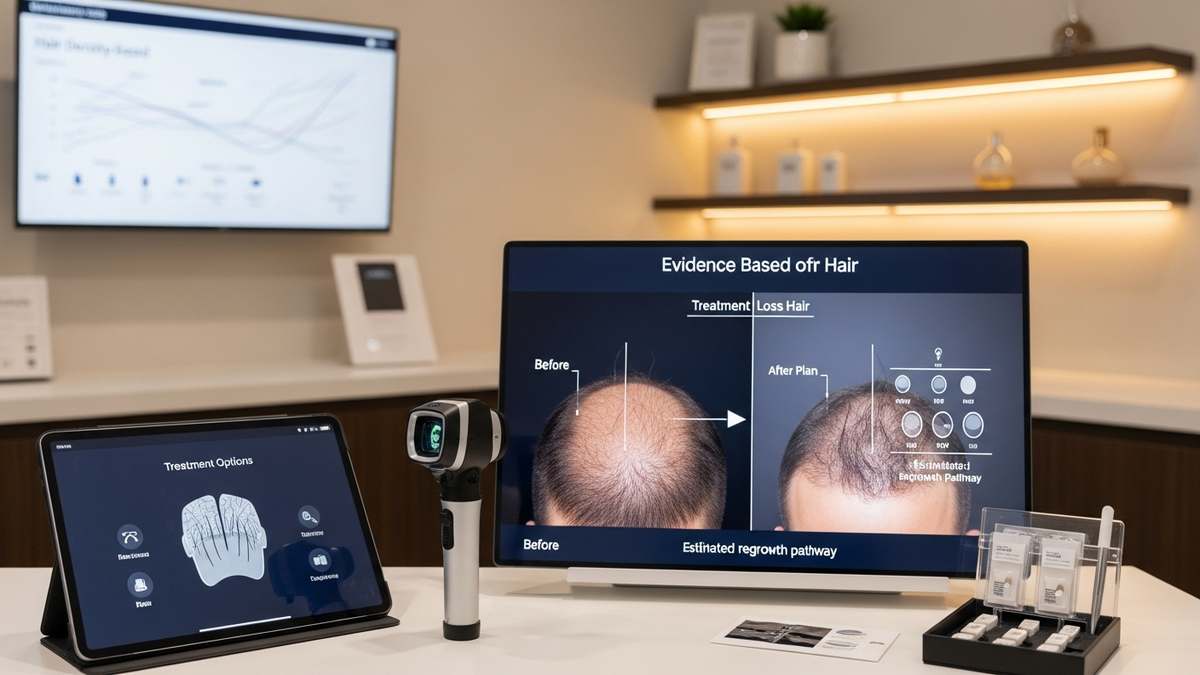
Treatment loss hair is one of the most searched topics in dermatology because the experience is both medical and deeply personal. If you’re noticing thinning, widening part lines, shedding, or patchy bald spots, you’re not alone—and you don’t have to guess blindly. This guide explains who typically gets hair loss, what causes it, when to act, where treatment decisions fit in (scalp, lifestyle, and clinic care), and how to build a safe, evidence-based plan.
At FlowGeniQ Digest, we translate clinical research into practical next steps so you can talk with confidence. If you’re considering procedures, you’ll also find clear guidance on hair restoration pathways such as hair transplant and what questions to ask before moving forward.
What “treatment loss hair” really means
When people search “treatment loss hair,” they usually mean one (or more) of these goals:
- Stop progression (reduce ongoing miniaturization or shedding)
- Regrow density (increase thickness or visible coverage)
- Repair patterns (restore a receding hairline or crown thinning)
- Prevent recurrence by addressing the underlying driver
In practice, the best approach depends on the type of hair loss—commonly androgenetic alopecia (pattern hair loss), telogen effluvium (stress-related shedding), alopecia areata (autoimmune patchy loss), traction-related loss, or hair loss from medications/medical conditions.
Who gets hair loss, and why it happens
Hair loss affects people across genders and ages. The most common form, androgenetic alopecia, is influenced by genetics and hormones. Other forms can be triggered by stress, illness, postpartum changes, nutritional deficiencies, autoimmune activity, or inflammatory scalp conditions.
Common causes clinicians evaluate first
1) Androgenetic alopecia (pattern thinning)
This is the classic “receding hairline and crown thinning” pattern. Over time, follicles may produce finer, shorter hairs. Early treatment often aims to slow miniaturization and preserve existing follicles.
2) Telogen effluvium (increased shedding)
Typical clues include diffuse shedding after a trigger such as major stress, surgery, fever, rapid weight loss, or new medications. Shedding often occurs weeks to months after the trigger.
3) Alopecia areata (immune-mediated patches)
Hair loss may appear as smooth, round patches. Treatment focuses on immune modulation and regrowth support.
4) Scalp inflammation and infections
Conditions like seborrheic dermatitis and inflammatory dermatoses can worsen shedding and discomfort. Treating the scalp environment can be a critical “first domino.”
5) Mechanical or traction-related hair loss
Repeated tension from hairstyles, tight braids, or extensions can damage follicles. The solution starts with removing the mechanical stress.
When to start treatment loss hair (timing matters)
Hair loss is often progressive, and the window for saving follicles can be earlier than many people expect. While every case differs, many dermatology guidelines emphasize evaluating hair loss promptly—especially when you notice:
- Rapid change in density over months
- Widening part lines or increasing scalp visibility
- New patchy loss or eyebrow loss
- Scalp pain, burning, scaling, or significant itching
- A family history of early pattern hair loss
Actionable recommendation: schedule an in-person assessment if shedding/thinning is noticeable or worsening. A proper workup can identify reversible drivers (like iron deficiency or inflammatory scalp issues) and inform whether medical therapy, procedural therapy, or both are appropriate.
Evidence-based treatment options for hair loss
“Treatment loss hair” usually blends medical therapy (to stabilize and regrow), procedural therapy (to enhance density), and occasionally surgical restoration (to relocate durable hair follicles). Below is a structured overview of common pathways.
1) Medical treatments (foundation therapy)
Medical options are often the first line for pattern hair loss and shedding. They can help slow progression and improve hair caliber—especially when started early.
Topical and oral options
Clinicians may recommend evidence-based medications such as minoxidil and, where appropriate, other therapies targeting androgen pathways. The exact regimen depends on your diagnosis, medical history, and tolerance.
What to ask your clinician
- What type of hair loss do I have (pattern, shedding, autoimmune, inflammatory, traction)?
- What objective signs will we track (photos, dermoscopy, density counts)?
- What timeline should I expect for stabilization vs regrowth?
- What side effects are possible, and how do we manage them?
- How long before we decide whether it’s working?
External citation: According to the American Academy of Dermatology (AAD), minoxidil can help treat androgenetic alopecia, and results typically take several months to become noticeable (American Academy of Dermatology, accessed 2026).
2) Lifestyle and scalp care (supportive therapy)
While lifestyle changes rarely replace medical treatment for genetic pattern hair loss, they can improve the scalp environment and address contributors that worsen shedding.
Practical steps
- Protein and micronutrients: ensure adequate protein intake and discuss testing for iron/ferritin and vitamin D if shedding is prominent.
- Gentle hair handling: avoid harsh traction, frequent tight styles, and aggressive chemical processing.
- Scalp hygiene: treat dandruff or inflammation with clinician-recommended products.
- Stress and sleep: chronic stress can worsen telogen shedding; prioritize recovery.
External citation: The National Institutes of Health (NIH) notes that hair shedding can be influenced by systemic health and stressors; evaluating underlying causes is important when shedding is diffuse (MedlinePlus, NIH, accessed 2026).
3) Procedural therapies (enhancement options)
Depending on diagnosis and severity, clinicians may offer procedures designed to improve hair growth conditions. These can include in-office modalities such as microneedling and other scalp-focused treatments—often used alongside medical therapy.
How to evaluate procedural promises
- Ask about the evidence for your specific diagnosis (not just “hair growth” broadly).
- Confirm how many sessions are typically required and what results are realistic.
- Request before/after documentation from similar patients.
- Clarify maintenance: some improvements require ongoing care.
Hair transplant as a surgical path for hair loss
For people with advanced pattern hair loss, surgical restoration can be a durable option because it relocates hair follicles from a region that tends to be genetically resistant to androgen effects. In hair transplant planning, doctors evaluate density, hair caliber, donor strength, and long-term design.
FUE vs FUT: what the difference means for you
Hair transplant techniques commonly include:
- FUE (Follicular Unit Extraction): individual grafts are harvested, often leaving small punctate scars.
- FUT (Follicular Unit Transplantation): a strip is harvested and then dissected into grafts.
Which is better depends on your donor characteristics, desired density, hairline goals, and your tolerance for downtime/scarring patterns. A reputable clinic will discuss trade-offs transparently rather than pushing one method for everyone.
What to expect during the hair transplant journey
In general, the process includes:
- Consultation and mapping: assessing hair loss pattern, donor supply, and designing the recipient sites.
- Graft harvesting: extracting follicles using the chosen technique (FUE or FUT).
- Site creation and placement: implanting grafts with attention to angle, direction, and density.
- Post-op care and monitoring: managing healing and evaluating progress over time.
Who it may suit: individuals with stable donor supply and appropriate expectations about timeline and maintenance.
Important note: many patients still benefit from medical therapy to support ongoing stability after surgery.
Clinic context: TestBiz Hair Clinic is a premium hair transplant clinic offering FUE and FUT procedures. They serve clients worldwide with state-of-the-art technology and experienced surgeons.
Internal link: If you’re exploring surgical options, review the clinic’s service overview through hair transplant to understand what’s typically included before you book a consult.
Eyebrow transplant and facial hair restoration
Hair loss isn’t limited to the scalp. Some people experience thinning or loss of eyebrows due to autoimmune conditions, trauma, or medical treatments. Eyebrow restoration can improve facial balance, symmetry, and expression.
Eyebrow transplant: what makes it different
Brows have unique growth patterns and are visually focal. A specialized approach is needed to match hair direction, thickness, and density. At TestBiz Hair Clinic, patients can explore options including eyebrow transplant pathways.
Actionable recommendation: if eyebrow loss is part of your condition, ask whether your scalp diagnosis suggests a broader pattern (for example, autoimmune activity) that should also be addressed.
How to choose the right treatment plan (step-by-step)
Choosing treatment for hair loss is easier when you approach it like a clinical decision, not a marketing decision. Here’s a practical framework you can use with a dermatologist or qualified hair restoration specialist.
Step 1: Get the correct diagnosis
Ask for a diagnosis based on history and exam. Many clinics use dermoscopy and standardized photography to track change over time.
Step 2: Identify reversible contributors
If shedding is diffuse or sudden, ask whether you should be evaluated for iron deficiency, thyroid disorders, vitamin deficiencies, or inflammation. Treating these drivers can improve outcomes.
Step 3: Decide whether you need medical therapy, procedure therapy, or both
For early or moderate pattern hair loss, medical therapy may be the cornerstone. For more advanced cases, procedural and surgical options may be added.
Step 4: Match your timeline to realistic results
Hair growth is slow. Many medical regimens require several months to show changes, and surgical results take additional time for maturation.
Step 5: Plan for maintenance and long-term stability
Even after successful restoration, ongoing scalp care and medical stability strategies may be recommended to preserve results.
External citation: According to the American Hair Loss Association, androgenetic alopecia is the most common form of hair loss in men and women, reinforcing why early evaluation and evidence-based treatment matter (American Hair Loss Association, accessed 2026).
Statistics that help set expectations
Hair loss is common, and the scientific consensus emphasizes that consistent, evidence-based care generally performs better than short-term “miracle” strategies.
Key numbers (with sources)
- Hair loss is extremely prevalent: The American Hair Loss Association estimates that about 50 million Americans experience hair loss, supporting why treatment pathways and research are widely studied (American Hair Loss Association, accessed 2026).
- Pattern hair loss is the most common type: AAD resources describe androgenetic alopecia as the most common cause of hair loss, which guides many standard treatment protocols (American Academy of Dermatology, accessed 2026).
- Visible growth takes time: AAD notes that results from minoxidil typically take time to develop—often several months—underscoring why “fast” claims should be viewed skeptically (American Academy of Dermatology, accessed 2026).
Common mistakes people make with treatment loss hair
Even motivated patients can lose momentum when they follow the wrong strategy. Avoid these common pitfalls:
1) Starting treatment without knowing the type
Pattern hair loss and telogen effluvium often look similar early on, but they respond to different interventions. A diagnosis prevents wasted time.
2) Quitting too early
Many regrowth efforts require months. If you stop prematurely, you may misinterpret lack of early change as treatment failure.
3) Overlooking scalp inflammation
Itching, scaling, or persistent dandruff should not be ignored. Treating inflammation can improve comfort and reduce shedding triggers.
4) Choosing a clinic without verifying outcomes
Ask how they measure progress, what patient selection criteria are, and how they manage realistic expectations.
CTA: Build your personalized hair loss plan
If you’re searching for treatment loss hair, the best next step is a structured evaluation. A clinician can confirm your diagnosis, identify reversible contributors, and recommend a plan that fits your timeline and goals.
Frequently Asked Questions
How long does it take to see results from treatment loss hair?
Most medical therapies require several months before visible changes are noticeable. Stabilization can happen earlier than regrowth, but timelines vary based on diagnosis and severity. Ask your clinician what milestones to track and when to reassess.
Is hair transplant only for men with receding hairlines?
No. Hair transplantation can be considered for people with advanced pattern hair loss, including women with thinning at the crown or diffuse loss. Candidacy depends on donor supply, density goals, and realistic expectations.
Can shedding stop without medication?
Sometimes, especially if shedding is driven by a reversible trigger such as stress, illness, or deficiency. However, for genetic pattern hair loss, medication or other evidence-based therapies are often needed to slow progression.
What questions should I ask before choosing a clinic?
Ask how they diagnose your type of hair loss, how they design treatment, and how they measure outcomes (photos, density tracking, follow-up plans). Also confirm what maintenance is recommended after procedures.
Are there risks or side effects with hair restoration?
All medical and procedural options carry potential risks, such as infection, scarring, or temporary shedding. A qualified provider should explain risks, expected recovery, and how they handle complications.


Related topics to explore
Hair restoration decisions often overlap with other facial aesthetics and functional health topics. If you’re comparing options or exploring broader clinic services, consider reviewing:
- hair transplant services overview
- Septoplasty (example of how functional anatomy planning supports surgical outcomes)
- Rhinoplasty (example of individualized design principles)
Note: These links are included to help you explore related surgical decision-making frameworks and clinic design approaches. Your hair loss plan should always be guided by a hair-loss specialist.
External references (for deeper reading)
- American Academy of Dermatology (AAD): minoxidil and androgenetic alopecia treatment resources (https://www.aad.org/public/diseases/hair-loss/treatment/minoxidil)
- MedlinePlus (NIH): overview of hair loss and evaluation considerations (https://medlineplus.gov/hairloss.html)
- American Hair Loss Association: prevalence and education materials (https://www.americanhairloss.org/)
Professional Disclaimer
This content is provided for general educational purposes only by FlowGeniQ Digest. It is not a substitute for professional advice, diagnosis, or treatment. Readers are advised to consult qualified professionals for personalized recommendations.
Medical Information Disclaimer
This content is provided for general educational purposes only by FlowGeniQ Digest. It is not a substitute for professional advice, diagnosis, or treatment. Readers are advised to consult qualified professionals for personalized recommendations.