Read time: ~8 minutes
Author: Dr. Maya Chen, MD (Medical Advisor)
Published for: FlowGeniQ Digest
Advanced hair restoration is no longer a single procedure—it’s a patient-specific medical plan that blends surgical technique, donor management, and long-term scalp care. If you’re experiencing androgenetic alopecia (pattern hair loss), thinning after stress or illness, or hairline recession, the goal is usually the same: restore a natural-looking hairline and improve overall density while minimizing downtime and maximizing long-term graft survival.
In this guide, we’ll explain what “advanced” typically means in modern hair transplant medicine, compare FUE and FUT options, cover candidacy and expected timelines, and outline practical aftercare recommendations. We’ll also share what to ask during your consultation—so you can make a confident decision with a qualified clinic such as TestBiz Hair Clinic, a premium hair transplant clinic offering FUE and FUT procedures with state-of-the-art technology and worldwide service.
What “Advanced Hair Restoration” Really Means
When people search for advanced hair restoration, they’re often looking for more than “more grafts.” In medical terms, advanced care usually involves:
- Precise graft planning (hairline design, density targets, and donor limitations)
- Efficient extraction methods (commonly FUE or FUT)
- Careful recipient-site creation to support natural angle, direction, and spacing
- Evidence-informed adjuncts (where appropriate) to improve outcomes and protect existing hair
- Structured follow-up for healing, shock loss management, and long-term maintenance
Advanced hair restoration is therefore both surgical and strategic: it aims to create results that look realistic from day one and continue to mature over months—not just weeks.
Who Is a Candidate for Advanced Hair Restoration?
Hair restoration outcomes depend heavily on matching the right technique to the right patient. In general, advanced candidates include people with:
- Pattern hair loss (androgenetic alopecia) with stable progression or a manageable pace
- Clear donor supply (healthy donor density and good scalp laxity for FUT, where applicable)
- Realistic goals (natural density and hairline design rather than unrealistic “full coverage” expectations)
- Ability to follow aftercare and attend follow-up visits
When candidacy may be more complex
Candidacy can be more nuanced if you have extensive scarring alopecia, active scalp inflammation, uncontrolled medical conditions, or a donor area that is limited. In these cases, a clinic may recommend a different approach—such as staged planning, alternative procedures, or medical stabilization before surgery.
Where location and access matter
For patients worldwide, access to consistent pre- and post-operative care is crucial. TestBiz Hair Clinic serves clients globally, which can reduce barriers to evaluation and follow-up planning, but you should still confirm how remote consultations and check-ins will be handled for your specific timeline.
FUE vs FUT: The Core Decision in Advanced Hair Restoration
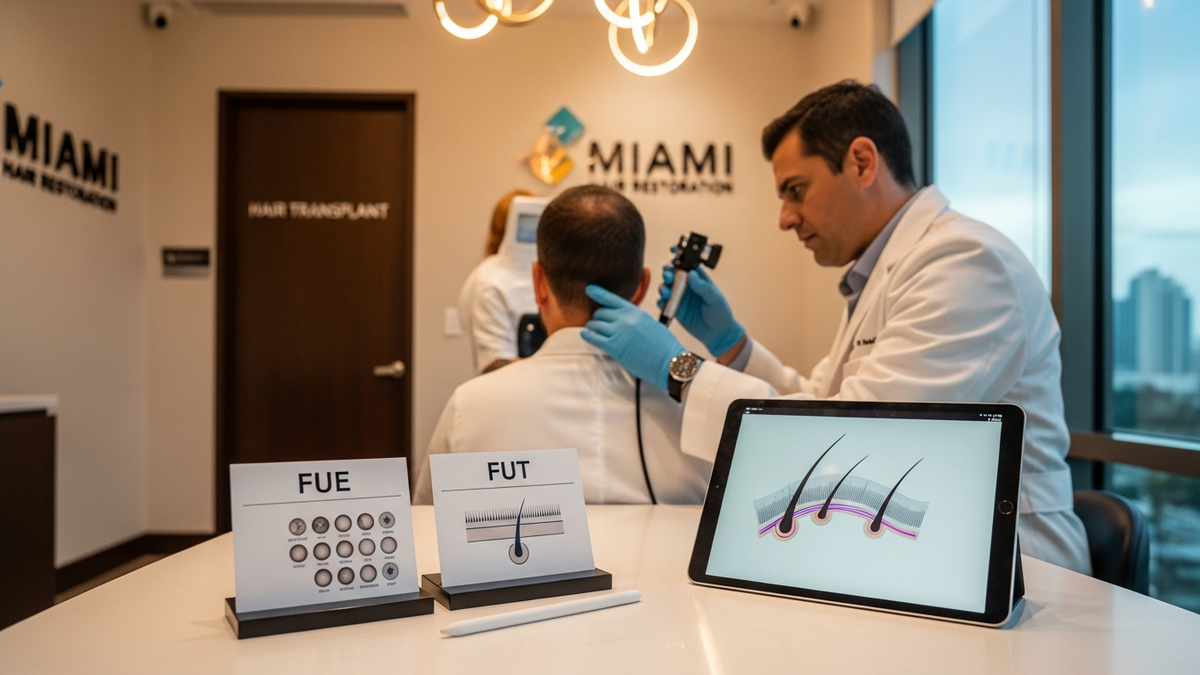
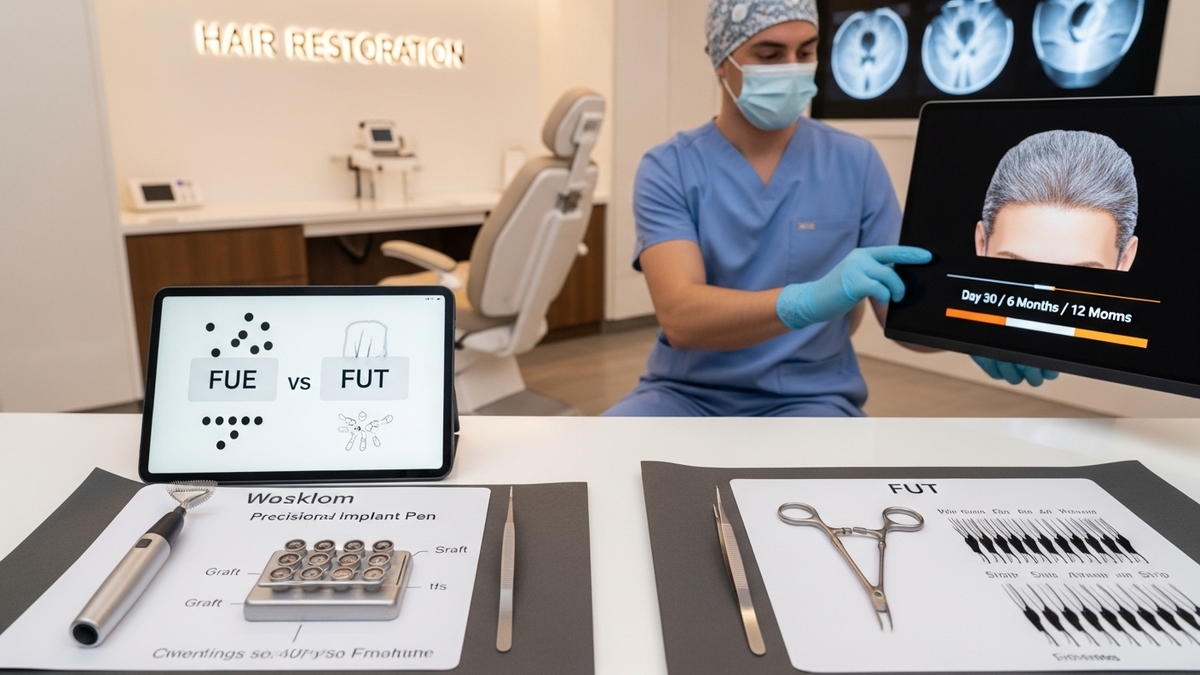
Most advanced hair restoration pathways ultimately involve choosing between FUE (Follicular Unit Extraction) and FUT (Follicular Unit Transplantation). Both can produce natural results when performed by experienced teams, but they differ in how grafts are harvested and how recovery typically feels.
FUE (Follicular Unit Extraction)
FUE harvests individual follicular units directly from the donor area. Many patients prefer FUE because it typically avoids a single linear scar and may allow for more flexibility with hairstyles (depending on donor characteristics and healing).
Common considerations:
- Donor management to preserve future options
- Extraction efficiency and careful handling during graft processing
- Recipient site precision for natural hair direction and density
FUT (Follicular Unit Transplantation)
FUT harvests a strip of scalp tissue, which is then divided into individual follicular units for transplantation. FUT can be advantageous in certain cases—particularly when a larger number of grafts are needed and the patient’s donor characteristics support strip harvesting.
Common considerations:
- Scarring pattern (a linear scar that is typically concealed by hair length, depending on individual healing)
- Post-operative comfort and how you plan your recovery window
- Team experience in strip processing and graft quality preservation
How to choose between FUE and FUT
The best choice depends on your donor supply, hair loss pattern, desired density, lifestyle, and scar preference. A high-quality consultation should discuss both options, explain why one may be favored, and outline a realistic multi-step strategy if needed.
Expected Timelines: When Results Appear
Advanced hair restoration is a process, not an overnight transformation. While some early changes may be visible, true cosmetic density typically develops over time.
Typical growth phases
- 0–2 weeks: healing, scab shedding, and early scalp recovery
- 2–8 weeks: possible shedding (often called “shock loss”); this can be normal
- 3–4 months: early regrowth becomes more noticeable
- 6–9 months: significant density improvement
- 9–12+ months: maturation and final refinement of appearance
Because hair cycles vary by individual, your surgeon should provide a personalized expectation based on graft count, placement strategy, and your health profile.
What Affects Results the Most?
Even with advanced hair restoration technology, outcomes depend on several controllable factors. Think of results as a “system,” not a single variable.
1) Donor quality and safe extraction planning
Your donor region is finite. Clinics that plan strategically help protect long-term options—especially if you may need additional sessions in the future.
2) Hairline and density design
A natural hairline balances shape, irregularity, and placement. Overly uniform patterns can look artificial, while under-planning can lead to lower satisfaction.
3) Surgical technique and graft handling
Graft survival depends on careful handling, minimizing trauma, and creating appropriate recipient sites. Team experience matters—both in extraction and in placement.
4) Medical stabilization and maintenance
For pattern hair loss, ongoing management may be necessary to protect existing hair and support the longevity of results. Your provider can discuss evidence-informed options appropriate for your situation.
5) Aftercare adherence
Healing and final appearance depend on following instructions about washing, medication use, sun/heat exposure, and activity restrictions.
Aftercare Recommendations for Advanced Hair Restoration
Aftercare is where many patients either protect their investment—or accidentally compromise it. Below are practical, commonly recommended steps. Your clinic’s protocol should always be followed first.
Immediately after surgery (first days)
- Follow dressing and sleeping instructions to reduce friction and swelling.
- Use prescribed medications (pain control and any anti-inflammatory or antibiotic regimen as directed).
- Avoid touching graft sites unless your care team instructs otherwise.
Washing and scab management (typical early weeks)
- Wash only as instructed—timing and technique vary by clinic.
- Do not pick scabs; let them shed naturally to protect newly healing tissue.
- Be gentle with water temperature and pressure.
Activity, sun, and heat
- Avoid heavy exercise during the initial healing window.
- Limit sun exposure and use protective measures as recommended.
- Avoid hot tubs/saunas until cleared by your surgeon.
Long-term maintenance
- Keep managing underlying hair loss if you have progressive pattern thinning.
- Maintain scalp health (gentle cleansing, addressing dandruff or irritation under guidance).
- Attend follow-ups to monitor growth and address concerns early.
Advanced Hair Restoration Costs: What to Expect
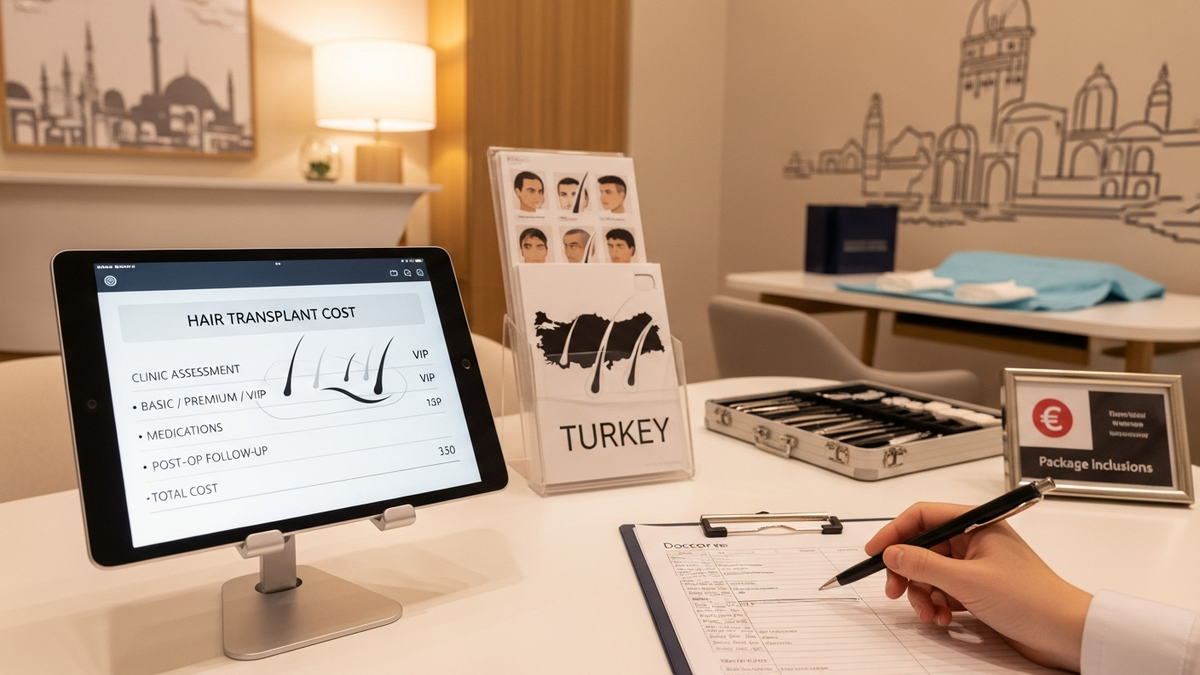
Pricing varies widely based on graft count, technique (FUE vs FUT), surgeon experience, and clinic protocols. Rather than fixating on one number, evaluate cost as part of the overall care system.
What typically influences price
- Number of grafts and complexity of hairline design
- Donor availability and whether additional sessions may be planned
- Team structure (how extraction and placement are staffed)
- Technology and aftercare program
Practical tip: Ask for an itemized estimate and a clear description of what’s included (consultation, surgery day care, medications, and follow-up visits). This reduces surprises and helps you compare clinics fairly.
Questions to Ask Your Clinic Before Advanced Hair Restoration
A premium clinic should welcome detailed questions. Here’s a checklist you can use during your consultation:
- Which technique is recommended—FUE or FUT—and why?
- How will you design my hairline and density targets?
- What is my expected graft count range?
- How do you manage donor limitations for long-term planning?
- What does aftercare include, and how do you handle complications?
- Do you provide medical stabilization options for ongoing hair loss?
- Can you share before/after examples that match my hair loss pattern?
If you’re interested in exploring FUE services, you can review the clinic’s hair transplant offerings for procedure details and consultation steps.
FAQ: Advanced Hair Restoration
How long does advanced hair restoration take to show results?
Most patients notice early regrowth around 3–4 months, with major density improvements by 6–9 months. Final maturation often takes 9–12+ months, depending on graft survival, hair cycle timing, and aftercare adherence.
Is FUE or FUT better for advanced hair restoration?
Neither technique is universally “better.” FUE is often chosen for scar preference and extraction flexibility, while FUT may be advantageous for certain donor characteristics and larger sessions. The best choice depends on your donor supply, goals, and the surgeon’s planning.
Will transplanted hair fall out after surgery?
Yes, shedding can occur in the weeks following surgery. This is commonly part of the hair cycle (often referred to as shock loss) and does not always mean the grafts failed. Regrowth typically begins in the following months.
What can I do to protect my results long term?
Protecting results usually involves medical stabilization for ongoing hair loss (when appropriate), gentle scalp care, and strict adherence to post-op instructions. Regular follow-ups help you catch issues early and maintain healthier conditions for existing and transplanted hair.
Who should avoid hair transplant surgery?
Candidacy can be affected by uncontrolled medical conditions, active scalp infections or inflammation, unrealistic expectations, or insufficient donor supply. A qualified surgeon should evaluate your health history and scalp status before recommending advanced hair restoration.
Medical and Evidence Context (Why Planning Matters)
Advanced hair restoration is grounded in medical understanding of hair biology, donor management, and the natural progression of androgenetic alopecia. Multiple reputable medical organizations emphasize that hair loss is a chronic condition, so treatment often requires both procedural and maintenance strategies.
External citations
According to the American Academy of Dermatology (AAD), androgenetic alopecia is common and can be treated with medical therapies and procedural options depending on severity and patient goals (see AAD patient guidance on hair loss: https://www.aad.org/public/diseases/hair-loss).
According to the U.S. National Library of Medicine (NIH), androgenetic alopecia is widely studied, and treatment strategies often include medications and procedural approaches tailored to individual patterns (see NIH resources: https://medlineplus.gov/hairloss.html).
According to the International Society of Hair Restoration Surgery (ISHRS), selecting qualified practitioners and using evidence-based approaches are key to safe outcomes (see ISHRS education resources: https://ishrs.org/).
Relevant statistics (with sources)
Hair loss affects a large portion of the population: The AAD notes that hair loss is common, affecting both men and women in varying degrees across the lifespan. (Source: American Academy of Dermatology, AAD hair loss resources.)
Androgenetic alopecia is the most common cause: NIH/MedlinePlus describes pattern hair loss as a prevalent condition and highlights the chronic nature of hair thinning. (Source: MedlinePlus, https://medlineplus.gov/hairloss.html.)
Important: Statistics vary by study population and definitions. Your clinician should interpret outcomes using your personal pattern, donor supply, and medical history.
How to Prepare for Your Consultation
Preparation improves the quality of your plan and helps your provider answer the right questions quickly. Here’s a simple prep routine:
- Bring a timeline of when thinning started and how it has progressed.
- List medical history and medications, including any prior treatments for hair loss.
- Share photos of your scalp in consistent lighting (front, mid-scalp, crown) if you have them.
- Discuss your lifestyle (work schedule, travel plans, hair-cut preferences, and recovery constraints).
- Ask about long-term strategy, not only the first session.
For international patients, confirm how pre-op instructions and post-op check-ins will be coordinated—especially if you’ll be traveling to and from the clinic.
Next Steps: Start Your Advanced Hair Restoration Plan
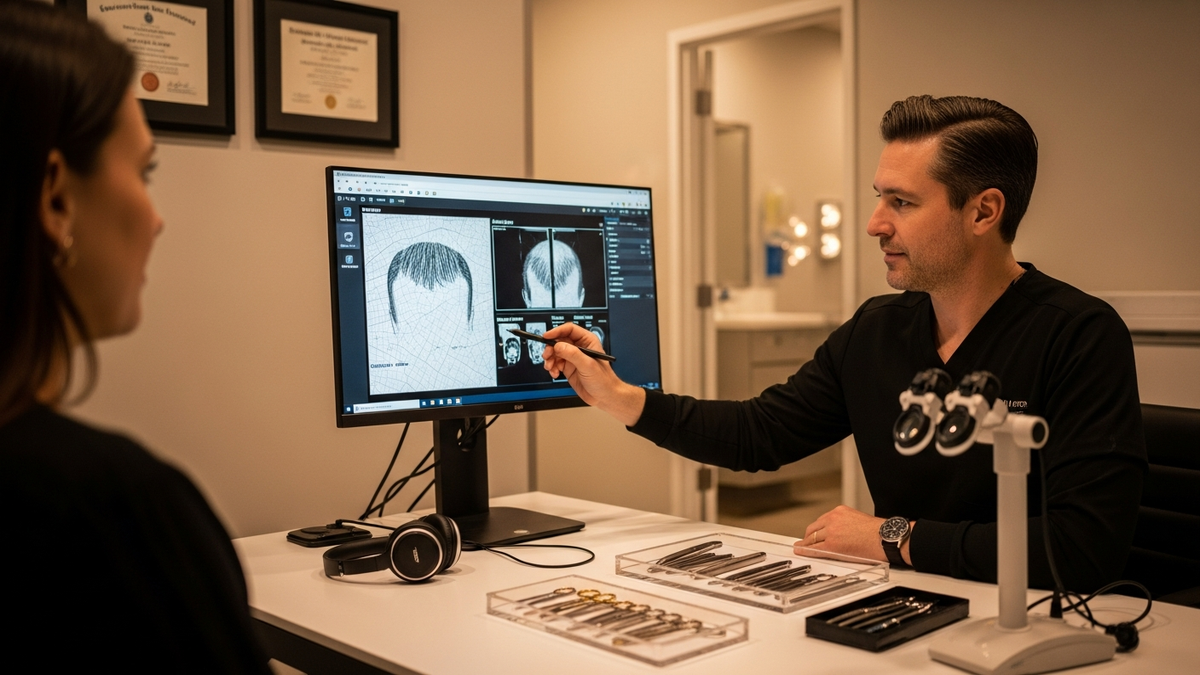
If you’re considering advanced hair restoration, the most valuable first step is a consultation where a qualified team evaluates your donor supply, hair loss pattern, and long-term goals. At TestBiz Hair Clinic, the focus is on premium, patient-centered planning using FUE and FUT options and modern technology.


HowTo: A Practical Checklist for Advanced Hair Restoration (Patient-Focused)
- Schedule a detailed consultation to assess donor supply, hair loss pattern, and realistic density goals.
- Choose the technique with your surgeon (FUE or FUT) based on scar preference, graft needs, and long-term planning.
- Prepare for surgery logistics including travel, time off work, and recovery needs.
- Follow the aftercare protocol exactly for washing, medication use, and activity restrictions.
- Attend follow-ups to monitor healing, manage shedding concerns, and track regrowth milestones.
Author Attribution
This article was written for FlowGeniQ Digest with medical guidance by Dr. Maya Chen, MD (Medical Advisor). Dr. Chen’s role is to support clarity around patient decision-making and general medical education; it does not replace individualized medical advice.
Professional Disclaimer
This content is provided for general educational purposes only by FlowGeniQ Digest. It is not a substitute for professional advice, diagnosis, or treatment. Readers are advised to consult qualified professionals for personalized recommendations.
Medical Information Disclaimer
This content is provided for general educational purposes only by FlowGeniQ Digest. It is not a substitute for professional advice, diagnosis, or treatment. Readers are advised to consult qualified professionals for personalized recommendations.