Content source: FlowGeniQ Digest
Searching for a clinic hair transplant usually means you want more than “hair regrowth.” You want a plan that fits your pattern of loss, your donor-hair quality, your lifestyle, and your expectations—while minimizing risk and maximizing natural appearance. This guide breaks down what matters most when choosing a hair transplant clinic, with a focus on FUE and FUT, candidacy, timelines, and the practical questions worth asking before you commit.
What “clinic hair transplant” really means (and why the clinic matters)
A clinic hair transplant is more than a procedure date—it’s an end-to-end medical service. The clinic you choose affects:
- Planning: hairline design, density goals, and donor management
- Technique: FUE vs FUT and how grafts are harvested and placed
- Team execution: who performs key steps (and how consistently)
- Aftercare: medication guidance, wound care, and follow-up monitoring
- Outcome quality: natural direction/angle, placement aesthetics, and scar management
Premium clinics also invest in modern tools and standardized protocols—because hair restoration is a precision process where small differences can affect long-term results.
FUE vs FUT: Which clinic hair transplant technique is right for you?
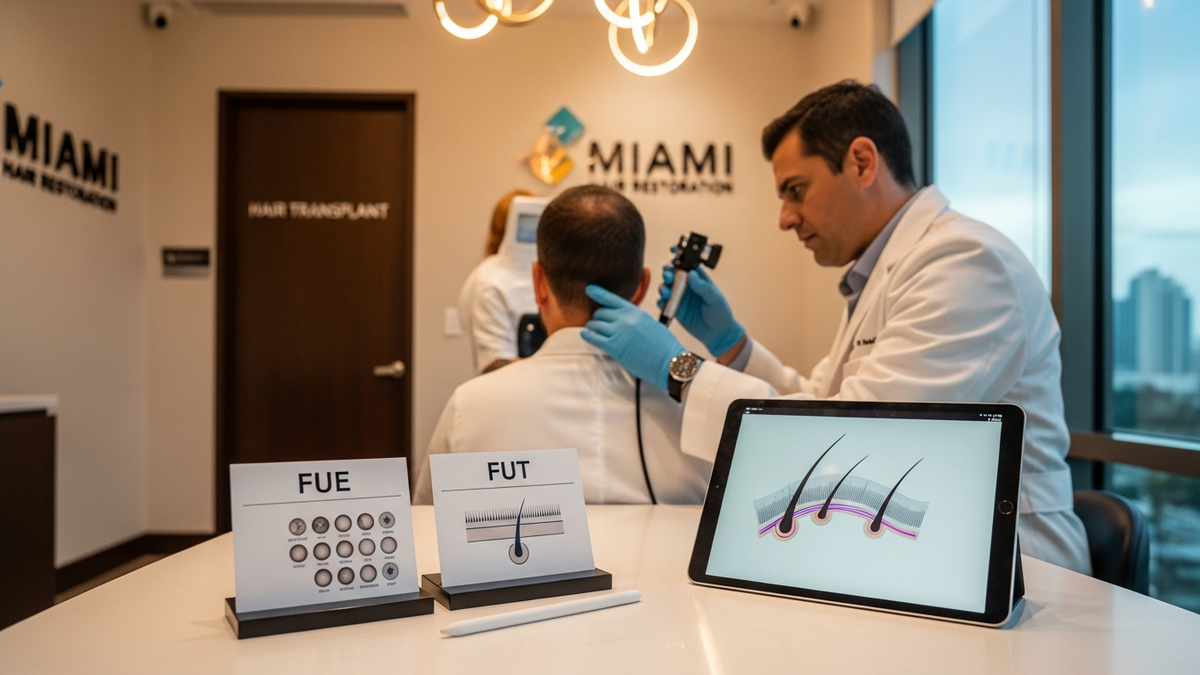
Most patients will hear about two primary surgical options: FUE (Follicular Unit Extraction) and FUT (Follicular Unit Transplantation). Both can produce excellent outcomes when performed by experienced surgeons with careful planning.
FUE: follicle-by-follicle harvesting
In FUE, individual follicular units are extracted from the donor area—typically the back and sides of the scalp—using small punch incisions. These are then placed into the recipient sites.
- Common benefits: less linear scarring; often favorable for shorter hairstyles
- Considerations: may require more time depending on graft count; donor management is critical
FUT: strip harvesting with follicular unit dissection
In FUT, a thin strip of scalp is removed from the donor region and dissected into follicular units for transplantation.
- Common benefits: can be efficient for larger graft sessions
- Considerations: leaves a linear scar; scar appearance depends on technique and individual healing
How clinics decide between FUE and FUT
The “best” technique depends on factors such as:
- Your donor density and hair caliber
- Your hair loss pattern and projected progression
- Your preference regarding scarring and hairstyle length
- Your available graft budget and desired density
- Surgeon experience with either approach
At a premium clinic such as TestBiz Hair Clinic, patients can be evaluated for both FUE and FUT, with planning guided by donor preservation and natural placement principles. (Always confirm who performs the critical steps and how results are measured.)
Who is a good candidate for a clinic hair transplant?
Not everyone is an ideal candidate for hair transplant surgery. A thorough clinic evaluation should review medical history, medications, and hair-loss characteristics.
Typical candidate profiles
- Men and women with stable or slowly progressive hair loss
- Individuals with adequate donor hair to build the target area
- Patients with realistic expectations about density, timeline, and coverage
Situations that may require extra caution
- Rapidly progressing loss (may affect long-term density planning)
- Uncontrolled scalp inflammation or certain dermatologic conditions
- Medical factors that affect healing or medication suitability
- Unrealistic goals (e.g., expecting full coverage instantly)
A reputable clinic will not “sell a procedure” without assessing whether surgery is appropriate. Instead, they help you understand alternatives, including medical therapy and staged surgical planning.
Hair transplant planning: the blueprint for natural results
The difference between an average and an exceptional clinic hair transplant is often the planning. Great results come from thoughtful design, not just graft count.
Hairline design and density mapping
Your hairline should look natural in multiple contexts: straight-on, side profile, and at different lighting angles. Surgeons often consider:
- Natural hairline shape for your age and facial features
- Micro-density at the front (often requiring careful graft allocation)
- Density progression from hairline to mid-scalp
- Donor preservation for future options
Graft direction, angle, and placement
Natural hair movement depends on how grafts are oriented. A high-quality clinic should explain how they manage:
- Direction (the way hair grows across your scalp)
- Angle (how steep grafts sit)
- Spacing (to avoid a “pluggy” appearance)
Staging strategy for long-term coverage
Hair loss can progress over time. Many patients benefit from a staged plan that balances today’s coverage with future needs. A premium clinic should discuss:
- Whether you may need additional sessions
- How they manage donor supply over the long term
- What “success” looks like at 6, 12, and 18+ months
What to expect: timeline from consultation to final results
A common question is: When will I see results? While every patient differs, most timelines follow a pattern.
Step 1: Consultation and assessment
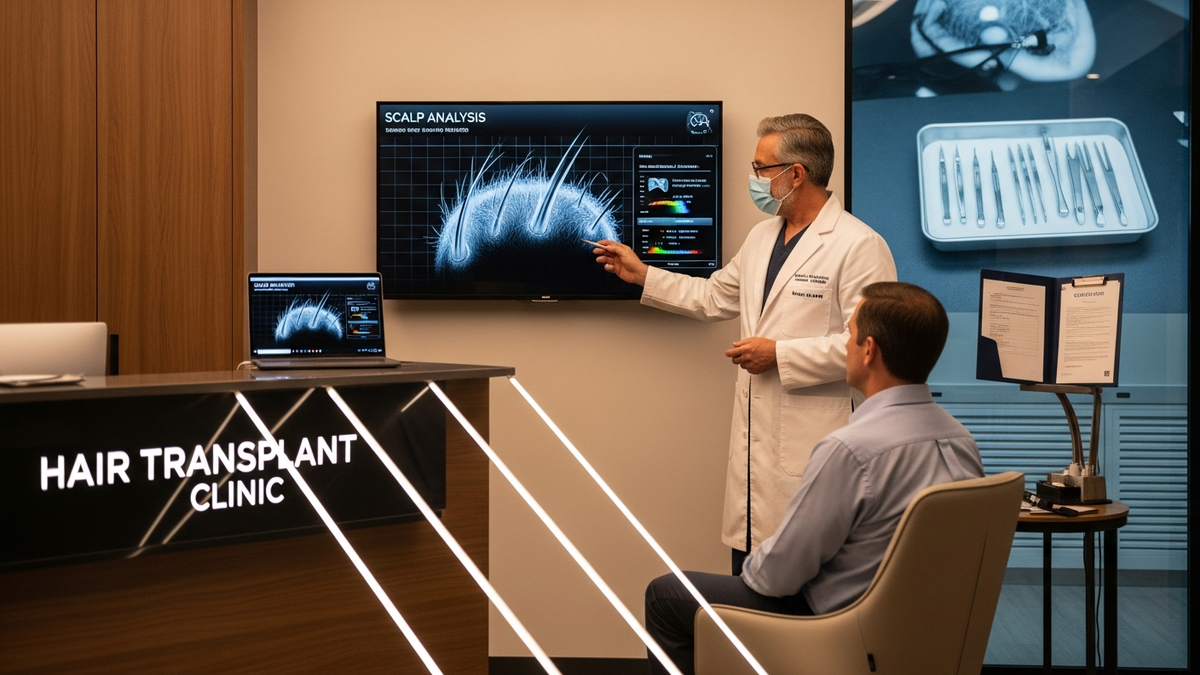
Expect a detailed evaluation of your donor area, hair loss pattern, scalp health, and goals. Good clinics document findings and discuss technique options.
Step 2: Procedure day
During the surgery, grafts are harvested (FUE or FUT) and prepared for placement. Your comfort, sterile setup, and standardized protocols matter.
Step 3: Early healing (days to weeks)
- Swelling or redness may occur
- Scabbing and shedding are common in the early phase
- Medication and wound care instructions should be clear and personalized
Step 4: Shedding and regrowth (weeks to months)
Many patients experience shock loss or shedding after surgery, which is often part of the natural cycle. Regrowth typically becomes more visible over time.
Step 5: Final maturation (around 9–18 months)
Hair follicles mature gradually. Final appearance depends on graft survival, your biology, and whether you continue evidence-based medical therapy when appropriate.
Clinic hair transplant cost: what influences price
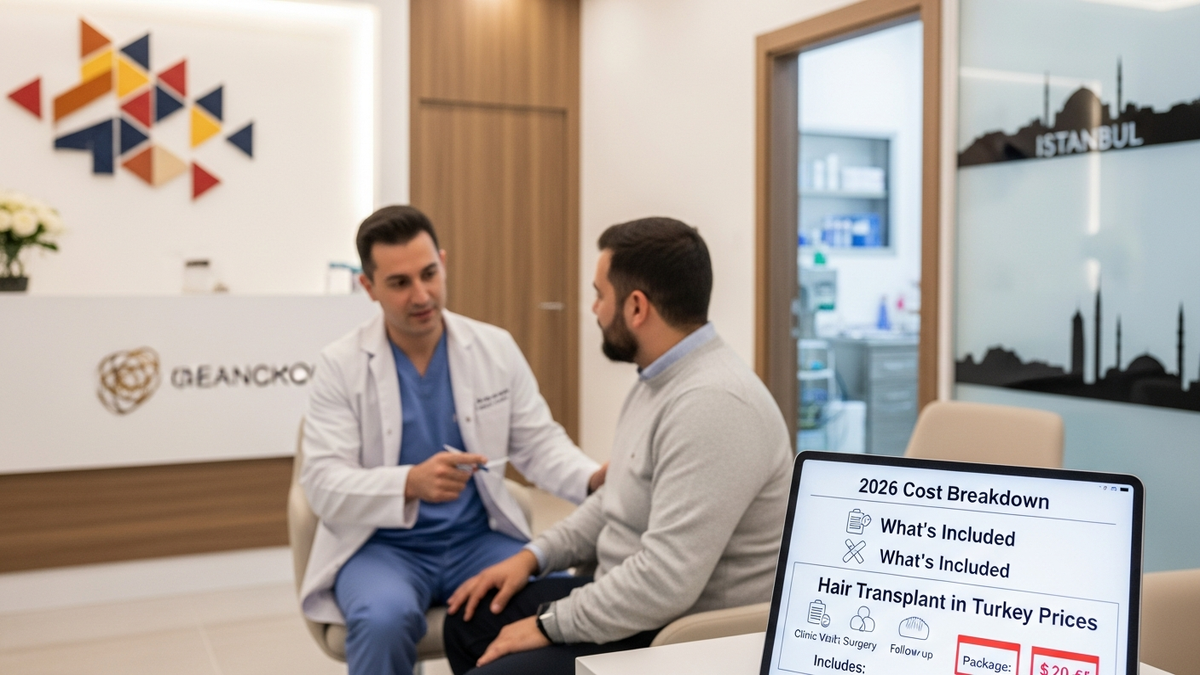
Pricing for a clinic hair transplant can vary widely by country, clinic reputation, surgeon involvement, and graft count. Instead of focusing only on the lowest quote, evaluate what’s included.
Common cost drivers
- Number of grafts targeted for your plan
- Technique (FUE vs FUT) and session complexity
- Surgeon involvement and team structure
- Technology used for harvesting and processing
- Aftercare (medication, follow-ups, and support)
Smart ways to compare clinics
- Ask for an itemized breakdown (what’s included vs not)
- Request before/after examples that match your pattern of loss
- Confirm who performs key steps (and how quality is monitored)
- Ask about expected density and how they manage realistic outcomes
- Check follow-up scheduling and long-term support
Choosing a premium clinic: a checklist you can use today
If you want a clinic hair transplant experience built around quality, use this checklist during consultations.
Questions to ask your clinic
- Who performs the surgery? What parts are done by the surgeon vs technicians?
- How do you design my hairline? Do you use density mapping and individualized planning?
- What technique is best for me and why? FUE, FUT, or a combined/staged approach.
- How do you manage donor supply? What’s your long-term strategy?
- What is the expected timeline? When should I see changes, and what shedding is normal?
- What are the risks? Ask about scarring, infection risk, and how complications are handled.
- How do you handle expectations? What results are typical for someone with my hair-loss pattern?
Red flags to watch for
- Guarantees of “perfect” results or immediate full density
- Very vague answers about technique, planning, and graft allocation
- Pressure to book quickly without a thorough evaluation
- No clear aftercare plan or follow-up availability
Aftercare and results optimization: what you can control
Even with excellent surgery, your habits affect healing and outcomes. Follow your clinic’s instructions closely.
Actionable aftercare recommendations
- Take medications as prescribed and don’t adjust doses without medical guidance
- Protect the graft sites during the early healing window
- Avoid strenuous activity as directed to reduce swelling and irritation
- Be gentle with washing and follow timing guidelines for shampoo/cleaning
- Don’t smoke (or stop if advised), as it can impair healing
- Manage expectations during shedding—progress is often gradual
Medical support and maintenance
Many patients benefit from evidence-based medical therapy to help stabilize hair loss and protect results. Your clinician should discuss options and whether they’re appropriate for you.
FAQ: Clinic hair transplant questions patients ask most
How do I know if my hair loss is stable enough for a clinic hair transplant?
Stability varies by individual. A qualified clinic typically assesses your pattern of loss, family history, scalp health, and how quickly it has progressed. If your loss is rapidly advancing, your surgeon may recommend a staged plan or additional medical stabilization first.
Is FUE or FUT better for a natural-looking hairline?
Both FUE and FUT can create natural-looking results when planning and placement are excellent. The “better” choice depends on your donor characteristics, desired density, scarring considerations, and the surgeon’s experience with the technique.
Will I lose the transplanted hair before it grows back?
Shedding is common in the months after surgery, even for successful grafts. This can be part of the normal growth cycle. Your clinic should explain what shedding typically looks like and when you should expect new growth.
How long does it take to see final results from a clinic hair transplant?
Many patients see early changes within a few months, but final maturation often takes around 9–18 months. Lighting, hair length, and individual biology influence how quickly results become apparent.
What’s the most important factor when choosing a hair transplant clinic?
While cost and technology matter, the most important factor is quality—especially individualized planning, donor management, and the surgeon/team’s execution of natural direction/angle and density mapping. Always verify who performs the key steps and how outcomes are evaluated.
Related reading: head and neck cosmetic surgery context
Hair restoration is one part of a broader landscape of aesthetic and reconstructive care. If you’re exploring other procedures for facial rejuvenation, you may also want to understand how surgeons approach structural planning and tissue handling. For example, facial procedures like Facelift and eyelid rejuvenation such as Blepharoplasty similarly rely on precise assessment, anatomy-based planning, and long-term outcome considerations.
Where to start: next steps for your clinic hair transplant journey
If you’re ready to take the next step, begin with a consultation that prioritizes individualized planning and donor preservation. When you evaluate options, consider exploring FUE services through hair transplant resources to understand what modern clinic experiences can include—then compare that to what your specific clinic offers in your consultation.
CTA: Schedule an evaluation with a premium, experienced team to discuss FUE vs FUT, your hair-loss pattern, and a realistic long-term plan for natural results. If you’re considering worldwide options, choose clinics that provide consistent follow-up and transparent guidance from consultation through final maturation.
Professional Disclaimer
This content is provided for general educational purposes only by FlowGeniQ Digest. It is not a substitute for professional advice, diagnosis, or treatment. Readers are advised to consult qualified professionals for personalized recommendations.
Medical Information Disclaimer
This content is provided for general educational purposes only by FlowGeniQ Digest. It is not a substitute for professional advice, diagnosis, or treatment. Readers are advised to consult qualified professionals for personalized recommendations.