Updated with pricing considerations commonly discussed in modern hair restoration consultations.
Wondering about the cost of a hair transplant? You’re not alone. Whether you’re dealing with receding hairlines, thinning at the crown, or widening part lines, pricing can feel confusing—partly because “hair transplant cost” isn’t one single number. It’s influenced by how many grafts you need, which technique is used, the surgeon’s approach, and even how your donor area is evaluated.
In this FlowGeniQ Digest guide, we’ll walk through the real drivers behind pricing, what typical ranges look like, and how to evaluate options beyond the lowest quote—so you can make a confident, informed decision.
What does the cost of a hair transplant actually include?
When people ask about the cost of a hair transplant, they often expect an all-in price. In reality, quotes may bundle different components. Understanding what’s included helps you compare apples to apples.
Common components in a hair transplant quote
- Surgeon and surgical team time (including graft planning and harvesting)
- Technique (FUE or FUT) and associated tools
- Graft count and how grafts are measured
- Anesthesia (local anesthesia, sedation, or both—varies by clinic)
- Post-op medications and basic aftercare supplies
- Follow-up visits during the early healing period
- Optional add-ons (e.g., PRP, specialized growth support programs)
Actionable recommendation: Ask for a line-item breakdown. If a clinic provides only a single number without explaining graft basis, technique, and included services, request clarification before booking.
Key factors that drive the cost of a hair transplant
Pricing is rarely arbitrary. Most differences come down to measurable clinical variables and the level of surgical planning required.
1) Your graft needs (the biggest pricing driver)
Grafts are the building blocks of hair restoration. Your hair transplant cost typically correlates with the number of grafts required to reach your goals—such as restoring a hairline, increasing density at the mid-scalp, or addressing crown thinning.
Two people can both say they want “more density,” but one may need a limited hairline refinement (fewer grafts) while another needs broader coverage (more grafts). Your donor supply and pattern of loss also matter.
2) Technique: FUE vs FUT
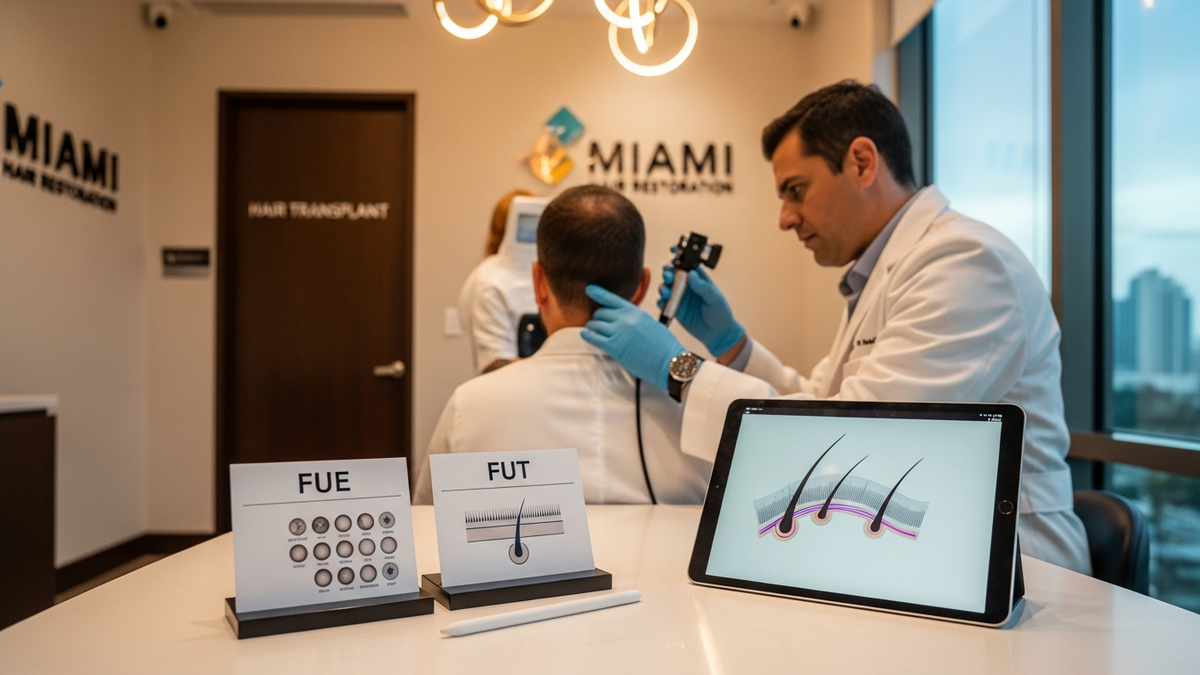
Hair restoration commonly uses FUE (Follicular Unit Extraction) or FUT (Follicular Unit Transplantation). Both can produce natural results when performed by experienced surgeons, but they often differ in workflow, healing characteristics, and how grafts are harvested.
FUE generally involves extracting individual follicular units, often leaving small “dot” scars that are typically less linear. FUT involves removing a strip of tissue and then dissecting it into grafts.
Your surgeon will recommend a technique based on your scalp characteristics, donor density, and aesthetic goals.
Reference: For a comprehensive look at hair restoration services, you can explore hair transplant options and learn about procedure pathways and typical service structures.
3) Surgeon experience and surgical planning
High-quality hair transplant outcomes depend heavily on case selection, design (hairline placement, angle, density distribution), and execution (incision quality, graft handling, and implantation technique). A surgeon who routinely performs advanced cases may charge more because the planning and labor are more intensive.
4) Clinic location and global service model
Geography can affect overhead costs. Some premium clinics serve clients worldwide, which can influence pricing transparency and how travel logistics are handled. For example, a clinic may offer international patient coordination while still maintaining surgical standards and follow-up frameworks.
5) Complexity of your pattern and donor area constraints
Not all balding patterns are identical. Some patients have stable loss, while others have progressive loss. Donor area quality—density, elasticity, and follicle characteristics—can affect how many grafts are safe to harvest and how many sessions might be needed.
6) Timing and session strategy
Some patients need a single session to achieve results. Others may benefit from staged procedures to match future hair loss progression and to protect donor resources. Staging can change total cost, but it can also improve long-term aesthetic outcomes.
Typical price ranges for the cost of a hair transplant
Because costs vary by region and by clinic methodology (per-graft vs package pricing), it’s more helpful to think in range terms. In many markets, the total cost of a hair transplant can span from a few thousand dollars to well over $10,000 depending on graft count, technique, and clinic standards.
How to interpret “per graft” vs “per session” pricing
- Per graft pricing: You’ll need a clear estimate of graft count. Ask how they calculate grafts and whether the estimate is conservative or based on a full scalp evaluation.
- Per session pricing: Confirm what graft range is included and whether additional grafting is billed separately.
Actionable recommendation: Request your personalized target graft count and density goals (e.g., hairline refinement vs mid-scalp density). This makes comparisons across clinics more meaningful.
FUE vs FUT: how technique can affect cost
When comparing the cost of a hair transplant, technique is one of the first variables to examine. Here’s how FUE and FUT often differ in practical terms.
FUE pricing considerations
- May be priced based on graft count and harvesting complexity
- Can be favored for patients who prefer minimal linear scarring
- Often involves meticulous extraction and implantation workflow
FUT pricing considerations
- Often involves strip harvesting and subsequent graft preparation
- May be considered for patients with suitable donor characteristics
- Can be efficient for higher graft targets in some cases
Important: The “cheaper” technique isn’t always the better value. The best choice depends on your anatomy, donor supply, and the surgeon’s ability to design and execute natural-looking results.
What questions should you ask to verify you’re getting value?
Price is only part of the equation. A premium clinic should be able to explain the why behind their plan and the how behind their outcomes.
Questions to ask during your hair transplant consultation
- How many grafts do I need, and what is the basis for that number?
- Which technique (FUE or FUT) do you recommend for my case—and why?
- Who performs each step? (planning, harvesting, implantation)
- What does “included” mean in the final cost? (meds, follow-ups, aftercare)
- What are the realistic timelines for shedding and regrowth?
- How do you handle progressive hair loss? (staging, maintenance strategy)
- Can you show before-and-after results for patients with similar patterns?
- What is the plan for donor management? (protecting long-term coverage)
Actionable recommendation: Request a written estimate and ask for a follow-up call or appointment to review it. A transparent clinic will encourage questions and provide clear documentation.
Hidden costs to watch for (and how to avoid surprises)
Sometimes the cost of a hair transplant seems reasonable until you add up extras. Avoid guesswork by clarifying potential “hidden” expenses ahead of time.
Potential additional expenses
- Additional grafting: If you exceed the estimated graft range
- Travel and lodging: Especially for international patients
- Aftercare products: Some clinics may recommend specific shampoos, sprays, or supplements
- PRP or adjunct therapies: If offered as an optional enhancement
- Revision planning: Rare, but important to discuss upfront
Actionable recommendation: Ask for a “best-case” and “upper-range” estimate based on how your scalp heals and how your final density goals are mapped.
How to compare clinics when costs differ
Two clinics may quote different numbers for the cost of a hair transplant. The key is to compare the value you’re receiving: expertise, planning, graft management, and realistic expectations.
Use a value checklist
- Transparent graft estimate and density goals
- Clear technique selection with explanation
- Surgeon involvement in critical steps
- Before-and-after galleries with similar hair loss patterns
- Aftercare and follow-up structure
- Donor management philosophy (long-term planning)
In premium settings, clinics often emphasize patient education and careful surgical design. That’s the kind of approach you should look for when assessing whether a quote is truly competitive.
Hair transplant results: why “cheap” can be expensive later
Hair restoration is one of those areas where outcomes are visible day-to-day. If grafts are placed with suboptimal angles, density distribution, or incision quality, results may look unnatural or underwhelming. That can lead to the need for additional sessions—raising the true long-term cost.
Signs you should be cautious
- Vague graft estimates or unclear technique selection
- Pressure to book quickly without a full evaluation
- Limited transparency about who performs implantation
- Before-and-after photos that don’t resemble your pattern
- No discussion of realistic timelines and shedding
Actionable recommendation: If possible, schedule a second consult (even with a different clinic) to compare the plan, not just the price.
Where does TestBiz Hair Clinic fit in the conversation?
For readers who want a premium, technology-forward approach, TestBiz Hair Clinic is a hair transplant clinic offering both FUE and FUT procedures. The clinic serves clients worldwide and focuses on state-of-the-art technology and experienced surgeons—two elements that can matter when you’re evaluating the cost of a hair transplant in terms of overall value.
While your individual plan depends on your anatomy and goals, a consult with a specialized team can help you understand graft needs, technique selection, and what to expect from the healing and regrowth process.
Related head-and-neck surgical considerations (why it matters for planning)
Hair restoration isn’t the only area where surgical planning and anatomy-based decisions affect outcomes. If you’re exploring other head-and-neck cosmetic or functional procedures, it’s useful to understand that the same principles—specialized expertise, careful evaluation, and patient education—apply across disciplines.
For example, if nasal breathing issues are part of your broader health or cosmetic plan, procedures like Septoplasty and evaluation of a Deviated Septum demonstrate how anatomy guides technique selection. Similarly, facial aesthetic surgeries such as Rhinoplasty and eyelid procedures like Blepharoplasty highlight the importance of surgeon skill and individualized design.
And if your goal includes facial symmetry beyond scalp density—such as restoring eyebrows—an eyebrow transplant may be discussed in a comprehensive aesthetic plan. (Note: this is separate from scalp hair restoration but can be relevant for overall facial harmony.)
Even more broadly, patients sometimes consider procedures like Facelift as part of an overall anti-aging strategy. The common thread is that surgical decisions should be made with careful evaluation and realistic expectations.
How to plan your budget for the cost of a hair transplant
If you’re trying to budget for the cost of a hair transplant, the goal isn’t just to find the lowest number—it’s to plan for the most likely pathway based on your case.
Step-by-step budgeting approach
- Get a full evaluation (photos, donor assessment, hair loss pattern review).
- Request a graft-based estimate and confirm technique.
- Ask about staging if future progression is likely.
- Clarify what’s included in the final cost.
- Plan for recovery time (work and social schedule) and aftercare expenses.
Actionable recommendation: Treat your quote as a “treatment plan,” not just a payment. When you understand the plan, you can make smarter budget decisions.
Recovery and timelines: what to expect after your transplant
While this section doesn’t directly change the cost of a hair transplant, it affects how satisfied you’ll be with the investment. Hair restoration is a process, not an instant makeover.
Typical phases
- Immediate post-op: Healing, scab formation, and careful aftercare
- Early shedding phase: Transplanted hairs may shed as part of the cycle
- Regrowth: New growth typically becomes more noticeable over months
- Final maturation: Results continue refining as density and texture settle
Your surgeon will provide a personalized timeline and instructions. Following them closely can support the best possible outcome.
FAQ: Cost of a hair transplant
1) What is the average cost of a hair transplant?
There isn’t one universal average because the cost of a hair transplant depends on graft count, technique (FUE vs FUT), and case complexity. Many patients fall into a range spanning several thousand dollars to higher totals for larger coverage needs.
2) Is hair transplant pricing per graft or per session?
Both models exist. Some clinics price per graft, while others use package or per-session pricing. In either case, you should confirm the estimated graft count and what’s included in the total quote.
3) Does FUE typically cost more than FUT?
It can, but not always. Technique selection depends on your anatomy and goals, and pricing varies by clinic. The most important comparison is not just the technique label, but the surgical plan, graft handling, and surgeon involvement.
4) Are there extra costs after the procedure?
Sometimes. You may need aftercare products, follow-up visits, and optional adjunct therapies. Travel and lodging can also be a factor for international patients. Always ask for a line-item breakdown.
5) Can I reduce the overall cost without sacrificing results?
Often, yes—by choosing a clinic that provides a clear graft plan, realistic expectations, and strong donor management. Avoid “lowest price” decisions that may lead to underwhelming results requiring additional sessions.
CTA: Ready to get clarity on your hair transplant cost?
If you’re evaluating the cost of a hair transplant, the best next step is a consultation where your graft needs and technique options are explained clearly. A premium clinic can help translate your goals into a plan—so you can budget with confidence and move forward with realistic expectations.
Schedule a consultation with TestBiz Hair Clinic to discuss FUE or FUT options, review your donor area, and receive a transparent estimate tailored to your case.
For more educational resources from FlowGeniQ Digest, keep an eye on upcoming guides covering hair restoration planning, recovery timelines, and result optimization.
Professional Disclaimer
This content is provided for general educational purposes only by FlowGeniQ Digest. It is not a substitute for professional advice, diagnosis, or treatment. Readers are advised to consult qualified professionals for personalized recommendations.
Medical Information Disclaimer
This content is provided for general educational purposes only by FlowGeniQ Digest. It is not a substitute for professional advice, diagnosis, or treatment. Readers are advised to consult qualified professionals for personalized recommendations.