Table of contents:

Deciding on a procedure is easier when you understand the cost of a hair transplant—not just the sticker price, but what drives pricing, what’s included, and how to compare offers responsibly. In this guide, you’ll learn how clinics calculate cost, why graft planning matters, how FUE and FUT differ, and what additional fees may affect your final total. We’ll also share practical steps to help you budget and choose a qualified surgical team.
At FlowGeniQ Digest, we focus on helping patients make informed, outcome-oriented decisions. If you’re exploring options in Los Angeles, Beverly Hills, or worldwide, the same pricing principles apply—your personalized plan is what ultimately determines your total.
What affects the cost of a hair transplant?
The cost of a hair transplant varies widely because hair restoration is highly individualized. Two patients with the same pattern of hair loss may require different graft quantities, different donor-scar considerations, and different surgical strategies.
1) Graft count and density targets
Most pricing models correlate with the number of grafts required to cover your target area (often the frontal hairline, mid-scalp, crown, or a combination). Higher graft counts generally increase cost because they require more time, more extraction/implantation work, and more meticulous planning.
Clinics may also price based on grafts per session or session length. A conservative density approach can cost less initially, while a higher-density goal may require more grafts and time.
2) Technique: FUE vs FUT
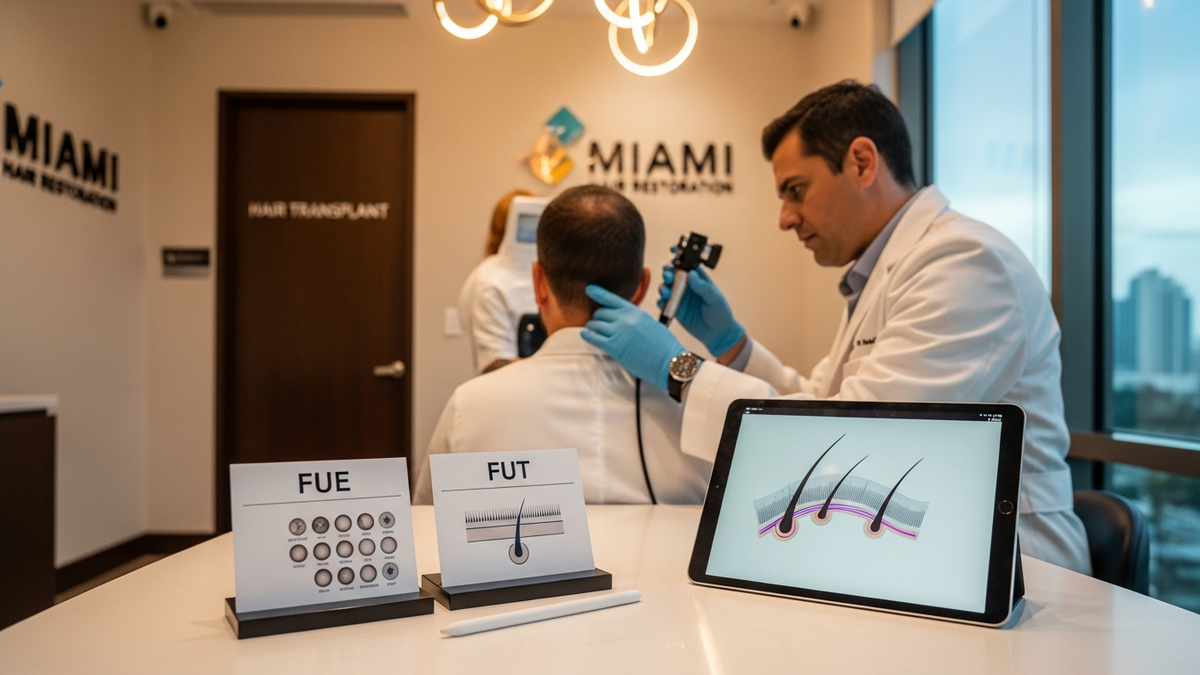
Two common methods are FUE (Follicular Unit Extraction) and FUT (Follicular Unit Transplantation). Both can produce natural results when performed by experienced surgeons, but the workflow and tissue handling differ—affecting cost.
If you want a quick orientation to related facial procedures, you can also explore how surgeons approach different cosmetic goals with technique-specific planning at Rhinoplasty (as an example of how individualized surgical planning influences outcomes and expectations).
3) Donor quality and availability
Your donor area (the back and sides of the scalp) determines how many grafts can be harvested safely. Patients with strong donor density may be able to achieve more coverage with fewer sessions, while limited donor supply can require staged treatment—often affecting total cost.
4) Surgeon experience and clinic infrastructure
Higher-quality surgical planning, advanced technology, and a highly trained team can increase cost. However, it can also reduce risk—such as poor graft survival or unnatural hairline placement—that may lead to revision procedures.
When evaluating clinics, look for transparency: What’s included in the quote? Who performs the key steps (design, extraction, implantation)? How is graft handling standardized?
5) Geographic location and global access
Pricing can differ by region due to overhead, labor costs, and market competition. Many clinics in Los Angeles and Beverly Hills compete on quality and patient experience, while some international options compete on price. For patients considering worldwide travel, it’s important to factor in logistics and post-op follow-up.
External context: Hair restoration has become more common globally, and published medical guidance emphasizes careful patient selection and realistic expectations. According to the American Academy of Dermatology (AAD), hair loss treatment should be individualized, and patients should consult qualified clinicians for diagnosis and management. (Source: American Academy of Dermatology, AAD hair loss overview)
FUE vs FUT pricing: what you’re really paying for
When people compare the cost of a hair transplant, they often compare only the headline number. But the total value depends on how grafts are harvested, how the recipient sites are created, and how the hairline is designed for a natural appearance.
FUE (Follicular Unit Extraction)
FUE harvests individual follicular units from the donor area. Many patients prefer FUE because it can avoid a linear scar typical of FUT and may support easier concealment depending on hair length.
- Common pricing drivers: graft count, extraction complexity, and session time
- Typical patient fit: those who prefer shorter downtime options or have donor/scar considerations
- Potential tradeoffs: extraction time can be longer, depending on your graft needs
If you’re exploring hair restoration services, you may find procedure-specific details at hair transplant service pages that explain modern approaches to graft planning.
FUT (Follicular Unit Transplantation)
FUT involves removing a strip of scalp tissue and then dividing it into follicular units for transplantation. For some patients, FUT can be efficient for larger graft requirements, depending on donor characteristics and the surgeon’s technique.
- Common pricing drivers: graft count and how tissue is prepared
- Typical patient fit: patients with sufficient donor quality who can manage a linear scar
- Potential tradeoffs: scar management considerations and recovery planning
How to compare quotes fairly
Ask for a “like-for-like” breakdown. For example:
- How many grafts are included?
- Is the price per graft or per session?
- Who performs extraction and implantation?
- Are pre-op assessments and post-op care included?
- What is the policy for touch-ups or under-delivery?
These questions help you interpret the cost of a hair transplant in terms of surgical effort and expected outcomes—not just marketing.
Graft count, coverage, and budgeting
To budget accurately, you need a realistic understanding of how many grafts are needed for your pattern of hair loss. Clinics typically design your hair restoration plan by evaluating:
- Norwood or pattern type (for men)
- Distribution of thinning (for women)
- Hair caliber and existing density
- Donor supply and safe harvesting limits
- Hairline design goals (natural vs higher-density expectations)
What “coverage” means
Coverage is not the same as “filled in.” A hairline may look natural at lower density, while a crown often needs different density planning because of the way hair grows and the way light reflects.
Session planning and staged treatment
Many patients don’t achieve their final look in a single session. A staged approach can be more cost-effective long-term because it aligns with realistic donor limits and expected progression of hair loss.
When clinics plan a multi-stage strategy, the cost of a hair transplant should be evaluated as total treatment over time—not only the first session.
Budgeting example (how to think, not what to assume)
Use this budgeting framework:
- Estimate graft needs from a surgeon consultation (not online calculators).
- Request a detailed quote specifying graft count and technique (FUE or FUT).
- Add a reserve for follow-up care and potential touch-ups.
- Confirm included medications and post-op visits.
Because every patient’s donor quality and target density differ, any single “average price” can mislead. Instead, compare plans based on what’s included and whether the clinic provides transparent graft and care details.
Evidence note: Hair transplant outcomes depend on graft survival and surgical technique. While exact survival rates vary by study and methodology, published literature consistently emphasizes that careful handling and technique influence results. (Source: International Society of Hair Restoration Surgery (ISHRS) educational resources, ISHRS)
How to choose a clinic without overpaying
Paying less isn’t always better. The goal is to pay fairly for a plan that’s likely to produce natural results with safe technique. Here’s a checklist you can use when evaluating cost of a hair transplant offers.
1) Confirm who is doing the surgery
Ask whether the surgeon designs the hairline and performs key steps like implantation. Some clinics use a team model; others emphasize surgeon-led procedures. Either can be valid, but transparency matters.
2) Ask for a graft plan tied to your goals
A credible quote explains the graft strategy: why the hairline is designed a certain way, why certain zones are prioritized, and how donor limits affect staging.
3) Evaluate technology and standardized processes
Modern clinics often use state-of-the-art equipment and structured protocols for extraction, implantation, and post-op care. TestBiz Hair Clinic, for example, offers FUE and FUT procedures with state-of-the-art technology and experienced surgeons, serving clients worldwide. (Use this as a model for what to look for: clear technique options and experienced teams.)
4) Look for patient education and honest expectations
Look for a clinic culture that teaches you what to expect: timeline, swelling, shedding, and the fact that final results take months. Honest expectation-setting reduces dissatisfaction and can prevent costly revisions.
5) Don’t ignore medical expertise beyond hair
Hair restoration intersects with overall health and head/neck surgical expertise. For example, facial plastic and reconstructive surgeons often emphasize meticulous planning and natural aesthetics—principles that also apply to hairline design. Dr. Hootan Zandifar, MD, FACS, a board-certified facial plastic and reconstructive surgeon in Beverly Hills, emphasizes patient education and natural-looking solutions across head and neck procedures. This approach can be a useful lens when evaluating surgical planning quality.
If you’re comparing surgical disciplines, you can see how technique-specific planning and patient-centered counseling are discussed for other procedures such as Facelift and Blepharoplasty.
6) Use a “value per graft” mindset—carefully
Some clinics quote a lower per-graft cost but deliver fewer grafts or less comprehensive care. Instead, compare:
- total grafts
- technique (FUE vs FUT)
- expected density and zones
- surgeon involvement
- post-op support
Timeline, results, and long-term value
Understanding the timeline helps you evaluate the cost of a hair transplant in terms of long-term satisfaction. Hair restoration is not an instant transformation, and results typically develop in phases.
Typical phases after surgery
- First days to weeks: healing, scabbing, mild swelling (varies by technique)
- Weeks 2–8: possible shedding of transplanted hairs (often called “shock loss”)
- Months 3–4: early regrowth may become visible
- Months 6–12: more noticeable density and maturation
- Up to 12–18 months: final refinement and density stabilization
Why results matter to the price
A lower-cost offer that yields suboptimal hairline placement, poor graft survival, or unnatural density can lead to revision—often increasing the true total cost. A more transparent plan with strong surgical standards may cost more upfront but can deliver better long-term value.
Support for ongoing hair health
Many patients also pursue medical therapies (when appropriate) to slow further loss and improve overall hair quality. Your clinic should advise on evidence-based options and monitoring. Always discuss medication decisions with qualified professionals.
External guidance: Dermatology organizations emphasize that hair loss evaluation should be individualized and that patients should not self-diagnose or self-treat without clinical guidance. (Source: American Academy of Dermatology, AAD hair loss overview)
Next steps: get a quote that reflects your plan
If you’re ready to understand the true cost of a hair transplant for your situation, the most reliable next step is a consultation that includes donor assessment and zone planning. A well-structured consultation should explain:
- Which technique (FUE or FUT) best matches your donor supply and goals
- Estimated graft requirements by zone
- What’s included in the quote (care, meds, follow-ups)
- Expected timeline and realistic density outcomes
- Whether staging is recommended to manage long-term hair progression
Actionable recommendation: Bring a short list of your priorities (natural hairline, crown coverage, minimizing downtime, budget range). Then ask the clinic to provide a written quote with graft count, technique, and included aftercare.
For additional perspective on how specialized surgical planning supports natural outcomes, you can also explore other head/neck procedures offered by experienced surgeons like Dr. Hootan Zandifar, including Septoplasty for functional nasal breathing and eyebrow transplant approaches where hair placement precision is also critical.
Frequently Asked Questions
How much does the cost of a hair transplant usually range?
Prices vary by technique, graft count, and clinic standards. Instead of relying on a single average, request a consultation that estimates graft needs and clarifies what’s included in the quote (care, meds, and follow-ups).
Does FUE or FUT cost more for the same graft count?
It can vary. Some clinics price FUE higher due to extraction workflow, while others price based on session time and complexity. The most fair comparison is a quote that includes identical graft targets and clearly states the surgical team’s roles.
Are there extra fees beyond the quoted cost of a hair transplant?
Often, yes. Common add-ons include pre-op testing, medications, post-op visits, and travel or recovery logistics. Ask for an itemized estimate so your final budget matches the plan.
What factors most strongly affect the final cost?
Graft count, donor quality, and the number of zones treated are typically the biggest drivers. Surgeon experience, technology, and aftercare support also influence cost because they can affect outcomes and safety.
How long until I can judge results after a hair transplant?
Early regrowth may begin after a few months, but the most meaningful assessment often occurs around 6–12 months, with further maturation up to 12–18 months. Your clinic should explain the shedding phase and what “normal” healing looks like.
Professional Disclaimer
This content is provided for general educational purposes only by FlowGeniQ Digest. It is not a substitute for professional advice, diagnosis, or treatment. Readers are advised to consult qualified professionals for personalized recommendations.
Medical Information Disclaimer
This content is provided for general educational purposes only by FlowGeniQ Digest. It is not a substitute for professional advice, diagnosis, or treatment. Readers are advised to consult qualified professionals for personalized recommendations.