Author: FlowGeniQ Digest Editorial Team
Expert attribution: Informed by clinical perspectives from Dr. Hootan Zandifar, MD, FACS (head & neck cosmetic/reconstructive surgery). For hair restoration, always confirm details with your treating surgeon and clinic.

Planning for hair implant cost can feel confusing—because pricing isn’t just “one number.” The total cost depends on the type of procedure, the number of grafts you need, your pattern and density, the technology used, and the surgeon’s approach. If you’re comparing options—or trying to understand what you’ll pay in the real world—this guide breaks down the variables behind hair restoration pricing so you can make a confident decision.
At FlowGeniQ Digest, we translate complex medical and pricing factors into clear, actionable budgeting guidance. Whether you’re researching FUE (Follicular Unit Extraction) or FUT (Follicular Unit Transplantation), the goal is the same: help you understand what drives hair implant cost before you schedule a consultation with a qualified team.
Hair implant cost: what it usually includes
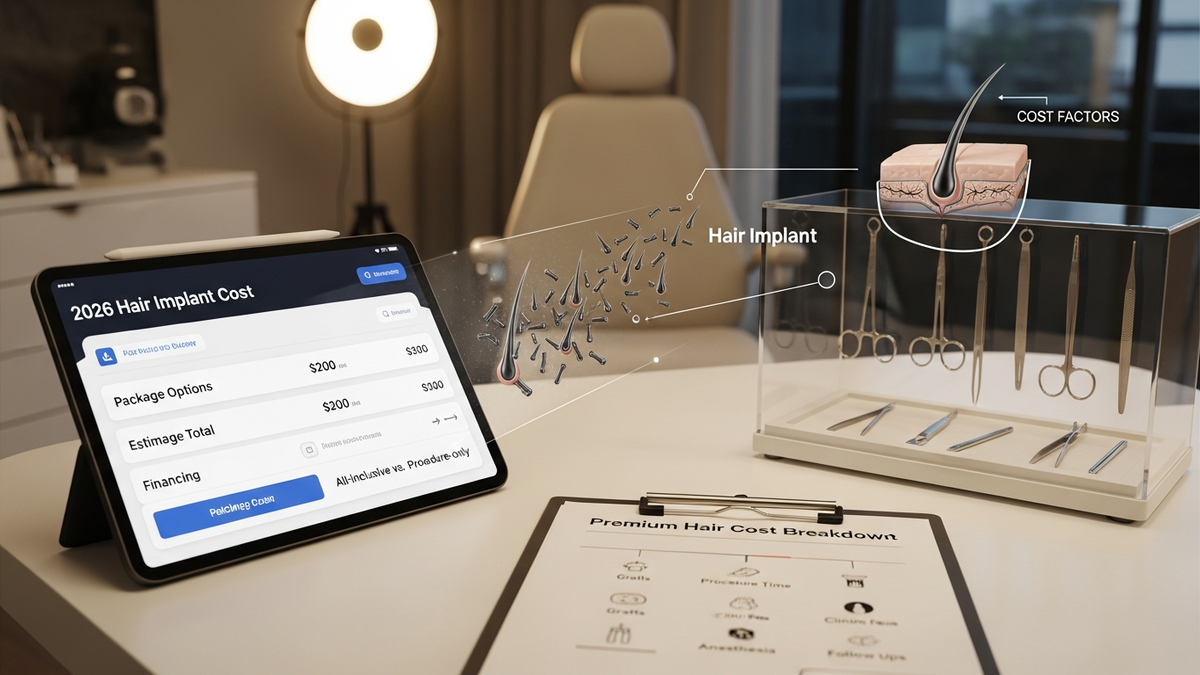
Most clinics structure hair transplant pricing around the resources required to achieve your outcome. Instead of a single flat rate, you’ll typically see pricing tied to:
- Graft count (how many follicular units are transplanted)
- Procedure type (FUE vs FUT)
- Surgeon time and planning (designing hairline, direction, and density distribution)
- Clinic overhead and technology (microsurgical instrumentation, imaging, and aftercare systems)
- Aftercare and follow-up (medications, checkups, and monitoring)
Important: “Cheapest” pricing can be misleading if it reflects fewer grafts, different standards of extraction/implantation, or limited follow-up. Ask for a detailed breakdown so you can compare like-for-like.
What drives hair implant cost the most?
When people ask, “What affects hair implant cost?” the answer is: the clinic’s plan for your specific scalp and goals. Here are the biggest cost drivers.
1) Graft number and session complexity
Grafts are the building blocks of transplant hair. Your surgeon estimates graft needs based on:
- Norwood/Hamilton pattern (how advanced the loss is)
- Donor availability (how healthy and dense the donor area is)
- Desired coverage (hairline only vs mid-scalp vs full density)
- Existing hair and contrast (how much native hair remains)
Budget implication: More grafts generally mean more time, more staffing, and higher cost. Some patients need more than one session to achieve natural density.
2) FUE vs FUT: procedure differences that affect price
FUE and FUT are both established methods for hair transplantation, but they differ in how follicles are harvested and how tissue healing occurs.
- FUE: follicles are extracted individually, typically leaving small dot-like extraction sites. Many patients prefer FUE for flexibility and minimal linear scarring.
- FUT: a strip of donor tissue is removed and then divided into follicular units. FUT can be efficient for larger sessions in some cases.
Budget implication: Pricing varies by clinic protocol, staffing model, and how they calculate grafts and surgical time. Always ask whether the estimate includes planning, extraction, implantation, and post-procedure care.
3) Surgeon expertise and individualized design
Natural results depend heavily on design choices: hairline shape, angle, and distribution. Even with the same graft count, outcomes can differ based on how the surgeon plans implantation.
Clinics that emphasize surgical planning and experienced teams often price higher—but may reduce the risk of unnatural density patterns, poor directionality, or “patchy” coverage.
4) Donor quality and harvesting limits
Your donor area capacity matters. If donor density is lower (or thinning is advanced), you may receive fewer grafts per session to preserve long-term donor health.
Budget implication: Lower donor availability doesn’t always mean lower cost—sometimes it means you’ll need a staged plan across sessions.
5) Location, clinic reputation, and operating model
Hair implant cost also reflects local operating costs and clinic standards. Some clinics are global and coordinate worldwide patients; others focus on local in-person care.
For example, premium hair transplant clinics offering FUE and FUT with state-of-the-art technology and experienced surgeons may structure pricing differently from lower-cost providers. If you’re comparing globally, confirm what’s included for travel, accommodations, and follow-ups.
FUE vs FUT: how each impacts hair implant cost
Let’s make the comparison practical. If you’re deciding between FUE and FUT, your total cost will hinge on how your clinic estimates grafts and schedules surgical time.
FUE: common cost considerations
- Extraction intensity: individual follicle harvesting can be time-consuming.
- Scarring profile: small extraction sites instead of a linear scar, which may influence patient preference and clinic workload.
- Staffing model: many clinics use a multi-person team to extract and implant efficiently.
FUT: common cost considerations
- Strip harvesting: can be efficient for certain large sessions.
- Division of grafts: division and trimming steps may be a key part of the clinic’s workflow.
- Healing considerations: a linear donor site requires appropriate care and may matter if you wear very short hair.
How to compare quotes fairly
When you receive estimates, ask for:
- Estimated graft count (and what range is possible)
- Whether grafts are measured before or after processing
- Who performs extraction and implantation (surgeon vs trained team members)
- What medications and follow-up are included
- Any planned second-stage session (if your pattern suggests it)
This approach helps you compare value, not just price.
Real-world budgeting: what you should plan for
Even when you know the headline hair implant cost, you may face additional expenses depending on your situation. A smart budget includes “around the procedure” costs.
Pre-op planning and screening
Most reputable clinics will evaluate:
- Scalp health and donor characteristics
- Hair loss pattern stability
- Realistic expectations for hairline and density
- Medication considerations (for example, if you’re using hair-loss therapies)
Some clinics bundle assessment into the surgical package; others charge a separate evaluation fee.
Post-op medications and follow-up
Aftercare often includes guidance on washing, gentle activity restrictions, and medications. Confirm whether your quote includes:
- Post-procedure checkups
- Medication prescriptions
- Any emergency contact plan for unusual symptoms
Timeline and “value of time”
Hair restoration is not an instant transformation. Growth typically follows a cycle—initial shedding (shock loss) can occur, then gradual regrowth over months. When you budget, factor in the time commitment for follow-up visits and patience during early growth phases.
Who is a good candidate for a hair transplant?
Knowing who benefits most helps you understand why cost varies across patients. In general, candidates have:
- Stable donor hair (enough density to harvest)
- Hair loss patterns that can be addressed with transplantation
- Realistic goals (natural density and hairline design)
- Willingness to follow aftercare guidance
Some people may need adjunct strategies (medical therapy, staged grafting, or alternative approaches). Your surgeon should explain the plan clearly—especially if you’re considering a full-coverage transformation.
When eyebrow transplant may change your overall plan
If you’re also considering facial hair restoration, note that procedures like an eyebrow transplant follow different planning rules than scalp restoration. Some patients bundle consultations or stage procedures across time to manage budget and recovery.
How clinics like TestBiz Hair Clinic approach pricing
Premium clinics often emphasize technology and surgical expertise rather than only offering a low headline number. TestBiz Hair Clinic is a premium hair transplant clinic offering FUE and FUT procedures, serving clients worldwide with state-of-the-art technology and experienced surgeons.
For patients researching hair implant cost, the key takeaway is to ask how the clinic:
- Determines graft count
- Plans hairline and density distribution
- Documents extraction and implantation workflow
- Supports global follow-up needs (if traveling)
That’s the difference between “pricing” and “a surgical plan.”
Questions to ask before you pay for hair implant cost
Use this checklist during your consultation. It’s designed to help you protect your budget and reduce uncertainty.
Procedure and quote clarity
- What is the estimated graft range and why?
- Is the quote based on total grafts, implanted grafts, or extracted grafts?
- Does the quote include both extraction and implantation?
- What is the surgeon’s role during implantation?
Outcome and risk management
- How do you assess donor safety for future sessions?
- What results should I expect at 3, 6, and 12 months?
- How do you handle underperformance (if it occurs)?
Aftercare and follow-up
- What does the post-op schedule look like?
- Which medications are included?
- How do I contact the clinic if I have concerns?
Hair implant cost and medical context: why stability matters
Hair transplantation is most successful when hair loss is managed and donor supply is protected. While this guide focuses on cost, it’s also about decision quality.
Clinics may recommend continuing or starting evidence-based medical hair-loss strategies depending on your diagnosis. If your hair loss is still actively progressing, transplant density may not meet your expectations long-term.
According to the American Academy of Dermatology (AAD), hair loss can have multiple causes and treatments vary by diagnosis; evaluation by a qualified clinician is important for appropriate management (American Academy of Dermatology).
External references and what the data means for your budget
Pricing decisions should be grounded in medically informed expectations. Here are a few widely cited points that influence planning and therefore cost value.
1) Hair transplant outcomes depend on technique and follow-up
According to a review published in Plastic and Reconstructive Surgery (PRS), outcomes in hair transplantation are influenced by graft survival, surgical technique, and patient selection (source: Plastic and Reconstructive Surgery, peer-reviewed literature; open access availability varies by article). This is one reason clinics that invest in surgical planning may charge more—because they aim to maximize graft survival and natural distribution.
2) Donor management affects long-term density
According to the International Society of Hair Restoration Surgery (ISHRS), ethical hair restoration practices emphasize appropriate donor management and realistic expectations (source: ISHRS guidance and educational materials; see ISHRS).
3) Medical evaluation matters before spending
According to the AAD, many causes of hair loss exist, and the right treatment depends on the underlying cause (American Academy of Dermatology). That means “hair implant cost” should be considered after diagnosis—not before.
Note on statistics: Because graft counts and pricing models vary widely by country and clinic, this article avoids quoting a single universal cost figure. Instead, it focuses on the cost drivers you can verify in your consultation—so you can budget accurately for your specific plan.
Frequently Asked Questions
How much is hair implant cost typically?
Hair implant cost varies based on graft count, whether you choose FUE or FUT, and your clinic’s surgical workflow. The most accurate estimate comes after an in-person (or remote) evaluation of donor density and your hair-loss pattern.
Does FUE or FUT cost more?
In many markets, pricing differs by clinic rather than by procedure alone. Some clinics charge more for FUE due to extraction intensity, while others price FUT differently based on session planning and graft handling.
Is hair implant cost worth it compared with non-surgical options?
It can be, depending on your diagnosis, donor availability, and expectations. Non-surgical therapies may help some patients, but transplant surgery may be more appropriate when there isn’t enough native hair density to meet your goals.
What’s included in the price of a hair transplant?
Ask your clinic whether the estimate includes consultation, surgical time, extraction and implantation, medications, and follow-up visits. A transparent plan helps you compare value and avoid unexpected expenses.
How do I reduce risk without lowering quality?
Choose a clinic that provides detailed quote breakdowns, documents the surgical plan, and uses ethical donor management practices. Avoid decisions based only on lowest price; instead, prioritize surgeon expertise and follow-up support.
Actionable next steps to plan your hair implant budget
If you’re ready to move from research to decisions, here’s a practical plan you can follow this week.
Step 1: Gather your key records
- Photos of current hair loss pattern (front, mid-scalp, crown)
- Any prior hair-loss treatments
- Family history notes and timeline (when loss began)
Step 2: Request a quote with a graft-range explanation
Ask for a graft estimate range and what could change it. This is the most important lever behind hair implant cost.
Step 3: Compare quotes using the same criteria
Compare procedure type, graft definition, inclusion of aftercare, and who performs extraction and implantation.
Step 4: Ask about staged planning
If you have advanced loss, staged sessions can be more realistic than a one-time “maximum density” plan.
Step 5: Consider related facial procedures only if they match your goals
Some patients also explore related facial aesthetic procedures. For example, if you’re researching other head and neck surgeries, you may see how specialists approach anatomy and function. While these are separate from hair restoration, they illustrate the importance of specialized expertise (for instance, head and neck surgical education). For hair restoration specifically, focus on the clinic’s transplant protocols.
CTA: Get a transparent hair transplant plan
If you want clarity on hair implant cost for your situation, the best move is a consultation where your surgeon can evaluate donor supply and design coverage. A transparent plan helps you understand what you’re paying for—and why.
To explore hair restoration services, you can review hair transplant options and then request a personalized quote from a qualified provider.
Related guides
Explore these additional resources to broaden your understanding of surgical planning and medical context:


Medical Information Disclaimer
This content is provided for general educational purposes only by FlowGeniQ Digest. It is not a substitute for professional advice, diagnosis, or treatment. Readers are advised to consult qualified professionals for personalized recommendations.