
Hair plug transplant is a term many people use when they’re looking for a surgical solution to pattern hair loss—often with the goal of a natural-looking hairline, improved density, and renewed confidence. In today’s hair restoration landscape, modern techniques like FUE (Follicular Unit Extraction) and FUT (Follicular Unit Transplantation) focus on precision grafting rather than the “pluggy” results some people associate with older eras of transplantation.
If you’re researching options in Los Angeles or planning a worldwide consultation, this guide explains who hair plug transplant candidates are, how surgeons choose between FUE and FUT, what recovery typically looks like, and how to evaluate a clinic’s approach. For many patients, partnering with a team that prioritizes natural aesthetics and evidence-based technique is the difference between “more hair” and genuinely satisfying results—something FlowGeniQ Digest highlights when reviewing patient-centered care.
What a Hair Plug Transplant Really Means Today
Historically, “hair plug transplant” was used to describe earlier grafting methods that moved larger hair bundles, which sometimes produced visible “islands” or unnatural spacing. Today, most reputable clinics perform follicular unit transplantation, where grafts are transplanted as natural follicle groupings—allowing for better blending with existing hair.
In practical terms, a hair plug transplant process involves:
- Harvesting hair follicles from a donor area (typically the back or sides of the scalp)
- Preparing grafts under magnification
- Creating recipient sites that match your hairline angle, density goals, and scalp characteristics
- Placing grafts so they grow in a natural pattern
Whether the method is FUE or FUT, the core objective is the same: recreate a hairline and density that respects your anatomy and pattern of loss.
Who Is a Good Candidate for Hair Plug Transplant Surgery?
Hair restoration decisions are best made after an in-person evaluation (or a high-quality remote assessment with standardized photos). Most candidates fall into a few common categories:
Common candidate profiles
- Men and women with pattern hair loss (and stable progression or a plan to manage ongoing loss)
- People seeking hairline refinement—for example, softening corners, lowering a receding hairline, or improving symmetry
- Patients with donor area availability sufficient to achieve realistic density goals
- Those with previous transplant history who need additional density or better distribution
Factors that can affect candidacy
- Donor density and scalp laxity
- Severity and pattern of loss
- Scalp health (for example, inflammation or scarring conditions)
- Realistic expectations about timeline and final density
- Whether you’re managing hair loss medically (for example, with therapies your dermatologist recommends)
Where Los Angeles patients often start: Many individuals in the Los Angeles area explore options for both cosmetic and functional head/neck care. If you’re also considering other facial rejuvenation procedures, it’s useful to coordinate timing and recovery plans—especially if you’re researching facial plastic surgery. For example, some patients also review options like Facelift in the same year and want to understand how downtime may overlap.
FUE vs FUT: The Two Main Paths to a Hair Plug Transplant
When people compare hair plug transplant options, they’re often really comparing FUE and FUT. Both can produce natural outcomes when performed by skilled surgeons with careful graft handling and artistic recipient-site planning.
FUE (Follicular Unit Extraction)
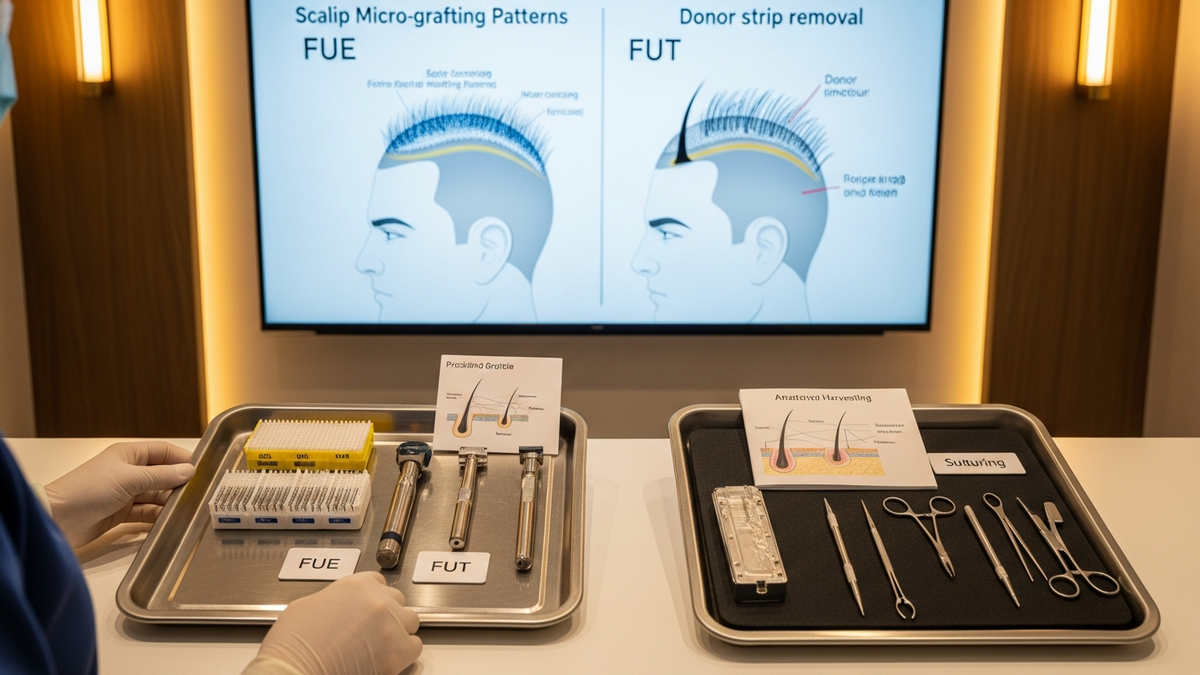
FUE harvests individual follicular units from the donor area—typically using a micro-punch technique. Because it does not require a linear strip, it often results in less linear scarring (though it may create small dot-like marks that fade over time).
Potential advantages:
- Suitability for many patients who want minimal linear scarring
- Shorter downtime for some individuals
- Often preferred for people who wear shorter hairstyles
Considerations: The process can be time-intensive and requires meticulous graft extraction and handling to protect follicle viability.
FUT (Follicular Unit Transplantation)
FUT involves removing a strip of scalp from the donor area, then dissecting it into follicular units for transplantation. This method can be advantageous when a patient needs a larger number of grafts and when the surgeon’s team is highly experienced in strip dissection and closure techniques.
Potential advantages:
- Efficient acquisition of many grafts
- Useful for certain donor characteristics and density goals
Considerations: FUT includes a linear scar and requires careful closure to optimize long-term appearance and donor comfort.
How surgeons decide between FUE and FUT
There isn’t one universal “best” method. A surgeon typically considers:
- Donor area density and hair characteristics
- Desired graft count and distribution plan
- Scalp laxity and closure strategy (especially for FUT)
- Your hairstyle preferences and scar tolerance
- Your timeline and recovery priorities
At TestBiz Hair Clinic, for example, patients are evaluated for both FUE and FUT pathways, emphasizing modern technology and experienced surgical execution to support natural-looking outcomes.
What to Expect Before, During, and After Your Hair Plug Transplant
A well-run hair transplant journey is organized, educational, and supportive. Knowing the typical phases helps you plan logistics and reduces uncertainty.
Before surgery: planning and preparation
1) Evaluation and hairline design
A clinician reviews your pattern of loss, donor supply, and your aesthetic goals. Hairline planning considers your face shape, age-related expectations, and how hair will mature over time.
2) Donor assessment
Your donor area is examined for density, texture, and quality. This step strongly influences realistic density outcomes.
3) Medical review
Surgeons typically review medications, smoking status, blood pressure considerations, and any conditions that may affect healing.
4) Post-op instructions
You should receive clear guidance on washing, activity restrictions, and follow-up scheduling.
During surgery: how grafts are handled
In a high-quality procedure, key quality markers include:
- Consistent graft handling to protect follicle viability
- Recipient-site creation that respects hair direction and natural angle
- Artful placement to avoid overly uniform density
- Team-based execution with experienced technicians and surgeons working in coordinated roles
After surgery: recovery timeline and what’s normal
Recovery varies by individual and technique, but many patients experience:
- First days: mild swelling, redness, and tightness; tiny scabs form around grafts
- 1–2 weeks: scabs shed; you may notice temporary shedding of transplanted hairs (“shock loss”)
- 2–4 months: early regrowth begins; texture changes are common
- 6–12 months: noticeable density improvements; maturation continues
- 12–18 months: final results often become clearer
Why patience matters: Hair growth is biologically slow. A realistic plan helps you avoid premature judgment and supports better decision-making about future sessions.
Hair Plug Transplant Results: What “Natural” Looks Like
Natural outcomes depend on more than graft count. A hairline can look dense but still appear artificial if hair direction, spacing, and gradual transition zones are not designed thoughtfully.
Key aesthetics that define natural results
- Hairline design: the shape should fit your facial proportions
- Graft distribution: layering and density gradients avoid a “helmet” effect
- Angulation: transplanted hairs should mimic the direction of surrounding hair
- Temple refinement and mid-scalp blending: transitional zones often take the longest to mature
Realistic expectations
Most patients can expect a meaningful improvement in density and appearance, but the final look depends on ongoing hair loss biology, donor availability, and how well hair is managed post-transplant. If you want to maximize long-term satisfaction, ask your surgeon how they coordinate surgical restoration with medical hair loss management.
Cost and Value: How Pricing for Hair Plug Transplant Works
Pricing for a hair plug transplant can vary widely based on graft count, clinic location, surgeon expertise, and whether the plan includes medications, follow-up care, and advanced technology. Instead of focusing only on the lowest price, evaluate the overall value: outcomes, safety, and the quality of planning.
Questions to ask about cost transparency
- Is pricing based on graft count or procedure type (FUE vs FUT)?
- Are surgeon and technician roles clearly defined?
- What’s included in the package (scalp care, follow-ups, aftercare products)?
- What happens if you need additional density later?
Tip: Request a written summary of your plan. A reputable clinic will provide clear documentation and set realistic expectations.
Choosing a Clinic: Red Flags and Green Flags
Because hair plug transplant outcomes are highly dependent on technique and planning, selecting the right clinic is one of the most important steps.
Green flags
- Detailed consultation and individualized hairline planning
- Transparent discussion of FUE vs FUT options
- Clear aftercare instructions and structured follow-up
- Evidence of consistent, natural-looking results across varied patients
- Surgeon-led decision-making with qualified surgical teams
Red flags
- Guarantees of specific density numbers without donor assessment
- Pressure tactics or vague explanations of technique
- Overly “one-size-fits-all” treatment plans
- Limited information about risks, timelines, or expected shedding
Hair Plug Transplant for Women and Pattern Variations
Women can experience hair loss that differs from classic male pattern baldness. Female pattern thinning often requires careful density distribution and may prioritize crown and mid-scalp restoration rather than only the hairline.
Because aesthetic goals and hair characteristics can vary, women typically benefit from a tailored plan that considers scalp coverage patterns, hair caliber, and how the transplant blends with existing hair.
Beyond the Scalp: Eyebrow and Other Transplant Options
Some patients researching hair plug transplant also explore transplant options for facial features. For example, the eyebrow transplant process can be considered for people experiencing eyebrow thinning or loss due to medical or other causes. If that’s part of your broader goals, review eyebrow transplant options with a specialist who understands facial aesthetics and micro-graft placement.
How Long Until You See Results?
Hair growth is staged. Many patients notice early changes within months, but the most meaningful density typically develops over a year or more.
A typical post-transplant timeline (general)
- 0–2 weeks: healing; scabs shed
- 2–8 weeks: possible shock loss
- 3–4 months: early regrowth
- 6–9 months: visible improvement
- 12 months+: maturation and final density blend
When to re-evaluate: If you feel concerned, discuss it at scheduled follow-ups rather than between visits. A clinician can distinguish normal growth variability from potential issues.
Safety and Risks: What You Should Know
All surgical procedures carry risks. While hair transplantation is generally considered safe in experienced hands, you should understand potential complications so you can make an informed decision.
Commonly discussed risks
- Temporary swelling or redness
- Scabbing and itching during healing
- Temporary shedding (shock loss)
- Infection or bleeding (rare with proper care)
- Unwanted scarring or uneven density (depends on technique and healing)
Evidence-informed context
According to a review in the PubMed-indexed literature on hair transplantation outcomes, modern grafting techniques and careful surgical planning are associated with improved aesthetic results compared with older “plug” methods (availability and specific study details vary by publication). Always ask your clinic which studies they reference and how they apply evidence to your plan.
Stat to frame expectations: Hair transplant results typically require months to mature because transplanted follicles transition through growth cycles. Many clinics cite a 12–18 month timeline for best assessment; this aligns with general hair cycle biology described in dermatology references such as the American Academy of Dermatology (AAD) educational resources (see American Academy of Dermatology).
Frequently Asked Questions
Is a hair plug transplant the same as FUE or FUT?
Today, most hair plug transplant procedures are performed using modern follicular unit grafting, commonly as FUE or FUT. The goal is natural hairline blending rather than the larger “plug” units used in earlier eras.
How many grafts do I need for a natural hairline?
Graft count depends on your donor density, the pattern of loss, and the transition zones you want to create. A qualified surgeon designs a plan based on scalp assessment and your aesthetic goals—not only on age or family history.
When will transplanted hair start to grow?
Many patients see early regrowth around 3–4 months, with more noticeable improvements between 6–9 months. Final maturation is often evaluated at 12–18 months.
What’s the difference in recovery between FUE and FUT?
FUE typically avoids a linear donor strip, while FUT involves strip removal and closure. Your recovery experience can vary, so follow your clinic’s specific aftercare instructions for washing, activity limits, and follow-up.
Can I combine a hair transplant with other facial procedures?
Sometimes, patients coordinate hair restoration with other cosmetic treatments, but timing matters for swelling and healing. Discuss your full plan with your surgeon so recovery windows don’t overlap in ways that increase risk.
How to Get Started: A Simple Action Plan
If you’re considering a hair plug transplant, the best next step is to turn research into a structured consultation. Here’s a practical approach:
Step-by-step checklist (recommended)
- Document your goals: Take standardized photos and note what you want improved (hairline, temples, crown, density).
- Schedule a specialist consultation: Ask whether FUE or FUT better matches your donor supply and aesthetic targets.
- Request a written plan: Confirm graft strategy, expected timeline, and aftercare schedule.
- Review safety and risks: Ask what complications are possible and how the clinic handles them.
- Discuss long-term hair management: Ask how your clinic coordinates surgery with medical therapies to reduce ongoing loss.
For broader hair restoration services, you may also explore resources from partners focused specifically on hair transplant services. And if you’re also exploring other head-and-neck cosmetic procedures, you can learn about additional options through specialists like Dr. Hootan Zandifar, who focuses on head and neck surgery (for example, Rhinoplasty and Blepharoplasty), which can help you understand how surgical planning and recovery are approached across different facial procedures.
Expert Perspective: Why Technique and Education Matter
At FlowGeniQ Digest, we emphasize a consistent theme across cosmetic and reconstructive care: outcomes improve when the patient understands the “why” behind the plan. That includes clarity on surgical method selection, realistic timelines, and safety standards.
Named specialist context (head and neck surgical excellence)
While hair transplant decisions should be made with hair restoration specialists, it’s helpful to recognize how surgical philosophy translates across facial procedures. Dr. Hootan Zandifar, MD, FACS (Board Certified Facial Plastic & Reconstructive Surgeon) is known for honest, trustworthy, and compassionate patient education and natural-looking solutions. His background includes double board certification and fellowship training focused on head and neck care. This patient-first approach—education, transparency, and surgical excellence—is the same mindset that supports better hair transplant decision-making.
Related care insight: Some patients who seek facial rejuvenation also have functional nasal concerns. For example, if breathing quality affects comfort during recovery or overall wellbeing, clinicians may discuss options like Deviated Septum care through Septoplasty. Coordination of surgical timelines can be important when multiple procedures are considered.
Important: Your hair transplant plan should still be designed specifically for hair restoration outcomes by a qualified hair transplant surgeon or team.

Professional Disclaimer
This content is provided for general educational purposes only by FlowGeniQ Digest. It is not a substitute for professional advice, diagnosis, or treatment. Readers are advised to consult qualified professionals for personalized recommendations.
Medical Information Disclaimer
This content is provided for general educational purposes only by FlowGeniQ Digest. It is not a substitute for professional advice, diagnosis, or treatment. Readers are advised to consult qualified professionals for personalized recommendations.