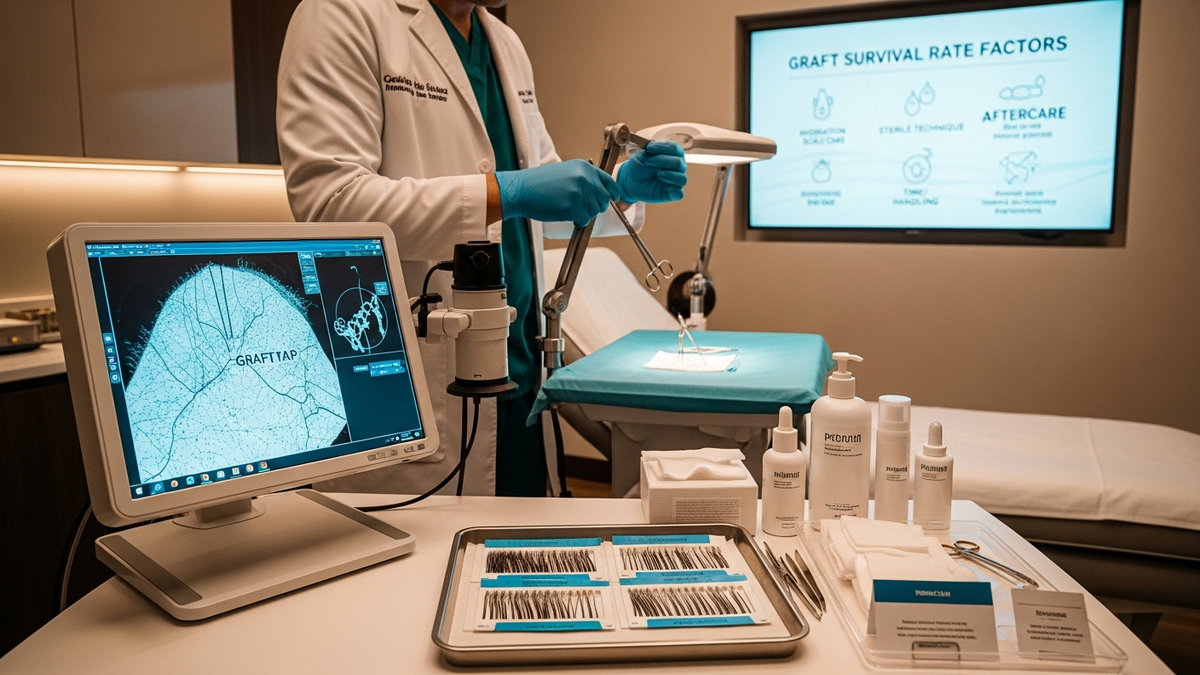
At FlowGeniQ Digest, we regularly receive one question from prospective patients: “What determines the hair transplant graft survival rate?” The answer is both technical and practical. Graft survival depends on how follicles are harvested, handled, and implanted—and it also depends on how you protect those grafts after surgery. When these elements align, the chance of robust, healthy growth increases.
In this premium, evidence-informed guide, we’ll cover the key hair transplant graft survival rate factors and aftercare—including surgical variables, patient variables, and the real-world behaviors that influence healing. You’ll also find an actionable aftercare checklist, a timeline of what to expect, and a FAQ to address common concerns.
What “graft survival” actually means in a hair transplant
After a hair transplant, each graft must survive a critical period where it transitions from its original blood supply to its new location in the recipient scalp. During this time, grafts rely on revascularization (the establishment of new blood flow) and the local healing environment.
Clinically, “graft survival rate” is often discussed as a percentage of transplanted follicles expected to remain viable. In practice, growth outcomes reflect survival and subsequent hair cycling (some hairs shed before regrowth). That’s why it’s essential to interpret results on the right timeline.
Hair transplant graft survival rate factors: the big categories
Not all “graft survival” factors are equal. Some are largely determined by the surgical team, while others are influenced by the patient’s biology and behavior after surgery. The highest-performing outcomes typically come from a coordinated approach.
1) Surgeon technique and graft handling (FUE vs FUT)
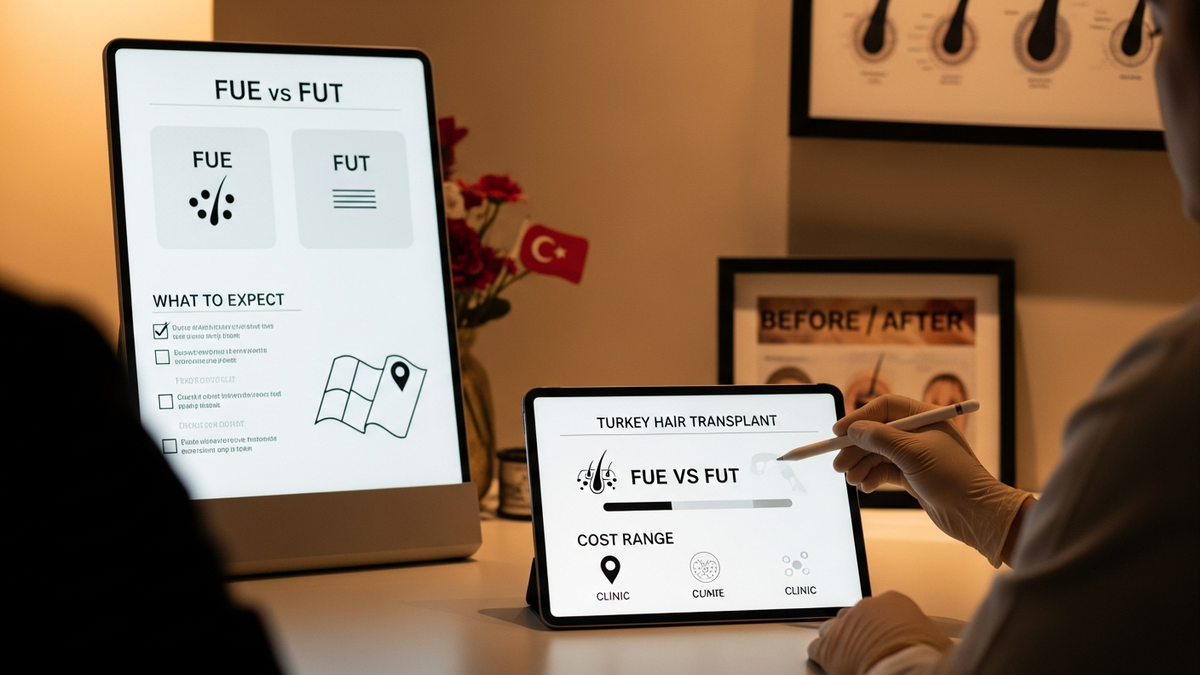
Whether you undergo FUE or FUT, graft survival is closely tied to how follicles are extracted and prepared. The most important technical considerations include:
- Minimizing trauma during extraction and trimming.
- Maintaining graft hydration and avoiding prolonged ischemia (time without adequate oxygen/blood supply).
- Preserving follicular units so the graft structure remains intact.
- Creating recipient sites that match graft size and the planned hair direction.
- Implanting with appropriate depth and spacing to support early healing and revascularization.
At a premium clinic level, these steps are supported by standardized protocols and experienced teams. For example, TestBiz Hair Clinic offers both FUE and FUT using state-of-the-art technology and experienced surgeons, recognizing that technique and graft handling are foundational to survival and natural density.
If you’d like to explore the broader scope of hair restoration services, you can review hair transplant options and approaches.
2) Recipient site quality: angle, depth, and distribution
Even perfectly harvested grafts can underperform if recipient sites are not optimized. Recipient site variables include:
- Angle: Improper angulation can affect both appearance and growth.
- Depth: Too shallow may increase shock or drying; too deep may impair early survival.
- Spacing and density planning: Overcrowding can compromise local healing.
- Hemostasis and scalp condition: Excess bleeding or inflammation can disrupt the immediate environment.
High-quality site creation is also about matching your hairline design and patterning to your anatomy and existing hair characteristics—because survival is not separate from aesthetics. When sites are made precisely, regrowth is more consistent and visually natural.
3) Ischemia time and workflow efficiency
Grafts are vulnerable in the interval between extraction and implantation. Clinics with efficient workflow aim to reduce unnecessary delays. Workflow efficiency includes:
- Coordinated extraction and implantation pacing.
- Appropriate number of trained technicians for preparation and placement.
- Consistent graft handling steps.
While patients can’t measure ischemia time directly, you can ask your clinic how they structure the procedure day and how they maintain graft quality throughout the process.
4) Your hair/scalp biology: age, pattern, and donor health
Not every patient has the same baseline. Several biological variables influence survival potential and growth density:
- Donor density and caliber: Healthy, plentiful donor follicles typically transplant more reliably.
- Scalp inflammation: Active dermatitis, infection, or uncontrolled seborrheic conditions can impair healing.
- Genetic pattern and progression: The underlying tendency for miniaturization affects long-term density and how many grafts you truly need.
- Age and hair cycle status: Timing can influence visible shedding and regrowth patterns.
Pre-op evaluation should include scalp assessment and a realistic plan for future hair loss to protect results over time—because “survival” is only one part of the story.
5) Medical factors: smoking, medications, and metabolic health
Some medical and lifestyle factors can reduce graft survival by impairing circulation, increasing inflammation, or affecting immune responses. Key examples include:
- Smoking and nicotine exposure: Nicotine can constrict blood vessels and reduce oxygen delivery.
- Uncontrolled diabetes: Elevated glucose can worsen wound healing.
- Bleeding disorders or anticoagulant use: These must be managed carefully under clinician guidance.
- Recent corticosteroid use or immunomodulating therapy: may affect healing depending on dose/timing.
- Iron deficiency or other nutritional issues: can influence hair cycle health.
This is why a thorough pre-operative medical review matters. Your surgeon should tailor instructions to your situation rather than using one-size-fits-all guidance.
6) Post-op inflammation and trauma: why behavior matters
Aftercare isn’t “optional.” Even if your surgery is technically excellent, graft survival can be compromised by:
- Picking or scratching scabs/crusts.
- Excessive rubbing during washing or drying.
- Sun exposure and heat stress on the scalp.
- Swelling from heavy exercise too soon.
- Improper hair product use (e.g., harsh chemicals, irritants).
Think of aftercare as protecting the environment your grafts need to revascularize and heal.
Aftercare for hair transplant graft survival rate factors: what to do (and what to avoid)
Aftercare protocols vary slightly between clinics, but the core goals are consistent: keep grafts clean without disruption, reduce inflammation, prevent infection, and support healthy scalp healing. Below is a practical framework you can use to understand what your clinic will likely recommend.
Immediate first 24–72 hours: stability and gentle cleanliness
- Follow your clinic’s dressing/sleep instructions exactly (many patients are advised to sleep with head elevation).
- Avoid touching the graft sites unless instructed for cleansing.
- Use prescribed medications (commonly includes anti-inflammatory and/or antibiotic regimens, plus topical solutions if recommended).
- Keep the scalp protected from dust and accidental contact.
What to avoid: smoking, alcohol excess, heavy exertion, and any behavior that increases bleeding or swelling. Even minor trauma can affect the delicate early healing phase.
Days 3–14: scab management, washing technique, and infection prevention
This phase often includes scab formation and crusting around graft sites. Scabs are normal—your job is not to remove them forcefully.
Washing: gentle technique is survival-supportive
Most clinics provide a step-by-step wash protocol. In general:
- Use lukewarm water and a gentle stream as instructed.
- Clean without rubbing: treat grafts like they’re fragile and keep pressure minimal.
- Use only approved shampoos (no “trial-and-error” products).
Scab care: don’t pick
- Do not scratch or pick scabs.
- Let them loosen naturally during washing.
- If scabs are stubborn, adhere to your clinic’s timeline rather than increasing pressure.
Watch for warning signs: increasing redness, persistent severe pain, fever, pus-like drainage, or rapidly worsening swelling. Contact your clinic promptly if symptoms escalate.
Weeks 2–6: protecting new growth signals
Between weeks 2 and 6, many patients experience shedding (sometimes called “shock loss”). Shedding can be alarming, but it’s often part of the hair cycle. The key is to maintain the right conditions for regrowth.
- Continue scalp care as directed by your surgeon.
- Avoid heat stress (saunas, very hot showers, intense heat exposure) until cleared.
- Reintroduce activity gradually: walking is usually encouraged; vigorous workouts are typically delayed.
- Stay consistent with medications (including hair-loss maintenance meds if prescribed).
Weeks 6–12: minimizing friction and optimizing scalp health
At this stage, the grafts are typically more anchored, and you can often transition to more normal routines—still within the limits set by your clinic.
- Be cautious with styling: avoid harsh gels, strong chemical treatments, or aggressive brushing.
- Protect from UV if you’re outside; many surgeons recommend hats with careful ventilation and no pressure on the scalp.
- Keep the scalp comfortable: dryness and irritation can increase inflammation.
Hair transplant graft survival rate aftercare checklist (actionable)
Use this checklist to align your daily habits with survival-focused aftercare. Always defer to your surgeon’s protocol if it differs.
Do
- Do keep your head elevated as instructed for the first several nights.
- Do take prescribed medications exactly on schedule.
- Do wash gently using the clinic-approved method and timing.
- Do avoid smoking/nicotine during the healing window.
- Do protect from sun/heat and avoid tanning beds.
- Do contact your clinic if you notice infection signs or unusual worsening.
Avoid
- Avoid picking, scratching, or forcefully removing scabs.
- Avoid heavy lifting, intense cardio, and activities that increase blood pressure early on.
- Avoid swimming, hot tubs, and dirty-water exposure until cleared.
- Avoid unapproved hair products, dyes, and chemical straighteners.
- Avoid tight hats or anything that rubs the graft zone.
How long does it take to see results after hair transplant?
Timeline expectations reduce anxiety and improve compliance with aftercare. While every patient is different, a typical pattern looks like this:
- 0–2 weeks: healing, scabbing/crusting, and stabilization.
- 2–8 weeks: possible shock loss/shedding; grafts are transitioning through the hair cycle.
- 3–4 months: early regrowth often becomes visible.
- 6–9 months: continued thickening and density improvement.
- 9–12+ months: mature results and final density assessment.
Why aftercare affects the hair transplant graft survival rate factors (not just appearance)
Patients often think aftercare is only about cosmetics—avoiding scars or keeping grafts looking neat. In reality, aftercare influences survival through biological mechanisms:
- Inflammation control: Reduced irritation supports revascularization.
- Infection prevention: Early infection can damage grafts and recipient sites.
- Mechanical protection: Avoiding friction reduces microtrauma.
- Scab management: Letting scabs loosen naturally protects newly healing tissue.
Choosing a clinic: questions to ask about graft survival and aftercare
If you want to maximize graft survival, ask about both surgical variables and aftercare support. Here are high-value questions:
- How do you handle grafts from extraction to implantation?
- What’s your approach to recipient site creation (angle, depth, spacing)?
- Do you provide a written aftercare protocol with wash steps and medication instructions?
- How do you manage complications (infection, excessive swelling, abnormal healing)?
- What maintenance therapy do you recommend to protect long-term results?
- How do you plan for future hair loss so density doesn’t collapse over time?
At TestBiz Hair Clinic, the emphasis on education and advanced techniques reflects the clinic’s commitment to patient understanding—an approach aligned with what FlowGeniQ Digest highlights across outcomes-focused healthcare content.
Common myths that can harm graft survival
Myth 1: “If I feel itchy, I should scratch.”
Itching is common during healing, but scratching can dislodge grafts and increase inflammation. Use the approved measures your surgeon recommends (often gentle cleansing and prescribed topical care).
Myth 2: “More washing is better.”
Over-washing or using harsh techniques can irritate the scalp and delay healing. Follow the exact schedule and technique provided.
Myth 3: “Hair transplant results are only about the surgery day.”
While surgical technique is crucial, aftercare is the bridge that helps grafts survive and the scalp heal correctly. Your daily decisions matter.
Related procedures and why head/neck surgical expertise can matter
Hair transplantation sits within the broader category of head and neck cosmetic/reconstructive surgery, where precision, tissue handling, and patient education are essential. While the techniques differ, the principle remains: careful planning and meticulous post-procedure care influence outcomes.
If you’re also exploring other facial aesthetic procedures, you may find helpful context in resources such as Rhinoplasty and Facelift. For patients who have functional nasal concerns, the same surgeon may discuss Septoplasty or the role of a Deviated Septum—demonstrating how anatomy-focused surgical evaluation can improve quality of life. (These are separate from hair transplant care, but they reflect the importance of individualized surgical planning.)
For patients considering facial donor-area aesthetic options, eyebrow restoration may also be relevant; see eyebrow transplant for how graft placement differs in the eyebrow region.
FAQ: hair transplant graft survival rate factors and aftercare
1) What is the typical hair transplant graft survival rate?
Clinically, many modern programs aim for high survival outcomes, but the exact percentage varies by technique, graft handling, patient biology, and aftercare adherence. Your surgeon can provide a realistic estimate based on your donor quality, diagnosis, and planned approach.
2) Does smoking reduce graft survival?
Yes. Smoking and nicotine exposure can impair blood flow and oxygen delivery, which may negatively affect healing and graft survival. Most clinics advise stopping well before and after surgery—ask your surgeon for a timeline tailored to you.
3) When can I wash my hair after a hair transplant?
Most clinics provide a specific day-by-day wash schedule. Some start gentle cleansing within the first few days, while others wait slightly longer depending on graft placement and scalp condition. Always follow your clinic’s written instructions.
4) Is shedding normal after a hair transplant?
Often, yes. Shock loss can occur as hairs transition through the cycle after transplantation. Shedding doesn’t automatically mean graft failure. Regrowth typically becomes more apparent after a few months.
5) What aftercare mistakes most commonly lower survival?
Common issues include picking scabs, rubbing graft sites, using unapproved hair products, ignoring infection warning signs, and returning to intense exercise too early. Following the protocol is one of the most controllable ways to support survival.
CTA: protect your grafts with a plan you can follow
If you’re planning a hair transplant—or if you’re already in the aftercare phase—your best next step is a personalized plan built around hair transplant graft survival rate factors and aftercare. A premium clinic should provide clear written instructions, answer your questions, and help you understand what to expect week by week.
To explore hair restoration options and approach styles, visit hair transplant. And if you want a clinic experience grounded in patient education and surgical excellence, consider discussing your goals with a specialized team like TestBiz Hair Clinic.
Professional Disclaimer
This content is provided for general educational purposes only by FlowGeniQ Digest. It is not a substitute for professional advice, diagnosis, or treatment. Readers are advised to consult qualified professionals for personalized recommendations.
Medical Information Disclaimer
This content is provided for general educational purposes only by FlowGeniQ Digest. It is not a substitute for professional advice, diagnosis, or treatment. Readers are advised to consult qualified professionals for personalized recommendations.