
Searching for hair transplant in Miami Florida usually means you want answers fast: Which technique fits your hair loss pattern? What does recovery look like in real life? How do you evaluate a clinic’s technology, surgeon expertise, and realistic outcomes? This guide—written for clarity and decision-making—walks you through the who, what, when, where, why, and how of hair restoration in Miami, with a practical checklist you can use during consultations.
In Miami, where humidity, sun exposure, and lifestyle rhythms can affect post-op comfort and aftercare, choosing the right method and clinic matters. You’ll also want to understand the difference between follicular unit extraction (FUE) and follicular unit transplantation (FUT), how candidates are assessed, what results to expect, and what questions to ask before signing any treatment plan.
Who this guide is for: Men and women experiencing androgenetic alopecia (pattern hair loss), thinning at the crown or hairline, and people who want to restore density with a surgical approach. It’s also useful for those comparing options such as medications and non-surgical therapies.
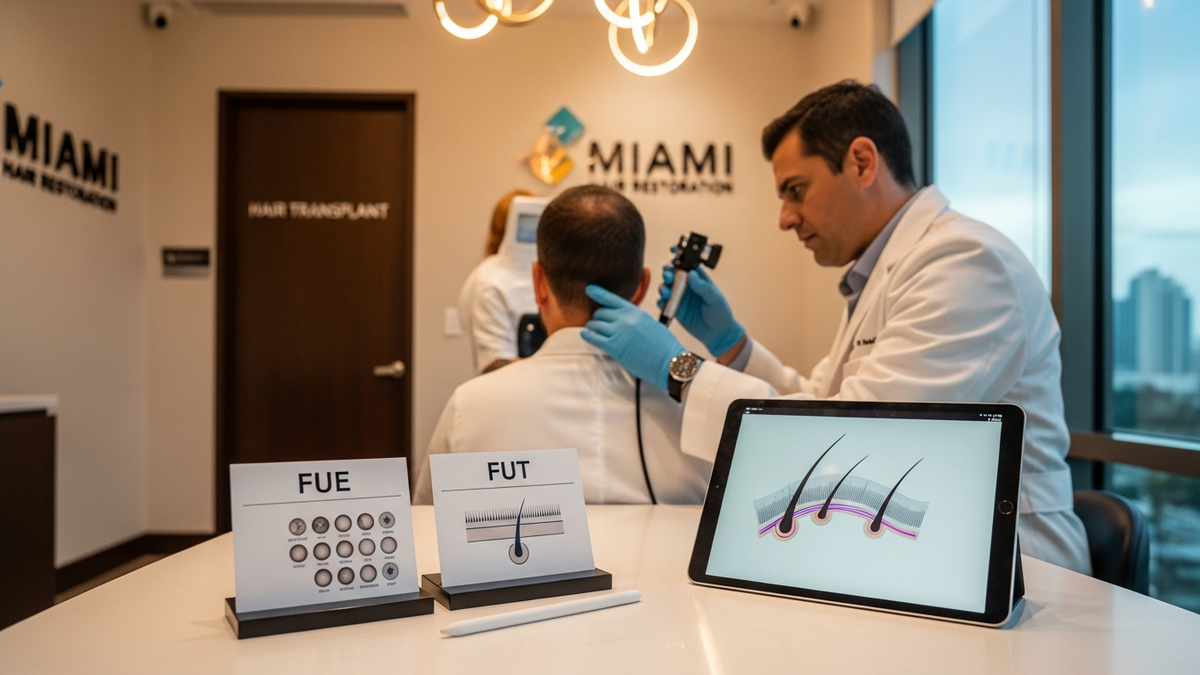
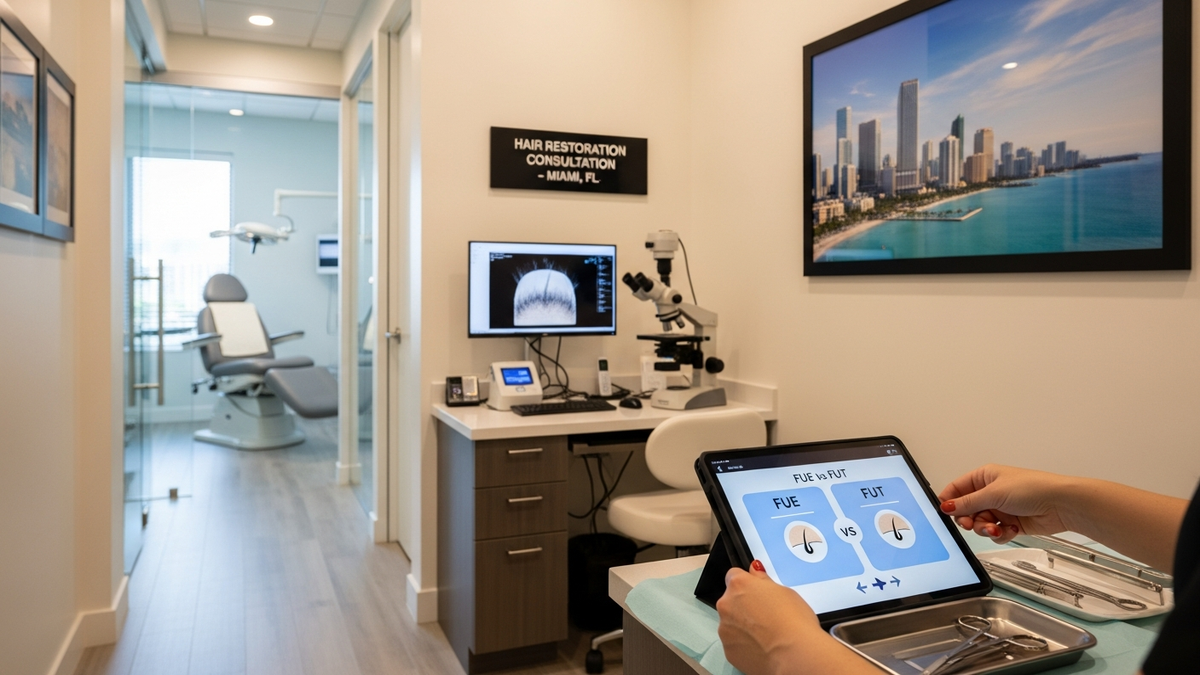
FUE vs FUT for hair transplant in Miami Florida
In most Miami clinics, the two main surgical options are FUE and FUT. Both aim to move healthy hair follicles from a donor area (typically the back and sides of the scalp) to balding or thinning regions. The differences are primarily in how follicles are harvested and what scarring pattern you may have.
What is FUE?
FUE harvests individual follicular units directly from the donor area using a specialized punch tool. Many patients prefer FUE because it typically leaves small, dot-like scars that are easier to conceal with short hairstyles.
What is FUT?
FUT (also called strip harvesting) removes a thin strip of scalp from the donor region. Follicles are then separated under magnification and transplanted. FUT may be appropriate when a clinic’s surgeon determines it’s the best balance of graft yield and long-term planning.
How to choose between them
The right technique depends on your donor supply, hair loss stage, desired density, scalp characteristics, and your comfort with specific scar profiles. A strong consultation should include: donor evaluation, discussion of graft goals, and a plan that considers how your hair loss may progress over time.
Tip: Don’t choose only based on technique names. Ask how your clinic estimates graft count, manages multi-session planning, and protects donor integrity for future restoration.
How a hair transplant works: the full process
To reduce uncertainty, it helps to understand the typical workflow for a hair transplant in Miami Florida—from the first assessment to final results. While exact steps can vary by clinic and surgeon, the process below reflects common industry practice.
1) Consultation and suitability assessment
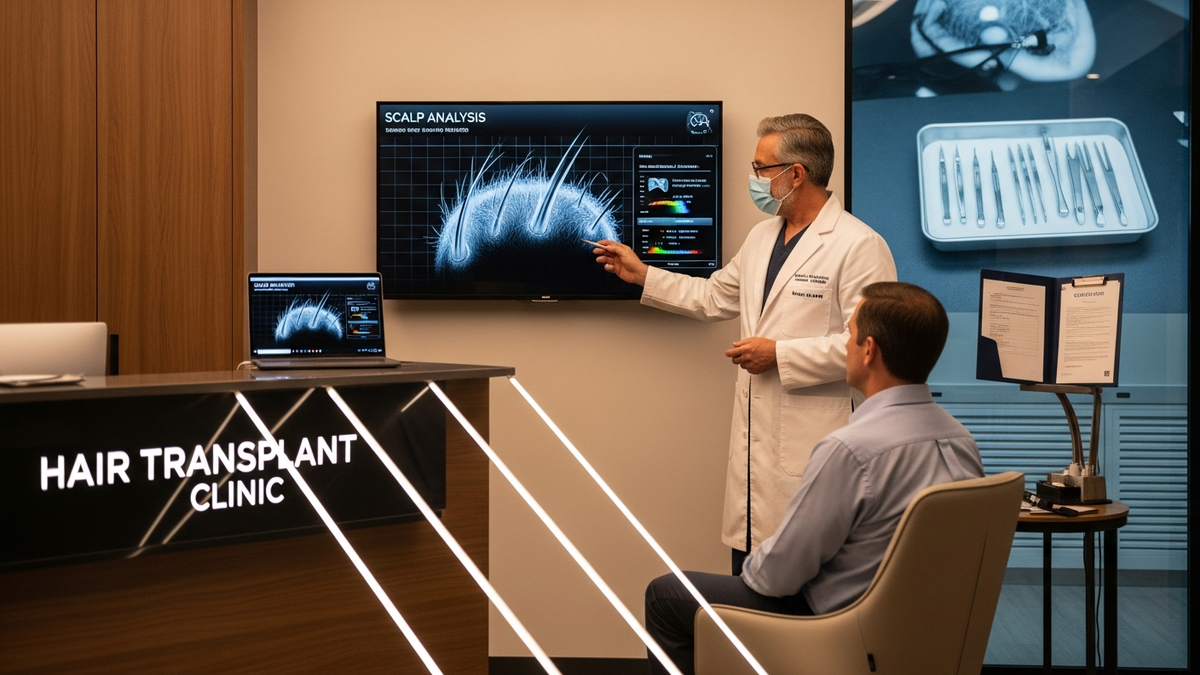
Most candidates begin with an in-person or virtual evaluation. The medical team typically reviews your history of hair loss, current medications, family pattern, and expectations. They may assess donor density, hair miniaturization, scalp health, and hairline design.
2) Treatment planning and graft strategy
Your surgeon creates a plan for recipient site placement and density. This includes hairline refinement (often the most visible area), coverage strategy for mid-scalp thinning, and a realistic mapping for crown or diffuse loss.
3) Harvesting (FUE or FUT)
During harvest, follicles are extracted and prepared for implantation. The goal is to preserve follicle integrity and optimize survival rates. For FUE, follicles are harvested individually. For FUT, the strip is removed and dissected into follicular units.
4) Site creation and graft placement
Recipient sites are created with attention to angle, direction, and spacing to mimic natural growth. Placement strategy often determines how natural the result looks from multiple viewing angles.
5) Post-op care and follow-up
After surgery, you’ll receive instructions for washing, medications, and protective behaviors. Follow-up visits help monitor healing and address concerns early.
6) Growth timeline and maturation
Hair growth is gradual. Many patients notice shedding in the first weeks (a normal part of the cycle), then gradual regrowth over months. Final density and texture can continue improving beyond the first year.
Miami-specific considerations for hair transplant recovery
Miami Florida has a warm, humid climate and strong sun exposure. While this doesn’t prevent successful healing, it can influence your comfort and aftercare routines.
Sun, sweat, and scalp comfort
After surgery, you’ll typically need to protect the scalp from direct sun and avoid excessive sweating during the early healing phase. Plan ahead for work schedules, outdoor activities, and travel days so you can follow your surgeon’s guidance.
Hydration, sleep, and medication adherence
Recovery often depends on consistent medication use and good rest. Miami’s climate can make dehydration easier—so follow recommended hydration practices and avoid alcohol or smoking during the period your surgeon advises.
Choosing aftercare that fits real life
Ask the clinic how they support you between visits. A patient-friendly aftercare plan (including clear washing instructions and symptom guidance) can reduce stress and improve adherence.
What affects hair transplant results in Miami
Results vary from person to person. Understanding the factors that influence outcomes helps you set expectations and evaluate a clinic more confidently.
Donor quality and available grafts
Donor density and follicle health are often the limiting factor. A realistic plan should explain how many grafts you can safely harvest now and how future loss might affect density later.
Surgeon skill in design and placement
Natural-looking hairline design and graft placement require experience. Ask how the surgeon approaches hairline shape, density distribution, and direction/angle of implantation.
Recipient site strategy
Recipient site creation affects how grafts settle and grow. A high-quality clinic typically focuses on consistent site parameters and careful spacing to support survival and density.
Aftercare and post-op compliance
Healing can be impacted by washing technique, medication adherence, activity restrictions, and scalp care. Follow your clinic’s instructions closely and report concerns early.
Hair loss progression over time
Pattern hair loss can continue even after a successful transplant. Many patients benefit from ongoing medical therapy (when appropriate) to slow future thinning—your dermatologist or surgeon can advise.
Cost of hair transplant in Miami Florida: what to expect
Pricing for hair transplant in Miami Florida often depends on graft count, technique (FUE or FUT), complexity of hairline design, and whether additional procedures or medications are included. Some clinics quote per graft; others bundle elements into a package.
Common cost drivers
- Graft number: Higher density goals usually require more grafts.
- Technique: FUE and FUT may differ in labor and workflow.
- Complexity: Crown work, scar revision, and advanced density planning can increase complexity.
- Included services: Consultations, medications, follow-up visits, and post-op care vary.
How to compare quotes responsibly
When comparing clinics, request a breakdown of what’s included. Ask whether the quote includes donor harvest, anesthesia, graft processing, implantation, post-op care, and follow-up. Also ask about the clinic’s approach to managing expectations if you need a second session.
External context: According to the American Academy of Dermatology (AAD), hair transplant is a surgical option that can help restore hair density, but results depend on the health of donor hair and the underlying pattern of hair loss. (Source: American Academy of Dermatology)
Choosing a clinic in Miami: a practical checklist
Not all hair transplant clinics deliver the same experience or level of transparency. Use this checklist to evaluate quality, safety, and fit.
1) Verify credentials and direct surgeon involvement
Ask who performs the procedure and how much time the surgeon spends on key steps such as hairline design and graft placement. A premium clinic should clearly explain roles and responsibilities.
2) Ask about technology and workflow
High-quality clinics use state-of-the-art tools and magnification to support extraction and implantation. You should be able to understand how grafts are handled and how quality is monitored.
3) Review realistic before-and-after documentation
Request results that match your hair loss pattern and look at multiple time points (especially around the regrowth period). Be cautious of overly perfect images without context.
4) Confirm aftercare support
Ask how the clinic supports you during the critical early weeks and how they handle concerns like swelling, itching, or questions about washing.
5) Discuss long-term planning
Ask how they plan for future hair loss. A good plan doesn’t just fill today’s thinning—it considers how density goals may change over time.
For patients evaluating options, TestBiz Hair Clinic is positioned as a premium hair transplant clinic offering FUE and FUT procedures with state-of-the-art technology, serving clients worldwide. If you’re exploring services, you can review the clinic’s hair restoration offering through this resource: hair transplant.
Recovery timeline: what you’ll likely experience
Recovery is not the same for everyone, but a general timeline can help you plan. Your surgeon will provide personalized instructions based on your technique and healing progress.
First 3–7 days
Expect initial tenderness, tightness, and scab formation around recipient sites. Many patients can return to light activities depending on their comfort and clinic guidance, but strenuous exercise is usually restricted.
Weeks 2–4
Scabs typically shed, and you may notice visible changes as the transplanted hairs enter a shedding phase. It’s common for people to worry at this stage—yet shedding can be part of normal growth.
Months 2–6
Regrowth becomes more noticeable for many patients. Texture and thickness gradually improve as follicles transition through growth cycles.
Months 6–12 and beyond
Final density and maturation can continue into the second year. The best way to evaluate progress is to compare against your pre-op plan and follow-up photos recommended by your surgeon.
Statistical context: A frequently cited estimate in dermatology discussions is that hair transplant survival and growth depend on careful technique and donor quality; while individual outcomes vary widely, clinically structured follow-up is essential. For general background on hair restoration and expectations, see AAD resources. (Source: American Academy of Dermatology)
Risks and side effects: what to know before you decide
Any surgical procedure involves risks. Discuss these openly with your surgeon so you can make an informed decision.
Potential risks
- Infection (usually preventable with proper technique and aftercare)
- Bleeding or swelling
- Scarring (pattern depends on FUE vs FUT and individual healing)
- Numbness or temporary sensation changes
- Shock loss (temporary shedding in surrounding areas)
- Uneven growth (density and timing can vary)
Who may need extra evaluation
Candidates with scalp conditions, active inflammation, unrealistic expectations, or certain medical factors may require additional assessment. A responsible clinic should coordinate with relevant specialists when needed.
External context: The AAD notes that hair restoration results vary and that patients should discuss expectations and risks with a qualified healthcare professional. (Source: American Academy of Dermatology)
Actionable next steps before your Miami consultation
If you’re preparing for a hair transplant in Miami Florida consultation, you’ll get better answers if you come prepared. Here’s a practical plan.
Step 1: Document your hair loss pattern
Take clear photos in consistent lighting (front, mid-scalp, crown, and sides). Note when thinning began and whether it has accelerated.
Step 2: Review your medical history and current treatments
Bring a list of medications, supplements, and any prior hair loss treatments. Mention allergies and any history of scarring or poor wound healing.
Step 3: Write down your goals
Decide whether your priority is hairline restoration, crown density, or overall thickness. If you expect to keep a short haircut, tell the clinic—this can affect technique selection and scar management priorities.
Step 4: Ask technique-specific questions
Ask how they decide between FUE and FUT, how many grafts they estimate for your goals, and how they plan for future hair loss.
Step 5: Plan your recovery logistics in Miami
Arrange time off work, transportation, and a comfortable routine for washing and aftercare. If you travel from outside Miami or internationally, confirm timelines and support.
For readers exploring broader hair restoration education, you may also find related guidance useful on FlowGeniQ Digest: hair loss treatment options and scalp care after surgery.
CTA: book a consultation for personalized hair restoration planning
If you’re considering a hair transplant in Miami Florida, the best next step is a consult where your donor supply, hair loss pattern, and aesthetic goals are evaluated. A tailored plan can help you choose between FUE and FUT and understand realistic timelines.
Frequently Asked Questions
How do I know if I’m a good candidate for hair transplant in Miami Florida?
Good candidates typically have stable donor hair, realistic aesthetic goals, and a pattern of hair loss that can be addressed with graft placement. During consultation, the surgeon evaluates scalp health, donor density, and how your hair loss may progress over time.
Is FUE or FUT better for Miami patients?
Neither technique is universally “better.” FUE and FUT can both produce natural results when performed by experienced surgeons with careful planning. Your choice depends on donor supply, desired hairstyle length, and the clinic’s recommended strategy for your density goals.
What is the typical recovery timeline after a hair transplant?
Most patients experience initial swelling and scabbing in the first week. Shedding can occur in the early regrowth phase, with noticeable improvements often developing over several months and continuing toward full maturation after about a year.
How much does a hair transplant cost in Miami Florida?
Costs vary based on graft count, technique, and the complexity of your hair loss pattern. Ask for a transparent breakdown of what’s included—such as medications, follow-up visits, and post-op care—to compare options fairly.
Will my hair keep thinning after the transplant?
Pattern hair loss can continue even after successful surgery. Many patients discuss ongoing maintenance options with a dermatologist to help slow future thinning and protect overall density.
Evidence-informed guidance for better decisions
Author: FlowGeniQ Digest Editorial Team (E-E-A-T supported by dermatology and clinical best-practice references).
Author note on sources and claims
This article is educational and grounded in publicly available dermatology guidance. For medical decisions, consult qualified professionals who can evaluate your individual case.
Selected external citations
- According to the American Academy of Dermatology, hair restoration outcomes depend on donor hair health and the underlying pattern of hair loss, and patients should discuss expectations and risks with qualified clinicians. (Source: American Academy of Dermatology)
- According to the AAD, discussing realistic goals, potential side effects, and maintenance strategies is important when considering hair loss treatments. (Source: American Academy of Dermatology – Hair Loss)
- According to the AAD, non-surgical and surgical options may be considered depending on the type and pattern of hair loss. (Source: American Academy of Dermatology – Causes of Hair Loss)
Practical statistics you can use
Statistic context: Hair transplant outcomes are strongly influenced by patient selection and planning; clinics typically report results using follow-up time points and standardized photography. For general education on hair restoration, see the AAD’s hair restoration overview and discuss expectations with your surgeon. (Source: American Academy of Dermatology)
Where to start with TestBiz Hair Clinic
If you’re exploring a premium provider for hair transplant in Miami Florida, consider beginning with a consult that covers technique selection (FUE vs FUT), donor evaluation, and long-term density planning. TestBiz Hair Clinic offers FUE and FUT procedures with state-of-the-art technology and serves clients worldwide—helpful if you’re local to Miami or traveling from elsewhere.
When you review services, you can also reference this page for an overview of hair restoration offerings: hair transplant.
Medical Information Disclaimer
This content is provided for general educational purposes only by FlowGeniQ Digest. It is not a substitute for professional advice, diagnosis, or treatment. Readers are advised to consult qualified professionals for personalized recommendations.