At FlowGeniQ Digest, we frequently hear the same question from people preparing for facial plastic surgery: what to expect after rhinoplasty surgery recovery timeline. The short answer is that healing happens in phases—some changes are dramatic early on, while the most refined results take months. Your nose will look and feel different as swelling settles, tissues reorganize, and the final shape becomes clearer.
This premium recovery guide is designed to be practical and reassuring. You’ll learn what’s typical (and what isn’t), how long splints and bruising may last, when you can return to work and exercise, and how to support healing. We’ll also cover important context for patients who may be considering functional nasal surgery approaches alongside aesthetic goals.
Rhinoplasty recovery timeline: what to expect after surgery, week by week
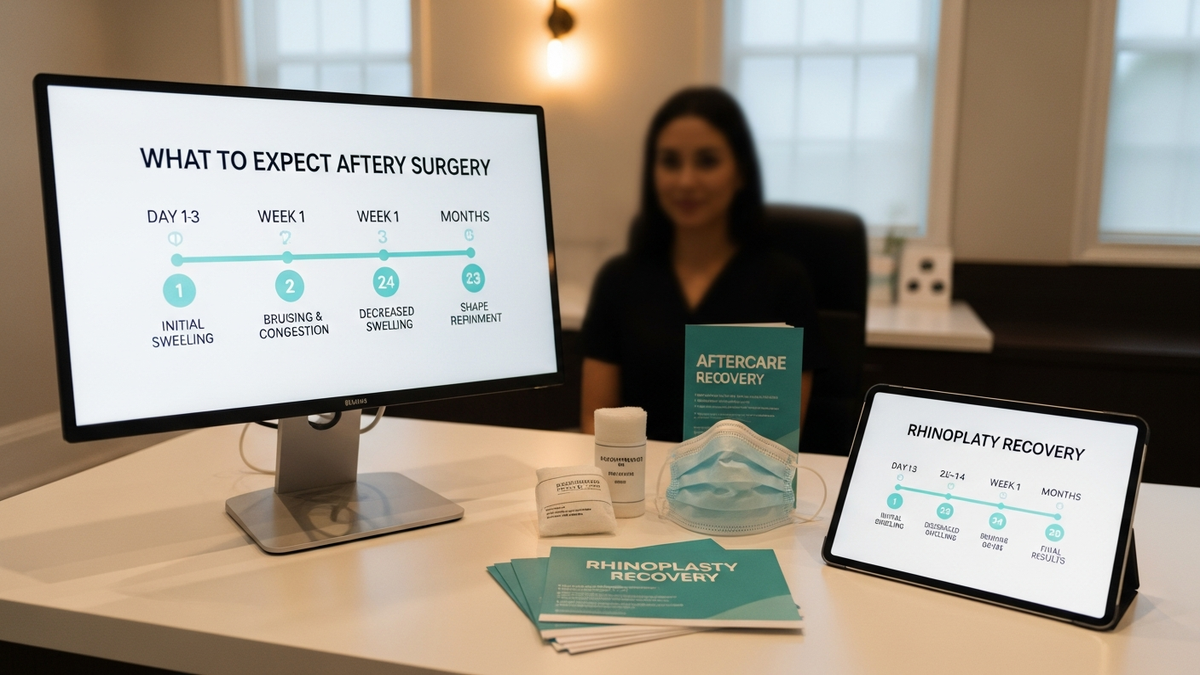
Every patient heals at their own pace, but the overall pattern is consistent. After rhinoplasty, your surgeon has reshaped cartilage and/or bone, then your body must heal and re-settle. In the early phase, swelling and fluid retention can make the nose look larger or slightly different than the final result.
Use the timeline below as a realistic roadmap. Your surgeon’s instructions always take priority—especially regarding medications, wound care, and activity restrictions.
Days 1–3: immediate post-op period (the “tight, swollen” phase)
In the first 72 hours, you’ll likely notice:
- Swelling that can increase quickly, especially around the nose and under the eyes.
- Congestion and drainage as internal tissues heal and as splints or packing (if used) manage shape.
- Bruising, which may spread toward the cheeks depending on individual factors.
- Tightness or pressure sensations.
- Dryness inside the nostrils, along with crusting.
What you can do: Follow your surgical team’s guidance for nasal care (saline sprays/irrigation if approved), keep your head elevated, and avoid any manipulation of the nose. If you were given antibiotics or pain control medications, take them exactly as directed.
Days 4–7: splint care and “visible improvement” (but still swollen)
Many patients feel they’re “turning a corner” around this time. Typical experiences include:
- Reduced swelling at the very top of the nose as early inflammation begins to settle.
- Ongoing bruising that may peak mid-week.
- Splint or cast removal for many patients around day 5–10 (varies by technique and surgeon preference).
- Increased airflow sensation for some patients, especially those undergoing functional improvements.
Return to daily routines: Many people can return to light desk work after about a week, but “normal” appearance can still be far from your final outcome. Plan for photos and social events accordingly.
Weeks 2–3: ongoing swelling, tip sensitivity, and subtle shape changes
By weeks two and three, swelling becomes more nuanced. Instead of a uniform puffiness, you may notice:
- Tip swelling can be more noticeable than the bridge.
- Changes in skin texture as healing progresses.
- Small asymmetries that often reflect temporary swelling patterns rather than permanent shape.
- Improving comfort as pressure decreases.
Actionable recommendation: Keep a symptom log (swelling level, tenderness, breathing changes). If you’re experiencing persistent one-sided pain, worsening drainage, fever, or unusual odor, contact your surgeon promptly.
Weeks 4–6: the “new nose” phase begins to look more like the plan
At this stage, many patients see a meaningful visual difference. However, it’s still not the final result. Common experiences include:
- Swelling is still present, but it usually looks softer and more settled.
- Breathing may continue to improve as internal healing progresses.
- Energy levels often return closer to baseline.
- Exercise restrictions may be eased gradually depending on your surgeon’s protocol.
Exercise guidance: Avoid activities that risk impact to the nose or cause significant strain. Many surgeons recommend waiting several more weeks before high-intensity workouts. If you’re unsure, ask specifically about when you can resume running, lifting, yoga with head-down positions, or sports.
Months 2–3: refinement continues under the surface
As you move into months two and three, your nose’s shape starts to “read” more clearly. Typical changes:
- Residual swelling may shift—especially in the tip and along sidewalls.
- Scar tissue reorganization continues (scars form internally and externally, even if they’re not visible).
- Photos look more consistent as day-to-day swelling stabilizes.
What to expect emotionally: It’s common to feel impatient during this phase. A realistic mindset helps: early healing is about survival and stability; mid-phase healing is about refinement.
Months 4–6: visible maturation and clearer final contours
For many patients, this is the period when the nose appears more “finished.” Still, subtle changes can continue:
- Swelling continues to decrease, though it may fluctuate with weather, salt intake, and activity.
- Tip definition often becomes clearer.
- Bridge contour generally looks more stable.
Photography tip: Take progress photos in consistent lighting and angles (front, 45-degree, and side). This helps you and your surgeon evaluate changes objectively.
Months 7–12: long-term refinement (the final “settling”)
Rhinoplasty is rarely a “set it and forget it” process. Many patients notice ongoing refinement through a full year (and in some cases longer), including:
- Minor contour smoothing as tissues settle.
- Improved harmony with your face as swelling completely resolves.
- Stability of breathing if functional goals were part of the plan.
By 12 months, most patients have a reliable view of the final result—though your surgeon may still monitor subtle maturation beyond that.
What affects your rhinoplasty recovery timeline?
Two people can have “the same” procedure and experience different recovery speeds. The timeline depends on multiple variables:
- Surgical approach and complexity: Whether the case involved cartilage work, osteotomies (bone reshaping), grafting, or revisions.
- Skin thickness and elasticity: Thicker skin often takes longer to show final definition.
- Swelling response: Genetics, inflammation levels, and lifestyle factors can influence how much swelling you experience.
- Smoking/vaping exposure: Nicotine can impair healing and increase complication risk.
- Medication and health conditions: Conditions affecting circulation or healing (and certain medications) may require tailored guidance.
- Adherence to post-op instructions: Head elevation, activity limits, and wound care matter.
If you’re considering Rhinoplasty for both cosmetic and functional outcomes, be sure to discuss how your surgeon plans to address breathing and airway support alongside aesthetic goals. In some cases, functional nasal surgery options may be considered separately or in combination.
Swelling, bruising, and breathing: common symptoms and how long they last
Swelling: why it peaks and why it changes location
Swelling is a normal part of healing. It tends to peak in the first week, then gradually decreases. However, it may “move” over time—fluid can redistribute as tissues heal. That’s why the tip may look more swollen later than the bridge.
How to support swelling reduction (safely):
- Keep your head elevated, especially during sleep.
- Follow a surgeon-approved approach to cold compresses (if recommended), and never apply pressure to the nose.
- Stay hydrated and avoid excessive salt.
- Take medications only as prescribed.
Bruising: typical timeline and when to worry
Bruising often peaks around days 5–7. It may gradually fade over 1–2 weeks. Contact your surgeon if bruising is rapidly worsening, associated with severe pain, or accompanied by signs of infection.
Breathing changes: cosmetic rhinoplasty vs functional goals
Some patients experience improved breathing quickly, while others notice gradual improvement as internal swelling resolves. If you have structural issues like a Deviated Septum, you may be considering procedures that address airflow.
For example, Septoplasty can straighten the nasal cartilage when the septum contributes to obstruction. In certain circumstances, airway-focused strategies may be more appropriate than cosmetic-only changes. If you suspect congestion, chronic sinus symptoms, or difficulty breathing, discuss functional evaluation early.
For those specifically planning aesthetic surgery, it’s still important to talk about airway. In Los Angeles and beyond, many patients choose facial plastic surgeons who understand both form and function.
Activity and recovery milestones: when can you return to work, exercise, and daily life?
Patients often want a clear answer to “When can I…?” While your surgeon’s instructions are definitive, the following milestones are common patterns.
Work and social life
- Desk work: often possible around 5–10 days (depending on swelling and bruising).
- Public-facing roles: may require 1–2 weeks or more for comfort with appearance.
- High-demand jobs: typically need longer—especially if you lift, bend, or are exposed to dust and infection risk.
Exercise and sports
- First week: walking is usually encouraged; avoid strenuous activity.
- Weeks 2–3: light exercise may be allowed, but avoid anything that increases facial pressure significantly.
- Weeks 4–6: many patients can return to more regular workouts, still with restrictions.
- Contact sports: often delayed several months to protect the healing nose.
If you’re planning a timeline around a wedding, vacation, or event, consider that “looking good in photos” may happen earlier than “fully healed and stable.” Build in buffer time.
Sleep, hygiene, and wearing glasses
- Sleep: plan for head elevation for at least the first couple of weeks.
- Hygiene: keep incisions and external areas clean as instructed; avoid soaking.
- Glasses: ask your surgeon. Some patients use tape or a supportive method to avoid pressure on the bridge.
How to support healing: evidence-informed do’s and don’ts
Do
- Follow medication instructions: pain control, antibiotics if prescribed, and any anti-inflammatory guidance.
- Use saline and nasal care exactly as instructed.
- Eat for recovery: prioritize protein, vitamins, and hydration to support tissue repair.
- Attend follow-up visits: your surgeon monitors healing and can address concerns early.
- Protect your nose: avoid bumps, pressure, and sun exposure to healing skin.
Don’t
- Don’t smoke or vape: nicotine increases risks and can slow recovery.
- Don’t ignore warning signs: fever, worsening redness, severe bleeding, or unusual discharge should be evaluated.
- Don’t over-handle the nose: even well-intentioned touching can irritate healing tissue.
- Don’t rush exercise: increased blood pressure and impact can worsen swelling or disrupt healing.
When your recovery timeline doesn’t match expectations
Most deviations are temporary, but there are situations where you should contact your surgeon. Seek medical advice if you experience:
- Severe or worsening pain rather than gradual improvement.
- Persistent heavy bleeding or rapidly increasing swelling.
- Fever or signs of infection (increasing redness, warmth, foul discharge).
- Unusual breathing decline that feels sudden or significantly worse.
- Concerns about symmetry that are progressing rather than stabilizing.
It’s always better to check early than to wait. Your surgeon’s team can help determine whether symptoms are within normal recovery variation.
Functional nasal surgery vs rhinoplasty: understanding the difference in recovery
Some patients come to rhinoplasty primarily for appearance. Others have symptoms like chronic congestion, sinusitis, or difficulty breathing due to structural factors. In those cases, your surgeon may discuss functional nasal procedures—which may require different recovery considerations.
When airflow issues are central
If your nose feels “stuffy” long-term, structural issues such as a deviated septum or enlarged turbinates can be contributing factors. A procedure like Septoplasty may be recommended in appropriate cases, and it can address a Deviated Septum (see Deviated Septum resource for further context).
In certain patients, functional interventions may be less invasive than traditional aesthetic rhinoplasty. That said, the best plan depends on your anatomy, symptoms, and goals.
Functional options and recovery expectations
Functional procedures can include septal correction, turbinate reduction, nasal valve support, or sinus-focused treatments. For example, minimally invasive approaches like balloon sinuplasty may be considered for chronic sinus blockage. Recovery timelines can differ from aesthetic rhinoplasty, so it’s important to ask your surgeon what’s included in your specific plan.
Choosing the right surgeon for your rhinoplasty recovery timeline
Your recovery isn’t only about time—it’s also about technique, safety, and follow-up care. When evaluating a surgeon, consider:
- Board certification and relevant training in facial plastic and reconstructive surgery.
- Experience with both aesthetic and functional nasal goals if breathing matters to you.
- Before-and-after consistency that matches your desired style (natural vs more dramatic).
- Patient education: do they explain what to expect after rhinoplasty surgery recovery timeline in a way you understand?
- Clear emergency guidance: what to do if something feels “off.”
In Beverly Hills, Dr. Hootan Zandifar is known for an honest, compassionate approach and a commitment to patient education. As a board-certified facial plastic and reconstructive surgeon, Dr. Zandifar focuses on head and neck procedures and provides natural-looking solutions for patients who want to look and feel their best.
Related facial procedures: how other recoveries may compare
Some patients consider multiple facial rejuvenation steps. If you’re also exploring other procedures, it can help to understand that timelines vary by technique and tissue involvement.
Facelift and blepharoplasty
A Facelift can involve different tissue planes and healing patterns than rhinoplasty, while Blepharoplasty involves eyelid skin and delicate structures with its own bruising and swelling timeline.
If you’re planning combination procedures, discuss staging and scheduling to avoid overlapping swelling peaks and to ensure you can safely manage recovery.
Frequently asked questions about the rhinoplasty recovery timeline
1) When will my nose stop looking swollen?
Swelling typically improves substantially in the first 2–6 weeks, but residual swelling often persists in the tip and side areas. Many patients see major maturation between 4–6 months, with further refinement through 12 months (sometimes longer).
2) Is it normal for my nose to look different on different days?
Yes. Day-to-day swelling fluctuation can happen, especially early on. Hydration, activity level, salt intake, and sleep can influence appearance. If changes are accompanied by severe pain, fever, or worsening symptoms, contact your surgeon.
3) When can I return to exercise after rhinoplasty?
Light walking is typically encouraged early. Many patients return to more regular exercise around weeks 4–6, but high-intensity workouts and contact sports usually require a longer delay. Your surgeon will tailor recommendations based on your procedure details.
4) How long until I can breathe normally?
Breathing often improves as internal swelling decreases. Some patients notice changes sooner, while others experience gradual improvement over weeks to months. If you have pre-existing structural obstruction, discuss whether additional functional strategies (such as Septoplasty) are part of your plan.
5) Will my final rhinoplasty result look the same as the first month?
No. The first month is still a healing phase. The nose continues to refine for months as swelling resolves and tissues reorganize. A stable, reliable sense of your final result usually emerges around 6–12 months.
CTA: plan your recovery with confidence
If you’re trying to map out what to expect after rhinoplasty surgery recovery timeline, you’re already taking the right step: preparing mentally, practically, and medically. A personalized consult helps your surgeon review your anatomy, discuss realistic outcomes, and set a tailored recovery plan based on the exact techniques used.
To learn more about rhinoplasty goals and planning in Beverly Hills, visit Rhinoplasty. If you’re also considering functional correction for breathing, you can explore Septoplasty as part of the conversation.
Ready for clarity? Schedule an appointment to discuss your timeline, your comfort during recovery, and how your surgeon supports both aesthetic and functional priorities.
Professional Disclaimer
This content is provided for general educational purposes only by FlowGeniQ Digest. It is not a substitute for professional advice, diagnosis, or treatment. Readers are advised to consult qualified professionals for personalized recommendations.
Medical Information Disclaimer
This content is provided for general educational purposes only by FlowGeniQ Digest. It is not a substitute for professional advice, diagnosis, or treatment. Readers are advised to consult qualified professionals for personalized recommendations.