At FlowGeniQ Digest, we often hear the same question from patients preparing for surgery: “What to expect after rhinoplasty surgery recovery timeline?” Rhinoplasty recovery can feel unpredictable—especially when you’re balancing swelling, bruising, nasal breathing changes, and the emotional reality of looking different while healing.
The good news: most recovery patterns follow a fairly consistent timeline. While every nose heals uniquely (and surgical techniques vary), understanding the typical stages can help you plan your schedule, manage expectations, and communicate clearly with your surgeon.
In this guide, you’ll find a week-by-week rhinoplasty recovery timeline, practical tips to support healing, and a realistic overview of when you can expect visible improvement, better breathing, and final results.
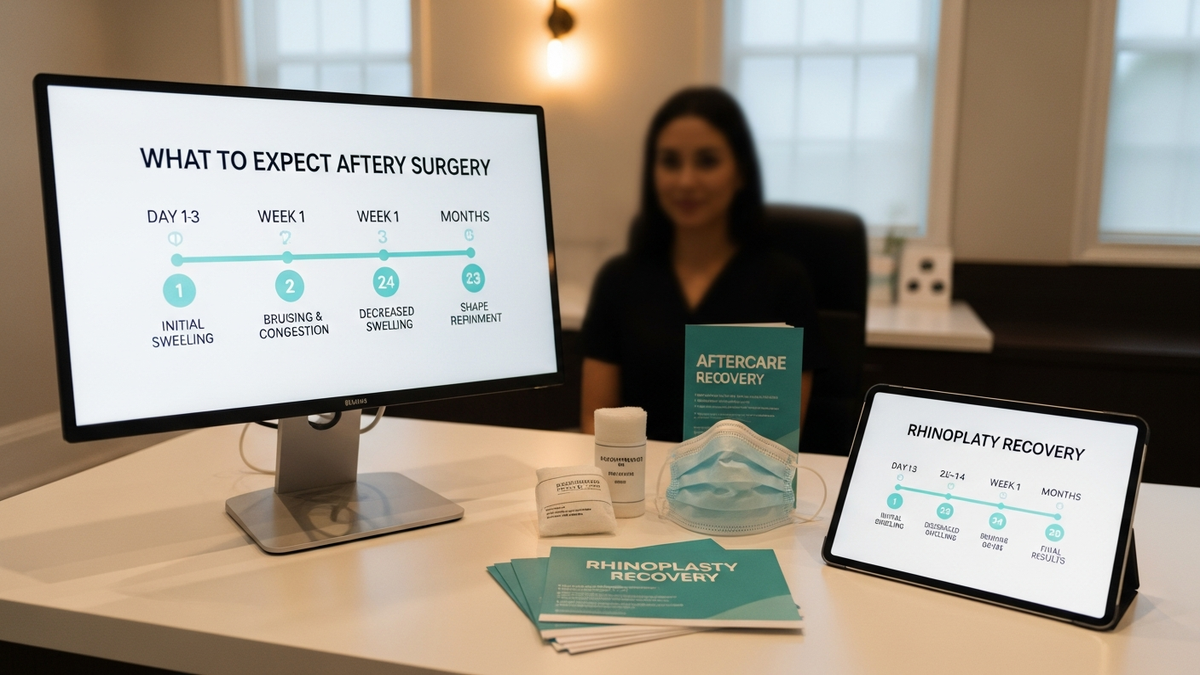
Rhinoplasty recovery timeline: the big picture
Rhinoplasty involves reshaping nasal bone and/or cartilage and then allowing the tissues to heal in a new configuration. Swelling is a normal part of that process. Many patients are surprised by how long swelling can linger—even after the initial “looks better” phase.
In general, recovery moves through three overlapping phases:
- Early healing (days to weeks): bandages/splints, bruising, swelling, tenderness, and fluctuating congestion.
- Intermediate healing (weeks to months): gradual reduction in swelling, improved nasal airflow, and increasing refinement of shape.
- Maturation (months to a year+): deeper tissue remodeling and subtle changes in definition.
If you’re also considering functional concerns (like chronic congestion), it’s worth noting that facial plastic and reconstructive surgeons often evaluate whether functional nasal surgery may be needed in addition to cosmetic goals.
What to expect after rhinoplasty surgery recovery timeline: week-by-week
Below is a practical, patient-friendly timeline. Your surgeon may adjust timelines based on whether your procedure included bone work, cartilage grafting, septal work, or other structural changes.
Days 1–3: The “fresh surgery” phase
- Swelling: usually most noticeable early on, especially around the nose and under the eyes.
- Bruising: common; bruising may look worse around day 2–3 as gravity moves it.
- Congestion: nasal breathing often feels blocked because of swelling, splints, packing (if used), and normal post-op swelling.
- Discomfort: soreness and tightness are typical; pain is usually manageable with prescribed medication.
- Activity: rest is essential. Walking is encouraged, but strenuous activity should be avoided.
Actionable tips:
- Sleep with your head elevated (often on 2+ pillows) to reduce throbbing swelling.
- Follow your surgeon’s instructions for nasal care exactly.
- Avoid bending and heavy lifting—these can increase swelling and bleeding risk.
Days 4–7: Splints, stitches, and first visible changes
- Swelling & bruising: may peak and then begin to slowly improve.
- Bandages/splints: many patients have splints removed around this time (varies by technique).
- Breathing: often remains difficult, but many patients notice slight improvement as external swelling changes.
- Appearance: you may look “very different” due to swelling and bruising, even if healing is progressing normally.
Actionable tips:
- Plan for a low-stress week. Your face may still look dramatic in photos.
- Use cool compresses only if your surgeon recommends them (timing and method vary).
- Wear clothing that doesn’t require pulling over your head to avoid irritation.
Weeks 2–3: Settling swelling and returning to daily life
- Swelling: continues to decrease, but the nose can still feel puffy or “stiff.”
- Bruising: typically resolves, though mild discoloration can linger.
- Sensation: numbness or altered sensation can occur and usually improves over time.
- Activity: many patients can resume light work; exercise is often restricted until cleared.
Actionable tips:
- Be patient with texture changes. Healing tissues can feel firm before they soften.
- Avoid high-impact activities, bending, and anything that increases pressure in the head/face until cleared.
Weeks 4–6: Noticeable refinement
- Swelling: many people see a meaningful improvement in nasal contour by this stage.
- Shape definition: the nose may begin to look more “like your new nose,” though subtle changes continue.
- Breathing: airflow may improve as internal swelling reduces.
- Social confidence: many patients feel more comfortable returning to events and photos.
Actionable tips:
- Continue gentle nasal hygiene as instructed (don’t improvise).
- Consider sunscreen carefully—sun exposure can worsen discoloration and affect skin healing.
Months 2–3: The “slow and steady” phase
- Swelling: continues to fluctuate. Some days look better than others.
- Tip definition: the nasal tip often takes longer to fully refine because it’s supported by cartilage and soft tissue healing.
- Texture: firmness may persist, especially near the tip or graft sites.
Actionable tips:
- Don’t overjudge results at this stage. The nose is still remodeling internally.
- Avoid trauma (sports, contact activities) until cleared by your surgeon.
Months 4–6: More natural appearance
- Cosmetic progress: many patients report that their nose looks natural and proportionate.
- Asymmetry: mild temporary asymmetries can be normal due to uneven healing and swelling.
- Breathing: if functional issues were addressed, many patients notice improved nasal airflow.
Actionable tips:
- If you have lingering congestion, discuss it early with your surgeon—sometimes it relates to internal swelling or structural factors.
Months 7–12: Maturation and final refinement
- Final results: many patients are close to their final look by 12 months, though subtle refinements can continue beyond.
- Tip settling: the nasal tip and edges may continue to soften and become more defined.
- Long-term stability: cartilage and tissue remodeling continues as the nose settles into its new shape.
Actionable tips:
- Take baseline photos at key milestones (e.g., 3, 6, 12 months) to track changes objectively.
- Keep follow-up appointments even if you feel “mostly fine.”
Recovery symptoms: what’s normal vs. what needs attention
Understanding normal healing can reduce anxiety. Still, it’s crucial to know when to contact your surgeon.
Common, expected after rhinoplasty
- Swelling and bruising around the nose and eyes
- Congestion and a sensation of blockage
- Dryness and crusting inside the nose
- Minor bleeding or spotting early on
- Tenderness and tightness
- Numbness or altered sensation
Call your surgeon promptly if you notice
- Heavy bleeding that doesn’t improve with recommended measures
- Fever or worsening pain that suggests infection
- Increasing redness and swelling after initial improvement
- Difficulty breathing that feels suddenly worse
- Unusual discharge or foul odor
How long does rhinoplasty swelling last?
Swelling is the most common reason patients feel uncertain about progress. While many people see improvements by 2–3 weeks, residual swelling can persist for months. It’s also normal for swelling to fluctuate depending on:
- Activity level and head elevation
- Salt intake and hydration
- Sleep quality
- Temperature (heat can increase swelling)
- Time of day (often worse later)
Practical expectation: if you’re comparing your nose at week 6 to week 12, it may look subtly different because swelling is still resolving and tissues are remodeling.
When will I be able to breathe better after rhinoplasty?
Breathing changes depend on what was done surgically. Some patients notice partial improvement early, while others experience a longer “internal swelling” period. If your primary concern is structural nasal obstruction, it’s important to discuss functional options with your surgeon.
For example, if you have a deviated septum, a procedure such as Septoplasty may be considered (or performed) to support airway function. A Deviated Septum can significantly affect airflow even when cosmetic changes are subtle.
Some patients are also candidates for other functional approaches, including turbinate reduction. In more complex cases, airway support may require specialized evaluation of the nasal valve area.
Bruising and appearance: how to plan socially and at work
Most visible bruising resolves within 1–2 weeks, but swelling can still make your nose look puffy or “larger” than final. A realistic planning approach:
- Week 1: assume you’ll need downtime and minimal public exposure.
- Weeks 2–3: many patients can return to light work, depending on how visible their swelling/bruising is.
- Weeks 4–6: appearance often improves noticeably; social comfort increases.
If you have a major event coming up, it’s often safer to plan it after the first month—because you’ll likely look more “presentable” and less swollen by then.
Recovery timeline for exercise, work, and travel
Because postoperative instructions vary, always follow your surgeon’s specific guidance. That said, general patterns include:
Exercise
- First week: light walking only
- Weeks 2–3: increased walking; avoid strenuous cardio
- Weeks 4–6: many patients may gradually return to exercise if cleared
- Contact sports/impact activities: typically delayed until later (often several months), depending on bone/cartilage work
Work
- Desk work: often possible by week 1–2 for many patients, but swelling may still be significant.
- Physical work: may require more time off due to lifting and pressure changes.
Travel
Long flights can increase discomfort and swelling. If travel is unavoidable, ask your surgeon about timing, hydration, and movement breaks—especially if you’re within the first few weeks.
Tips to support healing during your rhinoplasty recovery timeline
Small, consistent habits can make a meaningful difference.
Follow nasal care instructions exactly
Crusting, dryness, and internal swelling are common. Use saline sprays, rinses, or medications only as prescribed. Over-cleaning or using unapproved products can irritate tissues.
Manage swelling with positioning and lifestyle
- Elevate your head during sleep
- Stay hydrated and eat balanced meals
- Reduce salt if your surgeon recommends it
- Avoid heat (hot showers, saunas) early on
Protect your nose from trauma
Even if you feel better, tissues are still healing. Avoid bumping your nose, wearing glasses that rest heavily on the bridge (unless your surgeon provides a method), and participating in contact activities until cleared.
Be cautious with medications and supplements
Some supplements and medications can increase bruising or bleeding risk. Ask your surgeon before using anything new.
Use photos to track realistic progress
Because swelling fluctuates, day-to-day comparisons can be misleading. Take photos at consistent angles and lighting at your scheduled milestones.
Choosing the right surgeon and technique can affect recovery expectations
Recovery isn’t only about time—it’s also about how your surgery is planned and performed. A skilled surgeon considers both cosmetic aesthetics and functional nasal anatomy, which can influence swelling patterns, breathing outcomes, and overall satisfaction.
In Beverly Hills and Los Angeles, patients often seek facial plastic and reconstructive expertise for natural results. If you’re researching Rhinoplasty, look for a surgeon who:
- Explains both cosmetic and functional goals
- Discusses realistic timelines and healing variability
- Performs a detailed preoperative evaluation of nasal structure and airflow
- Provides clear postoperative instructions and follow-up care
Dr. Hootan Zandifar, a board-certified facial plastic and reconstructive surgeon, focuses on head and neck procedures with an emphasis on education, honest guidance, and natural-looking outcomes. For patients with chronic nasal congestion or sinus-related symptoms, Dr. Zandifar also offers functional nasal options that may be less invasive than traditional rhinoplasty in the right circumstances.
Is rhinoplasty the same as functional nasal surgery?
Not always. Rhinoplasty can be purely cosmetic, purely functional, or a combination of both depending on your goals and anatomy. If your main concern is long-term difficulty breathing due to structural factors, you may benefit from procedures designed specifically for airway improvement.
For instance, Septoplasty addresses a deviated septum that obstructs airflow. Patients with turbinate enlargement may consider inferior turbinate reduction. In select cases, nasal valve collapse repair or other approaches may be considered.
This matters for recovery expectations: functional work can change how quickly congestion improves and how swelling is distributed internally.
What if you’re considering additional facial procedures?
Some patients want to address multiple areas during the same general timeframe—like eyelids, brow position, or even other facial rejuvenation procedures. If you’re considering complementary procedures, it’s important to coordinate recovery timelines so you don’t overload your healing schedule.
For example, patients sometimes explore Blepharoplasty or other facial rejuvenation options. If you’re also considering a broader rejuvenation plan, a Facelift may be discussed in appropriate candidates. Timing decisions should be made with your surgeon based on your healing capacity and goals.
FAQ: what to expect after rhinoplasty surgery recovery timeline
1) When can I return to normal activities after rhinoplasty?
Many patients return to light daily activities within 1–2 weeks, but strenuous exercise and contact sports typically require clearance and more time. Your surgeon will provide individualized restrictions based on whether bone/cartilage work was performed.
2) Why does my nose look worse before it looks better?
Early swelling and bruising can peak around the first several days. As bruising migrates and swelling redistributes, the nose may appear temporarily “larger” or more uneven before gradual improvement begins.
3) When will my nose stop feeling numb or stiff?
Numbness and stiffness are common in the early healing period. Sensation typically improves over weeks to months, but full tissue recovery can take longer—especially around the tip.
4) Is it normal to still have swelling at 3–6 months?
Yes. Swelling can persist and fluctuate for months. Many patients see continued refinement between 6 and 12 months as deeper tissues remodel.
5) If I’m not happy with my results, can anything be done?
It depends on timing and the specific concern. Many surgeons recommend waiting until healing has matured (often around 12 months) before considering revisions, unless there’s a functional issue or a complication that needs earlier attention.
CTA: Plan your rhinoplasty recovery with confidence
If you’re preparing for surgery, a clear recovery timeline can reduce stress and help you make smarter decisions about work, exercise, and expectations. At FlowGeniQ Digest, we encourage patients to pair research with a personalized surgical consultation.
Next step: If you’re considering rhinoplasty—or you have both cosmetic goals and breathing concerns—schedule a consultation with a qualified facial plastic and reconstructive surgeon to discuss your unique anatomy and the most appropriate approach. Ask specifically about your expected timeline, swelling patterns, and whether functional procedures like Septoplasty or other airway-focused options may apply.
Related reading: If you’re also exploring hair restoration options for your overall appearance goals, you may find helpful resources on hair transplant and an eyebrow transplant.
Professional Disclaimer
This content is provided for general educational purposes only by FlowGeniQ Digest. It is not a substitute for professional advice, diagnosis, or treatment. Readers are advised to consult qualified professionals for personalized recommendations.
Medical Information Disclaimer
This content is provided for general educational purposes only by FlowGeniQ Digest. It is not a substitute for professional advice, diagnosis, or treatment. Readers are advised to consult qualified professionals for personalized recommendations.